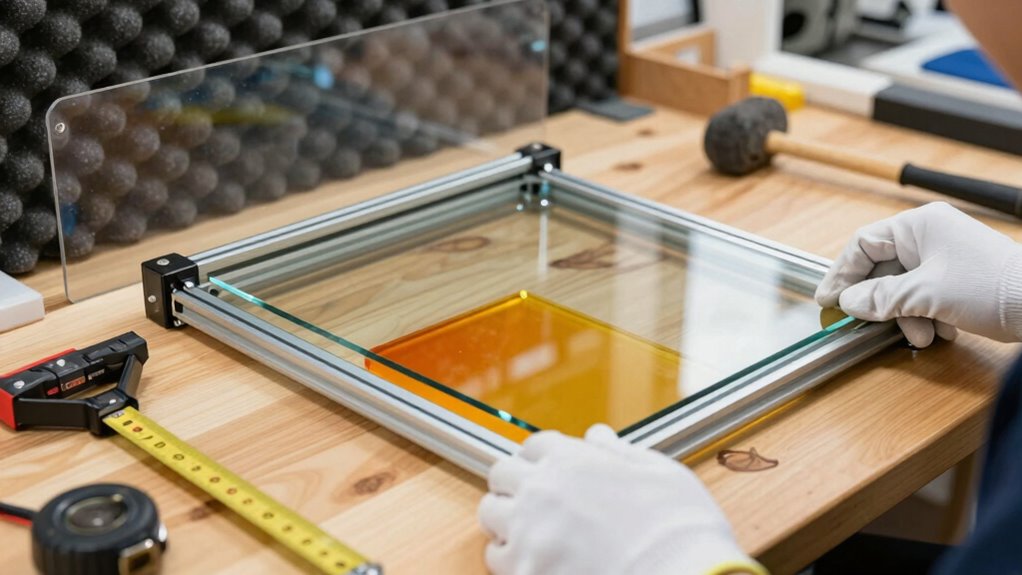

To build a safer framing workflow for glass and acrylic, always wear proper protective gear like cut-resistant gloves, eye protection, and sturdy footwear. Conduct safety briefings, review risks, and teach correct handling and emergency procedures. Regularly inspect tools and materials for damage, keeping your workspace organized and adhering to safety standards. Promote a safety-conscious culture where everyone feels responsible for hazard awareness. Keep these precautions in mind to establish a safer process—more tips to enhance your safety approach follow.
Key Takeaways
- Implement mandatory use of protective gear, including gloves, eye protection, and sturdy footwear, throughout all workflow stages.
- Conduct thorough safety training and hands-on demonstrations for handling, cutting, and drilling glass and acrylic.
- Regularly inspect tools and materials for damage, ensuring equipment is well-maintained and workpieces are secure before use.
- Maintain a clean, organized workspace that adheres to safety standards to prevent accidents and facilitate hazard identification.
- Foster a safety-focused culture with ongoing education, hazard reporting, and team responsibility for safe practices.

Have you ever considered how a safer framing workflow can markedly reduce accidents on your job site? When working with glass and acrylic, safety is essential. Implementing a well-structured workflow begins with guaranteeing everyone on site understands the importance of protective gear. Wearing the right safety equipment—such as cut-resistant gloves, eye protection, and sturdy footwear—can prevent serious injuries. Protective gear acts as your first line of defense against shards, splinters, and other hazards that come with handling fragile materials. But gear alone isn’t enough; you need to pair it with thorough safety training that emphasizes proper handling techniques and emergency procedures. Safety training educates your team on the best practices for cutting, drilling, and installing glass and acrylic, minimizing the risk of accidents caused by improper methods.
Start by establishing clear protocols for every phase of the framing process. Before you begin, hold a safety briefing where you review the specific risks associated with working with these materials. Make sure your team knows how to inspect tools for damage, how to handle materials carefully, and how to secure workpieces properly. Protective gear should be non-negotiable during these sessions, and you should insist that everyone wears their gear consistently. Reinforce the importance of maintaining a clean, organized workspace to avoid trips and falls, which are common hazards when working with large sheets of glass and acrylic. Incorporating tool inspection routines can help identify potential hazards before they lead to accidents. Additionally, adopting proper handling techniques can further reduce the likelihood of breakage and injury. Properly following industry safety standards is crucial for maintaining a safe environment. Incorporating safety checklists into each shift can help ensure all safety measures are consistently followed and nothing is overlooked.
Incorporate safety training into your routine, not just as a one-time event. Regular refresher courses keep safety top of mind and introduce new safety techniques as they develop. Use hands-on demonstrations to teach proper cutting and drilling techniques, emphasizing the importance of supporting materials to prevent breakage and injury. Encouraging ongoing education about hazard identification can cultivate a proactive safety culture within your team. Foster a culture where safety is a shared responsibility, and everyone feels empowered to speak up if they see something unsafe.
Additionally, establish a system for inspecting tools and materials before each use. Damaged blades or cracked sheets can lead to accidents, so maintaining equipment and materials is vital. Always keep emergency equipment, such as first aid kits and fire extinguishers, accessible and in good condition. By integrating protective gear usage, safety training, and proper procedures into your workflow, you considerably lower the chances of accidents. A safer framing process not only protects your team but also ensures a smoother, more efficient project from start to finish.

Schwer 2 Pairs Cut Resistant Gloves ANSI A6/A7 (Send Randomly) Cut Proof Work Gloves, Touchscreen, for Men and Women Used for Woodworking, Glass Cutting, Construction, Cargo Handling, Car Repair, L
ANSI A6 Cut Resistant—Our cut-resistant work gloves meet ANSI A6 standards, offering exceptional protection against medium to heavy…
As an affiliate, we earn on qualifying purchases.
As an affiliate, we earn on qualifying purchases.
Frequently Asked Questions
What Safety Gear Is Essential for Framing With Glass and Acrylic?
You need essential safety gear like gloves, safety glasses, and a dust mask to protect yourself when framing with glass and acrylic. Personal protective equipment helps prevent cuts, eye injuries, and inhalation of harmful particles. Always have an emergency response plan in place, including first aid supplies, so you can react swiftly if accidents happen. Prioritizing this safety gear keeps you safe and minimizes risks during your framing projects.
How Often Should Safety Training Be Updated for Framing Staff?
You should update safety training for framing staff at least once every year, like tuning a well-worn instrument. Regular refresher sessions keep skills sharp and awareness high, preventing accidents from slipping through the cracks. As safety standards evolve, so should your training frequency. Think of it as watering a garden—consistent care guarantees a healthy, safe workspace where everyone can work confidently with glass and acrylic.
Are There Specific Tools That Enhance Safety During Framing?
You should use specific tools like protective gloves and safety barriers to enhance safety during framing. Protective gloves protect your hands from sharp edges of glass and acrylic, reducing cuts and injuries. Safety barriers create a physical shield around your workspace, preventing accidental falls or contact with dangerous materials. Combining these tools guarantees a safer environment, helping you handle fragile materials confidently while minimizing risks during the framing process.
How to Handle Accidental Glass or Acrylic Breakage Safely?
When glass or acrylic shatters, don’t panic—just handle sharp shards carefully with thick gloves and tongs. Clear the area and avoid direct contact. Have emergency response protocols ready, including a first aid kit and a plan to dispose of debris safely. Remember, a quick, calm response prevents injuries, and sweeping up shattered pieces with a broom and dustpan keeps everyone safe from hidden dangers.
What Are the Most Common Safety Violations in Framing Workshops?
You often violate safety protocols by neglecting protective barriers around cutting and grinding areas, risking injuries. Failing to follow emergency protocols during accidents can worsen injuries or cause delays. Always guarantee protective barriers are in place and accessible, and review emergency procedures regularly. Staying vigilant, wearing proper PPE, and adhering to safety guidelines help prevent violations, creating a safer workshop environment for everyone involved.
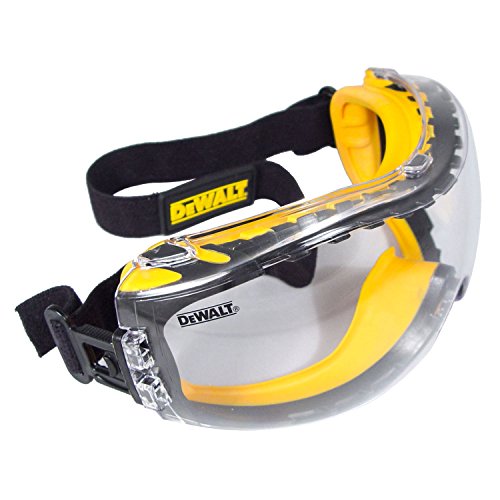
DEWALT DPG82-11 Concealer Clear Anti-Fog Dual Mold Safety Goggle, Clear Lens, 1 Pair
DEWALT ToughCoat hard coated lens provides tough protection against scratches.
As an affiliate, we earn on qualifying purchases.
As an affiliate, we earn on qualifying purchases.
Conclusion
By blending careful planning, consistent caution, and committed compliance, you can craft a safer framing workflow. Remember to respect regulations, reinforce routines, and review results regularly. This disciplined dedication delivers durability, diminishes dangers, and guarantees a more secure, satisfying setup. Stay vigilant, stay vigilant, stay vigilant—your vigilance is essential to victory. With wise workflows and wary work practices, you’ll build with confidence and create a safer, stronger space for all.

Furuian Steel Toe Boots for Men Women Comfortable Lightweight Work Boots for Men Slip Resistant High Top Steel Toe Safety Shoes Puncture Proof Indestructible Construction Boots
Safety First: Insulated with European standard ASTM F2413-18 steel toe cap, our work boots aim to provide first…
As an affiliate, we earn on qualifying purchases.
As an affiliate, we earn on qualifying purchases.
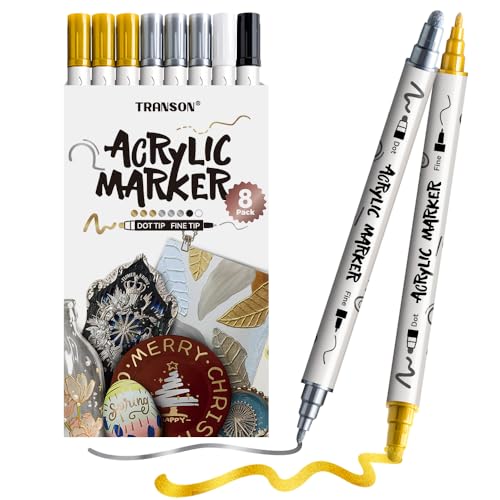
TRANSON 3 Gold, 3 Silver, 1 Black and 1 White Paint Markers Bold and Fine Dual-tip Acrylic Paint Marker Set for Rock Painting Glass Canvas Wood Leather Ceramic Painting
This dual tip acrylic paint pen set includes: 3 gold, 3 silver, 1 black and 1 white acrylic…
As an affiliate, we earn on qualifying purchases.
As an affiliate, we earn on qualifying purchases.