
To store oversized works safely without sacrificing convenience, you should use proper storage methods like flat, acid-free portfolios or padded partitions to prevent deformation. Maintain a stable, climate-controlled environment to avoid warping or mold, and regularly inspect for signs of damage. Digital backups also help safeguard provenance and condition. Combining secure physical storage with digital preservation offers a balanced approach. Keep exploring for detailed tips on achieving long-term safety and efficiency.

Prime made for students and young adults
- Fast, free delivery for dorm and study essentials
- Prime Video and Amazon Music included
- Member-only deals
Key Takeaways
- Use acid-free, sturdy storage materials like large portfolios or flat storage drawers to prevent damage.
- Maintain a climate-controlled environment with stable humidity and temperature to protect against deterioration.
- Store rolled works in protective, rigid tubes with end caps to avoid warping or crushing.
- Regularly inspect storage conditions and artwork for signs of deterioration or environmental fluctuations.
- Digitize oversized works and keep digital backups off-site to enhance preservation and ease of access.
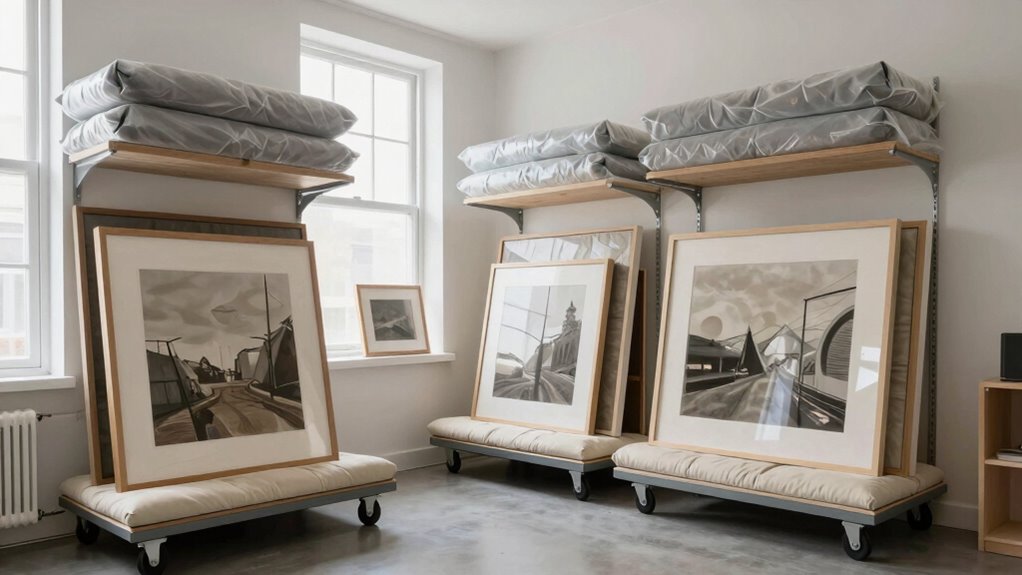
Storing oversized works can be a challenge, especially when you want to keep them safe without sacrificing convenience. These large pieces demand special care, but you also need practical solutions that don’t turn storage into a hassle. To achieve this balance, you must consider how digital preservation can complement physical storage, helping you safeguard your collection in multiple ways. Digitizing your oversized works creates a backup that’s resistant to physical deterioration, theft, or damage. This process also involves digital storage methods that ensure your digital copies are protected against data loss. Digital copies also make sharing and viewing easier, especially if you lack the space or proper climate conditions for long-term storage. Additionally, understanding media analysis can help you better assess the significance and condition of your collection for more effective preservation strategies. Regularly monitoring your collection’s condition and environmental factors can further prevent deterioration and ensure longevity. Incorporating conservation practices into your routine can also significantly extend the lifespan of your oversized works by addressing early signs of wear or damage.
Digitizing oversized works offers a secure backup and simplifies sharing when physical storage is limited.
When it comes to climate control, becomes your best friend. Oversized works are highly sensitive to environmental factors such as humidity, temperature fluctuations, and light exposure. You want to find a space that maintains stable conditions—ideally, a climate-controlled environment designed specifically for art or large-format materials. Proper climate control prevents warping, cracking, mold growth, and fading, which are common risks for large works stored improperly. If climate control isn’t an option in your current space, consider investing in portable units like dehumidifiers, humidifiers, or specialized storage cabinets that provide a controlled microenvironment for your pieces.
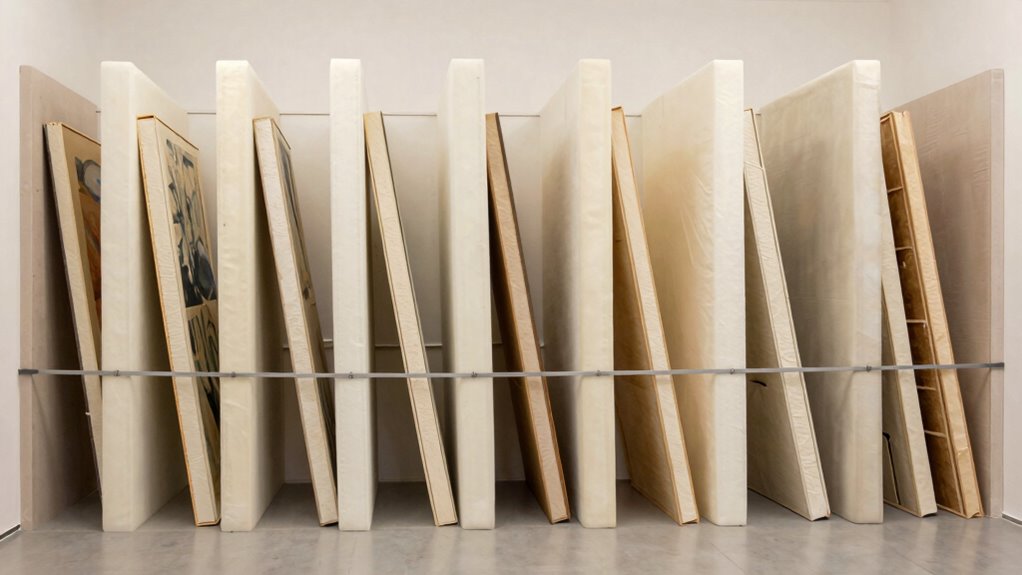
In addition to climate control, choose storage methods that reduce physical stress on your oversized works. Rolling or flat storage options are often best, depending on the medium. Rolled works should be stored in sturdy tubes with protective end caps, while flat pieces need large, acid-free storage boards or portfolios that support their weight evenly. Avoid stacking heavy works directly on top of each other, as this can cause warping or damage over time. Instead, use padded partitions or spacers to prevent contact and distribute weight evenly. Proper support prevents deformation, ensuring your collection remains in good condition for years to come.
Regular maintenance and inspection are critical for long-term preservation. Check your storage environment periodically for signs of deterioration or environmental fluctuations. Keep your digital backups updated and stored in secure, off-site locations or cloud services to ensure accessibility even if physical storage suffers damage. Additionally, digital preservation methods can help you maintain a comprehensive record of your collection’s condition and provenance over time. Combining digital preservation with careful climate-controlled storage gives you a reliable, efficient way to protect your oversized works without sacrificing convenience or safety.
As an affiliate, we earn on qualifying purchases.
Frequently Asked Questions
What Materials Are Safest for Storing Oversized Artworks Long-Term?
You should use acid-free materials and focus on frame preservation when storing oversized artworks long-term. Acid-free backing and tissue prevent deterioration caused by acidity, ensuring your artwork stays intact. Use sturdy, breathable storage containers and avoid plastic that traps moisture. Proper framing with archival quality materials also protects the piece. By prioritizing these safe materials, you safeguard your artwork’s integrity without compromising on convenience or safety.
How Can Climate Control Be Maintained in Non-Traditional Storage Spaces?
You can maintain climate control in non-traditional storage spaces by installing portable dehumidifiers and monitors to regulate humidity control, preventing mold and warping. Guarantee proper pest prevention by sealing gaps and using non-toxic pest deterrents. Regularly check your environment to adjust humidity levels and spot any pest activity early. This approach keeps your oversized artworks safe, preserving their integrity without sacrificing convenience or safety.
Are There Specific Insurance Options for Oversized Art Storage?
Yes, there are specific insurance options for oversized art storage. You should look into art insurance policies that cover both the artwork and storage liability, ensuring protection against damage, theft, or loss. It is crucial to work with insurers experienced in high-value, oversized pieces. These policies often include storage liability coverage, giving you peace of mind and financial security, especially when managing unique or large-scale artworks.
What Are Cost-Effective Solutions for Storing Large Works Securely?
Did you know that 80% of art damage occurs during handling and transportation? To store large works securely, focus on cost-effective solutions like custom crates, sturdy wall mounts, or specialized racks. Use proper handling techniques to prevent damage, and consider display options that keep art stable without risking safety. These methods help protect your oversized works while keeping costs manageable, ensuring both safety and convenience.
How Often Should Oversized Artworks Be Inspected During Storage?
You should inspect your oversized artworks at least twice a year. During these inspections, handle fragile frames carefully to avoid damage, and check for signs of mold growth, especially in humid environments. Look for any structural issues, guarantee storage conditions remain stable, and clean surfaces gently. Regular inspections help prevent deterioration, preserve the artwork’s integrity, and catch problems early, making sure your works stay safe and well-preserved over time.
climate-controlled art storage cabinets
As an affiliate, we earn on qualifying purchases.
As an affiliate, we earn on qualifying purchases.
Conclusion
Storing oversized artworks safely is vital to protect their value and integrity. Remember, nearly 60% of art damages occur during improper storage, so prioritizing safety over convenience is essential. By using sturdy, climate-controlled environments and proper padding, you guarantee your masterpieces stay pristine for years to come. Don’t compromise on security just to save time—your art deserves the best care. With the right precautions, you’ll enjoy peace of mind and preserve your collection’s beauty for future generations.
large rolled art tubes with end caps
As an affiliate, we earn on qualifying purchases.
As an affiliate, we earn on qualifying purchases.
As an affiliate, we earn on qualifying purchases.
Fall Picks
fall essentials
As an affiliate, we earn on qualifying purchases.