To use hygrometers and data loggers wisely around art, keep them in stable locations away from direct sunlight or drafts. Set thresholds for humidity and temperature, and use devices that send alerts if levels fluctuate. Regularly check and analyze data to identify patterns and make necessary adjustments. Wireless models make monitoring easy and remote, ensuring quick action when needed. Keep exploring to discover how these tools can help you protect your artwork more effectively.

Prime made for students and young adults
- Fast, free delivery for dorm and study essentials
- Prime Video and Amazon Music included
- Member-only deals
Key Takeaways
- Position hygrometers and data loggers away from direct sunlight and artificial heat sources to ensure accurate readings.
- Set alarm thresholds and alerts to promptly address humidity fluctuations and prevent potential damage.
- Regularly calibrate devices to maintain measurement accuracy over time.
- Use wireless data loggers for remote monitoring and quick response to environmental changes.
- Analyze collected data periodically to identify trends and optimize environmental control strategies.
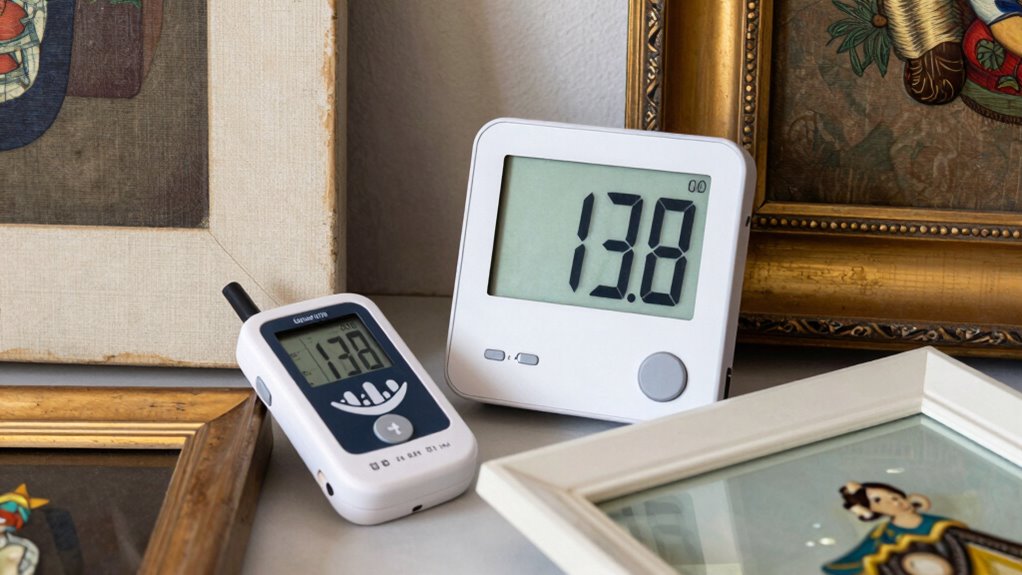
When it comes to preserving artwork, monitoring humidity levels is essential, and hygrometers and data loggers are indispensable tools in this effort. Proper environmental monitoring guarantees that your artifacts stay in ideal condition, reducing the risk of damage caused by fluctuations in moisture. These tools let you keep a close eye on the humidity and temperature levels in your storage or display space, giving you the data needed to make informed decisions about climate control. By maintaining stable conditions, you help prevent issues like warping, cracking, mold growth, or deterioration that can compromise the integrity of your artwork.
Monitoring humidity with hygrometers and data loggers is key to protecting artwork from moisture-related damage.
Using hygrometers and data loggers effectively allows you to implement a proactive approach to artifact preservation. Hygrometers provide instant readings of humidity and temperature, giving you immediate insight into your environment. Data loggers, on the other hand, record this information over extended periods, enabling you to detect patterns and fluctuations that might not be obvious with single readings. This continuous monitoring is critical because even brief spikes or drops in humidity can cause irreversible damage over time. When you analyze the collected data, you can identify trends, set thresholds, and take steps to stabilize the environment before damage occurs. Additionally, incorporating environmental monitoring into your preservation strategy also helps you fulfill conservation standards and best practices. Many museums and galleries rely on precise data to guarantee their collections are stored and displayed under ideal conditions. For you, adopting this approach means you’re actively protecting your collection with scientific accuracy, rather than guesswork. It’s about creating a stable environment that minimizes stress on your artifacts, especially those sensitive to humidity changes, like paper, textiles, or wooden objects. This steady environment extends the lifespan of your artwork and preserves its historical and aesthetic value. Incorporating quality control measures ensures you can maintain consistent conditions over time, which is vital for long-term preservation.
Modern hygrometers and data loggers are user-friendly and versatile. Wireless models enable remote monitoring, so you don’t have to be physically present to track environmental conditions. Some devices even send alerts if levels go beyond preset thresholds, allowing you to respond quickly. The ability to track environmental fluctuations in real time helps prevent sudden changes that could cause damage. The investment in these tools pays off by giving you peace of mind and a reliable way to safeguard your art. As technology advances, these devices are becoming increasingly affordable and accessible, making environmental monitoring more feasible for individual collectors and small institutions alike. Incorporating accurate data collection into your preservation efforts ensures you maintain optimal conditions consistently. In short, by integrating environmental monitoring into your artifact preservation efforts, you take control of your collection’s future, maintaining conditions that stay ideal and your artwork remains in pristine condition for years to come.
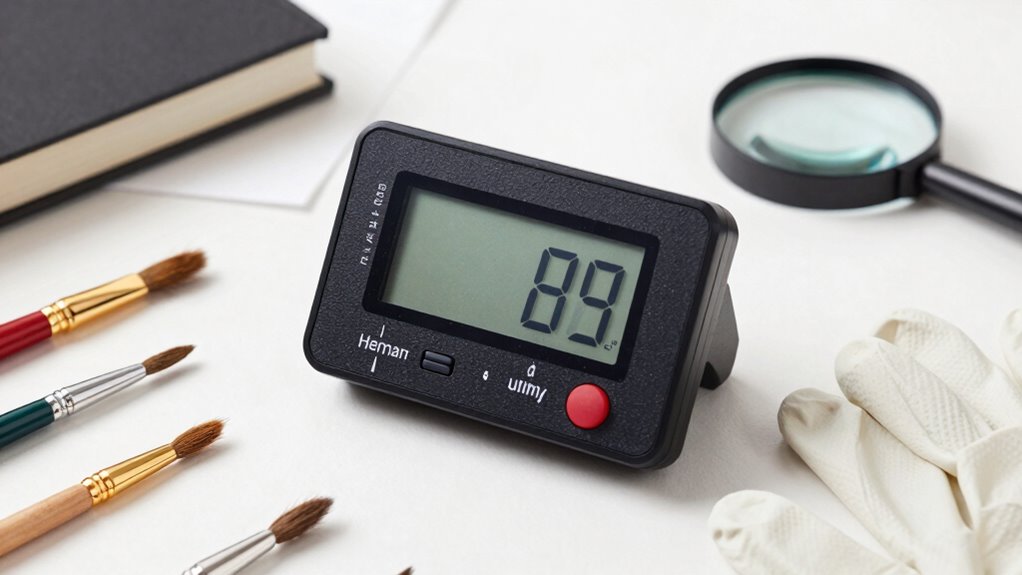
digital hygrometer and thermometer for art preservation
As an affiliate, we earn on qualifying purchases.
As an affiliate, we earn on qualifying purchases.
Frequently Asked Questions
How Often Should Hygrometers Be Calibrated for Art Preservation?
You should calibrate hygrometers at least once a year, but the frequency depends on the artifact sensitivity and environmental conditions. More sensitive artworks or fluctuating environments may require quarterly calibration to guarantee accurate readings. Regular calibration maintains data integrity, helping you monitor humidity levels effectively. Remember, proper calibration frequency is vital for preserving art, as even small inaccuracies can impact delicate materials over time.
What Is the Ideal Humidity Range for Different Types of Artworks?
For ideal art preservation, you should maintain humidity levels between 40-50% for most artworks, as this range effectively controls moisture and prevents damage. Paintings, textiles, and paper-based art require close attention, with slight adjustments based on material sensitivity. Consistent humidity control minimizes risks like warping or mold growth. Regular monitoring with calibrated hygrometers helps you keep conditions stable, ensuring your artworks stay in prime condition over time.
Can Data Loggers Detect Sudden Environmental Changes?
Yes, data loggers can detect sudden environmental changes if you place sensors correctly for ideal sensor placement. Proper placement guarantees data accuracy, allowing you to monitor rapid shifts in humidity or temperature that could threaten art. By positioning sensors near potential problem areas and regularly reviewing the logged data, you can promptly respond to environmental fluctuations, protecting your artworks from damage caused by sudden changes.
How Do Temperature Fluctuations Affect Hygrometer Accuracy?
Think of temperature fluctuations as the sun’s unpredictable rays, subtly shaking the stability of your humidity level. These shifts can impair the sensor’s sensitivity, causing inaccuracies in your hygrometer readings. When temperature varies, it can lead to false alarms or missed changes, jeopardizing humidity stability. To protect your art, guarantee consistent temperatures and calibrated equipment, maintaining the delicate balance that keeps your environment precisely monitored.
Are Wireless Data Loggers More Reliable Than Wired Ones?
Wireless data loggers can be reliable, but their wireless reliability depends on factors like signal strength and interference. Wired data loggers often offer more consistent data collection, especially in environments with potential interference. You might prefer wired options for stability, but wireless loggers provide convenience and easier placement. Consider your environment and needs, weighing wireless reliability against the wired advantages of steady, uninterrupted data logging around your art.
wireless data logger for humidity monitoring
As an affiliate, we earn on qualifying purchases.
As an affiliate, we earn on qualifying purchases.
Conclusion
Think of hygrometers and data loggers as the guardians of your art’s delicate environment, like a lighthouse guiding ships through treacherous waters. By monitoring humidity and temperature carefully, you avoid potential damage and preserve your masterpieces for generations. Embrace these tools as your trusted allies, turning the chaos of fluctuating conditions into a well-orchestrated symphony of preservation. With them, you guarantee your art remains vibrant and protected, shining brightly long after you’re gone.
art conservation environmental monitor
As an affiliate, we earn on qualifying purchases.
As an affiliate, we earn on qualifying purchases.
humidity alert system for artwork
As an affiliate, we earn on qualifying purchases.
As an affiliate, we earn on qualifying purchases.
Fall Picks
fall essentials
As an affiliate, we earn on qualifying purchases.