When picking up artwork locally, always confirm all details and times beforehand to prevent delays. Handle the art with care, supporting fragile pieces and using proper packing materials. Respect the seller’s space by avoiding unnecessary contact and keeping conversations brief if they’re busy. Secure the artwork properly during transport and consider insurance for valuable pieces. Finish with a thank you and follow up afterward. If you want to learn more, keep exploring these simple rules to protect your art.
Key Takeaways
- Confirm all pickup details and times beforehand to prevent delays and misunderstandings.
- Handle artwork gently, supporting fragile pieces and using proper packing materials for transport.
- Respect the seller’s space by avoiding unnecessary contact, touching, or disruptions.
- Secure artwork during transit with appropriate packing, supports, and insurance for added safety.
- Express gratitude and follow up post-pickup to ensure safe arrival and maintain professionalism.
Confirm Pickup Details and Times
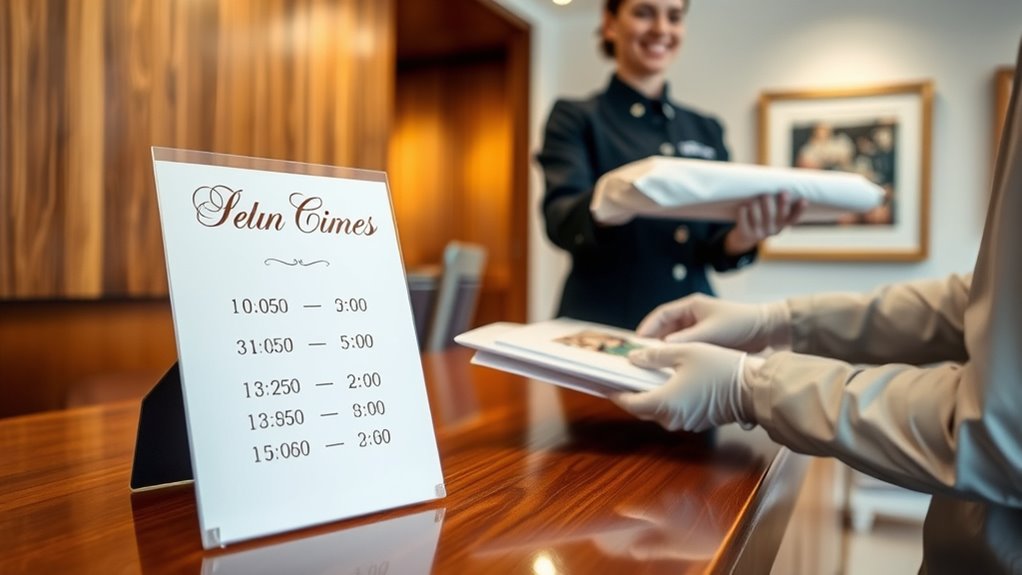
Before you head out to pick up your item, double-check the pickup details and times. Confirming your pickup scheduling guarantees you arrive at the right moment, avoiding unnecessary delays or missed pickups. Proper planning can help prevent last-minute issues and ensure a smooth collection process. Follow verification procedures by verifying the appointment time, location, and any required identification or paperwork. It’s easy to overlook small details, but doing so can disrupt the process and put your artwork at risk. Always review the confirmation email or message from the seller or gallery, and call ahead if anything seems unclear. Being proactive with these steps helps keep everything on track, ensuring your art remains safe and intact during the pickup. Taking a few moments to verify details now saves headaches later, especially considering responsible ownership and the need to safeguard your investment. Additionally, understanding safe handling practices can further protect your artwork during transport and collection. Being aware of storage guidelines prior to pickup can also help in maintaining the artwork’s condition until it reaches its destination. Ensuring that you are aware of artcare tips can help prevent damage during transport and handling.
Handle Artwork With Care

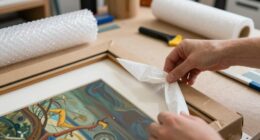
When handling artwork, careful attention must be taken to approach it with deliberate care to prevent damage. You should handle fragile items gently, supporting their weight fully and avoiding sudden movements. Proper packing is essential before pickup; use bubble wrap, foam, or sturdy boxes to safeguard the piece. Visualize the artwork’s positioning with this simple table:
| Artwork Type | Handling Tips | Packing Tips |
|---|---|---|
| Canvas paintings | Support from the back | Use corner protectors |
| Framed art | Handle by the frame edges | Add padding around frame |
| Sculptures | Lift from the base | Wrap in bubble wrap |
| Glass pieces | Use two hands | Secure with foam inserts |
Treat each piece with respect, ensuring it arrives intact and undamaged. Proper handling and packing keep the art safe and appreciated. Moreover, understanding proper art handling techniques can significantly reduce the risk of damage during transit, especially when considering fragile items and their unique requirements. Being aware of the net worth of artwork or collectibles can also influence how carefully they should be handled and protected during transportation. Additionally, familiarizing oneself with special handling procedures can further improve safety during the pickup process. Recognizing the importance of proper documentation can also assist in safeguarding valuable pieces during transit.
Respect the Seller’s Space
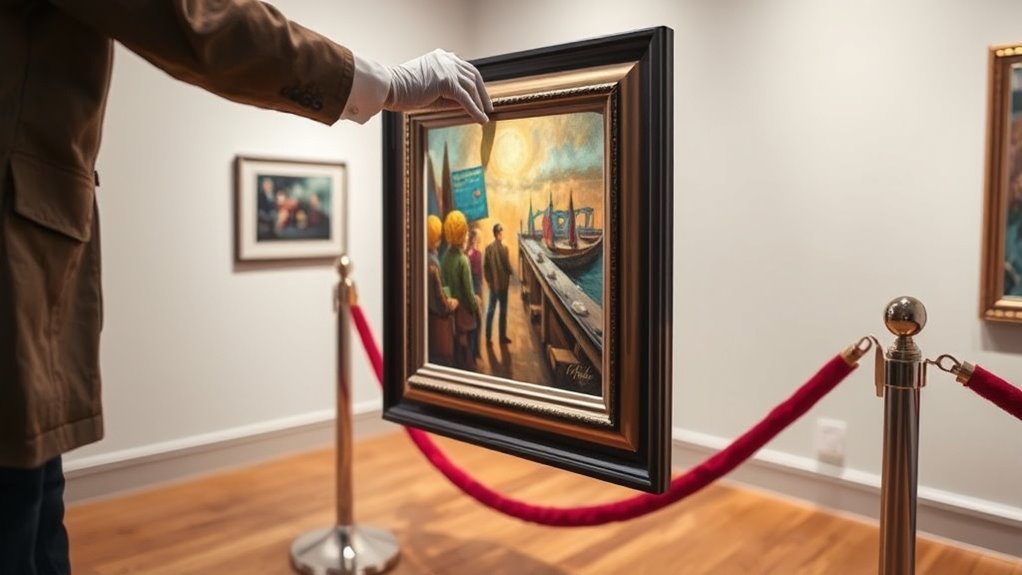
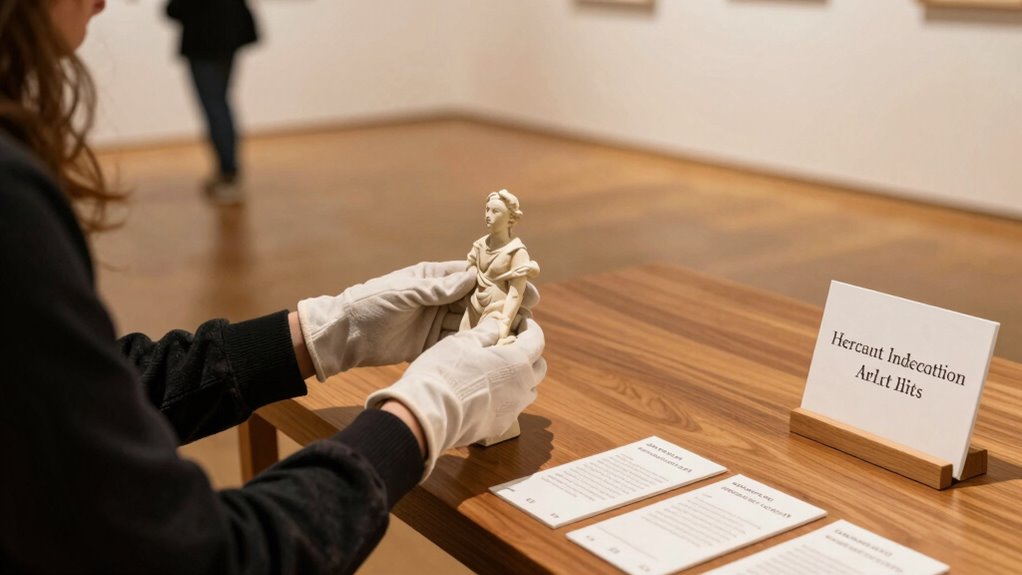
Respecting the seller’s space during pickup is essential to maintaining a positive experience for both parties. Following gallery etiquette shows you value the seller’s environment and art.
As a buyer, your responsibilities include being mindful of where you stand and how you handle the artwork. Avoid leaning on walls, touching other pieces, or crowding the seller’s workspace. Being aware of proper handling techniques can help prevent accidental damage to valuable art pieces. Additionally, understanding art security practices can further protect both the artwork and your investment. Being familiar with insurance considerations can also help safeguard your purchase against unforeseen mishaps. Observing professional gallery standards demonstrates respect for the seller’s expertise and environment, fostering trust and good relations.
Keep conversations respectful and brief if the seller is busy. Respect their setup by not disrupting displays or storage areas.
Remember, the seller’s space is part of their professional environment, and maintaining its integrity helps ensure the art stays safe. Additionally, being aware of protecting your savings and avoiding scams can help you make informed decisions about art purchases and investments.
Transport Artwork Safely
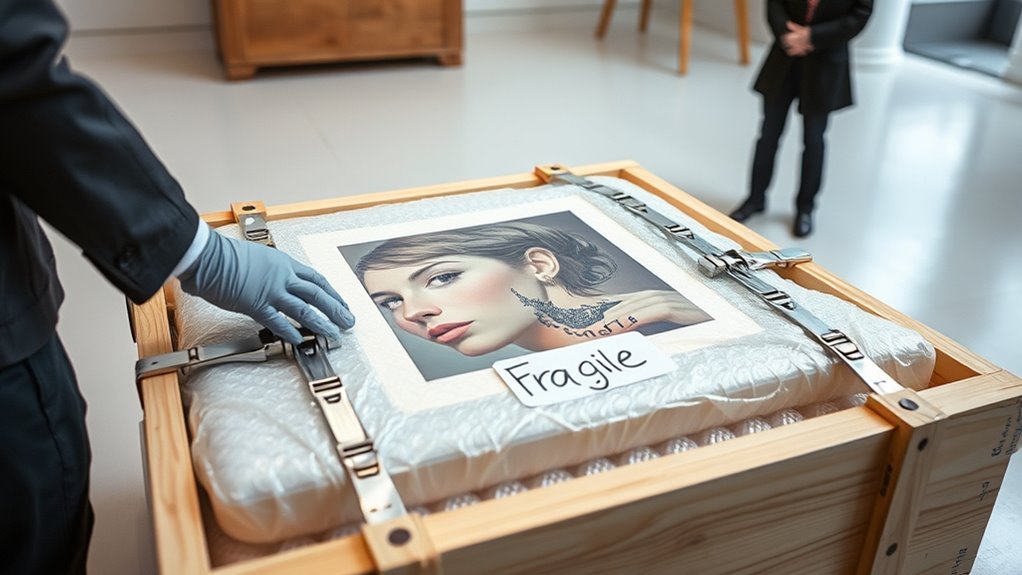
Transporting artwork safely requires careful planning and attention to detail. To protect your piece, choose appropriate packing materials like bubble wrap, foam boards, and sturdy boxes. Secure the artwork firmly to prevent movement during transit. Always verify that your transportation insurance covers art damage or loss. Consider insuring valuable pieces for extra peace of mind. Proper packing materials and insurance ensure your art arrives intact and protected against unforeseen mishaps. Additionally, understanding the resale value of your artwork can help inform your insurance coverage and packing strategies. Being aware of the contrast ratio in your packing setup can also improve the visibility of fine details during transit, especially for delicate or highly detailed pieces. Incorporating safe handling practices, such as using proper lifting techniques, can further reduce the risk of damage during transport. Paying attention to load‑planning ensures your artwork is transported efficiently and safely.
Say Thanks and Follow Up
Expressing gratitude and following up after a pickup shows professionalism and helps build trust. A simple thank you gesture, whether a quick message or a handwritten note, demonstrates appreciation for the buyer’s effort and reinforces a positive relationship. Recognizing mysterious absences or unexpected occurrences during the process can also help set realistic expectations and show understanding. Including clear communication about any issues or delays can further foster transparency and trust. After the artwork is collected, send follow-up communication to guarantee everything arrived safely and to answer any questions. This not only shows you care about the artwork’s safety but also encourages future collaborations. Being courteous and responsive makes the pickup experience smooth and respectful for both parties. Incorporating privacy considerations into your follow-up ensures that personal information remains protected while maintaining good communication. Additionally, being mindful of user privacy and cookies can help you handle personal data responsibly throughout your interactions. Remember, a genuine thank you can leave a lasting impression, fostering goodwill and ensuring your reputation remains strong in the art community. Maintaining professionalism in your follow-up can also help uphold the integrity of your dealings and leave a positive impression on your clients. Keep these small but meaningful gestures in mind to maintain excellent local pickup etiquette.
Frequently Asked Questions
Can I Reschedule My Pickup if I’M Running Late?
Yes, you can reschedule your pickup appointment if you’re running late, but you should verify the rescheduling policy beforehand. Contact the gallery or the person managing the pickup as soon as possible to let them know.
Most places appreciate prompt communication and will work with you to find a new time. Just make certain you follow their guidelines to keep the art safe and avoid any inconvenience.
What Should I Do if the Artwork Is Damaged Upon Pickup?
If the artwork’s damaged upon pickup, you should stop immediately and document the damage with photos for damage documentation.
Contact the seller or gallery right away to report the issue.
Check if the artwork was insured; if so, file a claim for insurance coverage.
Keep all packaging and damage evidence intact, as they may be needed for insurance or resolution purposes.
Acting promptly helps ensure the issue gets resolved efficiently.
Are There Size Restrictions for Artwork Pickup?
You should check the artwork dimensions and pickup size limits before arranging your pickup. Most galleries or sellers specify size restrictions to guarantee the piece fits comfortably during transport.
If your artwork exceeds the size limit, contact the seller to discuss alternative arrangements.
Always measure carefully and confirm the pickup size limits in advance to avoid surprises, ensuring your art arrives safely and without hassle.
Is It Okay to Bring Someone Else to Pick up the Art?
Yes, it’s okay to bring a guest accompanying you for authorized pickup. Just make sure they’ve your confirmation or any required identification.
You’re responsible for ensuring they understand the pickup process and handle the artwork carefully.
If someone else is picking up on your behalf, inform the gallery beforehand and provide any necessary authorization.
This way, you keep the process smooth and the artwork safe.
How Should I Handle Fragile or Delicate Artwork During Transport?
When transporting fragile or delicate artwork, you should use protective wrapping like bubble wrap or foam padding to prevent damage.
Handle the art with proper techniques, supporting it from the edges and avoiding pressure on vulnerable areas.
Keep it upright and secure it in a sturdy container or case.
These steps help guarantee your artwork stays safe and intact during transport, giving you peace of mind.
Conclusion
By confirming pickup details, handling the artwork carefully, respecting the seller’s space, transporting it safely, and expressing your thanks, you help guarantee the art stays safe and intact. Following these simple rules shows your appreciation and keeps the process smooth for everyone involved. Remember, good etiquette not only protects the artwork but also fosters positive relationships. Stick to these guidelines, and you’ll enjoy a seamless pickup experience every time.