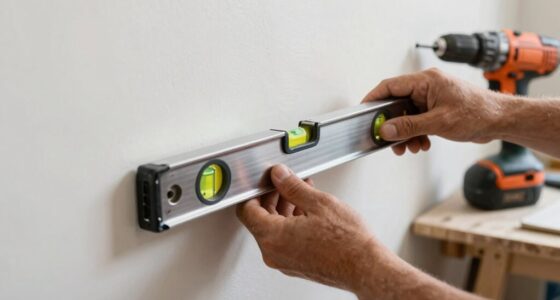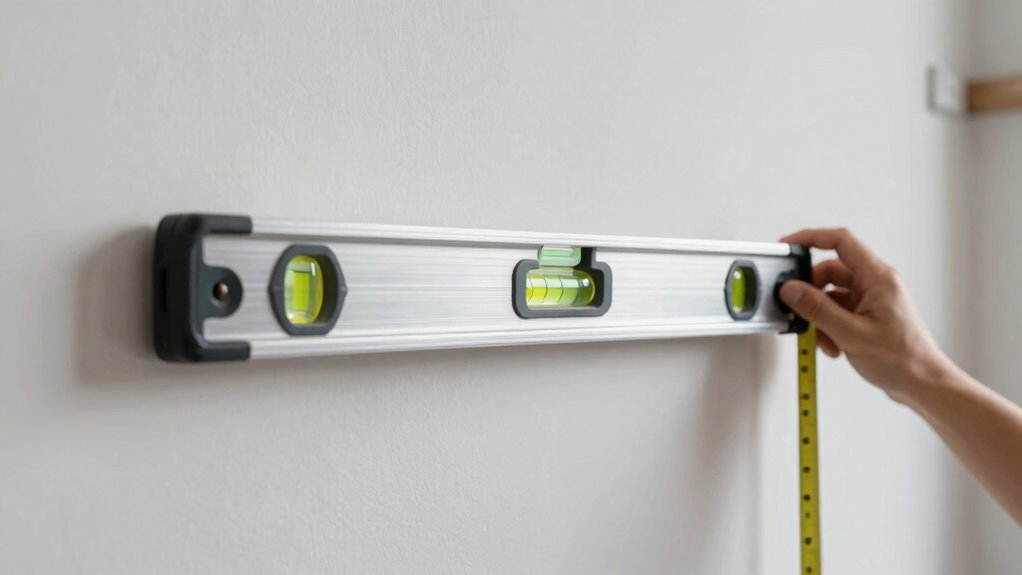

To assess your wall before hanging heavy art, start by checking its material—drywall, brick, or concrete—to determine the right hardware. Use a stud finder to locate studs, especially for large pieces, and mark their positions. Inspect the wall for cracks or damage that could weaken support. Measure the weight of your artwork and choose appropriate anchors or brackets rated for that load. Ensuring proper support and weight distribution is key—continue exploring to learn more about the best hanging techniques.

Prime made for students and young adults
- Fast, free delivery for dorm and study essentials
- Prime Video and Amazon Music included
- Member-only deals
Key Takeaways
- Use a stud finder to locate and mark studs for secure mounting points.
- Examine the wall for cracks, damage, or weak areas that may need reinforcement.
- Determine the wall material (drywall, brick, concrete) to select proper hardware.
- Measure the artwork’s weight and compare with hardware and wall capacity.
- Plan multiple mounting points to evenly distribute the heavy art’s weight.
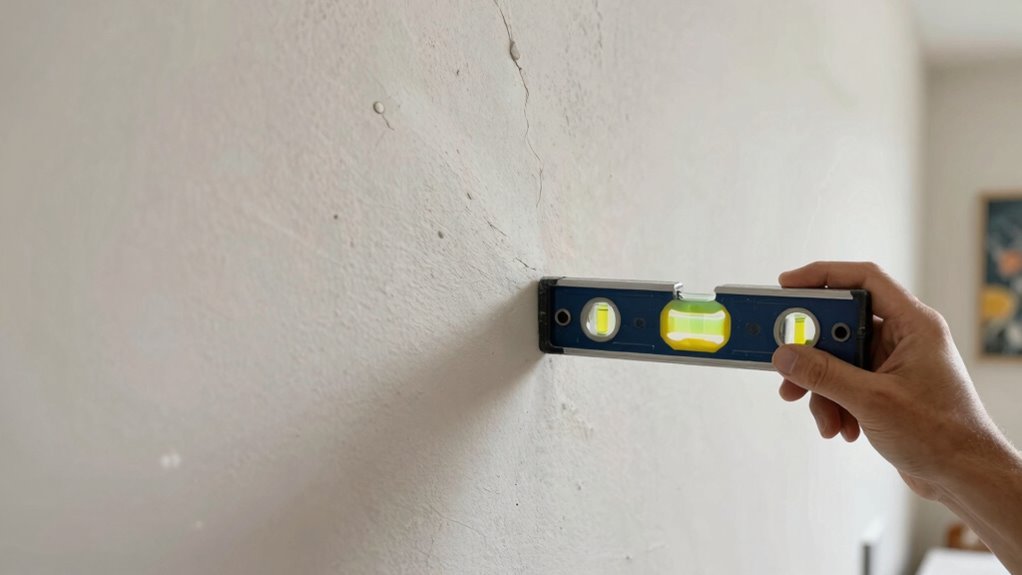
When hanging heavy art, you need to guarantee your walls can support the weight safely and securely. The first step is understanding the wall materials and how they’ll handle the load. Different wall materials offer varying levels of strength and stability. For example, drywall is common in many homes, but it’s not as sturdy as brick or concrete. Drywall alone might not support heavy pieces without reinforcement, so you’ll need to check if there are studs behind it or consider using anchors designed for heavy loads. On the other hand, brick and concrete walls are much stronger, often capable of supporting substantial weight without additional support. Knowing what your wall is made of helps you determine the best hanging method and avoid potential damage or accidents.
Ensure your walls can support heavy art by understanding materials and proper weight distribution for safe hanging.
Next, consider how weight distribution plays a vital role in evaluating your wall’s capacity. Proper weight distribution prevents stress points that could cause the wall or the art to fall. When hanging heavy art, it’s essential to spread the weight across multiple points rather than relying on a single hook or nail. Use wall anchors or mounting brackets that are rated for the weight of your artwork. If you’re mounting a large or particularly heavy piece, locate the studs behind your drywall and attach directly to them, as they’re designed to bear significant weight. If studs aren’t available, choose high-quality anchors designed for heavy loads, and follow the manufacturer’s instructions carefully. Additionally, understanding wall strength can help you better evaluate your space’s capacity to support your art. Being aware of wall reinforcement options can also be beneficial if your wall needs extra support.
Before hanging, take the time to examine the area. Use a stud finder to locate the studs accurately, and mark their positions. Measure the weight of your art and verify your mounting hardware can handle that load. It’s also wise to distribute the weight evenly across multiple points if possible, especially for larger pieces. When in doubt, consulting with a professional can provide valuable insights into your specific wall structure and its load-bearing capacity. Be cautious of any cracks or damage in the wall that might compromise its ability to support weight. If you notice any weaknesses, reinforce the area with additional support or consider alternative mounting methods. It’s helpful to understand wall strength to better assess the overall capacity of your space. Additionally, consulting professional advice can be advantageous for especially valuable or large artworks.
Finally, test the support gently after installing your art. Give it a light tug to ensure everything feels secure. If you notice any movement or instability, re-evaluate your mounting. Taking these steps ensures your heavy art is hung safely, preserving both your artwork and your walls. By understanding your wall materials and paying close attention to weight distribution, you can confidently display your favorite pieces without worry.
heavy duty wall anchors for drywall
As an affiliate, we earn on qualifying purchases.
As an affiliate, we earn on qualifying purchases.
Frequently Asked Questions
Can Drywall Support Heavy Artwork Without Additional Reinforcement?
Drywall can support heavy artwork if you use decorative hooks designed for weight distribution and guarantee proper installation. You should anchor the hooks into wall studs whenever possible, as they provide better support than just drywall anchors. Distribute the weight evenly across multiple hooks, and avoid relying on a single point. This approach helps prevent damage and ensures your artwork stays securely mounted without additional reinforcement.
How Do I Identify Hidden Structural Issues Behind the Wall?
You can identify hidden structural issues by inspecting the wall material for signs of hidden damage like cracks, bulges, or discoloration. Use a flashlight to look for irregularities behind the surface and gently tap the wall to listen for hollow or solid areas. If you notice any suspect spots, consider removing a small section or consulting a professional. This way, you guarantee the wall can safely support heavy artwork.
What Tools Are Best for Measuring Wall Strength Accurately?
You’ll want to start with a sturdy stud finder for quick measurements, but for more precise results, use a magnetometer or a wall scanner that measures wall density and detects studs or hidden supports. These tools guarantee accuracy in measuring techniques, giving you confidence in your wall’s strength. Remember, tool accuracy varies, so combining multiple methods helps you get the clearest picture of your wall’s capacity for heavy art.
How Often Should I Re-Assess the Wall’s Condition?
You should re-assess your wall’s condition every few years or if you notice signs of wear. Check the wall durability and paint condition regularly, especially after any remodeling or significant weight changes nearby. Look for cracks, sagging, or peeling paint, which could indicate weakening. Frequent inspections help prevent accidents, ensuring your wall remains strong enough to hold heavy art safely. Stay vigilant to maintain a secure display.
Are There Specific Wall Types Unsuitable for Heavy Art?
Don’t bite off more than you can chew; some wall types aren’t ideal for heavy art. Decorative paneling and textured surfaces often lack the stability needed for weighty pieces, making them unsuitable. You should avoid hanging heavy art on walls with delicate plaster, thin drywall, or weak backing. Instead, opt for solid, sturdy walls like concrete or reinforced drywall, ensuring your artwork stays secure and safe.
As an affiliate, we earn on qualifying purchases.
Conclusion
Just like Da Vinci studied his canvas before creating masterpieces, you must carefully assess your wall before hanging heavy art. Knowing its strength and stability guarantees your artwork remains a stunning focal point instead of a falling hazard. When you check for studs, weight capacity, and wall condition, you’re laying the groundwork for a gallery-worthy display that endures. Remember, a well-prepared wall is the silent hero behind every breathtaking, heavy-hanging masterpiece.
As an affiliate, we earn on qualifying purchases.
As an affiliate, we earn on qualifying purchases.
Fall Picks
fall essentials
As an affiliate, we earn on qualifying purchases.