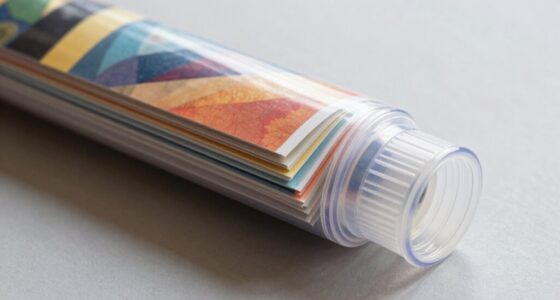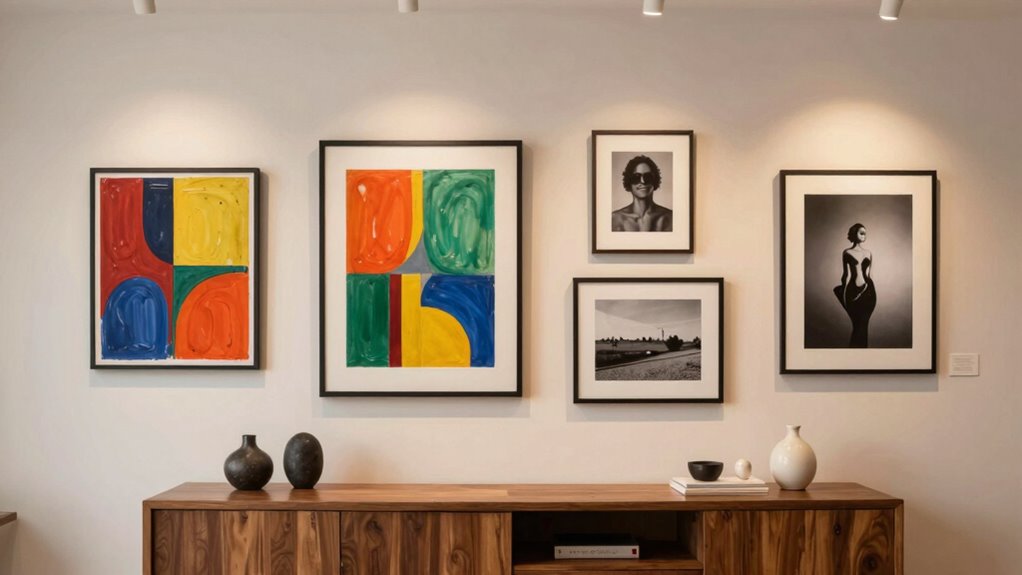
Museums teach you to focus on lighting, framing, and placement to make art stand out. Using adjustable lighting highlights colors and details without glare, while simple frames draw attention without overpowering the piece. Proper placement at eye level and thoughtful spacing creates balance and guides the eye smoothly across your display. Applying these principles makes your home art setup more engaging and professional. Keep exploring these ideas to create stunning, museum-quality displays in your space.

Prime made for students and young adults
- Fast, free delivery for dorm and study essentials
- Prime Video and Amazon Music included
- Member-only deals
Key Takeaways
- Use proper lighting techniques, like soft, diffused lights, to highlight colors and details without glare.
- Choose framing styles that complement the artwork and create a focused, polished presentation.
- Position artworks at eye level using the rule of thirds for natural, balanced viewing.
- Avoid clutter by spacing artworks appropriately to maintain visual rhythm and harmony.
- Apply museum display principles to develop thoughtful, engaging, and professional-looking home art arrangements.
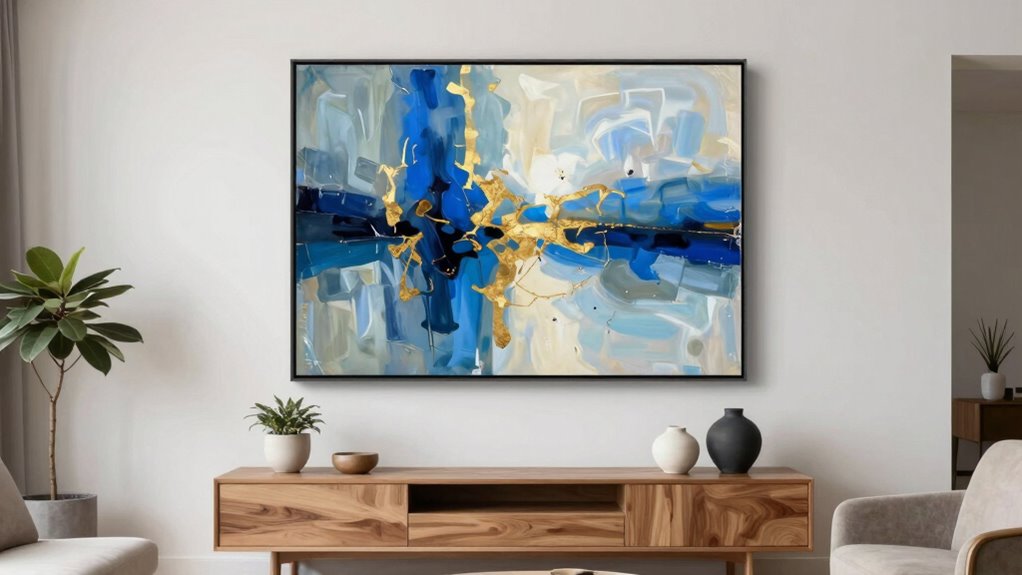
Displaying art at home can be just as impactful as in a museum if you follow some key principles. One of the most important aspects is understanding how lighting techniques can elevate your display. Museums invest heavily in lighting to highlight artwork, minimize glare, and create an inviting atmosphere. At home, you have the flexibility to experiment with different lighting options—think about using adjustable track lighting, picture lights, or even smart bulbs that allow you to control brightness and color temperature. Proper lighting not only enhances the colors and details of your art but also sets the mood of the space. You want to avoid harsh, direct light that causes glare or uneven shadows. Instead, aim for soft, diffused lighting that evenly illuminates your pieces and draws viewers’ eyes where you want them to go. Educating yourself on museum display principles can help you develop a more thoughtful and engaging presentation.
Alongside lighting, framing strategies are essential for showcasing your art effectively. Museums often use specific framing techniques to draw attention to the artwork and protect it from damage. At home, you can mimic this by choosing frames that complement the piece without overpowering it. Consider the style and color of the frame—simple black or white mats work well for many artworks, providing a clean border that directs focus inward. Additionally, the placement of the art within your space is significant. Use the rule of thirds to position your pieces at eye level or at a height that feels natural and balanced within the room. Spacing matters too; avoid clustering too many pieces together. Instead, give each artwork room to breathe, creating a visual rhythm that guides the viewer’s eye comfortably across your display. Paying attention to lighting techniques can make a significant difference in how your art is perceived and appreciated. It’s also helpful to consider framing options to better understand how to create a balanced and engaging presentation at home.
adjustable track lighting for artwork
As an affiliate, we earn on qualifying purchases.
As an affiliate, we earn on qualifying purchases.
Frequently Asked Questions
How Do I Choose the Right Lighting for My Home Art Display?
You should choose accent lighting with a warm color temperature to highlight your art without overpowering it. Opt for adjustable spotlights or track lighting that allow you to direct light precisely. Avoid harsh, bright lights that can cause glare or color distortion. By balancing accent lighting with the right color temperature, you create a gallery-like atmosphere that enhances your artwork’s beauty and makes your display inviting and professional.
What Are the Best Wall Colors to Highlight Artwork?
A picture is worth a thousand words, so choose wall colors that make your art pop. Opt for neutral palettes like soft grays, warm beiges, or cool whites to create a versatile backdrop. Consider accent walls in bold shades if you want to add drama and contrast. These choices highlight your artwork, letting its colors and details shine, just like a museum’s carefully curated display.
How Can I Prevent Damage to My Art Pieces at Home?
You can prevent damage to your art by maintaining proper climate control, avoiding extreme temperatures and humidity that cause deterioration. Use protective framing with UV-protective glass to shield pieces from light damage and dust. Handle art carefully, avoiding direct contact, and hang it securely to prevent falls. Regularly inspect and clean your artworks gently, ensuring they stay preserved and vibrant for years to come.
What Tools Are Essential for Hanging Art Securely?
Think of your tools as the magic wands that bring your art to life. To hang art securely, you’ll need a sturdy hammer, a level, and appropriate hooks or wires. Use gallery lighting to highlight your pieces without damaging them. Master hanging techniques like proper spacing and weight support. These tools and methods guarantee your art stays safe and beautifully displayed, turning your home into a personal gallery.
How Should I Arrange Multiple Artworks for Visual Harmony?
You should arrange your artworks by focusing on gallery balance, ensuring each piece complements the others without overwhelming the space. Start with a focal point placement, placing your most striking piece at eye level or central to the display. Then, organize remaining artworks around it, maintaining consistent spacing and alignment. This creates a harmonious flow, making your collection visually appealing and inviting, much like a professional museum exhibit.
As an affiliate, we earn on qualifying purchases.
Conclusion
By applying museum display tips, you can transform your home into a mesmerizing art space. Remember, studies show that well-curated displays can boost your mood and creativity by up to 25%. Keep lighting, scale, and spacing in mind, and don’t be afraid to experiment. With a little effort, your art collection will not only look stunning but also inspire and uplift you daily. Enjoy turning your home into a personal gallery!
As an affiliate, we earn on qualifying purchases.
As an affiliate, we earn on qualifying purchases.
Fall Picks
fall essentials
As an affiliate, we earn on qualifying purchases.