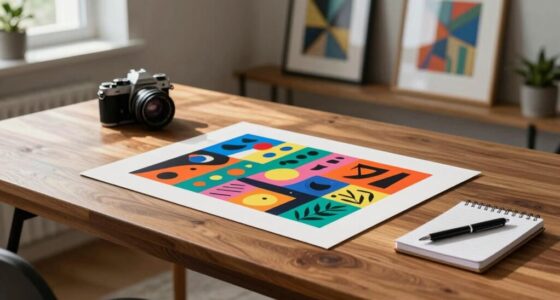
Buying art in person feels different because you can touch and feel its textures, see how colors shift with light, and observe brushstrokes and materials up close. This personal encounter helps you connect emotionally and assess authenticity and condition better than digital images allow. You also get a true sense of the piece’s scale and presence within a space. If you keep exploring, you’ll discover even more about what makes each artwork truly special.
Key Takeaways
- Viewing art in person reveals textures, surface details, and true colors that digital images cannot accurately convey.
- Physical examination allows assessing the artwork’s condition, craftsmanship, and authenticity through close inspection.
- Experiencing the artwork’s scale and spatial relationship helps determine how it fits and impacts your space.
- In-person viewing engages your senses, fostering a personal emotional connection beyond visual appearance.
- Proper lighting and viewing angles enhance perception of depth, mood, and subtle details that influence your appreciation.
Feel the Texture and Presence of the Artwork

When you visit an art gallery or studio, don’t just look at the artwork—touch and experience it firsthand. The tactile experience reveals details you can’t see, like the texture of thick paint, roughness of mixed media, or smoothness of polished surfaces. This physical presence helps you connect with the artist’s intent and the artwork’s materiality. As you approach, notice how the surface feels under your fingertips, giving you a sense of the artist’s technique and the work’s depth. Feeling the texture makes the art more immediate and personal, deepening your appreciation. It’s an active way to engage with art that images alone can’t provide, making your visit more immersive and meaningful. Engaging multiple senses enhances perception and creates a richer understanding of the piece. Recognizing the material qualities of the artwork can also reveal insights into the artist’s process and choices, especially considering how color accuracy impacts the visual experience.
Notice How Colors and Light Look in Person

When you see art in person, pay attention to how the colors appear and whether they match what you expect. Notice how light and shadow create depth and mood that photos can’t fully capture. This helps you understand the true color accuracy and how lighting affects the artwork’s overall impact. Additionally, observing lighting effects in person can reveal subtle details and textures that influence your overall perception of the piece. Being aware of visual perception differences between in-person viewing and digital images can enhance your appreciation of the artwork’s true qualities. Recognizing how lighting conditions impact color and texture can help you better evaluate art in real life versus digital representations. Understanding how rendering techniques influence the appearance of artwork can further deepen your insight during in-person visits.
Color Accuracy in Reality
Seeing art in person can be quite different from viewing it online, especially when it comes to color accuracy. Digital reproduction often struggles with true color representation because screens require proper color calibration, which varies from device to device. In person, you notice subtle nuances—tones, shades, and textures—that a screen may not capture. To help visualize this, consider the table below:
| Aspect | In Person | Digital Reproduction |
|---|---|---|
| Color Fidelity | Accurate, nuanced, true to life | Often slightly off due to calibration issues |
| Light Reflection | Visible, enhances depth | Cannot replicate the light’s interaction |
| Surface Texture | Tangible, adds dimension | Flat, relies on visual simulation |
Pay attention to these differences to truly appreciate an artwork’s authentic color and presence. Recognizing how light interacts with the surface can deepen your appreciation of the piece’s authenticity, especially since color accuracy can vary significantly between digital and physical viewing. Additionally, visual nuances such as brushstrokes or material details are often more apparent when viewing the artwork in person. Moreover, proper lighting at the viewing location can significantly influence how colors and textures are perceived, making it even more important to experience art firsthand. Understanding the physical qualities of artwork, like texture and surface reflectivity, can greatly enhance your overall appreciation and insight.
Light and Shadow Effects
In person, light and shadow play a vital role in revealing an artwork’s true depth and dimension. Lighting dynamics influence how colors appear and how textures are perceived, making the piece feel more alive. Observe how natural or artificial light interacts with the surface—shadows can emphasize certain areas or create a sense of movement. The shadow interplay adds layers of complexity, highlighting subtle details that may be lost in photos. Different angles and lighting conditions can dramatically change your perception, revealing nuances that aren’t visible on a screen. When you see art in person, you notice how shadows cast and shift, giving the piece a tangible presence. This real-time experience helps you truly understand the artist’s intent and the artwork’s genuine vibrancy. Additionally, understanding wall surface finishes can enhance how you appreciate different types of artwork and their presentation in your space. Recognizing how lighting conditions affect visual perception can deepen your connection to the art and improve how you select pieces for your environment. Being aware of lighting effects can also help you anticipate how a piece will look in your own lighting setup, making your selection more informed.
Look Closely at Brushstrokes, Techniques, and Materials

Take a close look at the brushstrokes to understand the artist’s technique and style. Feel the texture of the materials to see how they contribute to the artwork’s depth and quality. Recognizing these details helps you assess the piece’s craftsmanship and authenticity.
Examine Brushstroke Details
By closely examining brushstroke details, you can gain valuable insights into an artwork’s techniques and materials. Pay attention to the brushwork intricacies—the way the paint is applied, whether bold and sweeping or fine and delicate. These details reveal the artist’s process and skill, serving as an artistic signature that distinguishes their style.
Notice the direction, pressure, and texture of each stroke, as these elements create depth and emotion. Different materials, like oil or acrylic, influence the appearance of brushstrokes, so observing these nuances helps you understand what was used.
This close inspection allows you to connect with the artwork on a deeper level, appreciating the craftsmanship and intentionality behind each detail.
Recognize Material Texture
Examining brushstroke details leads you to a better understanding of an artwork’s materials and their textures. When you look closely, you notice the textural richness created by different techniques and mediums. Incorporating knowledge of quality assessment can further enhance your ability to discern authentic works from reproductions. Feel the tactile experience of varied surfaces—smooth, rough, layered, or impasto—each revealing how the artist worked with materials. Recognizing these textures helps you distinguish between oil, acrylic, or mixed media, giving insight into the artist’s process and intention. The material characteristics of each medium also contribute to the overall texture, adding depth and dimension to the piece. As you observe, you connect with the piece on a sensory level, appreciating the craftsmanship that contributes to its visual impact and emotional depth. A deeper understanding of medium properties can also guide you in evaluating the artwork’s longevity and condition over time.
Check the Scale and Proportion of the Piece

When evaluating a piece of art in person, it’s important to take into account its scale and proportion to make certain it suits your space and aesthetic. Conduct a scale comparison by visualizing how the artwork relates to other elements in the room, like furniture or architectural features. This helps you judge if the piece will feel balanced and harmonious. During your proportion assessment, consider the relationship between different parts of the artwork—are they cohesive and intentional? A piece that’s too large or small for your space can feel overwhelming or underwhelming, so trust your eye to evaluate how the dimensions interact with your environment. Additionally, understanding best garage door openers can help ensure your home’s exterior aesthetic is also proportionate and well-balanced. Being aware of designer elements can further assist in selecting art that complements your overall decor style. Paying attention to scale and proportion ensures your purchase complements your space and enhances your overall aesthetic. Recognizing the importance of art placement can further assist in integrating your new artwork seamlessly into your home, and considering appropriate lighting can highlight the piece’s features effectively.
Discover How Viewing in Person Builds Your Emotional Connection
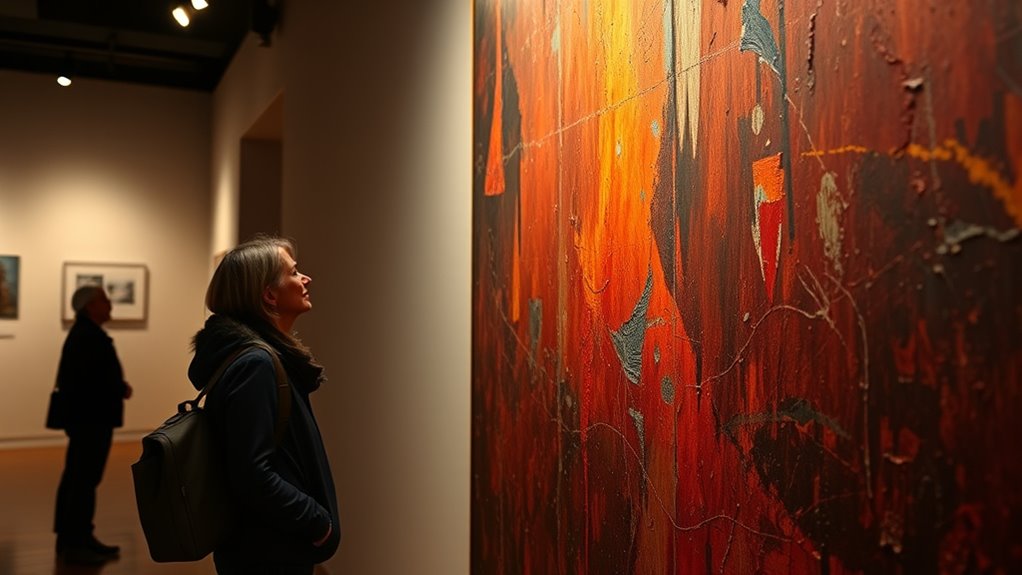
Seeing artwork in person allows you to experience its true presence and emotional impact, which can’t be fully conveyed through photos or digital images. When you stand before a piece, you can sense its emotional resonance—the way it makes you feel on a deeper level. Understanding food can be compared to appreciating art; just as culinary education helps you see the depth behind ingredients, viewing art in person reveals layers that aren’t visible otherwise. This direct encounter fosters a personal connection that’s impossible to replicate virtually. You might notice subtle details, textures, and brushstrokes that evoke specific feelings or memories. The energy of the space, the artist’s intent, and your own reactions combine to create a unique, visceral experience. This emotional engagement helps you understand why a particular piece speaks to you, making your connection more authentic and meaningful. Ultimately, viewing art in person deepens your appreciation and strengthens your bond with the work.
Inspect for Authenticity and Condition Up Close

Inspecting a piece of art closely allows you to verify its authenticity and assess its condition firsthand. The gallery ambiance can give you clues about the artwork’s provenance, but it’s essential to examine details directly. Pay attention to content related to authenticity, as subtle inconsistencies can reveal important information about a piece. Look for the artist signature—its placement, style, and consistency help confirm authenticity. Check for any signs of damage, fading, or repairs that might affect value or display. Pay attention to brushstrokes, texture, and surface quality, as these reveal craftsmanship and authenticity. Additionally, understanding art conservation techniques can help you identify areas that may have been restored or altered. A well-lit space allows you to see subtle details, ensuring you’re making an informed decision.
Frequently Asked Questions
How Does Viewing Art in Person Influence My Perception of Its Value?
Viewing art in person enhances your perception of its value because you can see the perceived craftsmanship firsthand and feel a stronger emotional connection.
When you stand close to a piece, details become clearer, making the art feel more authentic and tangible. This direct experience allows you to appreciate the artist’s skill and the piece’s uniqueness, ultimately increasing your emotional investment and perceived worth of the artwork.
What Subtle Details Might I Miss When Only Viewing Online Images?
When you only view online images, you might miss subtle details like texture details and color nuances that add depth to the artwork.
These elements can influence your emotional response and understanding of the piece.
Without seeing the texture in person, you won’t fully grasp its tactile quality, and color nuances may appear different on screens.
To truly appreciate the art, it’s crucial to experience these details firsthand whenever possible.
How Can In-Person Viewing Affect My Emotional Response to a Piece?
When you view art in person, your emotional intuition heightens, allowing you to connect on a deeper level.
The tactile connection with the artwork’s texture and presence evokes genuine feelings that online images can’t replicate.
You might notice subtle details and energy radiating from the piece, sparking a more visceral response.
This direct interaction helps you gauge your true emotional reaction, making the experience more meaningful and authentic.
Are There Specific Signs of Authenticity That Are Visible Only in Person?
Yes, in person, you can spot authenticity signs like texture details and signature verification more clearly. You’ll notice brushstrokes, surface imperfections, and unique textures that aren’t easily seen in photos.
Examining the artist’s signature up close helps confirm its authenticity, as you can check for consistent style and placement. These details give you confidence that the piece is genuine, making your in-person purchase feel more secure and personal.
How Does Lighting in a Gallery Space Alter the Artwork’s Appearance?
Lighting effects in a gallery space dramatically influence how you perceive artwork, highlighting textures, colors, and details that might be subtle otherwise. The gallery ambiance, created by strategic lighting, can make colors appear more vibrant or subdued, shaping your emotional response.
As you move through the space, notice how different lighting angles and intensities change the artwork’s appearance. This variation helps you connect more deeply with the piece and its intended impact.
Conclusion
Buying art in person truly immerses you in its details and presence. You can feel the texture, see the true colors, and appreciate the artist’s techniques firsthand. This connection helps you understand the piece on a deeper level, making your purchase more meaningful. Don’t forget to inspect the authenticity and condition closely. Ultimately, experiencing art in person creates a genuine emotional bond that photos can’t replicate, making your art collection more personal and special.