When you move often, focus on lightweight, portable art like prints, photographs, or digital works that are easy to transport. Choose versatile frames and neutral styles that can suit different spaces, and store your art safely using protective packing materials. Consider using modular display options to adapt to new environments and prioritize quality over quantity. Keep your collection secure during trips with proper handling and insurance; staying organized helps your art grow with you. Explore more ways to make your collection mobile and meaningful.
Key Takeaways
- Choose lightweight, portable art like prints, photographs, or digital pieces for easy transport.
- Use simple, neutral frames that can adapt to different spaces and styles.
- Store and transport art with protective materials, secure packaging, and climate-controlled options.
- Build a versatile collection with pieces that resonate over time and suit various environments.
- Maintain detailed inventory and insure artworks to safeguard your collection during moves.
How to Choose Light and Portable Art for Your Collection

If you’re just starting to build your art collection and want pieces that are easy to move and display, choosing light and portable artwork is a smart move. These pieces are ideal for frequent moves and allow you to showcase your art investment without hassle. Consider artworks like prints, photographs, or canvases that are lightweight yet impactful. Exploring artist collaborations can also lead to unique, easily transportable works that reflect your style. Limited edition prints or digital art are perfect options, combining portability with the potential for appreciation. By selecting versatile, lightweight pieces, you ensure your collection remains flexible, adaptable, and ready to travel with you, all while making smart investment choices that can appreciate over time. Incorporating art technology like digital displays or LED art can also add a modern, portable touch to your collection. Additionally, choosing pieces with lightweight materials ensures ease of transport and display in various spaces. Utilizing art preservation techniques helps maintain the quality of your portable artworks during transit and display, safeguarding your investments. Regularly researching market trends can also help you identify which portable art forms are gaining popularity and potential value appreciation. Staying informed about emerging art styles can further enhance your collection’s relevance and investment potential.
Picking Versatile Frames and Artwork for Flexibility

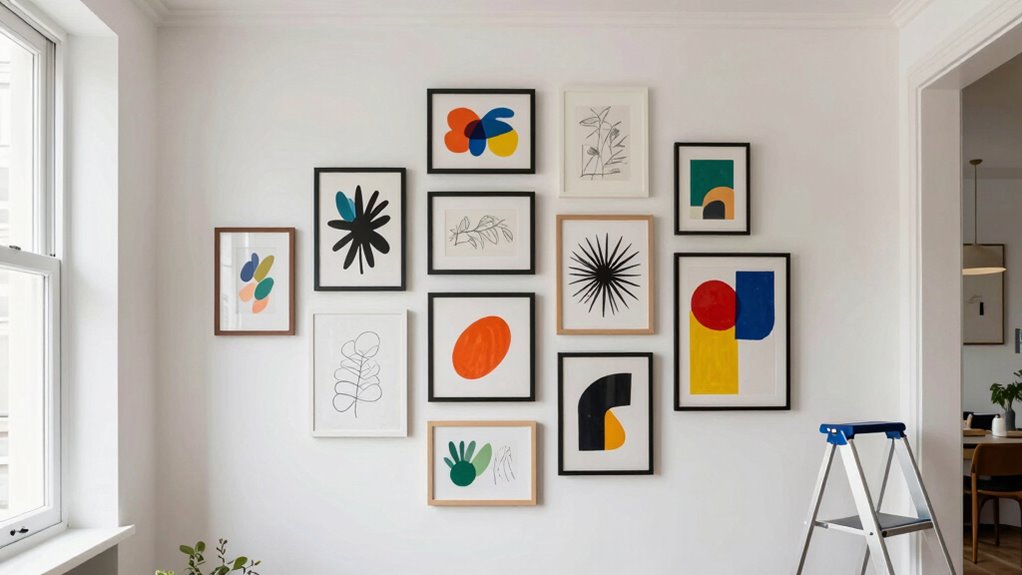
Choosing artwork that fits your space is only part of creating a flexible collection; selecting the right frames enhances that adaptability. Opt for simple, neutral framing materials like lightweight metal or sleek wood, which complement various art styles and are easy to swap out as your tastes evolve. Consider frames that are versatile in size and style, so they can adapt to different artworks without requiring extensive adjustments. Incorporate gallery lighting options that highlight your pieces without overwhelming them, making your art stand out regardless of frame choice. When selecting artwork, stick to pieces that can seamlessly transition between different settings, such as abstract prints or classic photographs. This approach guarantees your collection remains adaptable, whether you’re in a small apartment or a larger home. Additionally, researching trusted precious metal IRA providers can inform your investment choices, ensuring your collection is both flexible and secure over time. To further enhance the versatility of your collection, consider art preservation techniques that protect your pieces while allowing easy rotation and display. Employing proper storage methods also helps maintain the condition of your artwork, making it easier to adapt your collection as your environment changes. Moreover, understanding art handling best practices ensures your pieces remain in pristine condition during rotation or relocation. Incorporating support Breakfast options, such as cozy cafes or breakfast spots near your new home, can make moving and settling in more enjoyable and comfortable.
Smart Ways to Store and Transport Your Art Pieces
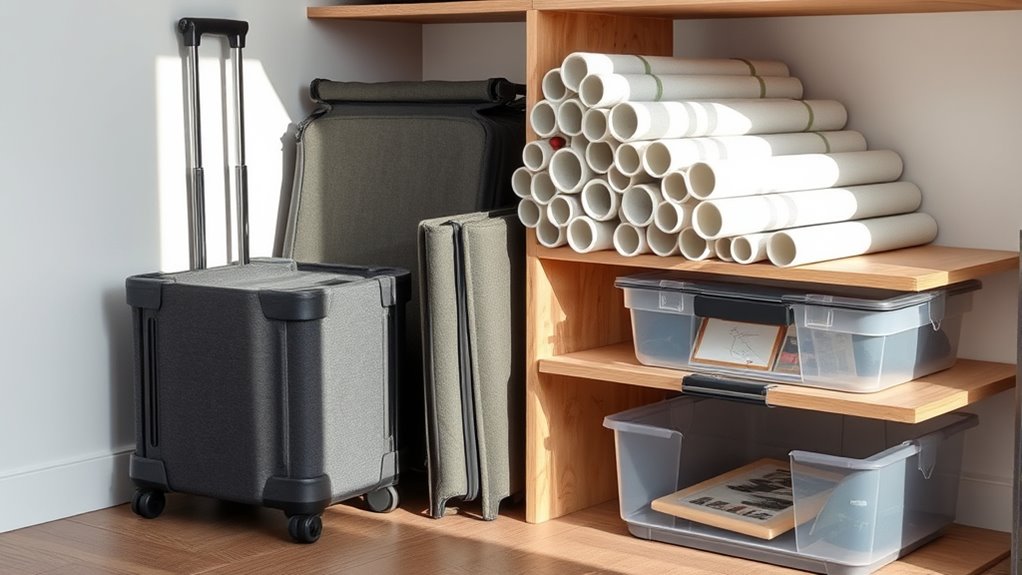
Properly storing and transporting your art pieces is essential to preserving their condition and ensuring they arrive intact. Use smart storage solutions like acid-free tissue, bubble wrap, and sturdy art crates to protect your pieces during transit. Incorporate Free Floating storage techniques to maximize space and prevent damage. When selecting storage options, consider climate control and secure shelving to prevent damage from humidity or accidents. Transportation tips include always carrying fragile artwork in your vehicle rather than shipping it via courier, and using corner protectors and padding for extra safety. Label boxes clearly and keep a record of your collection to avoid confusion. If you’re moving frequently, invest in lightweight, stackable storage containers and modular packing materials that adapt to different spaces. Additionally, understanding European cloud innovation can help you access reliable and secure storage solutions for your digital art records and documentation. Embracing self-sufficiency in your storage methods can further safeguard your collection against unforeseen issues. Implementing digital inventory management can streamline tracking and reduce the risk of loss or mix-up. These strategies help maintain your art’s integrity and make the move smoother.
How to Build a Collection That Grows With You
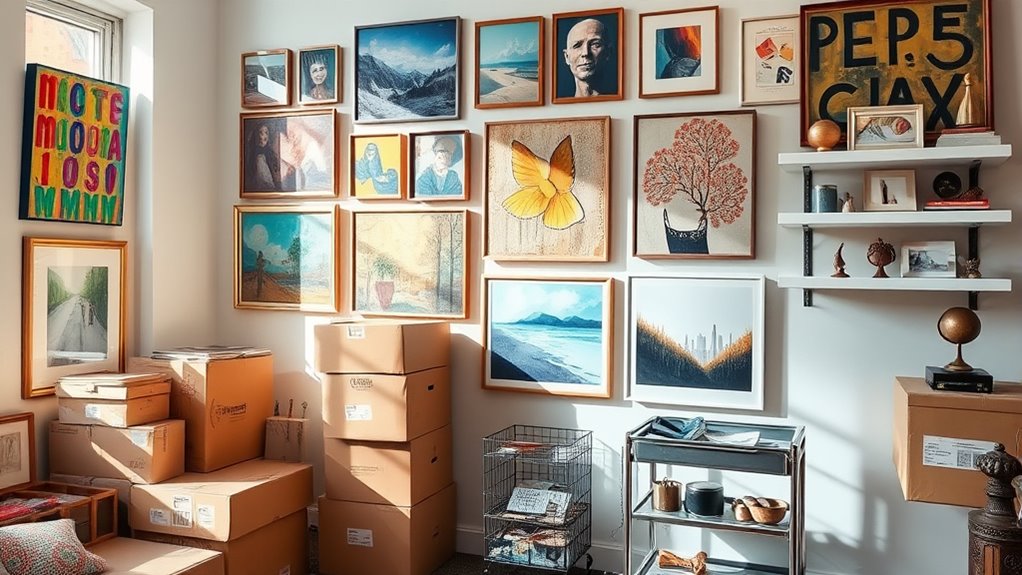
Building a collection that evolves with your tastes and space requires thoughtful planning. Start by selecting versatile pieces that resonate with you now but can also adapt as your style shifts. Embrace creative storytelling to make your collection more meaningful and personal. Use effective storage solutions to keep your art protected and accessible, making it easy to rotate pieces when you want a fresh look. Incorporate smart display techniques, such as adjustable frames or modular shelving, to showcase your collection dynamically. This flexibility allows your collection to grow naturally over time without feeling cluttered or stagnant. Focus on quality over quantity, investing in pieces that speak to you and can be integrated seamlessly into different spaces.
Tips to Keep Your Art Safe During Moves
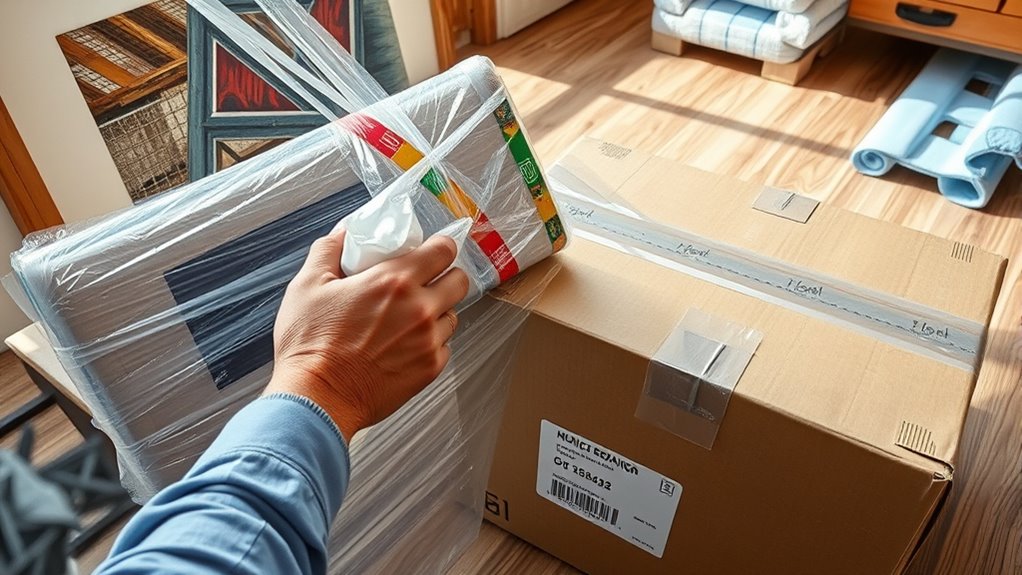
Moving your art can be stressful, but taking careful precautions guarantees it arrives intact. Handling fragile artwork requires extra attention—wrap pieces in bubble wrap or packing paper, and use sturdy boxes with padding. Label boxes clearly as fragile so movers handle them with care. Utilizing climate-controlled containers such as specialized climate-controlled containers can further protect sensitive pieces during transit. Securing paintings and sculptures to prevent shifting during transport is also crucial to avoid damage. Additionally, consider insurance considerations; make sure your art is covered during the move to protect against loss or damage. Document your collection with photos and appraisals, so you have records in case of damage. Developing a quality assurance plan for your art transport can help ensure all procedures are properly followed. Hiring professional movers experienced with art transport can make a significant difference.
Frequently Asked Questions
How Can I Find Affordable Art That’s Easy to Transport?
You can find affordable, easy-to-transport art through digital galleries or art rental programs. Digital galleries offer a wide range of affordable prints that are lightweight and easy to ship, making them perfect for frequent movers.
Art rental programs let you enjoy original or high-quality reproductions without the hassle of ownership, and you can swap pieces often. Both options keep your collection fresh, budget-friendly, and portable.
What Types of Art Are Best for Small Spaces?
For small spaces, opt for minimalist decor and wall-mounted sculptures. These pieces add visual interest without overwhelming the room.
Choose compact artwork, like small paintings or photos, that fit easily on your walls.
Wall-mounted sculptures are perfect because they save floor space and create a modern vibe.
Keep the area uncluttered by selecting versatile, lightweight pieces that reflect your style and make your space feel open and inviting.
How Do I Authenticate Art Pieces When Buying on the Go?
When buying art on the go, you should prioritize art appraisal and provenance research to verify authenticity.
Ask sellers for certificates of authenticity and detailed provenance documents.
Conduct quick online searches or consult with experts if possible.
Trust reputable sources and avoid deals that seem too good to be true.
This way, you protect your investment and build a genuine collection, even when you move frequently.
Are There Specific Art Styles That Suit Frequent Movers?
Yes, opting for portable artwork and minimalist styles suits your frequent moves. These art pieces are lightweight, easy to pack, and don’t overwhelm small spaces, making them perfect for your lifestyle.
Minimalist art also offers versatility, blending seamlessly into various environments without clashing with decor. By focusing on these styles, you can effortlessly refresh your space with new pieces without hassle, ensuring your collection stays manageable and stylish wherever you go.
How Can I Efficiently Organize My Art Inventory?
To efficiently organize your art inventory, focus on streamlined art storage solutions like stackable boxes or flat portfolios.
Use inventory management tools such as spreadsheets or apps to track each piece’s details, including location and condition.
Regularly update your records after moves, and label storage containers clearly.
This approach helps you quickly locate your art and manage your collection, even as you move frequently.
Conclusion
Starting an art collection when you move often is totally doable. Focus on lightweight, portable pieces, choose versatile frames, and pack smart for each move. Build your collection gradually, selecting art that truly speaks to you and can adapt as your tastes evolve. Keep safety in mind during transport, and don’t rush—your collection will grow over time. With these tips, you’ll enjoy collecting art no matter how frequently you move.