

To buy art as a gift without guessing wrong, start by understanding their preferred styles, themes, and colors through their collections or conversations. Assess their space to choose appropriately sized pieces and consider their décor to make sure harmony. Set a realistic budget, including framing and shipping, and decide if they’d prefer original artwork or prints. When in doubt, consult art experts or galleries—continuing down this path will help you select a truly meaningful gift.
Key Takeaways
- Research the recipient’s artistic preferences, preferred styles, themes, and favorite colors to select a meaningful piece.
- Measure available space and consider their home décor to choose appropriately sized and styled artwork.
- Set a clear budget, including framing and shipping costs, to find suitable options within your financial limits.
- Consult art experts or gallery professionals for authenticity, valuation, and personalized recommendations.
- Opt for versatile formats like prints or reproductions if uncertain, and include personalized notes for added thoughtfulness.
How to Understand Their Personal Art Style

To choose art that truly resonates, you need to understand their personal style. Observing their art collector habits reveals a lot—do they prefer contemporary pieces, classic works, or experimental styles? A good starting point is to consider whether they favor the intricate craftsmanship and luxurious fabrics associated with haute couture, which can influence their taste in art and appreciation for detailed, luxurious elements in a piece. Pay attention to the art trends they follow or purchase, as emerging art trends often reflect evolving tastes. Notice the colors they gravitate toward and the themes they connect with, whether it’s abstract, landscape, or minimalist art. Check their existing collection for patterns: do they favor bold statements or subtle nuances? Engaging with what excites them artistically helps you identify their aesthetic preferences. Additionally, exploring gelato flavors they enjoy or seasonal preferences can offer subtle clues about their taste preferences beyond visual art. Recognizing their cultural interests can also guide you toward artworks related to their heritage or favorite artistic movements. Understanding their personal artistic preferences can further refine your gift choices, ensuring a meaningful and appreciated piece. Being aware of their investment habits, especially if they are passionate about collecting, can help you select pieces that will appreciate over time and align with their investment approach.
What to Consider About Their Living Space for Art
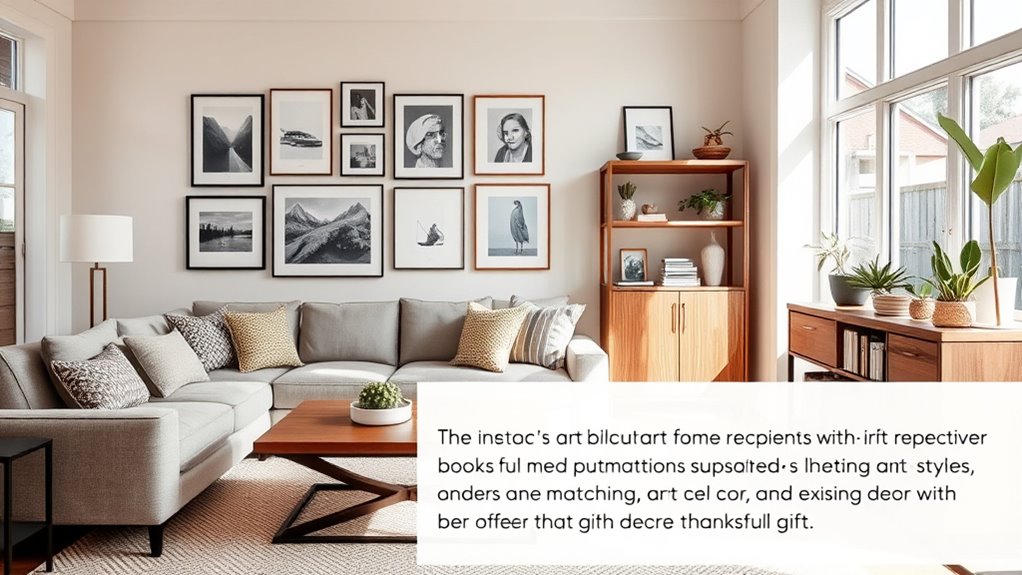
Considering their living space is essential when choosing art as a gift, as the environment influences what’ll fit and look great. Pay attention to furniture placement—will the artwork complement existing furniture, or will it clash? Measure the available wall space to guarantee the piece isn’t too large or too small. Additionally, take into account the energy efficiency of the home—opting for art that aligns with a sustainable lifestyle can make your gift even more meaningful. Notice if the walls are clear or crowded, and consider the height at which art is typically hung. Look for areas with good lighting or potential for added illumination. If they’ve a small space, opt for smaller, impactful pieces that won’t overwhelm. In larger rooms, you can consider statement art or multiple pieces. Being mindful of these factors helps you select art that enhances their space and feels thoughtfully chosen. Considering interior design style can also help ensure the artwork matches their aesthetic preferences and existing décor. Additionally, understanding their home environment can guide you toward art that suits both the space and their lifestyle. For example, incorporating art with natural elements can complement homes with a biophilic design, creating a harmonious atmosphere. Furthermore, thinking about the home’s lighting conditions can influence the choice of art, as certain pieces may look better under specific lighting.
How to Set and Stick to Your Art Budget

Establishing a clear budget helps you narrow down options and avoid overspending when choosing art as a gift. Begin by defining a realistic price range based on your finances, and consider different pricing strategies, like setting maximum limits or allocating a percentage of your total gift budget. Understanding your budget constraints can help you make more informed choices and prevent financial strain. Be mindful of additional costs, such as framing or shipping, which can add up. To protect your investment, consider art insurance, especially for high-value pieces, ensuring you’re covered against damage or loss. Staying disciplined with your budget means resisting impulse buys and focusing on pieces that truly fit your financial plan. Keep track of your spending throughout the process to avoid surprises, and remember that thoughtful, affordable art can be just as meaningful as more expensive options. Additionally, comparing art prices across different sources can help you identify the best deals within your set budget. Understanding your credit score can help you better manage your overall finances, ensuring you stay within your budget and avoid unnecessary financial strain. Additionally, researching art price ranges can give you a better idea of what to expect for different types of artwork within your set budget.
Exploring Different Art Mediums and Styles

Exploring different art mediums and styles opens up a world of options, allowing you to find pieces that truly resonate with the recipient’s tastes. Mixed media art combines various materials like paint, fabric, and found objects, creating rich textures and depth that appeal to those who appreciate tactile complexity. Limited-edition artwork offers a unique opportunity to gift something exclusive and museum-quality that stands out. Abstract art, on the other hand, emphasizes emotion and interpretation over realism, perfect for someone who prefers open-ended, thought-provoking pieces. By understanding these styles, you can select artwork that aligns with their personality and preferences, especially considering how artistic expression reflects individual tastes. Exploring subject-specific assistance broadens your perspective, helping you recognize what might suit their decor or personal style. This exploration guarantees your gift feels thoughtful and tailored, avoiding the mismatch of choosing art that doesn’t connect with their aesthetic sensibilities.
Picking Colors and Themes They Love

Choosing colors and themes your recipient loves is essential for guaranteeing your art gift feels personal and meaningful. Understanding color psychology can guide you in selecting hues that evoke the right emotions—calming blues, energizing reds, or cheerful yellows. Incorporating flavorful appetizers or other thematic elements can also enhance the personal connection of your gift. Consider art symbolism too; certain motifs or themes may hold special significance or resonate with their personality. For example, nature scenes might symbolize peace, while abstract designs reflect creativity. Pay attention to their existing decor or favorite color schemes to assure your choice complements their space. Additionally, knowing about sticking wall decor methods can help you select art that is easy to hang and secure, ensuring it stays beautiful over time. Exploring support breakfast options can inspire you to choose art that includes culturally or religiously significant symbols if appropriate. Researching electric bike conversion kits and their features can also provide unique inspiration for personalized gifts, especially if your recipient is passionate about cycling or outdoor activities. By focusing on these elements, you create an art piece that not only looks beautiful but also connects on a deeper level, making your gift both thoughtful and memorable.
How to Find Out Their Favorite Artists and Movements

Once you’ve considered colors and themes that resonate with your recipient, the next step is discovering their favorite artists and artistic movements. To do this, explore art history and collector profiles, which reveal tastes and preferences. You can look at their social media, museum visits, or past purchases for clues. Visualize this with a table:
| Artistic Movement | Notable Artists |
|---|---|
| Impressionism | Monet, Degas |
| Modern Abstract | Kandinsky, Pollock |
| Surrealism | Dalí, Magritte |
| Pop Art | Warhol, Lichtenstein |
This table helps you imagine their preferred styles and guides you in selecting pieces aligned with their passions. Knowing their favorite artists and movements ensures your gift feels personal and well-informed, rooted in understanding collector profiles and art history.
Should Your Gift Be Decorative or a Good Investment?
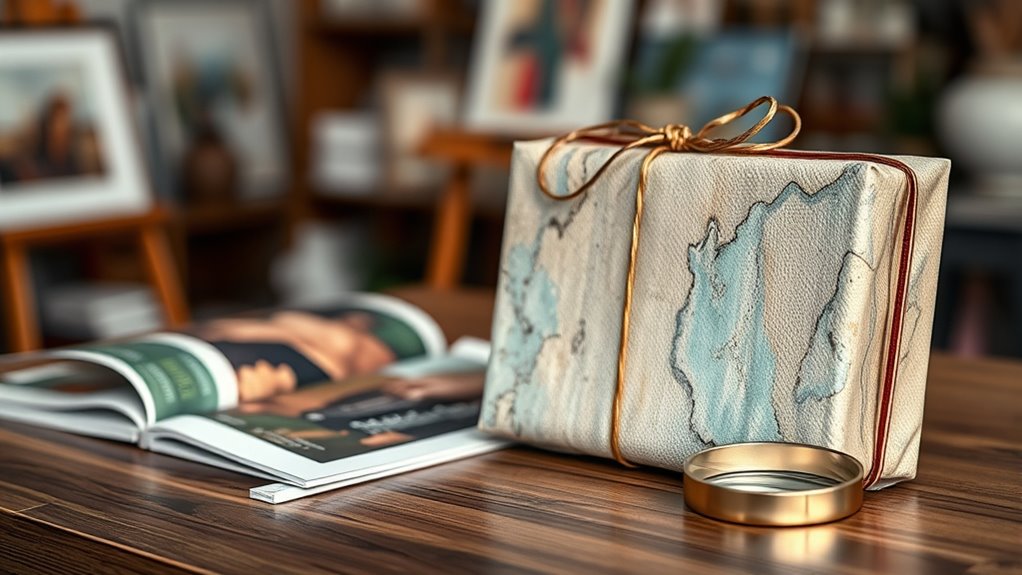
Deciding whether your art gift should be decorative or a good investment depends on your recipient’s priorities and your own intentions. If they value aesthetic appeal and want something to enhance their space immediately, focus on art with strong decorative appeal. These pieces add beauty and personality to their home or office, providing instant gratification. A piece with potential for appreciation might be more suitable if they are interested in future resale value and financial growth. Additionally, understanding art investment fundamentals can help in selecting pieces that are more likely to appreciate over time. Knowing art market trends can also inform your choices and help identify pieces with better investment prospects. Furthermore, familiarizing yourself with art valuation methods can assist in making informed decisions about the worth of a piece. Understanding the art market can also help you gauge the overall demand and rarity of certain pieces, which influences their investment potential.
On the other hand, if your goal is to offer a gift that might appreciate in value over time, consider art investment. Such pieces tend to be more carefully selected with future resale potential in mind.
Keep in mind that not all art makes a good investment, so research artists, trends, and provenance.
Ultimately, understanding whether your gift should serve as a visual delight or a financial asset helps you choose wisely.
Which Format Works Best: Original, Prints, or Reproductions?

When selecting the best format for your art gift, consider how your recipient will appreciate and use the piece. Originals are ideal if they value unique, one-of-a-kind artwork and have the space to display it proudly.
Choose the right format based on your recipient’s appreciation and display space for a truly personalized art gift.
Prints and reproductions offer affordability and versatility, making them great for more casual or decorative settings.
Digital art is perfect if your recipient prefers modern, easily shareable pieces or wants to access art regularly through art subscriptions.
Reproductions can also be reproduced in various formats, allowing for customization.
Think about their taste, lifestyle, and how they engage with art. If they love trying new styles, subscriptions that deliver digital art might be the best fit.
Choosing the right format ensures your gift feels personal and well-suited to their preferences.
How to Present or Frame the Gift Thoughtfully

Presenting your art gift thoughtfully can make a lasting impression and show how much you care. Consider elegant gift wrapping that complements the artwork’s style—this elevates the gift and adds a personal touch. Including a personalized note expresses your thoughtfulness and explains why you chose this piece. Choose a note that’s heartfelt but concise, emphasizing the recipient’s taste and your intention behind the gift. When it comes to framing, opt for a style that suits their space and decor, ensuring it enhances rather than overwhelms the artwork. Use the table below as a quick guide:
| Gift Wrapping Style | Personalized Notes | Framing Tips |
|---|---|---|
| Simple & Elegant | Heartfelt & Specific | Match decor & artwork style |
| Color Coordinated | Share your thoughts or memories | Clear & high-quality |
| Minimalist | Express your appreciation | Neutral frame, versatile |
Thoughtful presentation truly makes your gift memorable.
When to Ask Art Experts or Gallery Professionals for Help

If you’re unsure about the best artwork to choose or how to assess its value, consulting art experts or gallery professionals can provide valuable guidance. They excel in art valuation, helping you determine a piece’s worth and significance.
Additionally, they can assist with provenance verification, ensuring the artwork’s history and authenticity are legitimate. Knowing when to seek expert advice is vital, especially for high-value or rare pieces.
Verifying provenance ensures the artwork’s history and authenticity are legitimate, especially for high-value or rare pieces.
Experts can also advise on identifying pieces that match your recipient’s taste and collecting interests. Engaging with professionals minimizes the risk of buying a forgery or an undervalued work.
Ultimately, their insights help you make an informed, confident purchase, ensuring your gift is both meaningful and authentic.
Frequently Asked Questions
How Can I Identify Their Preferred Art Era or Historical Period?
To identify their preferred art era or historical period, observe their existing art collection strategies and the pieces they gravitate toward. Pay attention to their favorite styles, colors, or artists, which can reveal historical art influences.
You can also ask subtle questions about their interests or look at their social media for clues. This approach helps you select art that aligns with their tastes, making your gift meaningful and well-received.
What Are Subtle Ways to Discover Their Favorite Art Themes?
You can discover their favorite art themes subtly by paying attention to their color preferences in home decor and noticing which framing styles they prefer.
Observe the artwork they already display or comment on, and ask casual questions about their favorite colors or styles. These hints reveal themes they resonate with, helping you select art that aligns with their taste and complements their existing collection effortlessly.
How Do I Gauge Their Openness to Modern or Abstract Art?
You can gauge their openness to modern or abstract art by observing their existing art collection or decor style. If they display contemporary pieces or bold, unconventional art, they likely appreciate modern or abstract art.
Engage them in conversations about art investment, noting their enthusiasm for innovative styles. This approach helps you choose a gift that complements their taste, making it a meaningful addition to their collection without second-guessing your choice.
What Signs Indicate They Prefer Collectible Art Over Decorative Pieces?
If they prefer collectible art over decorative pieces, look for art preference signals like their interest in limited editions, artist signatures, or investment-grade works.
Signs include discussing art as an investment, attending galleries, or owning pieces by renowned artists. They may also have a curated collection or talk about art history.
Recognizing these art preference signals helps you choose a meaningful, collectible piece that aligns with their taste.
How Can I Determine if They Favor Local Artists or International Ones?
You can determine if they favor local or international artists by observing their art preferences and conversations. During your research, look for clues like mentions of local galleries or international exhibitions.
Follow art buying etiquette by asking subtle questions or seeking advice from close friends. When presenting the gift, use thoughtful gift presentation tips, such as framing or personalized notes, to show your effort and enhance the art’s significance, regardless of origin.
Conclusion
Buying art as a gift can be rewarding when you consider their style, space, and preferences. By exploring different mediums and sticking to your budget, you guarantee your gift feels personal and meaningful. Don’t hesitate to seek advice from art professionals, and always present your gift thoughtfully. With a bit of research and care, you’ll pick a piece they’ll cherish and enjoy for years to come. Happy gifting!