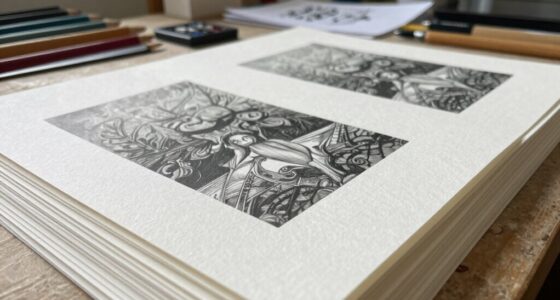

Prints are mechanically reproduced copies, often offered in editions, which makes them less unique and usually more affordable. Paintings are handcrafted, with each piece reflecting the artist’s personal touch, making them typically more valuable and exclusive. Material quality and authenticity also impact pricing, while market perception and licensing add further differences. If you want to understand how these factors influence what you pay, exploring below will reveal the true distinctions.
Key Takeaways
- Prints are mechanically reproduced, allowing multiple copies, while paintings are unique, handcrafted artworks with one-of-a-kind qualities.
- Production costs for prints are generally lower, but quality depends on printing techniques and materials; paintings involve higher labor and material expenses.
- Limited editions and signatures increase print value and authenticity; original paintings’ value is driven by artist reputation and uniqueness.
- Prints often have a lower price point due to mass reproduction, whereas paintings typically command higher prices reflecting their originality.
- Market perception, artist reputation, and authenticity significantly influence the pricing differences between prints and paintings.
How Are Prints and Paintings Made Differently
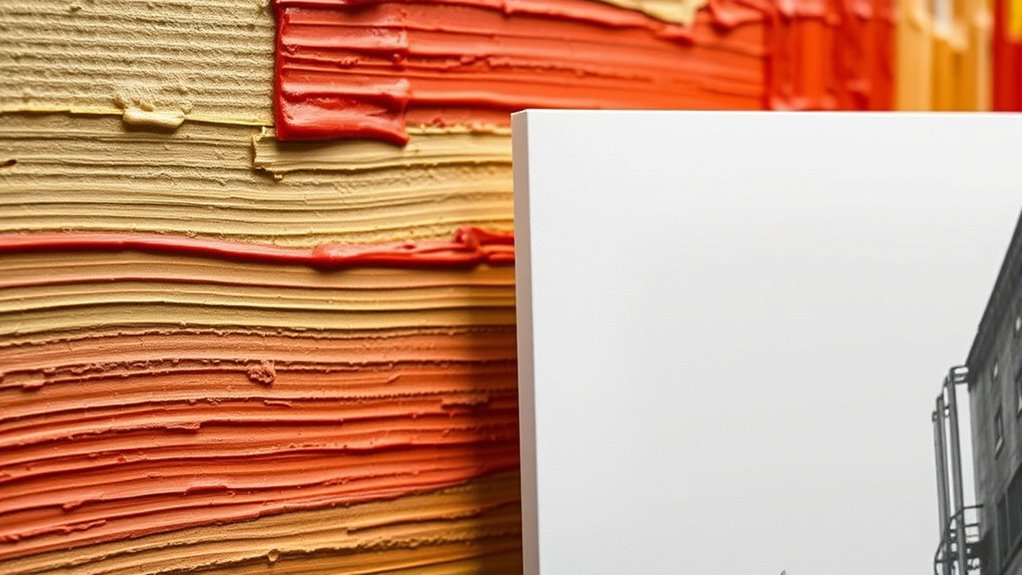
While both prints and paintings serve as ways to reproduce art, they’re created through fundamentally different processes. A print reproduction involves transferring an image onto paper or other materials using techniques like lithography, screen printing, or digital printing. Support Breakfast This process allows for multiple copies of the same artwork, with each print closely matching the original. In contrast, a painting results from an artist’s unique artistic process, applying paints directly onto a canvas or surface. Each painting is one-of-a-kind, reflecting the artist’s brushstrokes, techniques, and personal touch. The key difference lies in production: prints are mechanically reproduced, emphasizing replication, while paintings are handcrafted, emphasizing originality and artistic expression. Understanding the artistic process behind each method helps clarify why prices differ between prints and original artworks, especially considering artistic value and uniqueness.
What Materials Drive Costs and Quality in Art
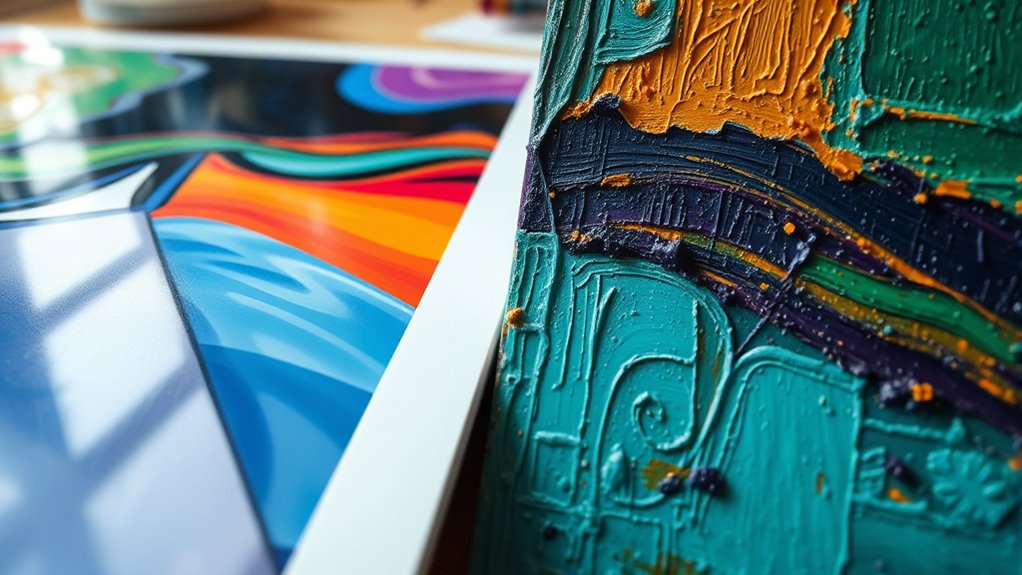
The materials used in creating art considerably influence both its cost and quality. For prints, digital reproduction quality depends on the resolution and printing techniques, which can affect both appearance and price. Higher-quality inks and archival papers increase durability and value but also raise costs. Additionally, understanding the benefits of curiosity can help buyers appreciate the nuances of material choices and their impact on artistic expression. When it comes to paintings, the type of canvas or panel and the quality of paints substantially impact the final piece. Using floating on water techniques can create unique visual effects that add to a painting’s appeal. Employing analytical thinking to compare different materials enables artists and buyers to make more informed decisions. Considering the cultural significance of certain materials can also influence both aesthetic choices and perceived value. Moreover, material selection plays a vital role in determining the longevity and preservation of artworks over time. Framing options also play a critical role; choosing elaborate frames or custom framing can elevate a piece’s presentation but add to the overall expense.
How Edition Size, Signatures, and Authenticity Affect Price

Edition size, signatures, and authenticity are key factors that directly influence the value of art. When it comes to print pricing, edition exclusivity plays a major role—limited editions are often more valuable because they’re rarer. A cryptid sighting can sometimes increase the popularity and value of related artwork or memorabilia. Signed pieces also command higher prices since signatures add a layer of authenticity and personal connection to the artist. For paintings, authenticity is vital; a verified original holds considerably more value than a reproduction. The artist’s reputation further impacts pricing—well-known artists can command higher prices regardless of edition size or signatures. Additionally, art authentication processes help verify the legitimacy of a piece, ensuring buyers receive genuine works. The certification process also often involves detailed documentation that reassures buyers about provenance and authenticity. Understanding the authentication process can provide buyers with added confidence in their purchases. Moreover, art valuation techniques are used by experts to assess the worth of both prints and original paintings based on these factors. In both print and painting markets, these elements combine to shape perceived worth, making rarity, verification, and reputation essential considerations when assessing art value.
Why Market Perception Shapes the Value of Prints and Paintings
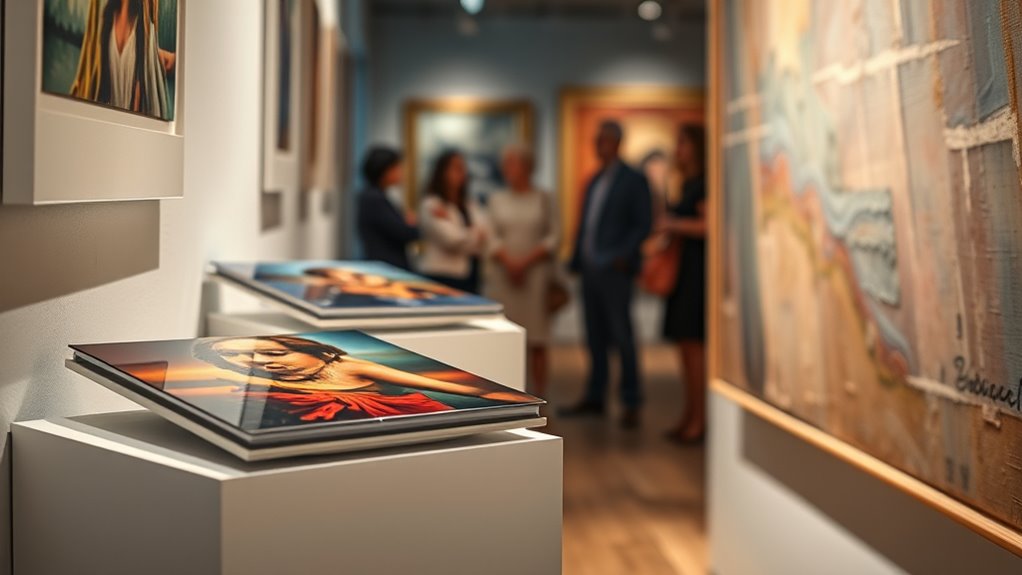
Market perception plays a pivotal role in determining the value of prints and paintings because buyers’ opinions and beliefs influence demand and pricing. Art collector psychology drives how people perceive an artwork’s worth, often based on reputation, rarity, or emotional connection. A piece’s popularity among collectors can significantly elevate its market value regardless of its physical attributes. Understanding the influence of market trends helps explain fluctuations in artwork prices over time. Historical valuation trends show that certain artists or styles gain or lose popularity over time, impacting market value. When a piece is seen as culturally significant or linked to a renowned artist, its perceived value increases regardless of its physical attributes. Additionally, the brand reputation of an artist or gallery can greatly influence the perceived worth of an artwork. External factors such as economic conditions or cultural shifts can also sway art prices, highlighting the importance of market sentiment in valuation. Conversely, lesser-known works may be undervalued despite quality. Recognizing the importance of energyLast in market dynamics helps clarify how external factors can sway art valuation. Your understanding of these perceptions helps you grasp why some prints or paintings command higher prices, emphasizing that market confidence and collective beliefs shape an artwork’s true worth much more than the art itself.
How Rights and Licensing Impact Art Pricing
When it comes to determining the value of prints and paintings, rights and licensing play a significant role in shaping their prices. Copyright implications influence how much you can sell or reproduce an artwork, affecting its overall worth. Licensing agreements specify how you can use or reproduce the piece, impacting its potential revenue streams. Additionally, understanding the evolution of portable restrooms can provide insight into how innovative solutions and design improvements have influenced industry standards and pricing models over time. Recognizing how creative storytelling enhances artistic branding can also influence the perceived value of art in the marketplace. If an artist retains full rights, their work might command a higher price due to exclusivity. Conversely, licensing restrictions can reduce an artwork’s value if it limits reproduction or commercial use. Licensing fees often add to production costs, which are reflected in the price. Moreover, ceiling fan efficiency can impact the overall cost of a product, influencing consumer perceptions of value and energy savings. Understanding these legal considerations, including copyright management, helps you gauge the true value of art, whether you’re buying, selling, or creating.
A deeper awareness of art market dynamics can further inform pricing strategies and valuation methods in the industry.
Frequently Asked Questions
How Do Artist Reputation and Fame Influence Print Versus Painting Prices?
Your artist reputation and market influence considerably impact both print and painting prices. When you’re well-known, collectors and buyers place higher value on your work, allowing you to command premium prices.
Reputation enhances perceived rarity and desirability, which boosts prices across formats. While original paintings often fetch higher prices due to their uniqueness, prints from reputable artists also see increased demand, reflecting your influence and status in the market.
What Role Does Provenance Play in Determining Artwork Value?
Provenance plays an essential role in determining artwork value because it provides authenticity verification through detailed provenance documentation. When you can trace an artwork’s history, ownership, and exhibition record, it boosts confidence in its legitimacy and rarity.
Buyers feel assured about investing in pieces with solid provenance, which can markedly increase the price. Without clear provenance, the artwork’s value drops due to doubts about its authenticity and origin.
Are There Specific Market Trends Affecting Print and Painting Prices Differently?
You’ll notice that market trends impact print and painting prices differently. Digital reproductions, for example, drive down print prices as they become more popular and accessible.
While paintings often retain or increase value due to their uniqueness. Custom framing adds to the cost of both, but collectors tend to invest more in original paintings.
Stay aware of these trends to make informed buying or selling decisions.
How Do Conservation and Framing Costs Impact Overall Artwork Pricing?
Conservation and framing costs substantially impact your overall artwork pricing. You need to take into account print quality, as higher quality prints often require more preservation efforts, raising costs.
Framing costs add to the final price, especially if you choose custom or high-end frames. These expenses ensure your artwork stays protected and looks professional, but they also increase the total price you pay or charge for your art pieces.
Can Limited Edition Prints Appreciate More Over Time Than Original Paintings?
Limited edition prints can appreciate more over time if they’ve high print scarcity and a small edition size. You should keep an eye on the artist’s reputation and demand, as these factors influence value.
Unlike original paintings, which are unique, limited editions can sometimes increase in worth if collectors see them as rare and desirable. So, choosing limited editions with smaller edition sizes might offer better investment potential.
Conclusion
Understanding the differences between print and painting pricing helps you make informed decisions. Prints are more affordable and mass-produced, while paintings often carry higher value due to their uniqueness and craftsmanship. Factors like materials, edition size, signatures, and market perception all influence their prices. By knowing what drives each price point, you can better appreciate the art’s worth and choose pieces that resonate with your budget and aesthetic preferences.