
Art Nouveau revolutionized design by emphasizing flowing, organic curves inspired by nature, moving away from rigid, industrial styles. It highlights handcrafted artistry, floral and natural motifs, and innovative materials like stained glass and wrought iron. Artists like Gaudí, Tiffany, and Mucha pushed boundaries with intricate patterns and elegant forms. This movement transformed architecture, jewelry, and furniture, leaving a lasting impact. If you want to explore how this design shift continues to influence artists today, there’s more to discover.
Key Takeaways
- Art Nouveau emphasizes flowing, organic curves inspired by nature, breaking away from rigid, geometric forms of traditional art.
- It incorporates floral, botanical, and animal motifs, celebrating natural beauty and harmony in design.
- The movement champions craftsmanship, detailed ornamentation, and innovative use of materials like stained glass and wrought iron.
- Architects and artists like Guimard and Tiffany revolutionized design with fluid lines and nature-inspired aesthetics.
- Art Nouveau’s global spread transformed architecture, furniture, jewelry, and graphic arts, influencing modern organic and decorative styles.
Where Did Art Nouveau Come From?
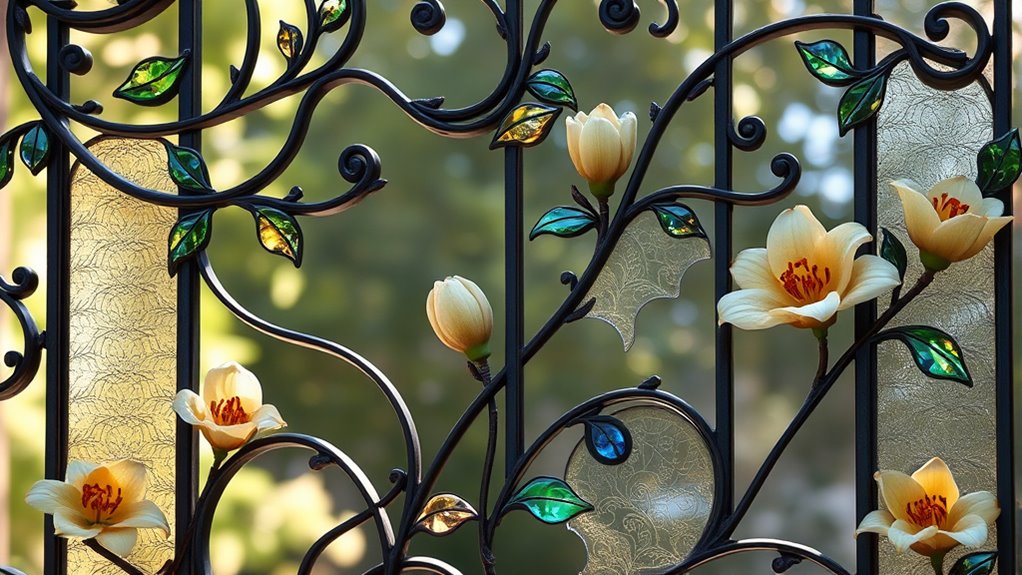
Art Nouveau emerged in the late 19th century as a response to the industrial revolution’s mass production and rigid styles. Its origins trace back to a desire to break away from traditional, academic art and embrace more organic, flowing designs. Cultural influences played a pivotal role, drawing inspiration from nature, Japanese ukiyo-e prints, and medieval decorative arts. You’ll notice how the movement incorporates natural forms—curving lines, floral motifs, and intricate patterns—reflecting a fascination with beauty in everyday life. Additionally, the movement’s emphasis on floating on water and fluidity mirrors its broader appreciation for natural, harmonious design. Artists and designers sought to create a unified aesthetic that blurred the boundaries between fine art and applied arts. This mix of cultural influences and a push for originality sparked the development of Art Nouveau as a distinct, revolutionary style. The emphasis on organic shapes and craftsmanship further distinguished it from previous artistic movements. Furthermore, the movement’s focus on handcrafted details emphasized the importance of individual artistry over industrial mass production.
What Are the Main Features of Art Nouveau?
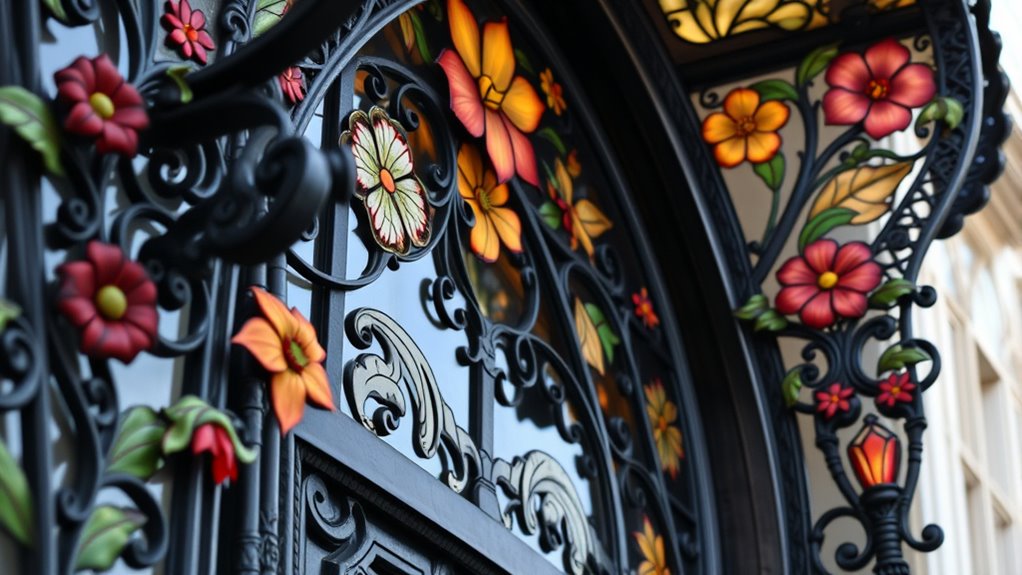
The main features of Art Nouveau reflect its desire to break free from traditional styles by emphasizing organic forms and decorative details. You’ll notice the use of flowing lines that mimic natural shapes, creating a sense of movement and harmony. This style often employs quality assessment to ensure the craftsmanship and intricate details are executed with precision. Decorative patterns often incorporate floral motifs, curving tendrils, and intricate details that appear inspired by nature’s forms. These patterns are integrated seamlessly into architecture, furniture, jewelry, and graphic design, giving each piece a unified, lively appearance. Art Nouveau rejects rigid symmetry and geometric shapes, favoring instead a more organic, free-flowing aesthetic. The emphasis on craftsmanship and artistic expression is also a hallmark, encouraging individuality and ornate beauty in every detail. Additionally, the use of natural inspiration is a defining characteristic, reflecting the style’s deep connection to the natural world and its emphasis on nature-inspired design. The innovative use of artistic materials contributed to its distinctive appearance and versatility, allowing artists to experiment with textures and finishes. These features make Art Nouveau distinct and instantly recognizable.
How Does Nature Inspire Art Nouveau?
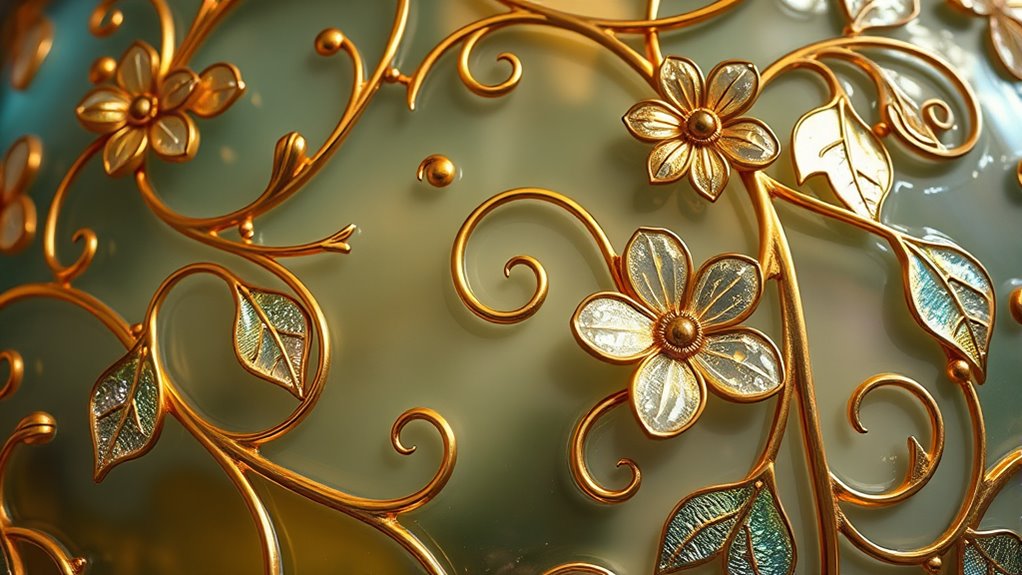
Nature serves as the primary source of inspiration for Art Nouveau, influencing its flowing lines, organic shapes, and intricate patterns. You’ll notice how botanical inspiration shapes the style, with leaves, flowers, and vines seamlessly blending into designs. These natural forms add a sense of movement and harmony, making each piece feel alive. Animal motifs also play a key role, with birds, insects, and other creatures woven into decorative elements. This connection to nature isn’t just aesthetic—it reflects a desire to break away from rigid, industrial forms and embrace the beauty of the natural world. By drawing on these organic and animal-inspired motifs, Art Nouveau creates a fluid, harmonious visual language that celebrates life’s natural diversity. Additionally, the incorporation of cybersecurity and ethical hacking principles in design ensures that such natural-inspired art remains protected in digital spaces, highlighting the importance of safeguarding creative works. Furthermore, embracing digital security measures allows artists to preserve their unique styles in the rapidly evolving online landscape, while understanding the history of the movement provides deeper appreciation of its cultural significance. Incorporating secure digital practices can also help prevent the unauthorized copying of these intricate designs online.
Who Were the Key Artists Behind Art Nouveau?
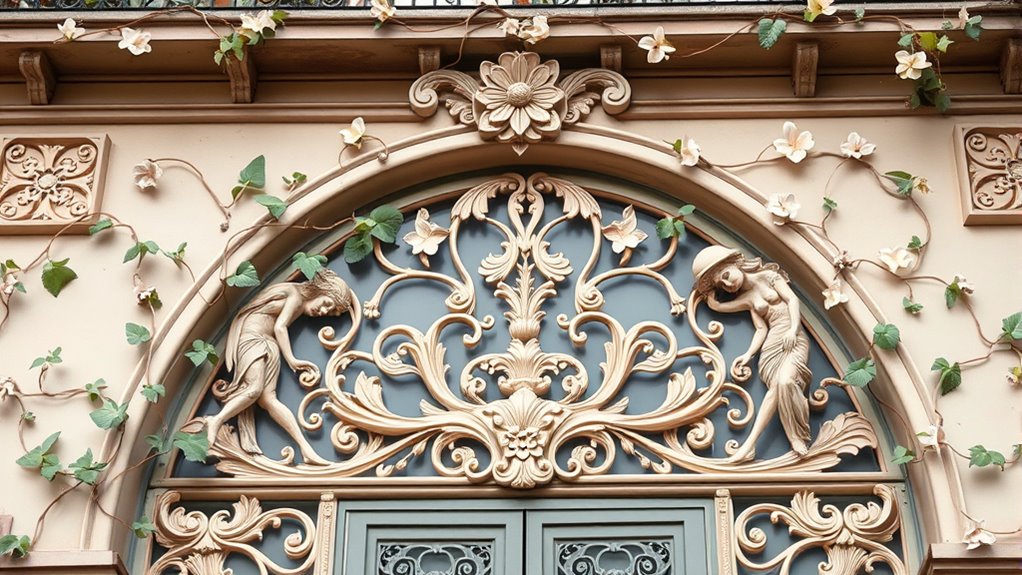
Who shaped the distinctive style of Art Nouveau? You’ll find that artists like Alphonse Mucha, Hector Guimard, and Louis Comfort Tiffany led the movement. Mucha’s art nouveau typography and decorative posters revolutionized graphic design, making him a household name. Guimard’s iconic Paris Métro entrances showcase his mastery of flowing lines and organic forms, influencing architecture and design. Tiffany’s stained glass windows and lamps highlight the natural motifs and craftsmanship central to the style. These artists didn’t just create art; they defined a cultural shift in art nouveau fashion, emphasizing elegance, curves, and nature-inspired details. Their innovative techniques and bold visions laid the groundwork for a revolutionary approach to design that still inspires today. Art Nouveau was characterized by its emphasis on natural forms and intricate craftsmanship, setting it apart from previous art movements. The movement’s focus on nature-inspired elements and handcrafted detail reflected a broader cultural shift towards beauty and artistry in everyday objects. Additionally, their work often combined artistic innovation with a focus on harmony between form and function, elevating everyday design to art.
What Are Iconic Art Nouveau Buildings?
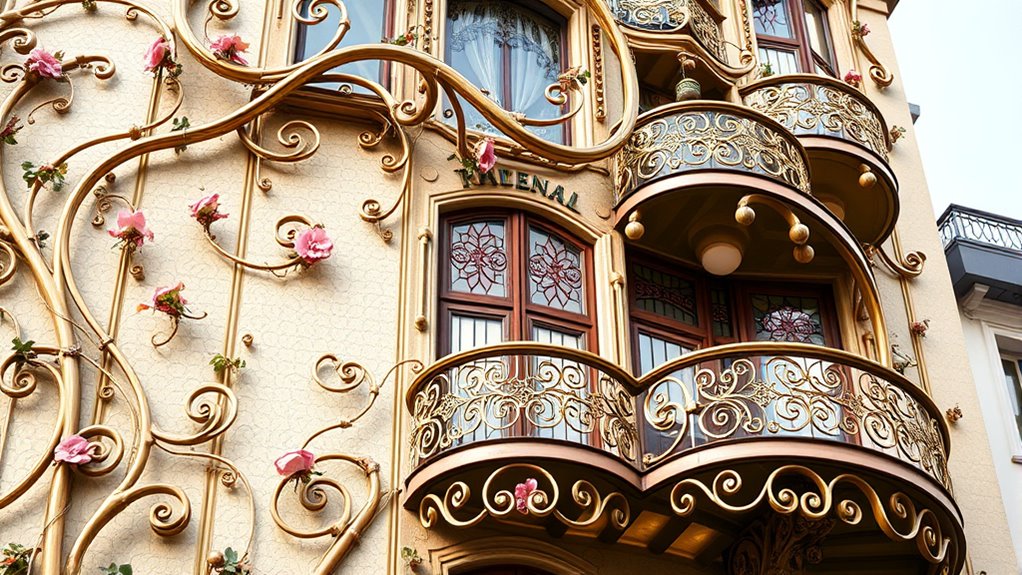
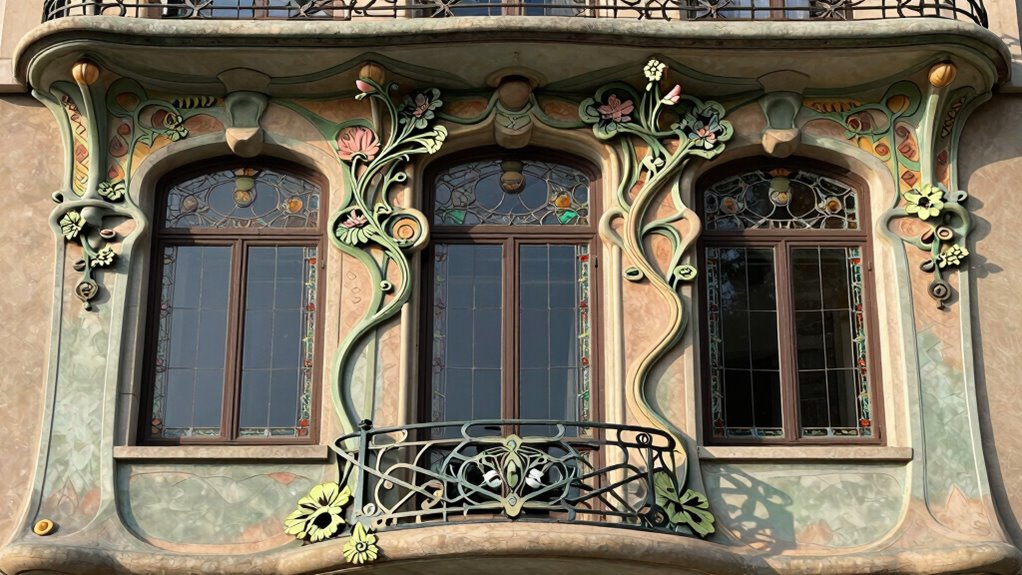
Some of the most recognizable Art Nouveau buildings showcase flowing lines, organic shapes, and intricate details that define the style. These structures exemplify ornamental architecture, where every element emphasizes beauty and craftsmanship. You’ll notice decorative facades that feature floral motifs, curvilinear forms, and elaborate ironwork, making the buildings stand out. Notable examples include the Parisian Hôtel Tassel by Victor Horta, renowned for its innovative design and decorative elements. In Belgium, Horta’s Maison du Peuple showcases a harmonious blend of form and function, with ornamental features that feel alive. These buildings don’t just serve as functional spaces; they’re masterpieces of artistic expression, capturing the essence of Art Nouveau’s emphasis on nature-inspired beauty and decorative detail. The use of Suprem fabric in interior design highlights how material innovation can complement the organic aesthetic of the style. Additionally, the integration of ornamental craftsmanship demonstrates how artisans contributed to the distinctive appearance of these structures. For example, the craftsmanship involved in creating decorative ironwork exemplifies the high level of skill required for these landmark designs.
How Did Art Nouveau Influence Jewelry and Furniture?
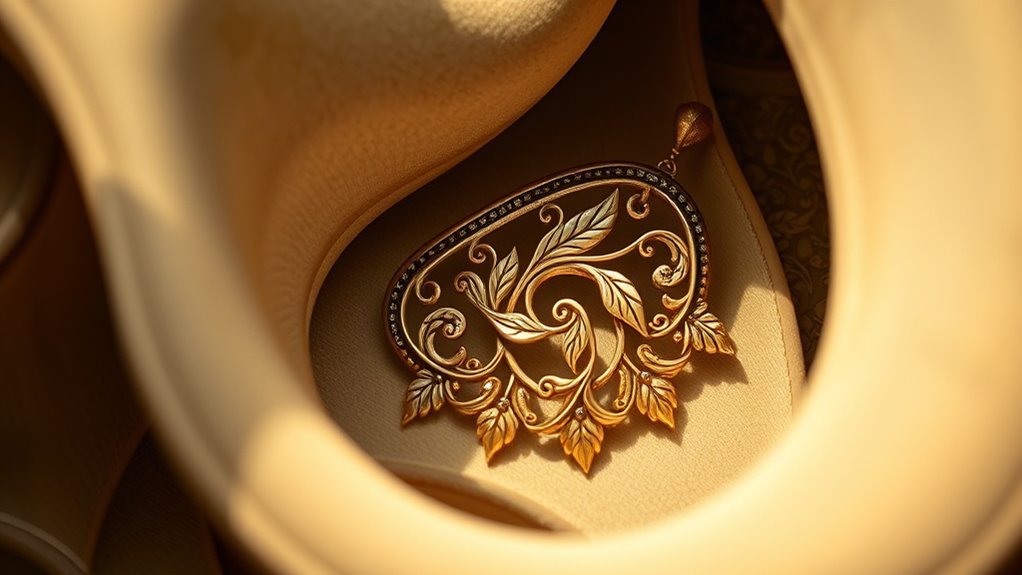
You can see how Art Nouveau’s flowing organic forms and nature-inspired motifs transformed jewelry and furniture into artful expressions. Artists focused on craftsmanship and used innovative materials to highlight intricate designs. This movement’s emphasis on natural beauty and quality craftsmanship still influences design today. Additionally, the movement’s reputation for trusted reputation and innovative techniques underscores its lasting impact on decorative arts. The use of artistic techniques contributed to its distinct aesthetic and enduring legacy. Furthermore, the movement’s focus on visual harmony and integration of art into everyday objects helped revolutionize design principles in the decorative arts. The incorporation of AI-driven platforms has further expanded the ways artists and designers explore innovative techniques today. Recognizing the movement’s influence on cultural heritage reveals how it continues to inspire contemporary creative practices.
Organic Forms and Motifs
Art Nouveau revolutionized jewelry and furniture by embracing organic forms and motifs inspired by nature. You’ll notice its signature flower patterns and flowing vegetal motifs, which create a seamless connection to the natural world. These designs often feature sinuous lines that mimic plant tendrils and curves found in leaves and blossoms. Instead of rigid geometric shapes, the movement favored fluid, dynamic shapes that evoke growth and vitality. Jewelry pieces incorporate intricate floral patterns, while furniture often showcases carved vines and floral embellishments. This approach transforms everyday objects into expressive works of art, celebrating nature’s beauty. Embracing artistic expression was essential to the movement, encouraging artists and designers to innovate beyond traditional styles. The use of organic forms was also a response to the industrial age, emphasizing craftsmanship and natural inspiration over mass production. Incorporating nature-inspired motifs allowed artisans to connect their work closely to the environment, fostering a sense of harmony. Additionally, the movement’s emphasis on design innovation helped bridge the gap between traditional craftsmanship and modern design principles.
Craftsmanship and Materials
The emphasis on organic forms and motifs in Art Nouveau extended beyond design into the craftsmanship and materials used for jewelry and furniture. Artists and artisans embraced innovative craftsmanship techniques, blending metalworking, glassblowing, and carving to create intricate, flowing designs. Material innovation played a key role, with designers experimenting with enamels, iridescent glass, and exotic woods. These advancements allowed for delicate details and seamless integration of natural themes. Here’s a glimpse of the materials and techniques:
| Material | Craftsmanship Technique | Notable Feature |
|---|---|---|
| Wrought Iron | Forging and chasing | Curvilinear forms |
| Opals | Setting and polishing | Play of color |
| Exotic Woods | Carving and veneering | Organic textures |
| Enamel | Enameling and firing | Vibrant, translucent hues |
| Glass | Blowing and etching | Iridescence |
How Did New Technologies Shape Art Nouveau?
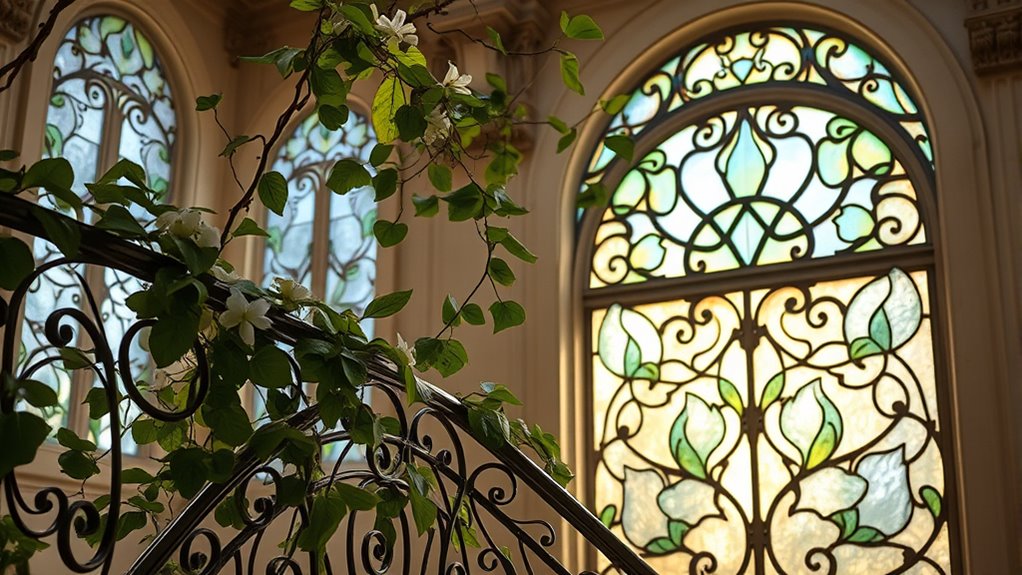
New technologies allowed artists to experiment with innovative materials, expanding what was possible in design.
Machinery and mass production made intricate Art Nouveau details more accessible and widespread.
As a result, the movement’s distinctive style reached a broader audience than ever before.
Innovative Materials Adoption
Innovative materials played a crucial role in shaping Art Nouveau by allowing artists and designers to experiment with new forms and textures. The advent of innovative materials like stained glass, wrought iron, and laminated wood gave artists fresh possibilities for creating flowing, organic shapes.
Modern manufacturing techniques made these materials more accessible and versatile, enabling intricate designs that emphasized craftsmanship and detail. You’ll notice how these materials helped move away from traditional, rigid forms, encouraging a sense of fluidity and natural inspiration.
The use of glass with vibrant colors or iron with elaborate curves became signature elements of the style. This adoption of new materials marked a significant shift, empowering creators to push artistic boundaries and redefine decorative art during the movement’s prime.
Machinery and Mass Production
How did machinery and mass production influence the development of Art Nouveau? You see, industrial machinery and mass production techniques revolutionized how objects were made. Art Nouveau artists embraced these new technologies to create intricate designs more efficiently.
With industrial machinery, they could produce decorative elements like ironwork, glassware, and ceramics with precision and consistency. Mass production techniques allowed for wider dissemination of their distinctive organic forms and flowing lines, making art accessible to a broader audience.
This shift also encouraged artists to experiment with new materials and methods, blending craftsmanship with industrial efficiency. As a result, Art Nouveau became a movement that celebrated both natural beauty and modern technological progress, shaping its unique aesthetic and making it a true design revolution.
How Did Art Nouveau Spread Across Europe?
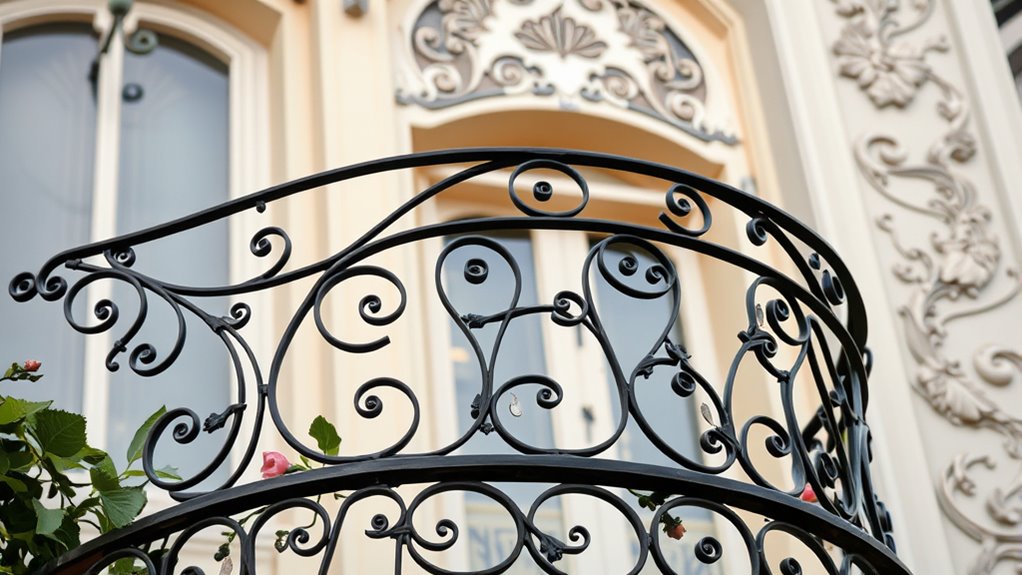
Art Nouveau spread across Europe primarily through a combination of international exhibitions, influential artists, and interconnected design movements. This cultural exchange facilitated artistic diffusion, allowing ideas and styles to travel swiftly between countries. You’ll notice how designers in France, Belgium, and Austria shared motifs, techniques, and philosophies, creating a cohesive movement. The table below highlights key factors that accelerated this spread:
| Factor | Description | Impact |
|---|---|---|
| International Exhibitions | Showcases like the 1900 Paris Expo | Increased visibility and interest |
| Influential Artists | Gaudí, Klimt, and Guimard | Inspired regional adaptations |
| Design Movements | Arts and Crafts, Jugendstil | Merged styles across borders |
| Cultural Exchange | Cross-border collaborations and travel | Facilitated ideas’ diffusion |
What Is Art Nouveau’s Lasting Impact on Design?
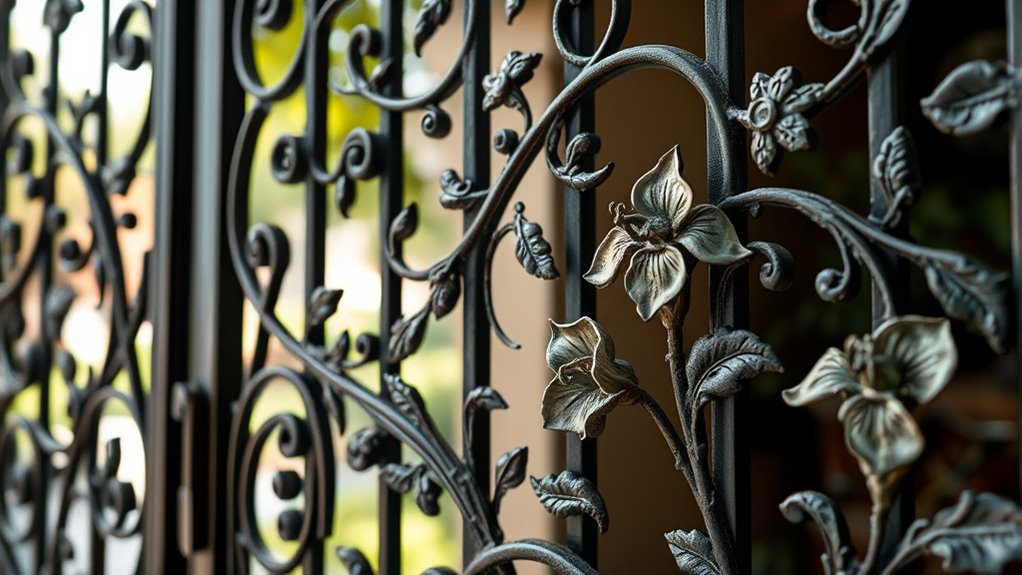
Art Nouveau’s lasting impact on design can be seen in how it transformed everyday objects and architectural spaces with organic forms, flowing lines, and intricate details. This movement pushed artistic innovation, inspiring new approaches to shape and ornamentation.
Its emphasis on nature and craftsmanship influenced furniture, jewelry, and graphic design, making beauty and function unite seamlessly. Culturally, Art Nouveau challenged traditional aesthetics and promoted a sense of modernity, shaping the visual language of the early 20th century.
You can see its influence today in contemporary design that values organic forms and detailed craftsmanship. Overall, Art Nouveau’s legacy endures through its bold integration of art into daily life, fostering a lasting appreciation for beauty rooted in nature and artistic expression.
Frequently Asked Questions
How Did Art Nouveau Influence Modern Graphic Design?
You see how Art Nouveau influences modern graphic design through its bold typography evolution and emphasis on organic, flowing forms. It encourages you to incorporate decorative elements and unique aesthetics into advertising, making visuals more mesmerizing.
This movement inspires you to blend art with function, creating memorable designs that prioritize beauty and creativity, shaping today’s branding and visual communication strategies.
What Cultural Movements Intersected With Art Nouveau?
You see that Art Nouveau intersected with various art movements like Symbolism and Arts and Crafts, shaping its emphasis on craftsmanship and nature.
Cultural influences such as Japonisme and the Celtic Revival also played a role, inspiring its organic forms and decorative details.
These cultural movements and art movements combined, helping Art Nouveau challenge traditional designs and promote a more expressive, innovative approach to art and architecture.
Are There Regional Variations Within Art Nouveau Style?
Yes, you’ll notice regional variations within Art Nouveau styles. These regional expressions incorporate local motifs and materials, reflecting cultural influences.
For example, France emphasizes elegant, flowing lines inspired by nature, while Belgium highlights intricate, decorative details. In Spain, you might see Moorish influences, and in Central Europe, a more ornate, historicist approach.
These differences make each regional style unique while maintaining the overall organic, curvilinear aesthetic.
How Did Art Nouveau Challenge Traditional Artistic Norms?
You see that art nouveau challenged traditional norms by breaking away from strict, classical forms and emphasizing decorative patterns and organic motifs.
It embraced flowing, curved lines inspired by nature, creating a sense of movement and harmony.
This revolutionary style prioritized aesthetics and individuality, encouraging artists to experiment with new materials and techniques.
What Role Did Women Artists Play in Art Nouveau?
You see that women artists played a vital role in Art Nouveau by challenging gender dynamics and pushing creative boundaries. Female innovators like Margaret Macdonald and Alphonse Mucha’s peers brought fresh perspectives, emphasizing femininity and nature in their work.
They actively contributed to the movement’s revolutionary style, breaking traditional norms and inspiring future generations of women in art. Their participation helped shape Art Nouveau’s distinctive, organic aesthetic.
Conclusion
You can see how Art Nouveau’s flowing lines and nature-inspired motifs transformed design across architecture, jewelry, and furniture. Its revolutionary approach broke away from traditional styles, inspiring future artists and designers. By embracing new technologies and global ideas, Art Nouveau left a lasting mark on the decorative arts. So, next time you notice elegant curves and organic forms, remember that this movement reshaped the way we experience beauty in everyday objects and spaces.