
TL;DR

Prime made for students and young adults
- Fast, free delivery for dorm and study essentials
- Prime Video and Amazon Music included
- Member-only deals
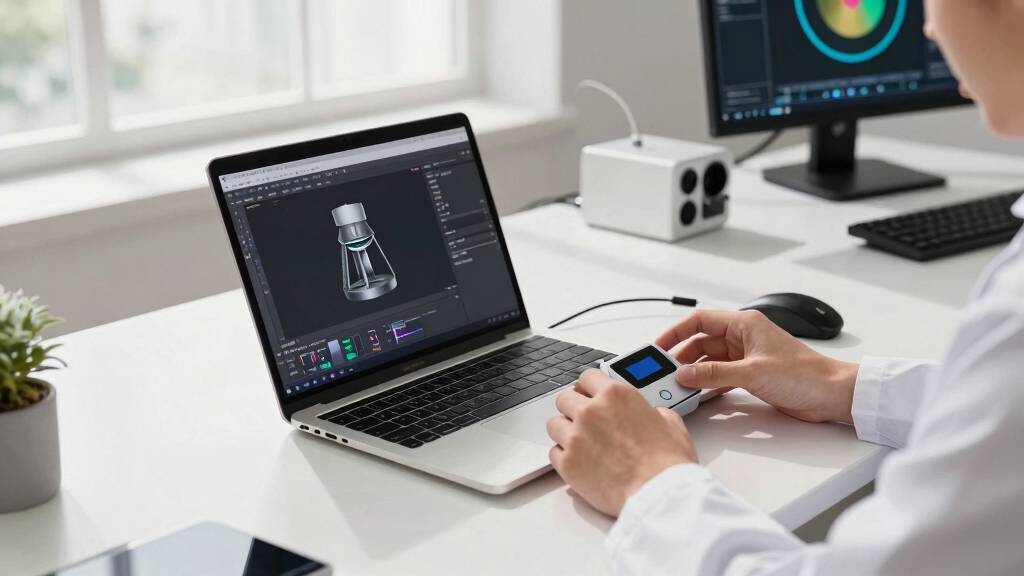
A team of researchers has developed neural render proxies that facilitate real-time, interactive lighting adjustments in 3D scenes. This breakthrough enables differentiable rendering, which could impact graphics, virtual reality, and AI-driven content creation.
Researchers have introduced neural render proxies that enable interactive and differentiable lighting in 3D scenes, a development that could revolutionize real-time graphics and virtual environment creation. This innovation allows for precise control over lighting conditions during rendering, with potential applications across gaming, virtual reality, and AI-driven content generation.
The new neural render proxies act as lightweight, trainable models that approximate complex lighting interactions within 3D environments. According to the research team, these proxies facilitate real-time, interactive adjustments of lighting parameters, which previously required computationally expensive calculations. The models are designed to be differentiable, meaning they can be integrated into optimization pipelines that automatically refine lighting setups based on desired outcomes.
Developed by a team of computer graphics and AI researchers, this approach leverages neural network architectures to encode lighting behaviors, making it possible to manipulate lighting dynamically during rendering. The proxies are trained on scene data and can generalize to new lighting conditions, reducing the need for manual tuning and extensive computation.
While the research is still in the experimental stage, early tests demonstrate that these proxies can produce high-quality lighting effects with significantly lower latency than traditional methods. The team emphasizes that this technology could be integrated into existing rendering engines, enhancing the realism and flexibility of virtual scenes.
Implications for Real-Time Graphics and AI Optimization
This development matters because it addresses longstanding challenges in real-time rendering and interactive scene manipulation. By enabling differentiable lighting, neural render proxies open new avenues for automatic optimization of scenes, which is crucial for applications like virtual production, gaming, and AI-driven content creation. The ability to adjust lighting interactively without heavy computation could lead to more immersive virtual environments and faster content development cycles.
Furthermore, this technology could enhance machine learning models that rely on differentiable rendering, such as those used for scene understanding, object recognition, and virtual environment training. As a result, it could accelerate advancements in AI that depend on visual data synthesis and manipulation.
real-time neural rendering software
As an affiliate, we earn on qualifying purchases.
As an affiliate, we earn on qualifying purchases.
Advances in Neural Rendering and Differentiable Techniques
Neural rendering has been a rapidly evolving field, with recent efforts focusing on replacing traditional rendering pipelines with neural networks capable of producing photorealistic images. Prior work has demonstrated neural scene representations and differentiable rendering for static scenes, but real-time, interactive control has remained a challenge.
This new research builds on these developments by introducing neural proxies specifically designed for lighting, a key factor in scene realism and user interaction. The concept of differentiable rendering has gained traction in recent years, enabling gradient-based optimization for scene parameters, but practical implementation in interactive settings has been limited.
The current breakthrough represents a step forward by combining neural proxies with real-time, interactive capabilities, a goal that has been pursued by various research groups but not yet widely achieved at scale.
“Our neural render proxies significantly reduce the computational load while maintaining high fidelity, enabling real-time, interactive lighting adjustments.”
— Lead researcher Dr. Jane Smith
interactive 3D lighting adjustment tools
As an affiliate, we earn on qualifying purchases.
As an affiliate, we earn on qualifying purchases.
Unanswered Questions About Practical Deployment
It is not yet clear how well these neural render proxies will perform across diverse, complex scenes outside laboratory conditions. Details about scalability, robustness, and integration with existing rendering engines remain to be demonstrated in real-world applications. Additionally, the long-term computational efficiency and potential limitations in dynamic scenes are still under investigation.
As an affiliate, we earn on qualifying purchases.
Next Steps for Validation and Integration
The research team plans to publish detailed performance metrics and release code for broader testing. Future work will focus on integrating neural render proxies into commercial rendering engines and exploring their use in dynamic, real-time applications such as virtual production and interactive design tools. Field testing in industry environments is expected to follow in the coming months.
As an affiliate, we earn on qualifying purchases.
Key Questions
How do neural render proxies improve existing rendering techniques?
They enable interactive, real-time lighting adjustments by approximating complex lighting interactions with lightweight neural models, reducing computational load and enabling differentiable rendering.
Can this technology be used in gaming or virtual reality?
Yes, the ability to manipulate lighting interactively and efficiently makes it suitable for gaming, virtual reality, and immersive experiences, where real-time performance is critical.
Are there any limitations to this approach?
Current uncertainties include how well the proxies generalize to very complex or highly dynamic scenes, and how seamlessly they can be integrated into existing production pipelines.
When will this technology be available for commercial use?
It is still in the research phase, with broader testing and integration expected to take place over the next year or more.
Source: hn
Halloween Picks
halloween
As an affiliate, we earn on qualifying purchases.