
TL;DR

Prime made for students and young adults
- Fast, free delivery for dorm and study essentials
- Prime Video and Amazon Music included
- Member-only deals
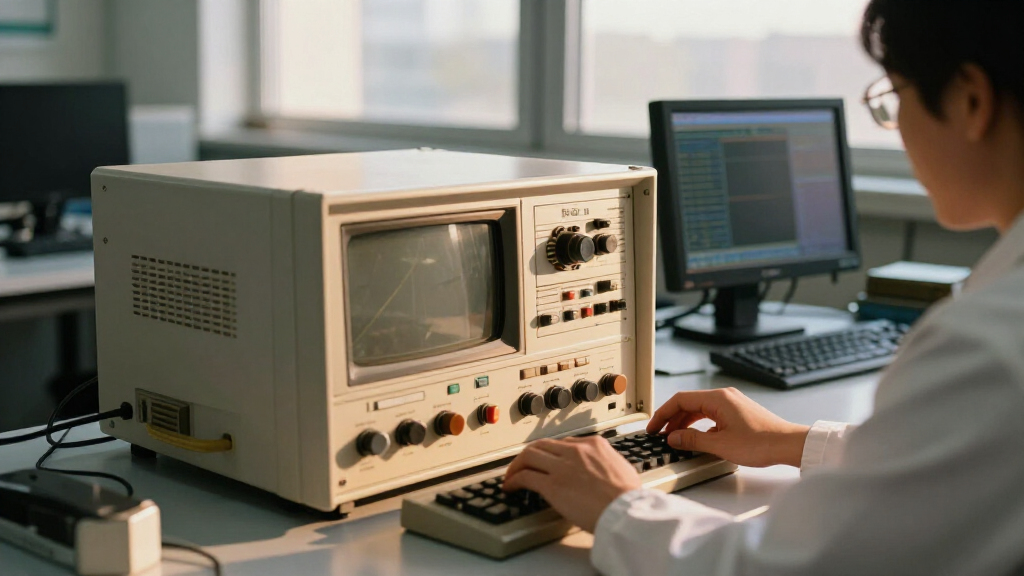
NASA has successfully created a software emulator replicating Voyager 1’s Flight Data System (FDS) computer. This breakthrough allows scientists to access and analyze historic spacecraft data remotely, supporting ongoing research and mission preservation.
NASA has successfully developed a software emulator that replicates Voyager 1’s original Flight Data System (FDS) computer, providing new access to decades-old mission data. This achievement is significant for ongoing scientific research and mission preservation, as it allows engineers and scientists to interact with Voyager 1’s data system remotely for the first time.
The emulator was created by NASA’s Jet Propulsion Laboratory (JPL) through a combination of reverse engineering and software modeling. It accurately simulates the hardware and software environment of Voyager 1’s original FDS, which was responsible for managing spacecraft data and commands during the mission’s early years.
According to NASA officials, the emulator enables remote access to the spacecraft’s data logs, telemetry, and system status, which were previously difficult to retrieve due to aging hardware and limited communication bandwidth. The project aims to preserve critical mission data and facilitate ongoing scientific analysis without risking interference with Voyager 1’s operations.
Implications for Spacecraft Data Preservation and Research
This development matters because it enhances the ability of scientists to study Voyager 1’s historic data, which may contain insights into the interstellar environment and the spacecraft’s long-term performance. It also offers a model for preserving and accessing data from other aging space assets, ensuring that valuable information remains available for future generations.
Furthermore, the emulator could support future missions by providing a blueprint for digital preservation of spacecraft systems, reducing reliance on obsolete hardware and enabling more flexible data retrieval methods.
As an affiliate, we earn on qualifying purchases.
Background on Voyager 1’s Data Systems and Mission Legacy
Voyager 1, launched in 1977, remains the most distant human-made object in space, having entered interstellar space in 2012. Its original Flight Data System was designed to operate for a limited mission duration, but the spacecraft has continued transmitting data for over four decades. Due to the age of its hardware and the scarcity of replacement parts, accessing its data has become increasingly challenging.
Historically, NASA has relied on ground-based systems to interpret Voyager 1’s signals, but hardware degradation and communication limitations have restricted detailed analysis. The recent emulator project is part of broader efforts to digitize and preserve mission data from aging spacecraft.
As an affiliate, we earn on qualifying purchases.
Remaining Challenges in Emulator Validation and Data Integrity
It is not yet clear how thoroughly the emulator has been tested against real spacecraft data or how it will integrate with ongoing mission operations. The long-term stability of the software and its ability to replicate all hardware functionalities remain under review.
Details about the emulator’s deployment for routine data access are still emerging, and NASA has not specified whether it will be used for active spacecraft command and control or solely for data analysis.
As an affiliate, we earn on qualifying purchases.
Plans for Broader Implementation and Future Research
NASA plans to conduct further validation of the emulator’s accuracy and stability over the coming months. The agency also intends to share the emulator with the scientific community for collaborative analysis of Voyager 1’s data.
Future milestones include integrating the emulator into NASA’s data infrastructure and exploring its application for other aging spacecraft, potentially extending its use to missions like Voyager 2 and beyond.
space mission data preservation tools
As an affiliate, we earn on qualifying purchases.
As an affiliate, we earn on qualifying purchases.
Key Questions
What is the Voyager 1 FDS emulator?
The Voyager 1 FDS emulator is a software simulation that replicates the spacecraft’s original Flight Data System hardware and software, enabling remote access to its historic data.
Why is this emulator important?
It preserves critical mission data, allows scientists to analyze Voyager 1’s long-term performance, and provides a model for digital preservation of aging space assets.
Can the emulator control Voyager 1 now?
Currently, the emulator is intended for data analysis and not for active spacecraft command and control, but further testing is ongoing.
What are the next steps for this project?
NASA will validate the emulator’s accuracy, expand access for researchers, and explore its use for other aging spacecraft in future missions.
Does this mean Voyager 1 is still operational?
No, Voyager 1 remains in a passive communication state, transmitting data back to Earth, but the emulator enhances access to its stored data.
Source: hn
Fall Picks
fall essentials
As an affiliate, we earn on qualifying purchases.