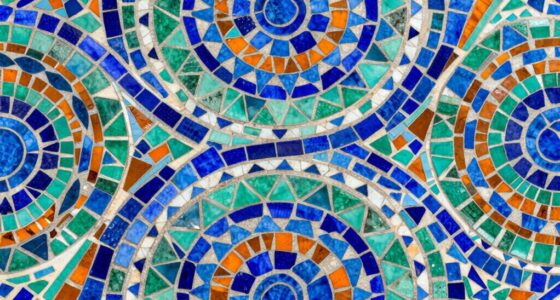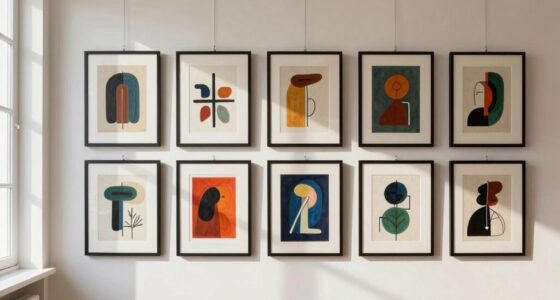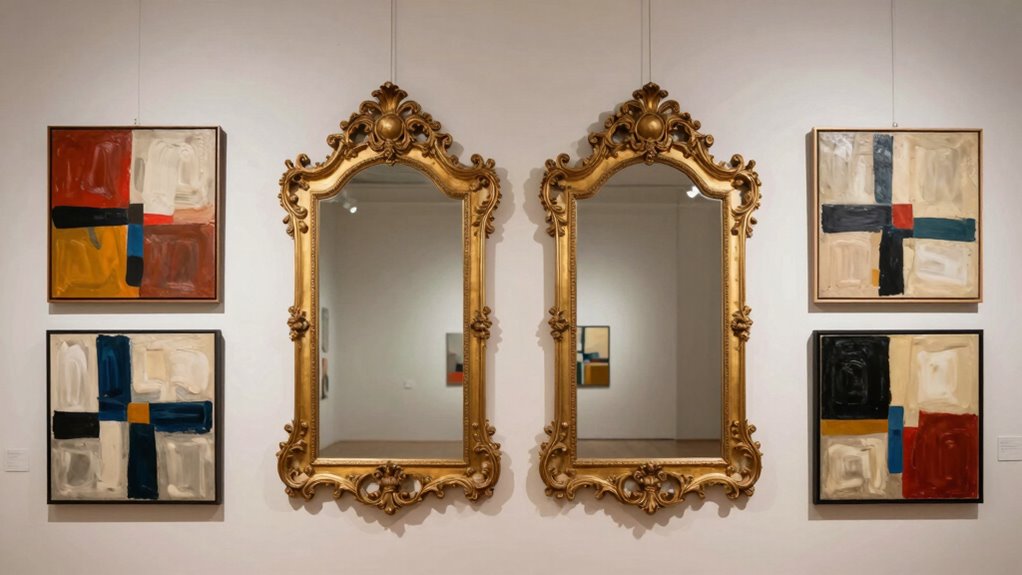

To use symmetry in your art display, center your main piece and mirror elements on both sides to create a balanced, calming effect. For asymmetry, place striking or varied pieces off-center to add energy and interest, balancing visual weight with size, color, or texture. Choose symmetry for formal, traditional settings and asymmetry for modern, energetic environments. Mastering these techniques will help you craft engaging displays that communicate your artistic vision—more tips await if you keep exploring.

Prime made for students and young adults
- Fast, free delivery for dorm and study essentials
- Prime Video and Amazon Music included
- Member-only deals
Key Takeaways
- Use symmetry to create a sense of order, focus, and calmness, especially for traditional or formal displays.
- Incorporate asymmetry to introduce energy, movement, and visual interest in modern or eclectic arrangements.
- Balance visual weight in asymmetrical setups through size, color, or texture variations for cohesion.
- Highlight focal points centrally in symmetrical displays, or off-center in asymmetrical ones to guide viewer attention.
- Match the display’s emotional tone—calm and stable with symmetry; dynamic and energetic with asymmetry.
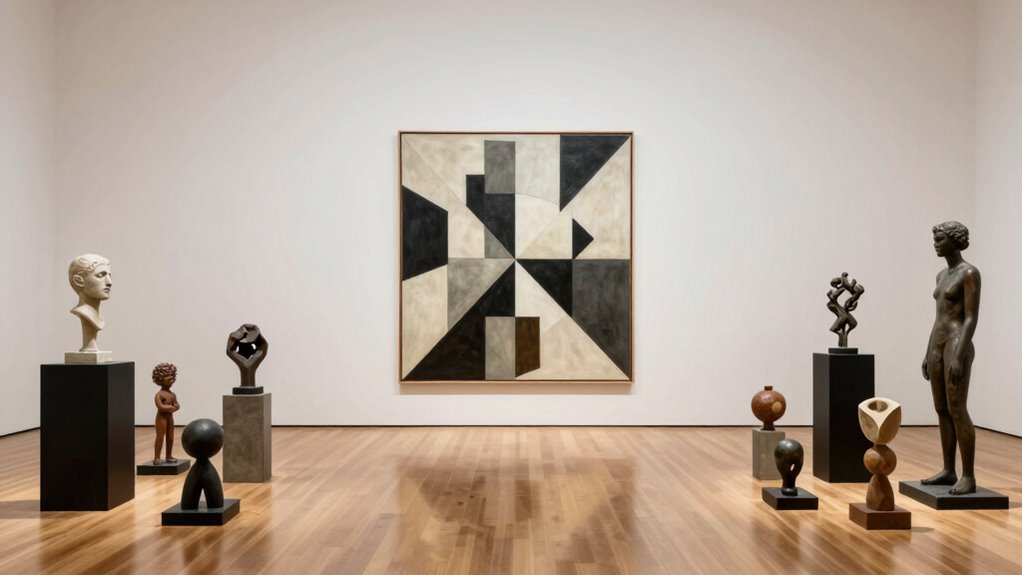
Symmetry and asymmetry are powerful tools that can dramatically influence how your art displays are perceived. When you carefully consider the arrangement of your pieces, you’re guiding viewers’ eyes and evoking specific emotions. Symmetry creates a sense of order, harmony, and stability. It involves mirroring elements across an axis, which can make your display feel balanced and cohesive. As a result, viewers often find symmetrical arrangements calming and pleasing, especially when you’re highlighting a central piece or a focal point. On the other hand, asymmetry introduces dynamism and interest. By intentionally offsetting elements, you create tension that draws viewers in, encouraging them to explore the display more actively. This approach can make your exhibit feel more spontaneous and engaging, especially if you want to emphasize movement or contrast.
When you decide on symmetry, think about how color balance plays a role in reinforcing that harmony. Use similar hues or tones on either side of your display to unify the arrangement visually. For example, placing artworks with comparable color palettes opposite each other can strengthen the symmetrical feel. If you want to highlight a particular piece as the focal point, position it centrally and arrange other works around it in a balanced manner. This setup ensures that the viewer’s attention naturally gravitates toward your main attraction. Conversely, with asymmetry, you can create a focal point by positioning a striking piece off-center. Play with contrasting colors or bold shapes to ensure it stands out amid other elements. The asymmetrical layout can make your display more dynamic, inviting viewers to move around and engage from different angles.
Your choice between symmetry and asymmetry influences not just the visual flow but also the emotional tone of your display. Symmetry often communicates calmness and order, making it ideal for formal or traditional settings. Asymmetry, however, introduces energy and unpredictability, fitting more modern or eclectic environments. Additionally, understanding how to achieve visual balance within either framework is crucial for creating cohesive and captivating displays. Regardless of the approach, keep in mind that balance is key. In symmetrical arrangements, balance comes naturally through mirroring. In asymmetry, you’ll need to balance visual weight by varying sizes, colors, or textures. Understanding the concept of visual balance and how to achieve it within either framework is crucial to creating compelling art displays that captivate your audience and communicate your artistic vision with clarity and impact.
As an affiliate, we earn on qualifying purchases.
Frequently Asked Questions
How Does Color Influence Symmetry and Asymmetry in Art Displays?
Color influences symmetry and asymmetry by creating contrast and emotional tone in your art display. Bright, contrasting colors emphasize asymmetry, drawing attention to imbalance and dynamic movement. Conversely, harmonious, balanced color schemes reinforce symmetry, fostering a sense of stability and order. Your choice of color contrast and emotional tone helps guide viewers’ focus, evoke feelings, and enhance the overall impact of your composition, whether symmetrical or asymmetrical.
Can Symmetry or Asymmetry Be Used Effectively in Small Spaces?
Yes, symmetry and asymmetry can be used effectively in small spaces. Symmetry helps with space optimization by creating a balanced, organized look that makes the area feel larger. Asymmetry adds visual interest without clutter, guiding the eye and enhancing depth. Use symmetrical arrangements for a tidy, harmonious feel, and asymmetrical setups to break monotony and maximize limited space. Both strategies improve visual balance and make small spaces appear more inviting.
What Are Common Mistakes to Avoid When Applying These Principles?
When applying symmetry and asymmetry, avoid disrupting balance harmony, which can make your display feel off-kilter. Steer clear of focal imbalance, where one piece overpowers others, causing visual chaos. Don’t overcrowd your space or ignore the importance of negative space. Instead, guarantee your arrangement maintains a cohesive flow, guiding the viewer’s eye naturally. These mistakes can undermine your artistic intent and diminish the overall impact.
How Do Cultural Differences Impact the Use of Symmetry and Asymmetry?
Cultural differences considerably influence your use of symmetry and asymmetry, as cultural symbolism shapes aesthetic preferences. In some cultures, symmetry symbolizes harmony and balance, making it essential in your design. Conversely, other cultures value asymmetry for its dynamic and expressive qualities. By understanding these cultural nuances, you can tailor your art display to resonate more deeply with diverse audiences, creating a meaningful and respectful visual experience.
Are There Specific Art Styles That Favor One Approach Over the Other?
You’ll find that certain art styles favor symmetry, emphasizing balance dynamics and creating a sense of harmony, like classical and Renaissance art. Conversely, styles like abstract, modern, and surrealist art often prefer asymmetry to evoke movement and tension, guiding your eye toward a focal point. These approaches influence how viewers experience the artwork, either through stability or dynamic energy, shaping the overall visual impact.
symmetrical art arrangement tools
As an affiliate, we earn on qualifying purchases.
As an affiliate, we earn on qualifying purchases.
Conclusion
Mastering symmetry and asymmetry can transform your art display into an unstoppable visual storm. When you harness these techniques, you’re not just arranging objects—you’re creating an awe-inspiring spectacle that can stop viewers in their tracks and make them gasp in amazement. With the right balance, your display will scream, shout, and shout again, leaving an unforgettable impression. So go ahead—dare to be bold, and watch your art command attention like never before!
As an affiliate, we earn on qualifying purchases.
As an affiliate, we earn on qualifying purchases.
Halloween Picks
halloween
As an affiliate, we earn on qualifying purchases.