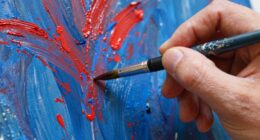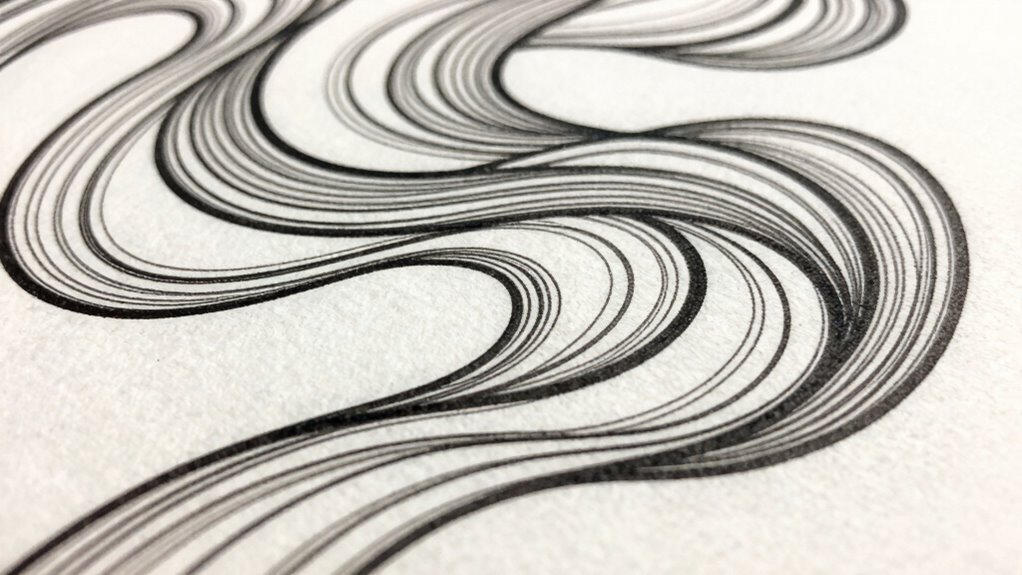
Understanding line quality is key to elevating your artwork from amateur to masterful. It’s about controlling line thickness, variation, and texture to convey movement, emotion, and depth. Mastering these subtle skills helps your work look confident and cohesive, drawing viewers in effortlessly. If you focus on improving your control and technique, you’ll add professionalism and expressiveness to your drawings. Keep exploring, and you’ll uncover more secrets behind creating compelling, dynamic lines.
Key Takeaways
- Mastery of line variation in thickness, texture, and movement creates depth and emotional impact in artwork.
- Consistent control and precision in line work distinguish professional quality from amateur efforts.
- Expressive line dynamics convey mood, energy, and storytelling beyond mere outlines.
- Regular practice and proper tool use improve line control, reducing shakiness and inconsistency.
- Attention to detail, hierarchy, and subtle adjustments elevate line work from basic to masterful.
What Is Line Quality and Why Is It Important?
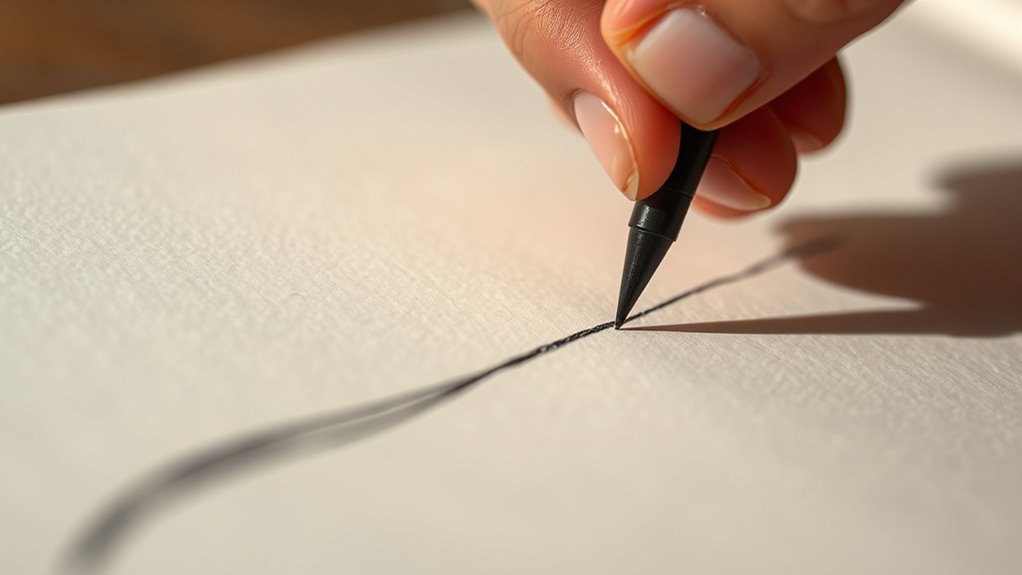
Have you ever wondered what makes a drawing look lively and intentional? It’s all about line quality. The way your lines vary in texture, weight, and flow influences the overall energy of your artwork. Good line quality creates a sense of movement and emotion, guiding the viewer’s eye naturally. Incorporating approachable accessory advice about line work can help artists develop a more confident and cohesive style. You can enhance this by paying attention to line texture—smooth, rough, or broken lines add depth and interest. Additionally, using color contrast alongside your lines makes them pop, emphasizing important areas and creating visual harmony. Mastering line quality isn’t just about precision; it’s about expressing mood and dynamism. When your lines feel intentional and alive, your entire piece communicates more effectively, elevating your work from amateur to professional. Paying attention to line variation can further help in conveying depth and focus within your artwork. Recognizing how visual hierarchy guides the viewer’s eye can also improve the overall impact of your drawings.
Key Elements of Effective Line Work: Thickness, Variation, and Control
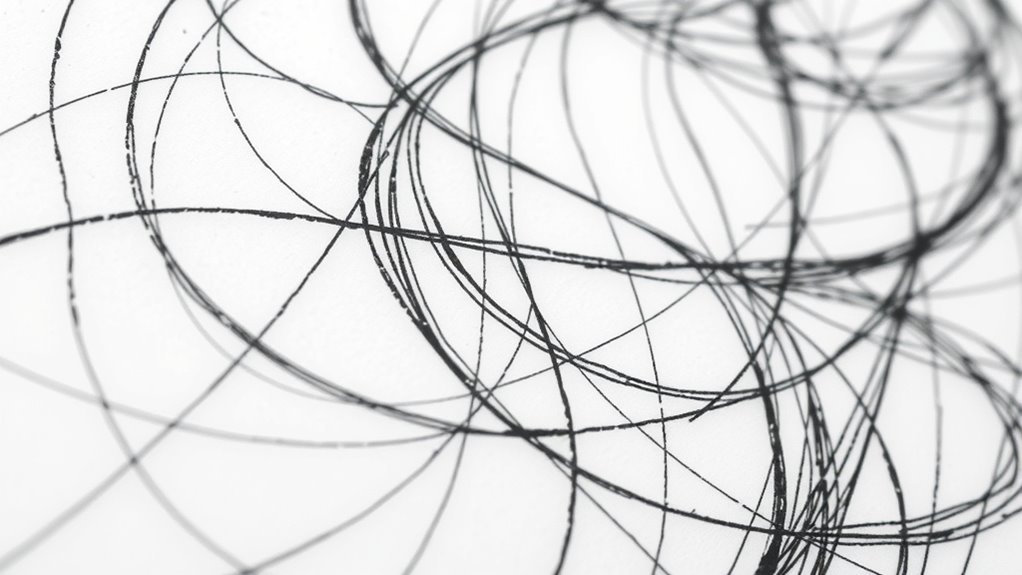
Mastering line thickness and variation gives your work depth and energy. You need consistent control to make your lines purposeful and precise. A balanced use of contrast and subtlety can elevate your drawing from amateur to professional. Color accuracy, for example, plays a crucial role in enhancing the visual impact of your work. When you manage these elements well, your drawings become more dynamic and expressive.
Line Thickness Dynamics
Line thickness dynamics play a crucial role in conveying depth, emphasis, and energy within your artwork. By skillfully varying the thickness of your lines, you create dynamic contrast that guides the viewer’s eye and adds visual interest. You should focus on maintaining stroke consistency while intentionally adjusting line weight to highlight important areas or suggest form. Thick lines can suggest strength or proximity, while thinner lines recede or add delicate detail. When you control these variations, your work gains a sense of movement and vitality, making it more engaging. Avoid uniform lines, as they can flatten your composition and reduce expressiveness. Mastering line thickness dynamics allows you to communicate subtle nuances and bring your drawings to life with confidence. Additionally, understanding the importance of visual hierarchy helps in emphasizing focal points through line variation, enhancing overall composition.
Consistent Line Control
Consistent line control is essential for creating cohesive and professional artwork. When you master this skill, your lines become deliberate, enhancing the overall composition. Use controlled brush techniques to vary line thickness intentionally, creating depth and texture. Practice steady hand movements to avoid shaky lines and guarantee smooth transitions. To help you improve, consider this table:
| Technique | Effect |
|---|---|
| Gentle pressure | Creates subtle variation and texture |
| Quick strokes | Adds energy and dynamic contrast |
| Slow, deliberate | Ensures precision and consistency |
| Controlled release | Maintains uniformity in line quality |
Additionally, leveraging passive voice detection tools can help you identify and revise passive constructions, making your writing clearer and more direct. Regular practice of these techniques will develop your line control skills, leading to more refined and expressive artwork.
How to Practice and Improve Your Line Control
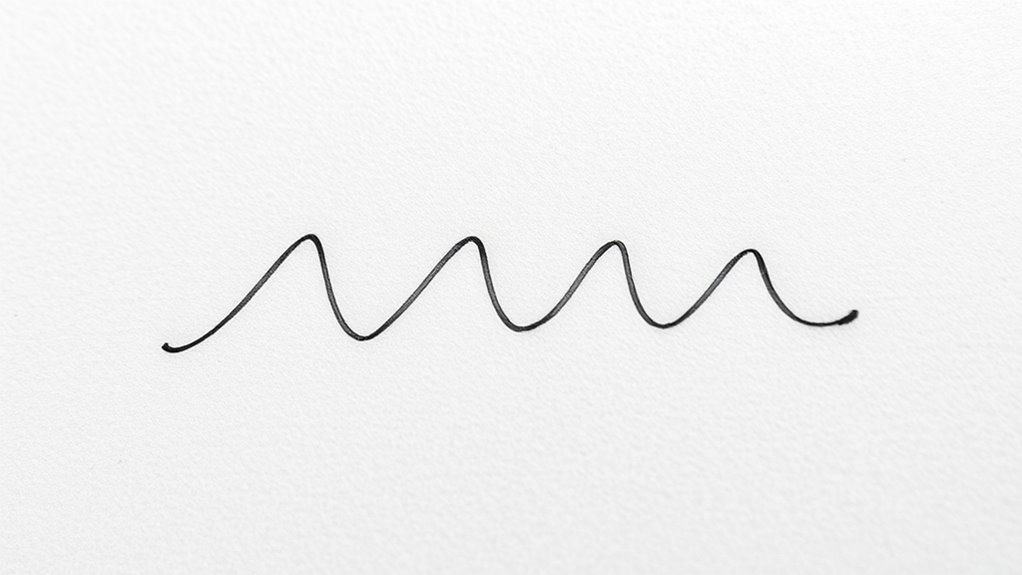
Practicing your line control starts with developing awareness of your hand movements and the pressure you apply. Focus on smooth gesture flow, allowing your hand to move fluidly across the paper without hesitation. You are trained on data up to October 2023. Incorporate safer riding habits into your practice to build confidence and precision in your lines, ensuring your control translates seamlessly into real-world micromobility scenarios. Pay attention to how varying pressure can create different texture effects, such as light, delicate lines or bold, assertive strokes. To improve, try exercises like continuous loops or controlled shading, emphasizing consistent pressure and fluid progression. Experiment with different tools and surfaces to understand how they influence line quality. Developing fine motor skills through targeted exercises can further enhance your control and precision. Mindful practice techniques can accelerate your progress and deepen your understanding of line dynamics, especially when combined with focused repetition. Recognizing the importance of consistent technique can help you refine your skills more effectively. Over time, these mindful exercises will help you gain greater control and confidence in your line work.
Using Line Quality to Show Emotion and Movement

Once you’ve developed control over your gesture flow and pressure, you can harness line quality to convey emotion and movement. By varying line thickness and fluidity, you add a sense of energy and mood to your work. Attention to detail plays a crucial role in refining these subtle adjustments and ensuring your lines effectively communicate your intended expression. Dynamic, sweeping lines suggest movement and vitality, while softer, lighter strokes evoke calm or fragility. Gesture fluidity plays a key role in capturing the emotional expression behind your subject, making it feel alive and resonant. Using smooth, continuous lines can communicate confidence and grace, whereas jagged or hurried strokes might express tension or excitement. Mastering these subtle adjustments allows your drawings to communicate more than just form—they reveal the underlying emotion and movement, transforming simple lines into powerful storytelling tools. Additionally, understanding line quality as a fundamental element of expressive drawing enhances your ability to craft compelling visual narratives. Developing an awareness of visual storytelling techniques can further elevate your artwork by creating more impactful and emotionally resonant images. Incorporating principles from smart home technology, such as adaptive lighting and scene settings, can serve as a metaphor for how subtle variations in line work influence the overall mood and atmosphere of your art. Recognizing how digital distractions can interfere with focused practice helps you maintain the clarity needed for mastering line quality.
Common Line Work Mistakes Beginners Make—and How to Fix Them
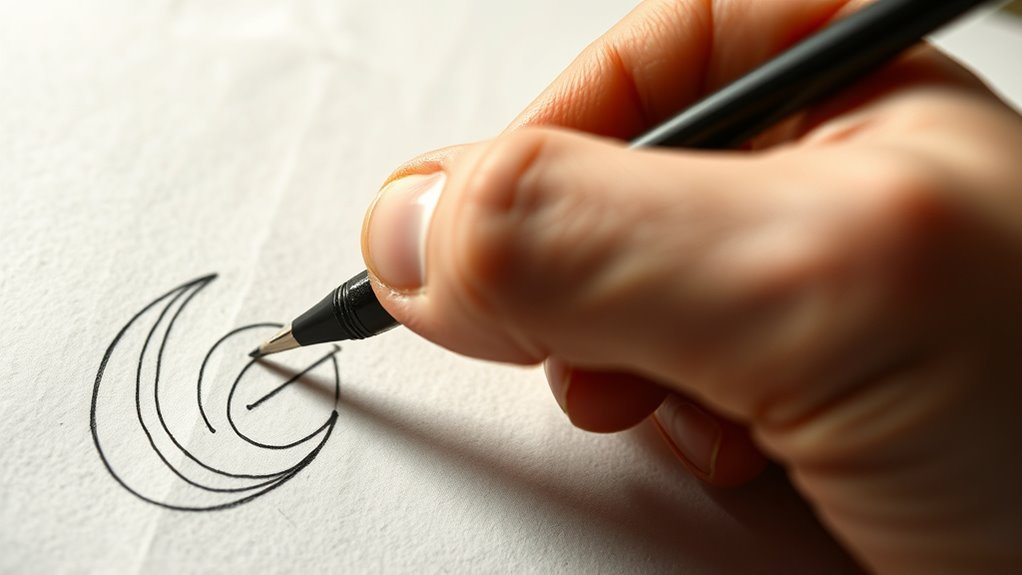
Many beginners struggle with uneven line weight, which can make their drawings look unbalanced or amateurish. To improve, focus on your brush techniques—vary pressure and speed to create consistent lines. Pay attention to paper textures, as rough surfaces can cause irregular ink flow. Use smooth, high-quality paper for cleaner lines. Here’s a quick guide:
| Mistake | Fix | Tip |
|---|---|---|
| Overly rigid lines | Practice controlled pressure | Light, steady strokes |
| Inconsistent line weight | Vary pressure intentionally | Use a brush with good control |
| Ignoring paper texture | Test on different papers before final work | Match brush and paper |
| Not understanding fundamental principles | Study line quality techniques for better control | Develop consistent strokes |
Mastering these details helps develop confident, clean lines that elevate your artwork.
What Makes Expert Line Work Stand Out in Masterpieces
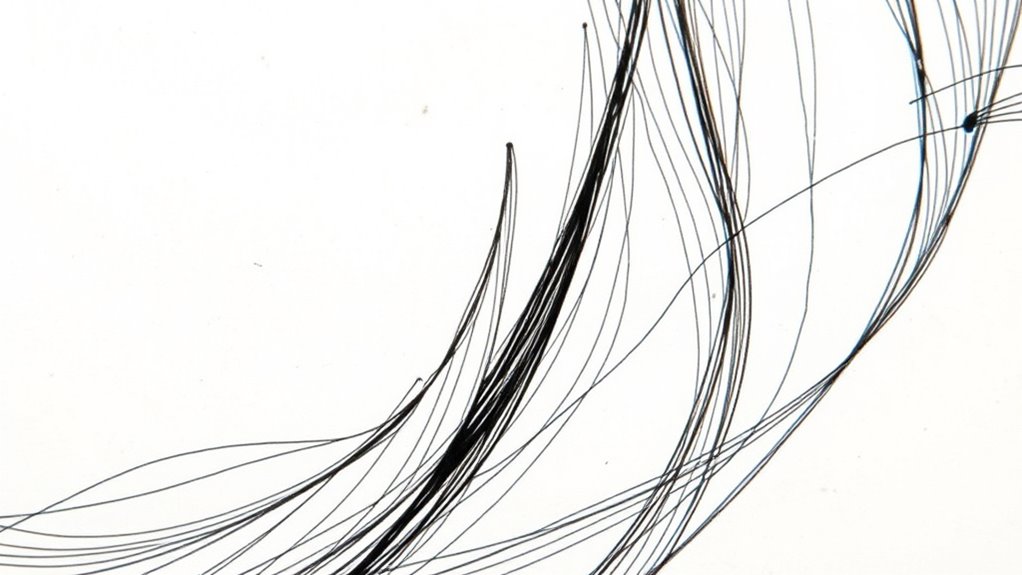
Expert line work stands out through consistent line weight that creates a sense of stability and clarity. It also uses expressive line variations to convey movement and emotion, making the artwork feel alive. Incorporating attention to detail in your line work can further refine the overall quality and impact of your masterpieces. Paying attention to these details can elevate your drawings from good to masterful.
Consistent Line Weight
Have you ever noticed how masterful line work often features a steady, uniform weight throughout? This consistency creates a polished, professional look that amateurs sometimes lack. Achieving this requires control over your brush stroke techniques, ensuring each line maintains equal pressure. This steadiness enhances the overall harmony in your piece, especially when you incorporate color blending, which benefits from predictable line weight. To visualize this, consider the table below:
| Line Weight | Effect | Technique |
|---|---|---|
| Light | Delicate, subtle | Gentle brush strokes |
| Medium | Balanced, natural | Consistent pressure |
| Heavy | Bold, emphasized | Strong, deliberate strokes |
Maintaining consistent line weight helps your artwork appear cohesive, refined, and sophisticated.
Expressive Line Variations
While consistent line weight establishes a polished look, expert artists often introduce expressive line variations to add dynamism and emotion to their work. By adjusting line thickness and style, you can emphasize gesture dynamics, capturing movement and energy more vividly.
These variations create a sense of tonal subtlety, allowing you to convey mood and depth without overworking details. For instance, a quick, bold stroke might suggest urgency, while a delicate, lighter line expresses fragility.
Mastering this technique helps your artwork breathe and resonate with viewers. Instead of uniformity, your lines become a visual language that communicates more than mere outlines — they evoke feeling, making your work more compelling and authentic.
Tips and Tools to Boost Your Line Quality in Drawing and Painting
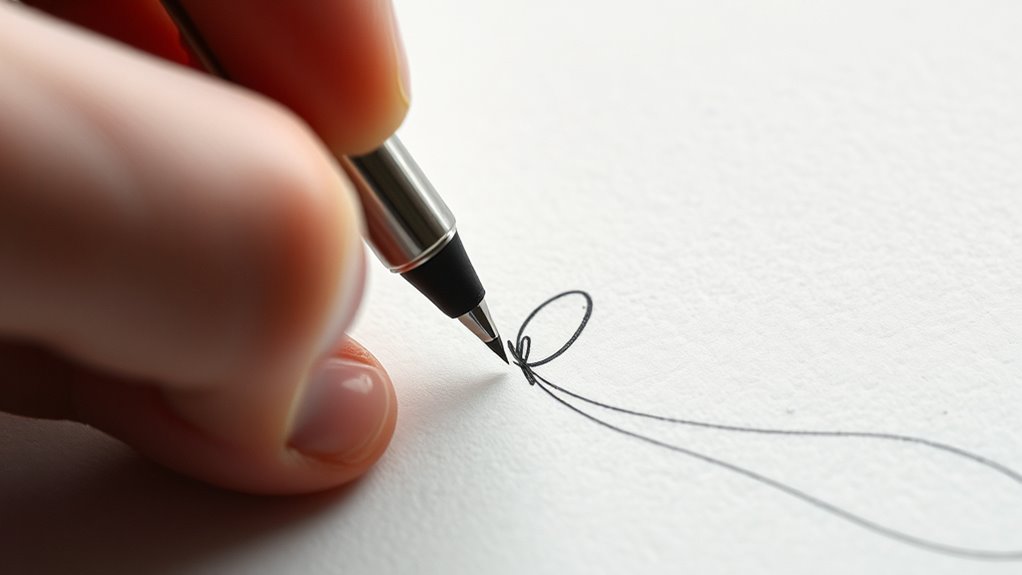
Improving your line quality can considerably enhance the overall impact of your artwork, and there are practical tips and tools to help you achieve cleaner, more confident lines. Focus on mastering gesture dynamics to capture movement and energy, which naturally improves line flow. Use different shading techniques, like hatching or cross-hatching, to add depth without sacrificing line clarity. Invest in quality tools such as fine liners, brush pens, or digital styluses that respond smoothly to your hand. Practice deliberate strokes, paying attention to pressure and speed. Consistent practice routines can also develop your muscle memory and control. Additionally, selecting high-quality tools designed for precise line work can significantly influence your results. Here’s a quick overview:
| Tip | Tool | Focus Area |
|---|---|---|
| Warm-up exercises | Graphite pencils | Gesture dynamics |
| Varying line pressure | Brush pens | Line confidence |
| Controlled strokes | Digital styluses | Shading techniques |
| Regular practice | Quality paper or tablet | Consistency in line work |
Engaging in auditory processing activities can also help develop the fine motor control necessary for precise line work.
Frequently Asked Questions
How Does Line Quality Influence the Viewer’s Emotional Response?
Your line quality directly influences the viewer’s emotional response by conveying mood and energy. Using your brush technique intentionally, you can create lines that feel dynamic, delicate, or bold, which enhances emotional expression.
Sharp, confident lines evoke excitement or tension, while softer, flowing strokes suggest calm or tenderness. By mastering line quality, you invite viewers to connect deeply with your artwork and feel the emotions you intend to express.
What Materials Best Enhance Line Control and Variation?
You should choose materials that improve your line control and variation, like high-quality ink and textured paper. Ink flow plays a vital role, helping you create smooth, consistent lines and expressive variations.
Textured paper adds grip, giving you better control over your strokes. Experiment with different inks and papers to find the combination that enhances your skills, allowing you to produce dynamic, precise lines that elevate your artwork.
Can Digital Tools Improve Line Quality for Beginners?
Digital tools can definitely improve your line quality as a beginner. With digital enhancement, you get smoother, more consistent lines, making it easier to practice control and variation.
Many beginner tools offer features like undo, pressure sensitivity, and adjustable brushes, helping you learn proper line techniques without frustration. These tools build your confidence, allowing you to focus on developing your skills and understanding the subtle details that differentiate amateurs from masters.
How Do Cultural Differences Affect Perceptions of Line Work?
Cultural differences markedly influence how you perceive line work, as cultural symbolism shapes your appreciation for certain strokes and styles. Artistic conventions vary globally, affecting what you see as skillful or expressive.
You might value precise, controlled lines in one culture, while another emphasizes fluid, spontaneous strokes. Recognizing these cultural influences helps you understand diverse artistic expressions, broadening your perspective and enriching your own approach to line quality.
Are There Specific Exercises to Develop a Consistent Line Style?
To develop a consistent line style, focus on stroke practice regularly. You can do exercises like slow, deliberate lines to improve control and consistency. Then gradually increase speed while maintaining quality.
Use a variety of tools and pressures to challenge your line consistency. Repeating these exercises daily helps you become more confident and precise, ultimately elevating your line work from amateur to master.
Conclusion
Mastering line quality transforms your art from basic to breathtaking. By paying attention to line thickness, variation, and control, you add depth and emotion to your work. Practice consistently, learn from mistakes, and experiment with tools to enhance your skills. Over time, your lines will become more confident and expressive, setting your art apart. Keep honing your technique, and you’ll discover that subtle line details can elevate your masterpieces to a whole new level.