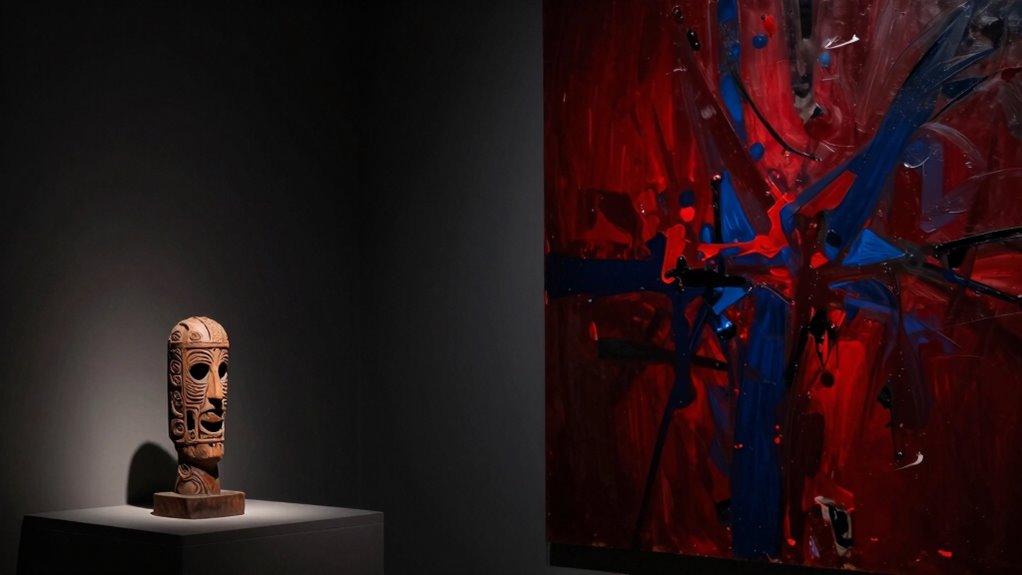
Some art needs more context because it relies on cultural stories, historical background, or artist intentions to uncover deeper meaning. When you know these details, you can appreciate the artwork’s full layers and significance. On the other hand, some pieces thrive on mystery, inviting you to explore personal feelings and interpretations without predefined answers. Understanding when each approach works best helps you deepen your connection with art, and there’s much more to discover as you continue exploring.

Get school and study supplies delivered free — and shop member deals
- Fast, free delivery on millions of items
- Access to Prime Big Deal Days deals on October 6–7
- Prime Video, Amazon Music and more included
Key Takeaways
- Context provides essential background that deepens understanding of culturally or historically rooted artworks.
- Mystery allows abstract or ambiguous art to evoke personal reflection without predefined meanings.
- Some art relies on cultural narratives, requiring context to unlock its full symbolism.
- Ambiguous pieces gain emotional power through mystery, encouraging individual interpretation.
- The appropriate approach depends on whether the viewer seeks knowledge or open-ended exploration.

Have you ever wondered why the same artwork can evoke completely different reactions depending on its surroundings? It’s because art doesn’t exist in a vacuum. Instead, it’s shaped by the environment around it, influenced heavily by cultural influences and personal interpretations. When you see a painting in a museum versus in a street art setting, your experience changes. In a museum, you might approach it with an expectation of historical significance or artistic mastery. Outside, it might feel more rebellious or raw. The context adds layers of meaning, guiding how you interpret what you see.
Cultural influences play a huge role in shaping your understanding of art. Different societies attribute different symbols, colors, and motifs with specific meanings. For example, a red color might symbolize passion in one culture but danger in another. When you’re exposed to these cultural narratives, your personal interpretations are colored accordingly. A piece that might seem straightforward in one setting could take on a whole new depth when you understand its cultural background. This is why some artwork needs more context—without it, you might miss the full story or misinterpret the artist’s intent. Moreover, cultural narratives can serve as a powerful lens to deepen your appreciation and understanding of the work. Recognizing these narratives can transform a superficial viewing into a richer, more nuanced experience.
But not all art benefits from explicit context. Some works thrive on mystery. When you encounter an abstract sculpture or a cryptic painting, the ambiguity invites you to bring your own experiences into the equation. The lack of clear explanation sparks curiosity and personal reflection. Here, the power of mystery lies in its ability to let you project your feelings and thoughts onto the piece. It becomes a mirror rather than a window. The absence of a defined narrative encourages a more intimate, personal connection, making the artwork feel alive because it’s open-ended. In such cases, the mystery itself acts as an essential artistic technique, engaging viewers on a deeper emotional level. This approach often resonates with viewers because it allows for a more personal interpretation that can be different for everyone. Additionally, the element of mystery can heighten the emotional impact, making the experience more memorable.
However, even in these cases, context can deepen your appreciation. Knowing the artist’s background or the historical moment when the piece was created can add layers that enhance your personal interpretation. But at its core, works that are intentionally ambiguous rely on mystery to evoke emotion and engagement. They challenge you to fill in the gaps, making your experience uniquely yours. In contrast, pieces that are heavily rooted in specific cultural contexts often require explanations to unlock their full meaning. Both approaches serve different purposes: one invites personal discovery, the other demands understanding rooted in shared knowledge. Understanding the importance of cultural context can help you appreciate why some artworks are more accessible with background information.
Ultimately, whether art needs more context or gains power from mystery depends on what you seek as a viewer. Sometimes, understanding the background enriches your experience; other times, the mystery itself becomes the art’s most compelling feature. Both methods invite you to explore, interpret, and connect in different, meaningful ways.
art history books with cultural context
As an affiliate, we earn on qualifying purchases.
As an affiliate, we earn on qualifying purchases.
Frequently Asked Questions
How Does Cultural Background Influence Art Interpretation?
Your cultural background shapes how you interpret art through cultural symbolism and your artistic heritage. It influences the symbols you recognize and the stories you connect with, making some artwork deeply meaningful. Without this context, you might miss layers of significance. Understanding an artist’s cultural background helps you see their work more clearly, appreciating the cultural nuances that give art its power and depth, enriching your overall experience.
Can Mystery in Art Diminish Its Emotional Impact?
Mystery in art can diminish its emotional clarity, making it harder for you to connect deeply. When an artwork’s meaning is too obscure, it reduces the narrative depth that fuels your emotional response. Without clear context, you might feel confused or detached, preventing a full appreciation of the artist’s intent. For some, mystery adds intrigue, but for others, it can obscure the emotional impact, making the experience less powerful.
Are Certain Art Styles More Dependent on Context Than Others?
Yes, certain art styles depend more on context due to their reliance on visual symbolism and stylistic evolution. For example, abstract and conceptual art often require you to understand cultural or historical backgrounds to fully grasp their meaning. In contrast, realistic or traditional styles may communicate emotions more directly. Your interpretation deepens as you explore the context, making the artwork’s message more impactful or, alternatively, more mysterious.
How Do Art Collectors Value Artworks With Little Known History?
You might wonder how art collectors value pieces with little known history—they rely on authentic valuation and perceived potential. Like explorers charting new territory, they assess the artwork’s visual impact, craftsmanship, and emotional resonance. Historical significance may be limited, but if the piece sparks curiosity or hints at hidden stories, its value can soar. Ultimately, collectors trust their intuition, blending mystery with the hope of uncovering something extraordinary.
What Role Does Artist Intent Play in Understanding Ambiguous Art?
You see that artist intent plays a vital role in understanding ambiguous art, as it shapes your perception of the piece. Creative ambiguity invites you to interpret the work personally, but knowing the artist’s intent can deepen your appreciation and clarify hidden meanings. When you consider the artist’s perspective, you connect more authentically, making the experience richer. Ultimately, understanding intent enhances your engagement with ambiguous art, revealing layers you might otherwise overlook.
As an affiliate, we earn on qualifying purchases.
Conclusion
Just like the Mona Lisa’s enigmatic smile invites endless speculation, some art thrives on mystery, beckoning you to explore its depths. But other works, like Van Gogh’s swirling skies, reveal their secrets only with context, deepening your understanding. Remember, whether it’s the allure of the unknown or the clarity of history, art’s power lies in how you engage with it. As Dante knew, every masterpiece is a journey—sometimes into darkness, sometimes into light.
As an affiliate, we earn on qualifying purchases.
As an affiliate, we earn on qualifying purchases.
Fall Picks
fall essentials
As an affiliate, we earn on qualifying purchases.