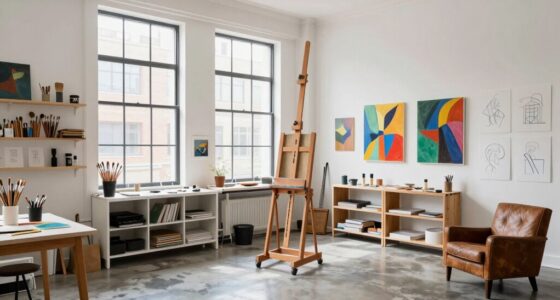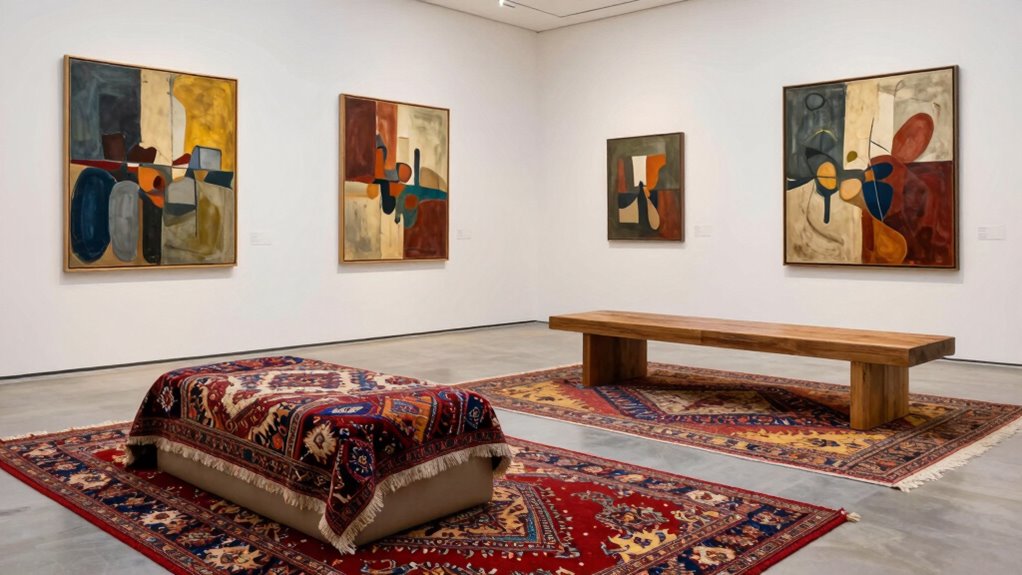

Rugs, ottomans, and benches influence how you move and pause in an art space, shaping your overall experience. Soft rugs and plush ottomans invite you to settle in, encouraging longer observation and a deeper connection with the artwork. Benches and minimalist furniture prompt quicker shifts, keeping your pace brisk. These elements subtly guide your engagement, making your visit either reflective or dynamic. If you keep exploring, you’ll discover even more ways these pieces shape your journey through art.

Prime made for students and young adults
- Fast, free delivery for dorm and study essentials
- Prime Video and Amazon Music included
- Member-only deals
Key Takeaways
- Rugs and textiles create inviting, comfortable spaces that encourage visitors to pause and linger longer with artworks.
- Ottomans and benches provide resting spots, slowing movement and fostering deeper contemplation.
- The placement and type of furniture subtly guide the flow and pacing of visitor engagement.
- Textural variety in rugs and furniture influences emotional tone, affecting how quickly or slowly viewers connect with the art.
- Cultural symbolism in textiles enriches understanding and promotes meaningful, deliberate viewing experiences.
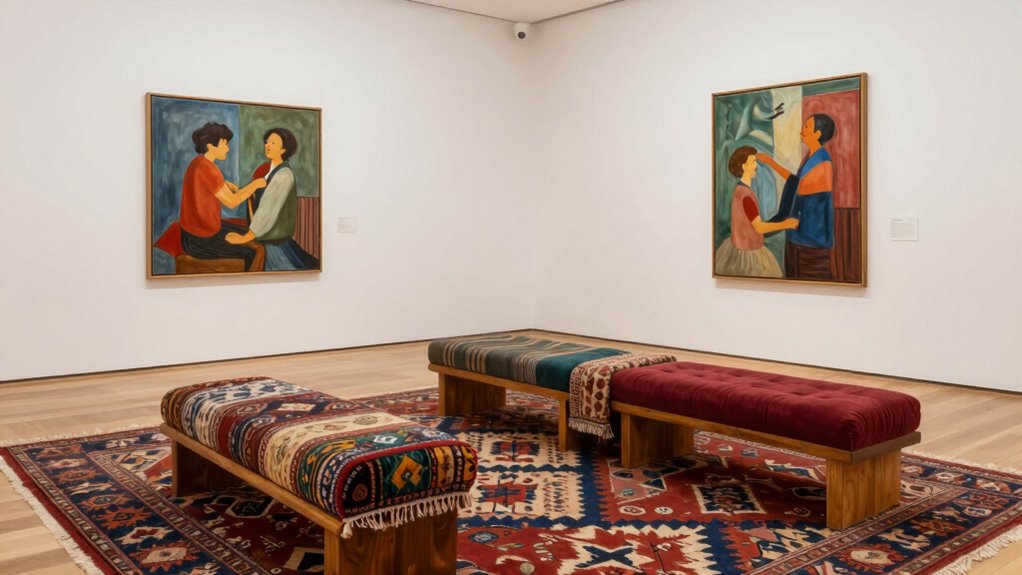
When you step into an art space, the furniture and textiles you encounter—like rugs, ottomans, and benches—do more than just serve practical purposes; they shape your experience and interpretation of the artwork. These pieces influence how you move through the space, where you pause, and how long you linger. They create a rhythm, guiding your eye and attention, subtly dictating the pace at which you engage with the art. Rugs, for example, aren’t merely decorative; they carry cultural symbolism that enriches your understanding. A Persian rug, with its intricate patterns and rich colors, can evoke a sense of history and tradition, adding layers of meaning to the environment. Similarly, textiles with cultural significance signal respect for heritage and invite you to consider the context behind the art. Material textures also play a vital role here. The roughness of a woven rug contrasts with the sleek surface of modern furniture, creating tactile cues that influence your mood and focus. When you sit on a plush ottoman, you might feel more relaxed and open, encouraging a slower, more contemplative viewing experience. Additionally, the materiality of furniture can enhance emotional responses, fostering a sense of connection with the space. The textures of these furnishings help set the tone of the space, subtly cueing your emotional response. Soft textiles can foster intimacy and comfort, making you more receptive to nuanced details in the artwork. Conversely, rougher or more structured textures might evoke a sense of formality or seriousness, prompting you to approach the art with greater focus. The materiality of furniture also impacts your physical movement. Low benches or plush rugs invite you to settle in for longer periods, encouraging deeper reflection. Elevated or minimalist pieces might prompt quicker transitions, pushing you to move on and explore other parts of the exhibit. Thoughtful furniture design can also influence how visitors interact with the space, guiding their journey and engagement. Moreover, the arrangement of these furnishings can subtly influence visitor flow, shaping the overall experience and accessibility of the exhibit. These choices influence not just your pace but also your overall engagement, helping you navigate the space in a way that feels natural and meaningful.
Persian rug with intricate patterns
As an affiliate, we earn on qualifying purchases.
As an affiliate, we earn on qualifying purchases.
Frequently Asked Questions
How Do Different Rug Patterns Influence Art Perception?
Different rug patterns influence your art perception by guiding your mood and focus. Pattern symbolism can evoke specific emotions or cultural associations, shaping your interpretation. Color psychology plays a role too—vibrant hues energize your viewing, while subdued tones create calmness. As you observe, the intricate designs and colors in rugs influence your emotional response and deepen your engagement with the artwork, making the experience more immersive and meaningful.
Can Ottomans Serve as Interactive Art Pieces?
Yes, ottomans can serve as interactive art pieces, blending functional aesthetics with interactive installations. You’re invited to touch, sit, or even move them, transforming your experience from passive viewing to active engagement. Ottomans become more than furniture; they become a part of the art, encouraging curiosity and participation. This approach invites you to see everyday objects as dynamic, living elements within the artistic landscape.
What Materials Are Commonly Used for Art-Inspired Benches?
You’ll find that art-inspired benches often use materials like plush textiles, intricate weaves, and durable fabrics to showcase textile textures. These choices guarantee the bench’s aesthetic appeal and material durability, making them both beautiful and functional. Leather, velvet, and woven fibers are common, allowing the piece to serve as an interactive art object while standing up to regular use. The combination of textures and sturdy materials enhances the artistic statement and longevity.
How Do Seating Choices Affect Visitor Engagement in Galleries?
Like a steady pulse in a symphony, comfortable seating keeps your viewer focus sharp and relaxed. When seating choices prioritize comfort, visitors linger longer, engaging more deeply with the art. Conversely, uncomfortable or sparse seating can rush the experience, like a fleeting shadow. By thoughtfully selecting inviting benches or ottomans, you create a welcoming space that encourages exploration, connection, and sustained engagement with the artwork’s story.
Are There Cultural Differences in Furniture Use During Art Viewing?
Yes, there are cultural differences in furniture use during art viewing. In some cultures, traditional practices emphasize sitting on floor mats or cushions, reflecting cultural symbolism of humility and community. Other cultures prefer chairs or benches as a sign of respect or social status. These choices influence how visitors engage with art, creating a more immersive or formal experience based on local customs and traditional practices.
As an affiliate, we earn on qualifying purchases.
Conclusion
By incorporating rugs, ottomans, and benches into your art space, you subtly shift the way you experience each piece. These pieces do more than provide comfort—they guide your gaze, set the mood, and invite you to linger longer. Think of them as the silent hosts that make your art journey smoother. After all, when you have the right setting, you can truly appreciate the beauty without missing a beat.
minimalist wooden bench for entryway
As an affiliate, we earn on qualifying purchases.
As an affiliate, we earn on qualifying purchases.
textured area rugs for art space
As an affiliate, we earn on qualifying purchases.
As an affiliate, we earn on qualifying purchases.
Halloween Picks
halloween
As an affiliate, we earn on qualifying purchases.