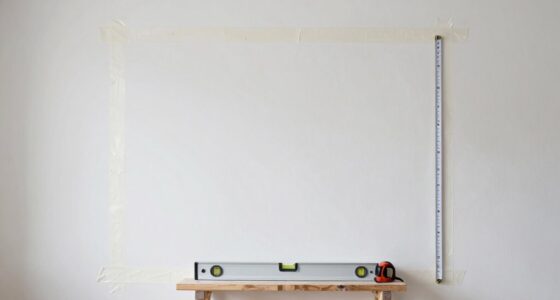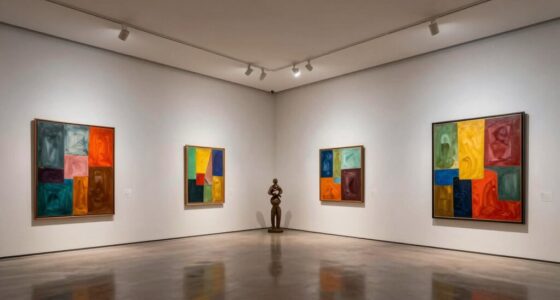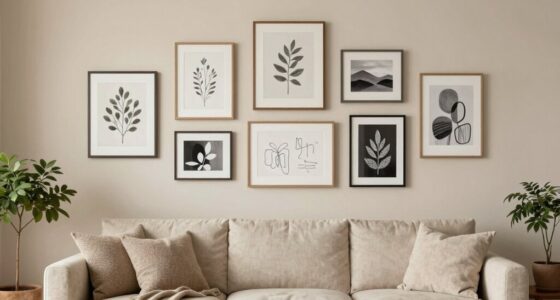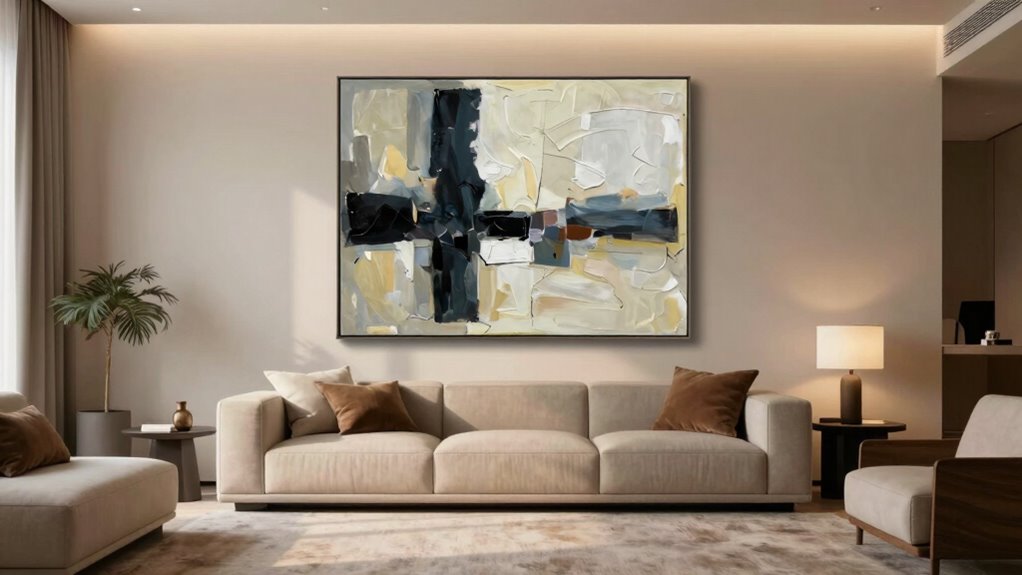

To make your artwork feel like it belongs, position it at eye level, which creates an instant sense of harmony and focus. Strategically place larger pieces above furniture like sofas or beds, and group smaller works for visual balance. Consider the lighting to enhance colors and textures, making the piece pop. Proper spacing prevents crowding and ties the room together. Want to discover more clever placement tricks that transform your space? Keep exploring for tips and ideas.

Prime made for students and young adults
- Fast, free delivery for dorm and study essentials
- Prime Video and Amazon Music included
- Member-only deals
Key Takeaways
- Position artwork at eye level to create a natural, comfortable viewing experience.
- Use consistent color schemes to integrate art seamlessly into the room’s palette.
- Center larger pieces above furniture to establish a clear focal point.
- Ensure proper lighting to highlight colors, textures, and details.
- Maintain balanced spacing around the art to prevent crowding and enhance cohesion.
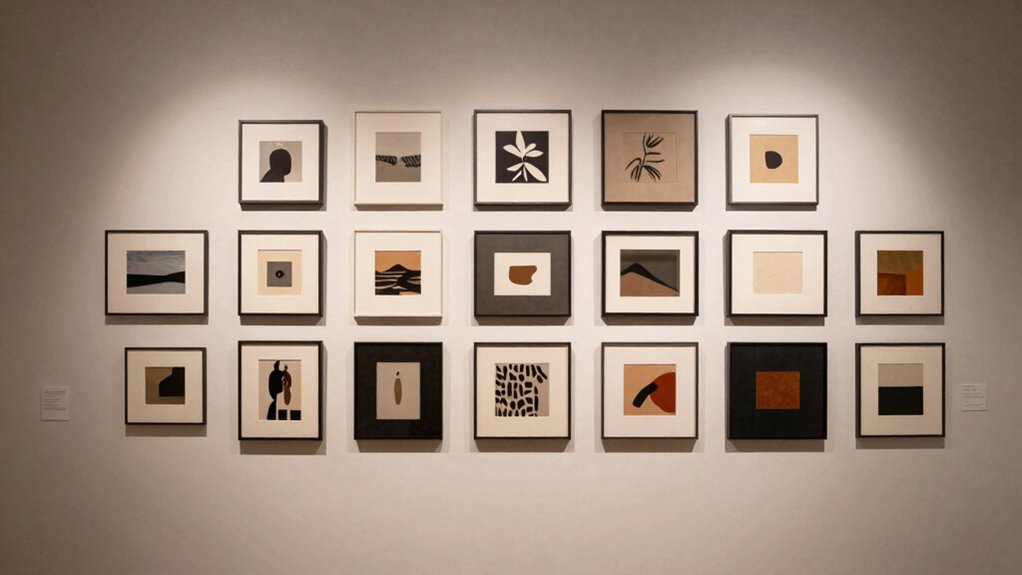
When it comes to showcasing your artwork, the key isn’t just in creating it but in how you position it. The right placement can transform a plain wall into a captivating gallery and make your art feel like a natural part of the room. To achieve this, you need to pay attention to two crucial aspects: color coordination and focal point placement. These elements work together to create harmony and draw attention where you want it most.
Start by considering the room’s color scheme. Your artwork should complement or contrast thoughtfully with the surrounding colors. If your room features neutral tones, a vibrant piece can serve as a striking focal point, immediately catching the eye. Conversely, if the space is already colorful, opt for artwork that shares some hues to create cohesion. This balance in color coordination ensures your art enhances the room without clashing or feeling out of place. When the colors in the artwork and the room align or complement each other, it helps the piece blend seamlessly into the environment, making it feel intentional rather than just an add-on.
A well-chosen color palette helps your artwork blend seamlessly or stand out as a focal point.
Next, focus on focal point placement. The goal is to position your artwork at eye level or at a height that’s comfortable for viewing. This placement naturally invites attention and makes the piece feel integrated into the space. For larger pieces, center them above furniture like a sofa or a bed, ensuring they’re proportionate to the furniture and wall space. Smaller pieces work well in grouping arrangements at eye level or in a gallery wall setup, where multiple works can be coordinated to create a unified look. Keep in mind that the focal point of the artwork should align with the viewer’s eye when seated or standing, depending on the room’s purpose. This strategic placement communicates that the art was intentionally curated for that spot. Additionally, considering the lighting conditions can further enhance the artwork’s impact and visibility. Proper lighting can emphasize the artwork’s colors and textures, making it more vibrant and engaging. Being aware of environmental factors like natural light and room layout can also influence how the art is appreciated throughout different times of the day. Incorporating these principles of design can help create a harmonious and inviting space.
Additionally, pay attention to the spacing around your artwork. Adequate space prevents the piece from feeling crowded and allows it to breathe within the room. When the artwork is well-positioned with balanced spacing, it reinforces the idea that it belongs in that environment. Proper placement doesn’t just highlight the piece; it also enhances the overall room aesthetic, making everything feel cohesive and thoughtfully designed. Recognizing the importance of biodiversity in our environment can also inspire your art choices, encouraging the use of natural themes or eco-friendly materials that promote sustainable living.
In the end, understanding how color coordination and focal point placement work together is your best trick for making your art feel like it truly belongs. When you put effort into these details, your artwork won’t just hang on the wall — it’ll become an integral part of the space, enriching the room’s personality and creating a welcoming atmosphere.
As an affiliate, we earn on qualifying purchases.
Frequently Asked Questions
How Do I Choose the Right Size Art for My Space?
To choose the right size art for your space, consider artwork proportions and the wall area. Aim for pieces that complement the furniture size—generally, art should be about two-thirds the width of the furniture. Use frame styles that enhance the artwork’s scale and style without overwhelming the space. Smaller rooms benefit from larger, bold pieces to create impact, while larger rooms can handle multiple smaller artworks for a balanced look.
What Are Common Mistakes to Avoid When Hanging Art?
Think of hanging art like tuning a musical instrument—you want harmony. Avoid common mistakes like choosing the wrong frame, which can clash with your decor, or ignoring color coordination, making the piece feel out of place. Make certain your art is hung at eye level and use consistent spacing. Don’t rush; careful framing and matching colors help your art integrate seamlessly, creating a balanced, inviting space.
How Can Lighting Enhance Artwork Placement?
Lighting enhances artwork placement by highlighting its details and creating the right mood. Use ambient lighting to evenly illuminate the room, ensuring the art isn’t overshadowed or lost. Add accent illumination, like picture lights or spotlights, to draw focus and emphasize the piece’s features. This combination makes your art stand out, complements the room’s design, and helps it feel integrated and intentional within the space.
Should Art Be Hung at Eye Level or Higher?
You should hang art at eye level for the best impact. This positioning guarantees your artwork is easily seen and appreciated. Consider your frame styles— sleek and modern frames work well at this height, while ornate ones might suit a slightly higher placement for a commanding look. Also, coordinate colors between the art and room decor to create harmony, making the piece feel naturally integrated into the space.
How Do I Create a Cohesive Gallery Wall?
To create a cohesive gallery wall, start with color coordination—choose artwork with a similar palette or complementary hues to unify the display. Select frames that match or coordinate in style and finish for consistency. Arrange your pieces with balanced spacing, mixing sizes thoughtfully. This approach guarantees your gallery wall feels intentional, harmonious, and visually appealing, making your art look like a curated collection rather than a random assortment.
adjustable picture hanging hooks
As an affiliate, we earn on qualifying purchases.
As an affiliate, we earn on qualifying purchases.
Conclusion
So, next time you hang art, ask yourself, does it feel like it belongs? Remember, the key is to think about the space and how the piece interacts with its surroundings. When you find that perfect placement, the art becomes part of the room’s story, not just an object on the wall. Why settle for just hanging art when you can create a harmonious environment that truly feels complete? Your perfect setup is just a placement away.
As an affiliate, we earn on qualifying purchases.
As an affiliate, we earn on qualifying purchases.
Halloween Picks
halloween
As an affiliate, we earn on qualifying purchases.