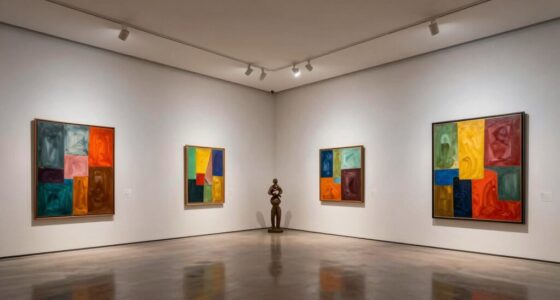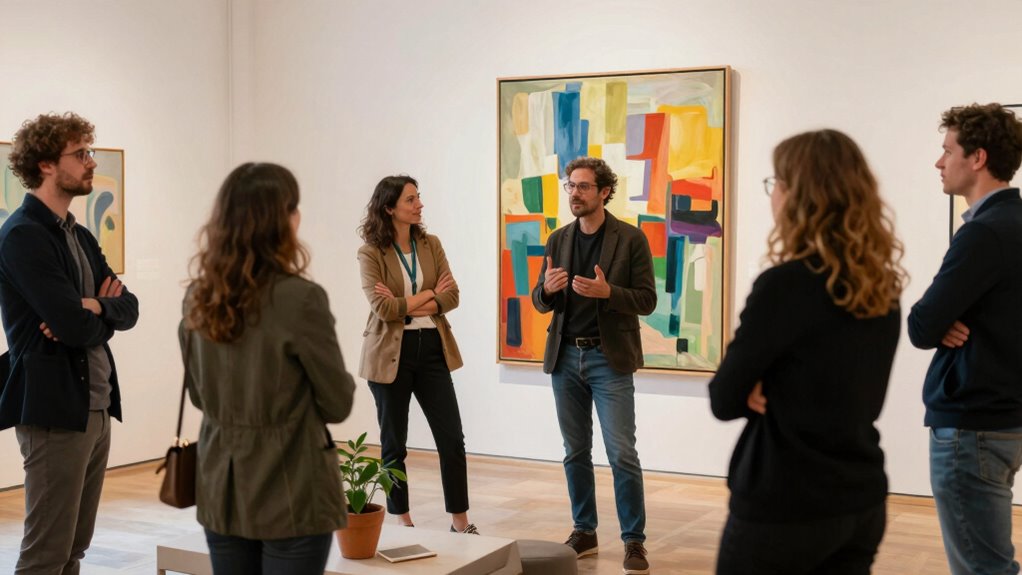

To create better conversations around art in shared spaces, focus on using interpretive strategies that explore the artist’s background, symbolism, and techniques. Share your personal emotional reactions, and encourage others to do the same, fostering genuine connections. Ask thoughtful questions to invite diverse perspectives and listen actively to build understanding. Recognize that everyone’s view is unique and valuable. If you’re interested, there’s a lot more you can explore to make your discussions even richer.

Prime made for students and young adults
- Fast, free delivery for dorm and study essentials
- Prime Video and Amazon Music included
- Member-only deals
Key Takeaways
- Use interpretive strategies to explore multiple layers of meaning and deepen engagement.
- Encourage sharing personal emotional responses to foster authentic connections.
- Practice active listening and ask open-ended questions to promote thoughtful dialogue.
- Acknowledge diverse perspectives to enrich conversations and break down barriers.
- Incorporate background knowledge and artistic techniques to provide context and enhance understanding.
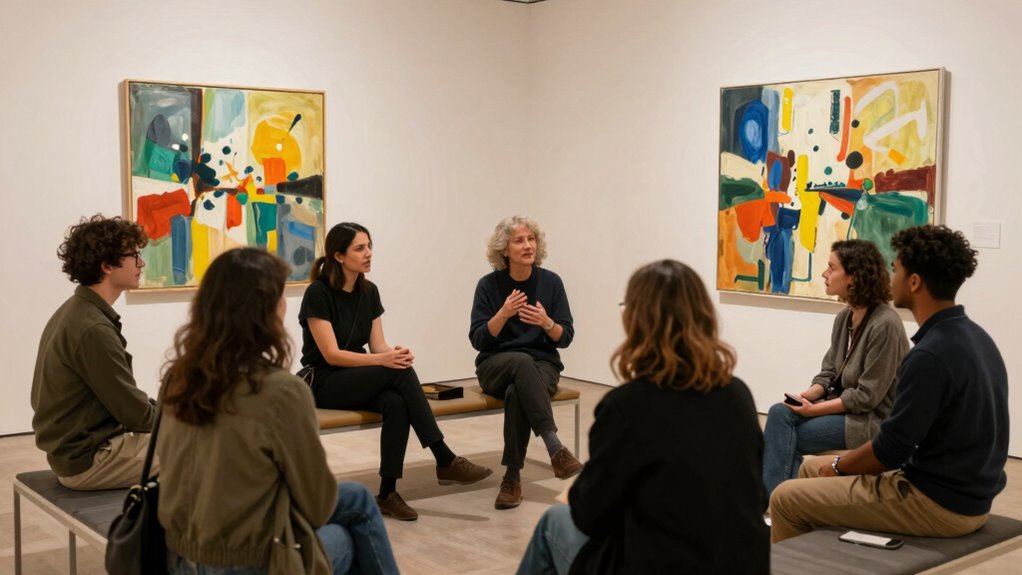
Have you ever wondered why some art conversations spark excitement while others fall flat? The key often lies in how you approach the artwork and the strategies you use to interpret it. When you engage with art thoughtfully, you’re more likely to foster meaningful discussions that resonate with everyone involved. One effective way to do this is by applying interpretive strategies. These are methods you use to analyze and understand what you’re seeing, which helps you articulate your thoughts clearly and invites others to share their perspectives. Instead of just stating your initial impression, try to explore different angles—consider the artist’s background, the historical context, or the symbolism behind the piece. This deepens the conversation and makes it more engaging for everyone.
But more than just analyzing, you want to create emotional engagement. Art is inherently emotional; it evokes feelings, memories, and personal reactions. When you share your emotional response authentically, you open the door for others to do the same. This connection makes the conversation more lively and memorable. For example, instead of simply describing what you see, talk about how the artwork makes you feel and why. When you’re honest about your emotional reactions, it encourages others to be open too, transforming a surface-level discussion into a shared experience.
To foster better conversations around art, it’s also crucial to listen actively. Show genuine interest in others’ interpretations and emotional reactions. Ask questions like, “What does this piece remind you of?” or “How does this make you feel?” This not only demonstrates your engagement but prompts others to delve deeper into their own responses. Remember, a good conversation isn’t just about sharing your opinions; it’s about creating a space where everyone feels comfortable expressing their thoughts and feelings. Recognizing the subjectivity of art allows for more inclusive and diverse discussions. Additionally, understanding the interpretive strategies can help create a more structured and insightful dialogue. Developing an awareness of artistic context can further enrich the conversation by providing background that influences interpretation. Exploring artistic techniques can also reveal how the artist’s methods contribute to the overall meaning, fostering a richer dialogue. Moreover, understanding the viewer’s perspective can help you appreciate how personal experiences shape interpretation and facilitate more empathetic exchanges.
You can also enhance conversations by encouraging different viewpoints. Art is subjective, so welcoming diverse interpretations enriches the dialogue. When you acknowledge various perspectives, you help break down barriers and make the discussion more dynamic. Keep in mind that the goal isn’t to reach a consensus but to explore multiple layers of meaning. By combining interpretive strategies with authentic emotional engagement and active listening, you set the stage for conversations that are vibrant, inclusive, and memorable. Ultimately, the way you approach art conversations can turn a simple exchange into a shared journey of discovery, connection, and appreciation.
As an affiliate, we earn on qualifying purchases.
Frequently Asked Questions
How Can Technology Enhance Art Conversations in Shared Spaces?
You can enhance art conversations in shared spaces by leveraging technology like interactive displays and virtual tours. Interactive displays invite visitors to engage directly with the artwork, sparking curiosity and deeper discussions. Virtual tours provide immersive experiences, allowing people to explore art from different perspectives. These tools break down barriers, encourage participation, and foster dynamic conversations, making shared art spaces more engaging and educational for everyone involved.
What Are Common Barriers to Engaging Discussions About Art?
You might find that barriers like differing art interpretations and emotional responses hinder engaging discussions about art. When people view artwork differently or feel emotionally vulnerable, they may hesitate to share their thoughts. To overcome this, you can foster a safe environment where diverse interpretations are welcomed. Encourage open-ended questions that invite personal emotional responses, helping participants connect more deeply and feel confident sharing their unique perspectives.
How Do Cultural Differences Influence Art Conversations?
Cultural differences profoundly influence art conversations by shaping how people interpret and value artworks. You should practice cultural sensitivity, recognizing diverse perspectives, and be mindful of language barriers that might hinder understanding. When discussing art, ask open-ended questions and listen actively to learn each person’s cultural context. This approach fosters respectful, meaningful conversations that bridge differences, enriching everyone’s appreciation of art in shared spaces.
What Role Does Audience Age Play in Art Discussions?
You’ll find that audience age considerably shapes art discussions through age-related perceptions and generational influences. Younger audiences might focus on contemporary themes, while older viewers often appreciate historical context. As you facilitate conversations, consider these differences, encouraging diverse perspectives. By recognizing how age influences perceptions, you foster richer, more inclusive dialogues. This approach helps everyone feel heard, making shared art experiences more engaging and meaningful across generations.
How Can Facilitators Encourage Shy or Reserved Participants?
You can draw out shy participants by starting with icebreaker activities that gently ease them into conversation. Use guided prompts that invite personal reflections or small group discussions, making it less intimidating to share thoughts. Keep the atmosphere relaxed and non-judgmental, so they feel safe. As trust builds, they’ll become more engaged, revealing their unique perspectives and enriching the art conversation for everyone involved.
As an affiliate, we earn on qualifying purchases.
Conclusion
By fostering open, inclusive dialogues around art, you turn shared spaces into vibrant hubs of connection and insight. Imagine hosting a community mural project where everyone shares stories behind their favorite colors or symbols—suddenly, conversations deepen, and bonds strengthen. When you encourage curiosity and respect different perspectives, you create an environment where art sparks meaningful exchanges. So, next time you see a piece, ask questions and listen—you might discover a story that transforms your understanding.
As an affiliate, we earn on qualifying purchases.
artistic techniques reference book
As an affiliate, we earn on qualifying purchases.
As an affiliate, we earn on qualifying purchases.
Halloween Picks
halloween
As an affiliate, we earn on qualifying purchases.