
To safely display art in open-plan homes, choose the right wall anchors and hardware based on your wall type and artwork weight. Use stud finders to locate sturdy support or opt for heavy-duty toggler bolts for larger pieces. Guarantee everything is level and securely fixed, and periodically inspect for looseness or damage. Consider professional help for large or valuable pieces. Keep in mind proper mounting and maintenance practices to prevent accidents—more detailed tips await you.

Prime made for students and young adults
- Fast, free delivery for dorm and study essentials
- Prime Video and Amazon Music included
- Member-only deals
Key Takeaways
- Use appropriate wall anchors and hardware based on wall type and artwork weight for secure mounting.
- Locate wall studs and screw directly into them for maximum stability in open spaces.
- Regularly inspect and maintain mounted art to ensure hardware remains secure over time.
- Opt for level, secure mounting techniques to prevent art from falling or tilting.
- Consider professional installation for large or valuable pieces to ensure safety in open-plan environments.
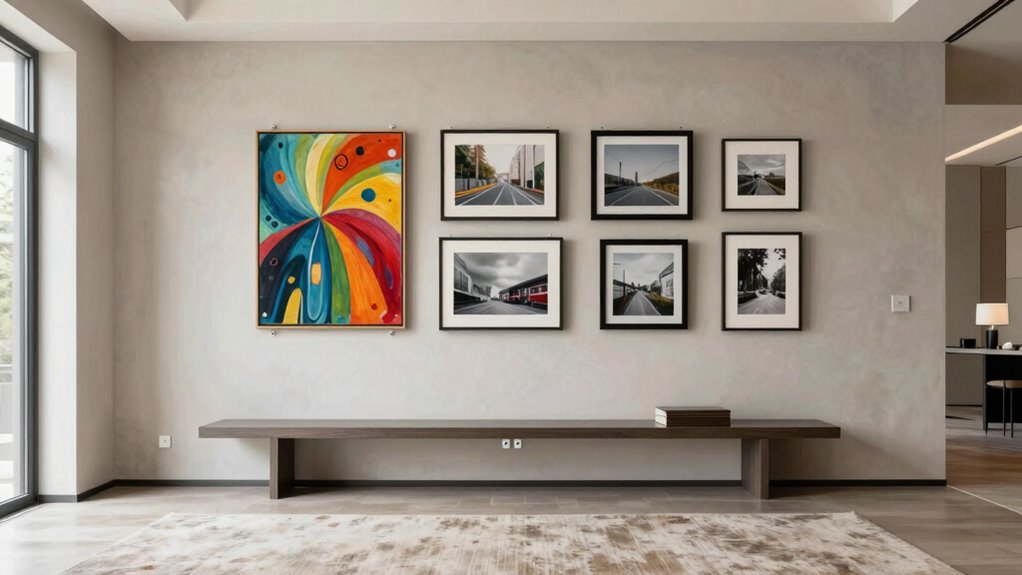
Have you ever wondered if your art display setup is safe? If you’re like many people with open-plan homes, you want your art to look stunning without compromising safety. The foundation of a secure art display starts with a proper art installation. It’s essential to choose the right materials and techniques to ensure your artwork stays put and doesn’t pose any hazards. Wall mounting is the most common method, but it requires careful planning. First, identify the wall type—whether drywall, plaster, or brick—so you can select appropriate anchors and screws. Using the wrong hardware can lead to your art falling unexpectedly, which is especially risky in open spaces where people frequently walk around. Invest in high-quality wall anchors designed for the weight of your artwork. For heavier pieces, consider toggler bolts or molly bolts that provide extra support and stability. When hanging large or valuable art, it’s worth hiring a professional or at least consulting one to guarantee your wall mounting is secure.
Make sure to locate wall studs if possible; they provide an extra solid anchor point. Use a stud finder to help you pinpoint these areas, and then screw directly into the studs for maximum safety. If your artwork is lighter, special adhesive hooks or picture-hanging strips can be effective, but always check their weight limits and ensure they’re rated for your specific piece. When mounting, double-check that your hardware is level and securely fastened. A crooked or loosely hung piece not only ruins the aesthetic but also increases the risk of falling. Keep in mind that open-plan homes often have high ceilings and large wall spaces, so it’s tempting to hang big, statement pieces. While this enhances visual impact, it also demands extra caution during installation. Proper wall mounting techniques are crucial to prevent accidents and damage. Additionally, understanding the different wall types helps you select the most appropriate hardware for a safe and secure display. Knowing the weight limits of your mounting hardware is equally important to avoid overloads that could lead to accidents.
Regularly inspect your wall-mounted art to catch any signs of loosening or damage. Over time, screws can loosen, or wall anchors may weaken, especially if you live in an area prone to humidity or temperature fluctuations. Re-tighten or replace hardware as needed to maintain safety. It’s also helpful to familiarize yourself with proper safety guidelines to further prevent any mishaps. Being aware of the structural integrity of your walls can help you determine the best mounting solutions for your space. Remember, the goal isn’t just to create a beautiful art display but to do so responsibly. When your art is properly installed with the right wall mounting techniques, you can enjoy your open-plan space without worry. Your carefully curated art will be a source of pride, not concern, knowing it’s securely and safely displayed for everyone’s enjoyment.
heavy duty wall anchors for artwork
As an affiliate, we earn on qualifying purchases.
As an affiliate, we earn on qualifying purchases.
Frequently Asked Questions
How Do I Choose the Best Art Display for High-Traffic Areas?
To choose the best art display for high-traffic areas, consider lighting considerations that highlight your pieces without causing glare. Opt for durable, secure hanging options to prevent accidents. Coordinate wall colors to make your artwork pop and blend seamlessly with your decor. Keep the display low enough to avoid bumps and guarantee easy access. You want your art to be attractive yet safe, so prioritize both aesthetics and practicality.
What Are the Safest Materials for Hanging Artwork?
Imagine your artwork hanging securely like a treasured gem in a safe vault. Opt for art materials with high durability, such as acrylic or metal frames, which withstand bumps and knocks. Use wall mounting techniques like heavy-duty anchors and picture hooks rated for weight. These choices guarantee your art stays safe amid busy foot traffic, providing peace of mind while showcasing your collection elegantly and securely.
Can Children Access Artwork Safely in Open-Plan Homes?
You can keep children safe from artwork in open-plan homes by implementing child-proofing measures like securing frames tightly and using shatterproof glass. Follow artwork height guidelines, placing pieces higher on walls so kids can’t reach or pull them down. Supervise children around artwork, and consider using protective barriers or furniture to keep delicate pieces out of reach. Regularly check that all display elements remain secure and safe.
How Often Should I Inspect Art Hanging Hardware?
You should inspect your art hanging hardware at least once every six months to guarantee art security and hardware durability. Regular checks help catch loosened hooks, bent nails, or worn-out wires early, preventing accidents. If you notice any signs of wear or instability, replace or tighten the hardware promptly. Consistent inspections keep your artwork secure and your open-plan home safe, especially with children around.
Are There Specific Safety Tips for Large or Heavy Art Pieces?
Yes, there are safety tips for large or heavy art pieces. You should prioritize wall anchoring that can support the weight considerations of your artwork. Use appropriate anchors or toggles for heavier pieces, ensuring they’re securely fastened into studs or proper wall anchors. Regularly check the hardware, especially after any impact or over time, to prevent accidents. Properly supported heavy art keeps your space safe and your display secure.
As an affiliate, we earn on qualifying purchases.
Conclusion
By following these simple safety tips, you turn your open-plan space into a gallery that celebrates creativity without risking chaos. Remember, a well-secured art piece isn’t just about protection—it’s about preserving the harmony of your home’s story. Think of each carefully hung artwork as a silent guardian, whispering stories of beauty and safety. When you prioritize security, you’re not just decorating—you’re crafting a sanctuary where art and life coexist in perfect balance.
toggle bolts for heavy picture hanging
As an affiliate, we earn on qualifying purchases.
As an affiliate, we earn on qualifying purchases.
professional picture hanging kit
As an affiliate, we earn on qualifying purchases.
As an affiliate, we earn on qualifying purchases.
Halloween Picks
halloween
As an affiliate, we earn on qualifying purchases.