To display art in your dining room without fighting reflections, you should avoid direct, harsh lighting and opt for diffused, soft light sources like dimmable LEDs or wall sconces. Position your lighting at angles above or to the side of the artwork to minimize glare. Keep natural light in check with sheer curtains or UV-protective films, and carefully plan the placement of your art away from windows and bright reflections. Continue exploring to uncover more tips for perfect display.

Prime made for students and young adults
- Fast, free delivery for dorm and study essentials
- Prime Video and Amazon Music included
- Member-only deals
Key Takeaways
- Use diffused, soft lighting at angles above or to the side of the artwork to reduce glare.
- Position artwork away from direct sunlight and utilize sheer curtains or UV filters.
- Select frames with matte or non-reflective surfaces to minimize surface reflections.
- Arrange furniture and artwork to avoid direct lines of sight with light sources or windows.
- Implement layered lighting with ambient, task, and accent lights for balanced, glare-free illumination.
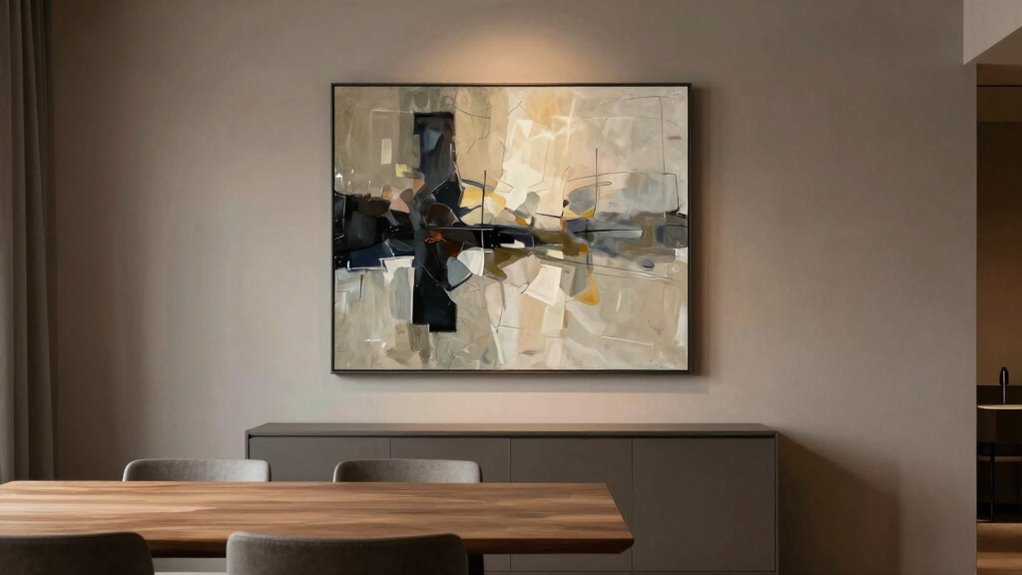
When showcasing art in your dining room, reflections can often detract from the beauty of your pieces and disrupt the overall ambiance. To prevent this, you need to pay close attention to lighting techniques and frame styles, which play vital roles in minimizing unwanted glare. Start by considering how your light sources interact with the artwork. Direct, harsh lighting can create glare and reflections that obscure the details and colors of your art. Instead, opt for diffused lighting—such as soft LED fixtures or wall-mounted sconces with dimming options—that evenly illuminates your artwork without creating bright spots or glare. Position your lighting at angles that avoid direct reflection into your eyes or onto the surface of the art piece. For example, placing fixtures slightly above or to the side of the artwork can greatly reduce reflections, ensuring your art is displayed clearly and beautifully. Using appropriate lighting techniques can significantly enhance the viewing experience and help your art shine without distraction. Additionally, understanding how lighting interactions affect reflections can guide you in selecting the best fixtures and angles for your space, ensuring the artwork remains the focal point. Proper lighting placement is also crucial, as it prevents unwanted reflections and enhances the overall aesthetic. Positioning your art thoughtfully within the space is equally important. Keep your artwork away from direct sunlight, which can cause both glare and fading over time. If natural light is unavoidable, use sheer curtains or UV-protective window films to soften the light and prevent reflections. Additionally, consider the artwork’s position relative to windows and light sources to further minimize glare. When arranging your dining room lighting, aim for layered lighting—combining ambient, task, and accent lights—to distribute light evenly and create a warm, inviting atmosphere that highlights your art without overwhelming it. Furthermore, experimenting with different lighting angles can help you find the optimal setup for reducing reflections and showcasing your art effectively. By carefully selecting your lighting techniques and frame styles, you guarantee your art remains the focal point, free from distracting reflections. With these adjustments, you’ll enjoy a dining room that showcases your artwork beautifully and harmoniously, inviting admiration from everyone who enters.
Frequently Asked Questions
Can Reflective Art Pieces Be Used in Dining Rooms?
Yes, you can definitely use reflective art pieces in your dining room. To avoid glare and reflections, consider strategic art placement—hang pieces at eye level and away from direct light sources. Incorporate mixed media art to add texture and interest, balancing reflective surfaces with matte finishes. This approach keeps your space lively without the distraction of unwanted reflections, creating a harmonious dining environment.
What Lighting Options Reduce Glare on Reflective Art?
You can reduce glare on reflective art by choosing soft, warm lighting with strategic placement. Position your light sources at angles rather than directly facing the artwork, like casting gentle pools of light from the sides. Opt for matte finishes on frames or mats to diffuse reflections further. Imagine a cozy glow softly wrapping around the art, creating a welcoming ambiance without harsh reflections, making your dining space inviting and visually pleasing.
How Does Wall Color Affect Reflections in Artwork?
Choosing wall colors with matte finishes minimizes reflections, helping your artwork stand out without glare. Light, muted shades are especially effective, as they reduce light bounce and diffuse reflections. Incorporate wall textures like subtle plaster or textured paint to further break up reflective surfaces. These choices create a soft, non-reflective background that enhances your art’s visibility while preventing distracting reflections, making your dining room more inviting and visually balanced.
Are There Specific Frame Materials That Minimize Reflections?
Think of your frames as shields in a battle against glare. Opt for materials like matte finishes or anti-reflective glass to deflect reflections effectively. These choices act like armor, reducing light bounce and keeping your artwork pristine. Wooden or metal frames with matte coatings are excellent, as they absorb rather than reflect light. By choosing these materials, you guarantee your art remains the star, undistracted by unwanted reflections.
Can Window Treatments Help Control Reflections on Art?
Yes, window treatments can help control reflections on art. You can use window films to reduce glare and diffuse sunlight, making reflections less noticeable. Additionally, choosing curtain styles like blackout curtains or layered drapes allows you to block or filter light effectively. By combining window films with strategic curtain styles, you create a softer, glare-free environment that enhances your art’s visibility without unwanted reflections.
Conclusion
Remember, a picture is worth a thousand words—and a little reflection can be a good thing, too. By choosing the right placement and framing your art thoughtfully, you can enjoy beautiful pieces without the glare. Think of it like the saying, “A good eye is worth a thousand words,” and trust your instincts. With a bit of patience and creativity, your dining room can become a perfect blend of style and function, free of pesky reflections.
Fall Picks
fall essentials
As an affiliate, we earn on qualifying purchases.