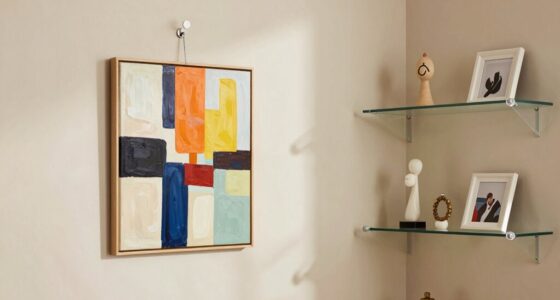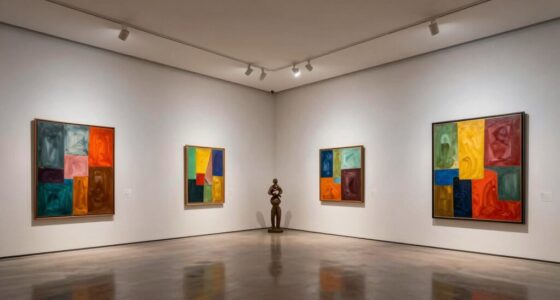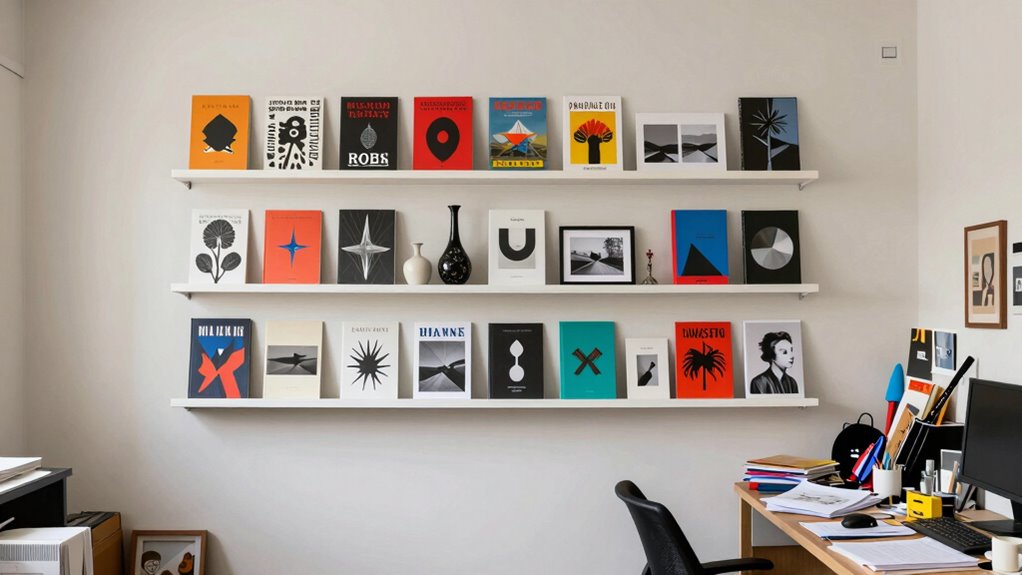
A curated display is intentional, with elements arranged to tell a clear visual story, highlight key messages, and create harmony through thoughtful use of color and space. In contrast, visual clutter results from disorganized, haphazard placement that overwhelms your senses, distracts from your message, and makes interpretation difficult. Recognizing these differences helps you craft displays that guide your audience smoothly. Keep exploring to discover how to transform chaos into clarity and enhance your visual communication skills.

Prime made for students and young adults
- Fast, free delivery for dorm and study essentials
- Prime Video and Amazon Music included
- Member-only deals
Key Takeaways
- Curated displays are intentionally arranged to guide the viewer’s eye, while visual clutter is randomly organized and overwhelming.
- Curated displays use color harmony and spatial planning to create a cohesive, pleasing visual story; clutter lacks such harmony.
- Curated displays highlight meaningful elements with clear visual hierarchy; clutter obscures important information through chaos.
- Properly curated displays foster engagement and clarity; clutter causes distraction and confusion.
- Recognizing signs of disorganization enables transforming clutter into a focused, effective visual presentation.

Understanding the difference between a curated display and visual clutter is essential for effective communication and space management. When you arrange items intentionally, you create a visual story that guides the viewer’s eye and highlights meaningful elements. This involves paying attention to color harmony, guaranteeing that the colors you select complement each other and produce a pleasing, balanced look. Proper use of color harmony helps to unify your display, making it more appealing and easier for viewers to process. It also prevents the chaos that arises when too many contrasting or jarring colors compete for attention, which can overwhelm the senses and obscure your message.
Spatial organization plays a critical role in distinguishing a curated display from clutter. When you approach your space with a clear plan, you allocate specific zones for different objects, balancing negative space with items of interest. This deliberate spatial organization ensures that every piece has room to breathe and that the overall layout feels cohesive rather than chaotic. You might group related objects together or create visual anchors that draw attention and provide structure. By contrast, visual clutter results when objects are scattered randomly, with no thought to their placement or relationship to each other, making it hard for anyone to focus or interpret the space’s purpose. spatial organization is a key element in creating an intentional and harmonious display. Additionally, understanding the principles of visual hierarchy can help you prioritize elements and guide viewers through your arrangement more effectively. Developing an awareness of space planning techniques can further enhance the clarity and impact of your display. Recognizing how visual weight influences the viewer’s focus is also crucial for a balanced design.
A curated display isn’t just about selecting attractive items; it’s about creating a narrative through thoughtful arrangement. You choose what to include based on relevance and aesthetic appeal, and you carefully consider how each piece interacts with others. This intentional curation enhances the overall message and creates a sense of harmony. When you manage spatial organization well, your display becomes inviting and easy to navigate—each element leading naturally to the next. This not only improves visual appeal but also helps communicate your intent more effectively.
In contrast, visual clutter signals a lack of planning or awareness. It can happen when you pile objects without thought or ignore principles of color harmony and spatial organization. The result is a chaotic environment that distracts rather than communicates. Viewers may feel overwhelmed or disengaged because their attention is pulled in multiple directions, with no clear focal point or sense of order. Recognizing visual clutter as a sign of disorganization helps you develop more mindful and intentional display practices. By understanding the principles behind effective arrangement, you can transform chaos into clarity and purpose.
Frequently Asked Questions
How Can I Identify Visual Clutter in My Space?
You can identify visual clutter by checking if your space feels overwhelming or chaotic. Look for areas where color harmony is disrupted, with mismatched or excessive colors that distract the eye. Also, assess space utilization—if surfaces are overcrowded or items are poorly organized, it’s cluttered. Removing unnecessary objects and maintaining a balanced color scheme helps create a clean, harmonious environment, reducing visual noise and making your space more inviting.
What Are Quick Tips to Curate My Display Effectively?
To curate your display effectively, start by selecting a few decorative accessories that complement each other. Keep color coordination in mind; choose a cohesive palette to create harmony. Limit the number of items to avoid clutter, and regularly reassess your arrangement. Focus on balance and negative space, ensuring each piece has room to breathe. This approach keeps your space visually appealing without overwhelming it.
Does Minimalism Always Mean a Curated Display?
Minimalism isn’t always a curated display; it’s more like a clean canvas. While it emphasizes simplicity, you can still add decorative accents and maintain color coordination for visual interest. Think of minimalism as a well-edited playlist—each element chosen intentionally. So, yes, a minimalist space can be curated, but it doesn’t have to be overly styled or clutter-free. It’s about balance, not perfection.
How Does Lighting Impact Visual Clutter Perception?
Lighting considerably impacts how you perceive visual clutter. Ambient lighting creates a soft, even glow that minimizes distractions, making spaces feel calmer. Shadow play adds depth and dimension, guiding your focus and reducing perceived clutter. When you use strategic lighting, you highlight key areas while subtly concealing less important items, helping your space look more curated rather than cluttered. Proper lighting truly transforms your environment into a more organized, serene space.
Can Curated Displays Be Personalized Without Cluttering?
Yes, you can personalize displays without cluttering by using effective personalization techniques. Focus on selecting a few meaningful items that reflect your style and interests, and arrange them neatly to reduce visual clutter. Incorporate space between items, choose cohesive colors, and limit the number of pieces. This approach keeps your display personalized and engaging, while maintaining a clean, clutter-free look that enhances your space’s overall aesthetic.
Conclusion
Understanding the difference between curated display and visual clutter helps you create spaces that feel intentional and calming. When you choose to curate, it’s like tending a garden—each element has purpose and beauty. But if you let clutter take over, your space becomes chaotic, like a stormy sky. By consciously shaping your environment, you can enjoy clarity and peace, turning your surroundings into a sanctuary rather than a jumble.
Fall Picks
fall essentials
As an affiliate, we earn on qualifying purchases.