

To think about depth when displaying sculptural or layered work, focus on manipulating spatial relationships and visual cues like shadows, highlights, and overlaps. Pay attention to how layers interact with light and each other to create a sense of three-dimensionality. Consider viewer angles and perspectives, ensuring the piece remains engaging from different viewpoints. If you stay curious, you’ll uncover more ways to enhance depth and make your work truly immersive.

Prime made for students and young adults
- Fast, free delivery for dorm and study essentials
- Prime Video and Amazon Music included
- Member-only deals
Key Takeaways
- Consider the arrangement and spacing of layers to create clear foreground, middle ground, and background distinctions.
- Use lighting strategically to cast shadows and highlights that enhance perceived depth and form.
- Vary the scale and placement of components to guide viewer movement and emphasize spatial relationships.
- Incorporate subtle perceptual cues like overlaps and textures to reinforce layered depth.
- View the work from multiple angles to ensure depth and spatial hierarchy remain engaging and convincing.
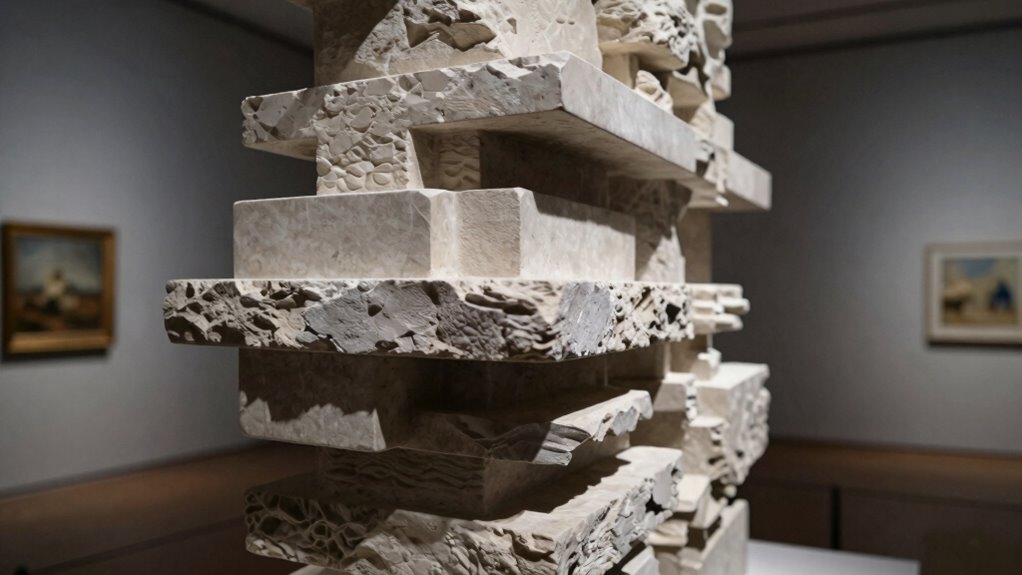
Have you ever wondered what it truly means to think about depth? When you’re working with sculptural or layered pieces, understanding depth isn’t just about making something look three-dimensional—it’s about actively engaging your viewer’s visual perception and spatial awareness. Depth in art guides the eye, creates a sense of movement, and transforms flat surfaces into immersive experiences. To do that effectively, you need to consider how viewers interpret space and how your work interacts with their natural perception.
Depth in art engages perception and spatial awareness, transforming flat surfaces into immersive, dynamic visual experiences.
Your visual perception plays a vital role in how depth is perceived. It’s what your brain uses to interpret the spatial relationships between objects, whether they’re on a flat canvas or a multi-layered sculpture. When you design layered work, you’re essentially manipulating visual clues that lead the eye into different planes. Shadows, highlights, overlaps, and varying textures all serve as signals, helping viewers distinguish between foreground, middle ground, and background. You want these cues to be clear yet subtle enough to invite closer inspection. The goal is to create a convincing illusion of depth that draws viewers in without confusing them.
Spatial awareness is equally critical. It refers to how you understand and manipulate the spatial relationships within your work. When layering materials or sculpting, you’re not just stacking elements; you’re orchestrating a dialogue between forms. Consider the placement and scale of each layer or component relative to the others. Think about how light interacts with these surfaces, casting shadows that enhance the sense of depth. You want the layers to feel intentional—each one contributing to the overall spatial narrative. This means paying attention to the depth of each element, ensuring some are pushed forward while others recede, creating a dynamic sense of three-dimensionality. Additionally, understanding visual perception helps you anticipate how viewers will interpret these cues from different angles and distances. Recognizing how spatial perception influences viewer engagement can help you design work that remains compelling and immersive regardless of the viewer’s position. Developing an awareness of multi-dimensionality can further enhance how viewers experience layered or sculptural works, making the illusion of depth more compelling. Incorporating perceptual cues intentionally can also significantly strengthen the viewer’s experience of depth and space. Being mindful of how different visual cues are perceived from various viewpoints can make your work more versatile and impactful.
Thinking about depth also involves stepping back and viewing your work from different angles. What looks layered and immersive from one perspective might flatten out from another. Use this to your advantage by designing with multiple viewpoints in mind. Be mindful of how your audience will move around the piece. The visual perception of depth isn’t static; it shifts with perspective, so your work should be engaging from every angle. By consciously planning how each layer interacts with light, shadow, and space, you can craft layered or sculptural work that feels alive, compelling, and rich in depth. Ultimately, mastering the relationship between visual perception and spatial awareness allows you to create work that invites viewers to explore and experience depth more vividly.
art gallery lighting for sculptures
As an affiliate, we earn on qualifying purchases.
As an affiliate, we earn on qualifying purchases.
Frequently Asked Questions
How Does Lighting Affect Perceived Depth in Layered Sculptures?
Lighting profoundly impacts how you perceive depth in layered sculptures through shadow play and color contrast. By positioning light to cast shadows, you create a sense of dimensionality and separation between layers. Using contrasting colors enhances this effect, making certain elements pop forward while others recede. Adjusting light angles and intensity helps you control perceived depth, making your sculpture more dynamic and engaging for viewers.
Can Digital Tools Help Visualize Depth Before Creating Physical Work?
Yes, digital tools like virtual modeling and digital simulations can help you visualize depth before creating your physical work. You can experiment with different layering techniques, lighting effects, and spatial arrangements, all in a virtual environment. This allows you to see how elements interact in three dimensions, make adjustments easily, and refine your design. Using these tools saves time and helps you achieve the desired depth and layered complexity with confidence.
How Do Viewer Angles Influence the Perception of Depth?
Imagine the subtle dance of perspective shifts, guiding your viewer’s engagement. As they move around your work, their changing angles reveal new layers of depth, making the sculpture feel alive and dynamic. Viewer angles influence perception by highlighting or softening certain elements, so consider how your piece interacts from multiple viewpoints. By thoughtfully arranging your work, you invite viewers to explore depth intuitively, enriching their overall experience.
What Materials Best Emphasize Depth in Layered Art?
You should choose materials that create strong material contrast, like combining smooth wood with rough metal, to emphasize depth. Incorporate color depth by layering shades or using translucent materials, which add visual layers. These techniques make different layers stand out more distinctly, engaging viewers and enhancing the perception of depth. By thoughtfully selecting contrasting textures and rich colors, you create a dynamic, layered effect that draws viewers into your work.
How Does Scale Impact Depth Perception in Sculptural Works?
A larger scale greatly enhances depth perception in sculptural works because it boosts your spatial awareness and emphasizes dimensional contrast. Remember, size isn’t everything, but it certainly helps you see the layers more clearly. When you work with bigger pieces, viewers can better appreciate how elements relate in space, creating an immersive experience. Smaller works might require clever lighting or positioning to achieve the same sense of depth, but scale remains a powerful tool.
layered sculpture display stands
As an affiliate, we earn on qualifying purchases.
As an affiliate, we earn on qualifying purchases.
Conclusion
When displaying sculptural or layered work, remember that depth isn’t just about physical distance—it’s about creating an immersive experience. By thoughtfully manipulating shadows, textures, and spatial relationships, you can guide viewers’ eyes and emotions. Notably, studies show that our brains process layered visuals 30% faster when depth cues are well-defined, highlighting how vital depth is to engagement. So, embrace depth as a tool to invite viewers into your work, making each piece more compelling and dynamic.
As an affiliate, we earn on qualifying purchases.
As an affiliate, we earn on qualifying purchases.
Fall Picks
fall essentials
As an affiliate, we earn on qualifying purchases.