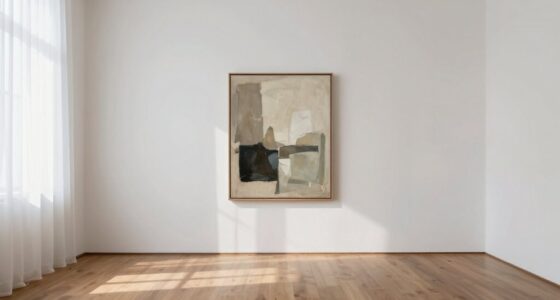
Small-scale art has a quiet yet impactful power in large rooms. It creates visual contrast, making spacious areas feel more inviting and thoughtfully curated. By carefully arranging your artwork, you can achieve harmony, highlight focal points, and add depth to the space. These pieces help balance the room’s scale without overwhelming it, turning empty expanses into intimate environments. If you want to discover how to perfectly incorporate small art into big spaces, keep exploring these ideas.

Prime made for students and young adults
- Fast, free delivery for dorm and study essentials
- Prime Video and Amazon Music included
- Member-only deals
Key Takeaways
- Small-scale art creates visual contrast and focal points without overwhelming large spaces.
- It maintains balance and harmony, guiding the viewer’s eye naturally throughout the room.
- Strategic arrangements and display styles add depth, texture, and visual interest.
- Proper placement enhances the room’s ambiance, making it feel warm and inviting.
- Thoughtful curation emphasizes intentionality, elevating large rooms with subtle artistic accents.

When you place small-scale art in large rooms, it creates a striking visual contrast that can make your space feel more inviting and thoughtfully curated. This clever art placement draws the eye without overwhelming the room’s expansive feel, allowing you to highlight specific areas or add subtle interest. Instead of filling every inch with large, bold pieces, you let a few carefully chosen small artworks act as focal points, creating a layered look that invites closer inspection. This approach not only enhances the aesthetic but also emphasizes a sense of curated intentionality, making your space feel more sophisticated and personalized.
Small-scale art in large rooms creates inviting contrast, adding sophistication and visual interest without overwhelming the space.
In a large room, the challenge is often maintaining visual balance. Small-scale art helps you achieve this by providing focal points that don’t dominate the environment. You might consider grouping a series of tiny paintings or photographs in a grid or asymmetrical arrangement to create a cohesive visual story. When placing art, think about the natural flow of the space—align pieces at eye level in areas where you want attention and keep them clustered in zones that need visual anchoring. Proper art placement ensures your small artworks complement the scale of the room rather than get lost in the vastness. It’s about creating harmony between the art and the space, so neither seems out of place or diminutive.
You can also experiment with different display styles—float frames, shadow boxes, or even mixed-media arrangements—to add texture and depth. When hanging, consider the concept of visual balance; distribute your small pieces evenly or intentionally asymmetrically depending on the mood you want to evoke. A single small piece can serve as a visual pause, giving viewers a moment to absorb the details before moving on. Multiple tiny works can form a narrative or thematic grouping that guides the eye naturally around the room. The key is to avoid clutter while still making the art stand out. Proper art placement turns your large room into a canvas where small-scale pieces act as strategic accents, enriching the overall aesthetic without overwhelming the space.
Ultimately, your goal is to create a harmonious environment where each piece of art enhances the room’s grandeur. Small-scale art, when thoughtfully placed, brings a quiet power—subtle yet impactful—highlighting your taste and making your large space feel warm and inviting. By paying attention to art placement and visual balance, you craft a setting that feels both expansive and intimate, ensuring your art complements rather than competes with the room’s size.
small framed wall art for large rooms
As an affiliate, we earn on qualifying purchases.
As an affiliate, we earn on qualifying purchases.
Frequently Asked Questions
How Can Small Art Pieces Enhance Large Room Aesthetics?
Small art pieces can elevate your large room by creating focal points that draw the eye. Use color harmony to guarantee these pieces complement your existing palette, adding visual coherence. Incorporate texture contrast to add depth and interest, preventing the space from feeling overwhelming. Their subtle presence allows for flexibility in decor, making a big impact without overpowering, and encouraging viewers to appreciate the nuanced details up close.
What Framing Options Work Best for Small-Scale Artwork?
Thinking about framing options for your small-scale artwork? Opt for sleek, minimalist frames or floating styles to let the art shine. Choose gallery arrangements that create visual impact, like a grid or salon style, to draw attention. These framing styles and arrangements add depth and sophistication, transforming your small pieces into mesmerizing focal points. Don’t underestimate the power of a well-chosen frame—it’s your secret weapon for stunning large-room displays.
Are There Specific Themes Suited for Small Art in Big Spaces?
Yes, certain themes suit small art in big spaces, especially those that emphasize gallery diversity and thematic cohesion. You should choose themes like intricate nature scenes, delicate portraits, or abstract designs that invite close-up viewing. These themes create a sense of intimacy and contrast, drawing viewers in. When the themes are cohesive, they help unify the large space, allowing the small artworks to stand out and contribute meaningfully to the overall ambiance.
How Do Lighting Choices Affect Small Art Display?
Lighting effects dramatically enhance small art in large rooms by creating shadow play and highlighting details. You might think bright, direct lighting is best, but softer, layered lighting often offers a more nuanced presentation. By carefully positioning lights, you can draw attention to subtle textures and colors, making your small art pieces stand out without overwhelming the space. Proper lighting transforms quiet art into a mesmerizing focal point.
Can Small Art Be Used as Focal Points in Large Rooms?
Yes, small art can serve as focal points in large rooms. You create a striking gallery juxtaposition by placing a carefully chosen piece against expansive walls, drawing attention. To maintain visual balance, surround it with minimal decor, letting the artwork stand out. Proper lighting enhances its presence, guiding viewers’ eyes directly to the piece. This approach emphasizes the artwork’s impact, transforming a small piece into a mesmerizing focal point.
As an affiliate, we earn on qualifying purchases.
Conclusion
Think of small-scale art in a large room as a lighthouse guiding ships through darkness. Its subtle glow may seem modest at first, but it holds the power to steer the entire space toward intimacy and reflection. Don’t underestimate the quiet strength of these tiny masterpieces—they’re the gentle whispers that awaken the vast, echoing halls, inviting you to pause, ponder, and find your way amidst the grandeur. In their subtlety, they become your guiding light.
art display shelves for small artworks
As an affiliate, we earn on qualifying purchases.
As an affiliate, we earn on qualifying purchases.
gallery wall frames for large spaces
As an affiliate, we earn on qualifying purchases.
As an affiliate, we earn on qualifying purchases.
Halloween Picks
halloween
As an affiliate, we earn on qualifying purchases.