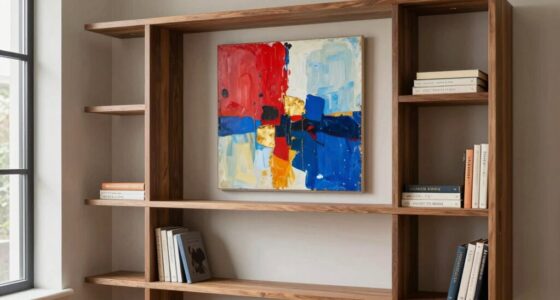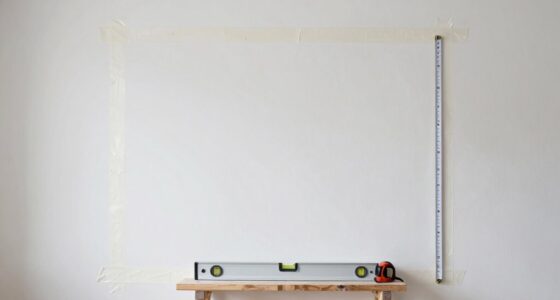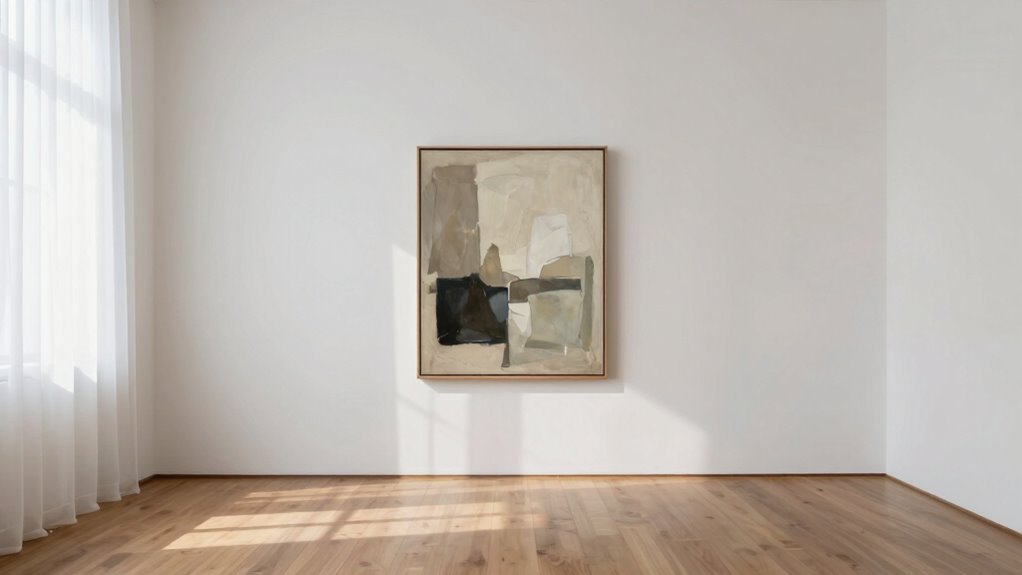

Great art displays often start with restraint because it helps you focus on what truly matters. By limiting your palette and simplifying composition, you create space for each element to stand out. Restraint prevents clutter, directs attention, and builds a cohesive look that feels intentional and refined. It sharpens the overall impact and invites viewers to connect more deeply. If you keep exploring, you’ll discover how restraint can elevate your entire approach to art display.

Prime made for students and young adults
- Fast, free delivery for dorm and study essentials
- Prime Video and Amazon Music included
- Member-only deals
Key Takeaways
- Restraint emphasizes quality over quantity, creating a more refined and impactful visual experience.
- Limiting color and simplifying composition helps focus attention on essential elements.
- Balanced, thoughtful arrangements prevent chaos, enhancing clarity and viewer engagement.
- Minimal clutter allows viewers to connect emotionally and interpret the artwork more deeply.
- Restraint cultivates intentionality, making each element contribute meaningfully to the overall display.
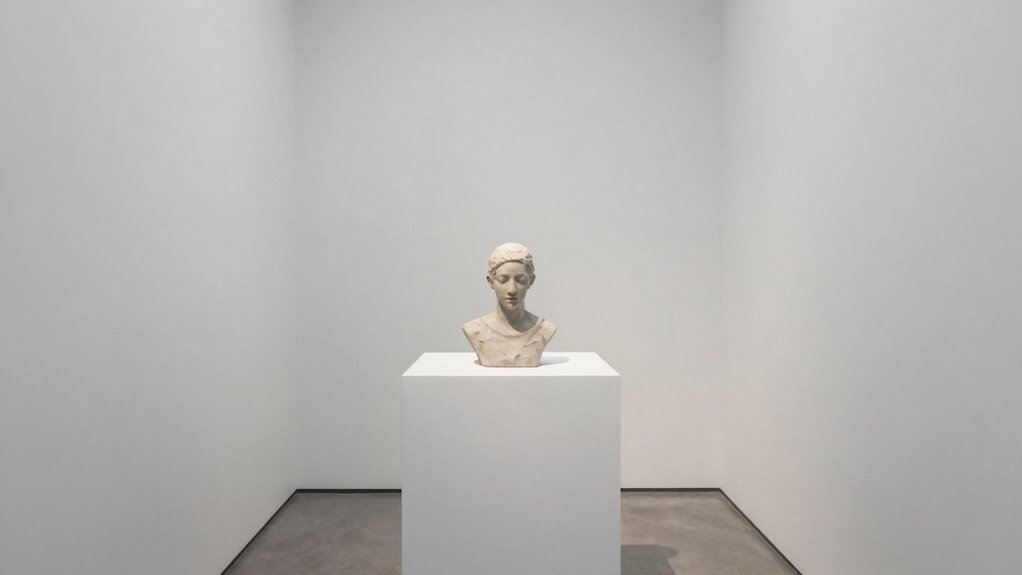
Great art displays often stand out not because they are cluttered or overwhelming, but because they embrace restraint. When you choose to limit your palette or simplify your composition, you create space for each element to breathe. This restraint isn’t about lack of effort; it’s about deliberate choices that emphasize quality over quantity. One of the key principles behind this approach is color harmony. By selecting a cohesive color scheme, you guide the viewer’s eye smoothly across the artwork, avoiding chaos and confusion. Instead of competing for attention, the colors work together to establish a unified mood or message. When the hues complement each other, they enhance the overall visual experience, making the piece feel intentional and refined.
Embracing restraint through color harmony creates a refined, intentional visual experience that guides the viewer effortlessly.
Along with color harmony, visual balance plays a vital role. When you arrange elements thoughtfully, you prevent the artwork from feeling lopsided or chaotic. Balance doesn’t mean everything is perfectly symmetrical—it’s about distributing visual weight so the viewer’s eye naturally moves through the piece. Sometimes, this involves a focal point that anchors the composition, while other times, it’s about creating equilibrium through negative space. The restraint you exercise in not overcrowding the artwork allows each component to stand out without overwhelming the viewer. This careful balance ensures that no single part dominates unless intended, maintaining harmony throughout the display. Additionally, understanding visual hierarchy helps in guiding the viewer’s attention intentionally.
Restraint also invites viewers to engage more deeply. When your artwork isn’t cluttered with unnecessary details or excessive elements, your audience can focus on the core message or emotion you want to convey. This clarity often leads to a more powerful impact. You’re not just filling space—you’re shaping it intentionally. The simplicity can evoke sophistication, encouraging viewers to linger and contemplate. Furthermore, restraint in display allows for flexibility; you can draw attention to specific details or subtle nuances that might get lost in busier compositions.
Ultimately, great art display begins with restraint because it sharpens your focus on what truly matters. By prioritizing color harmony and visual balance, you create a cohesive, compelling experience that resonates. When you resist the temptation to overfill your artwork, you craft something more elegant and thoughtful. It’s about understanding that less is often more—letting the essential elements shine without distraction. This mindful approach doesn’t diminish creativity; it amplifies it, ensuring that every part of your display contributes meaningfully to the whole.
As an affiliate, we earn on qualifying purchases.
Frequently Asked Questions
How Do Cultural Differences Influence Restraint in Art Display?
Cultural differences influence restraint in art display through cultural symbolism and aesthetic modesty. You might notice that in some cultures, art emphasizes subtlety and restraint to honor tradition and avoid excess. Cultural symbolism guides what’s considered appropriate, while aesthetic modesty encourages simplicity and humility. These values shape how artists and viewers approach art, favoring restraint over extravagance, which ultimately elevates the artwork’s depth and meaning within that cultural context.
Can Restraint Be Applied to Modern Digital Art Forms?
Yes, restraint can definitely be applied to modern digital art forms. You can embrace minimalist techniques to strip away unnecessary details, focusing on essential elements. Digital minimalism encourages simplifying visuals, reducing clutter, and emphasizing meaning over complexity. By practicing restraint, you allow viewers to engage more deeply with your work. This approach enhances clarity, directs attention, and elevates the emotional impact, proving that less truly can be more in digital art.
What Are Common Mistakes When Practicing Restraint in Art Display?
You often make mistakes in practicing restraint by ignoring color theory, overwhelming your audience with too many hues, or disrupting spatial balance, making your art feel cluttered. To avoid this, focus on subtle color choices that enhance mood and maintain harmony. Pay attention to spatial balance, ensuring elements are thoughtfully positioned. Too much restraint can also dull your message, so find a balance where simplicity highlights your core idea without sacrificing impact.
How Does Audience Perception Change With Restrained Art Displays?
Your audience perceives restrained art displays as more profound, more deliberate, more impactful. When you use restraint, you invite deeper audience engagement, encouraging viewers to contemplate, interpret, and connect. The emotional impact heightens because restraint creates space for viewers’ own feelings and thoughts to emerge. In this way, restraint transforms a simple display into a powerful, memorable experience, fostering a lasting connection between the art and its audience.
Are There Specific Art Styles That Inherently Favor Restraint?
Yes, certain art styles inherently favor restraint, especially those embracing a minimalist approach and bold simplicity. You’ll find that minimalist art uses limited elements, focusing on clean lines and subtle colors, encouraging viewers to reflect deeply. This style’s restraint emphasizes meaning over excess, making each detail more impactful. By choosing such styles, you let the power of simplicity speak, often creating a stronger emotional connection with your audience.
As an affiliate, we earn on qualifying purchases.
Conclusion
Remember, embracing restraint can elevate your art display, allowing each piece to breathe and truly shine. Studies show that minimalist arrangements can increase viewer engagement by up to 30%, proving less truly can be more. So, don’t overcrowd or overcomplicate—trust in simplicity. When you master restraint, your space invites viewers to pause, reflect, and connect deeper with the art. Ultimately, less clutter creates more impact, making your display memorable and meaningful.
As an affiliate, we earn on qualifying purchases.
As an affiliate, we earn on qualifying purchases.
Fall Picks
fall essentials
As an affiliate, we earn on qualifying purchases.