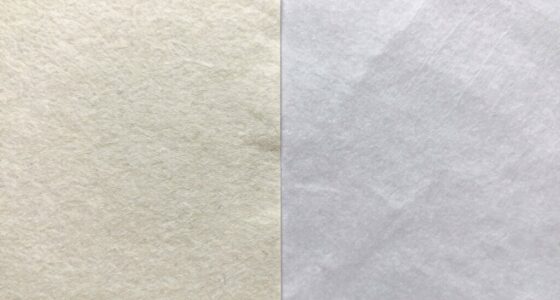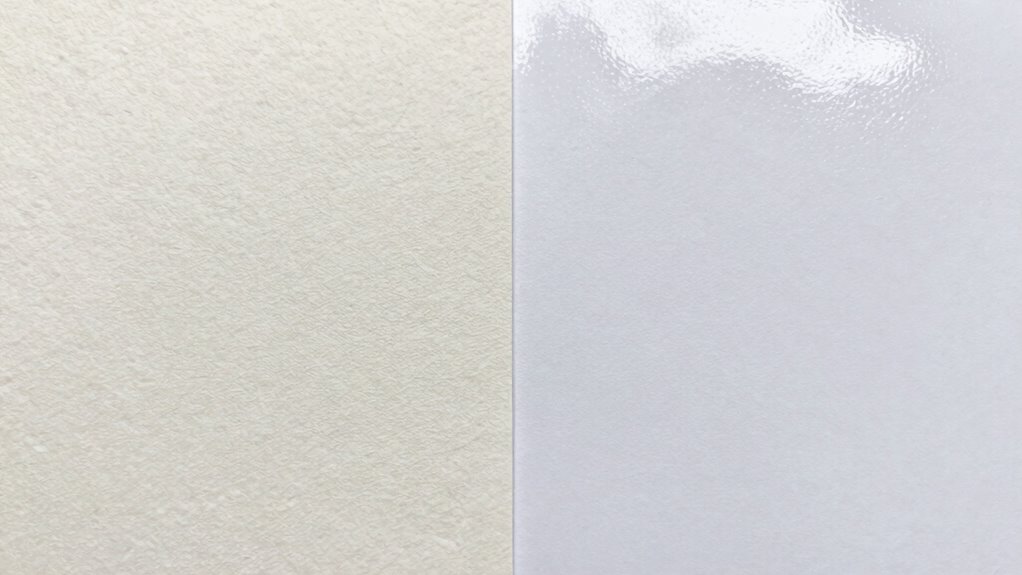

Choosing between cold press and hot press paper can dramatically change your artwork’s texture, durability, and overall feel. Cold press offers a textured surface that’s great for expressive brushwork and layered effects, while hot press provides a smooth surface for fine details and sleek finishes. Your choice depends on your style and medium. If you want to master these differences, keep exploring — understanding these details can truly elevate your art.
Key Takeaways
- Cold press paper has a textured surface ideal for expressive brushwork and layering, while hot press offers a smooth surface for fine detail.
- Manufacturing processes differ: cold press uses lower heat, preserving fibers; hot press uses high heat for a sleek, flat finish.
- Cold press enhances durability and aging resistance due to its textured surface, whereas hot press is more susceptible to surface wear.
- Medium interaction varies: cold press supports mixed media and textured effects, hot press suits precise ink lines and detailed watercolor work.
- Choosing between cold and hot press depends on artistic style, desired detail level, and medium compatibility, impacting overall artwork quality.
What Are Cold Press and Hot Press Paper?
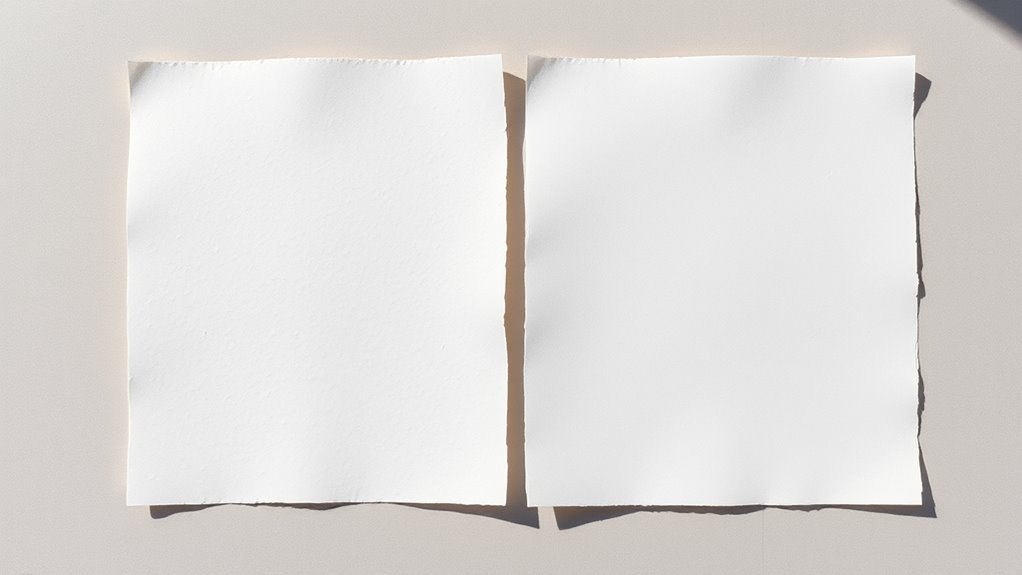
Have you ever wondered what distinguishes cold press and hot press paper? The key lies in their fiber composition and manufacturing processes. Cold press paper is made through a gentler process, where fibers are pressed at lower temperatures, preserving a more textured surface with visible fibers. This results in a slightly rougher feel, ideal for detailed work. Additionally, the textile line influences the surface texture and how mediums like watercolor or ink interact with the paper. The surface texture plays a crucial role in determining how your medium adheres and flows. The way the fibers are arranged impacts absorption rate, which affects how paint or ink spreads on the surface. This variation in fiber arrangement also affects the drying time of your artwork. Hot press paper, on the other hand, undergoes a manufacturing process involving higher temperatures and more pressure, creating a smooth and sleek surface with tightly compressed fibers. This smoothness makes it perfect for fine details and sleek washes. Both types use different fiber arrangements influenced by their manufacturing methods, which ultimately impact how your medium interacts with the paper. Understanding these differences helps you choose the right paper for your artistic style.
How Do Cold and Hot Press Textures Affect Your Art?

The texture of cold press and hot press paper directly influences how your art appears and feels. Cold press paper, with its slightly textured surface, encourages expressive brush strokes and adds a tactile quality to your work. This texture influences brush stroke application, making marks look more dynamic and lively. It also impacts color blending, allowing hues to mingle smoothly or build layered effects. Additionally, European cloud innovation emphasizes sustainable practices, aligning with environmentally conscious art supplies and techniques. Hot press paper, smoother and slick, results in cleaner, more precise lines, making it ideal for detailed work. The absence of texture means brush strokes are less prominent, giving your art a polished, refined appearance. Overall, your choice between cold and hot press considerably affects how your brush strokes influence your piece and how colors interact across the surface.
How to Choose the Best Paper for Watercolor Effects

Choosing the right watercolor paper depends on the effects you want to achieve and your painting style. When selecting paper, consider its manufacturing process, which influences texture, absorbency, and durability.
Cold-pressed papers tend to be more versatile, offering a balanced surface that handles both washes and detailed work well. Hot-pressed papers have a smoother finish, ideal for fine details and delicate effects.
Your artistic inspiration guides whether you prefer a textured surface for spontaneous strokes or a slick surface for precision. Think about how much water you’ll use and the type of effects you seek.
Testing different papers allows you to discover what complements your technique and helps bring your artistic vision to life. Ultimately, choosing the best paper enhances your creativity and elevates your watercolor effects. Manufacturing process plays a crucial role in determining the paper’s suitability for various techniques and desired outcomes.
What Are the Top Surfaces for Ink and Printmaking?

Selecting the right surface for ink and printmaking is essential to achieving crisp lines, rich textures, and durable prints. The grain pattern of your paper influences how ink flows and settles, affecting line sharpness and shading. Additionally, understanding the surface finish can help artists choose the best paper for their specific techniques and desired effects. Smooth surfaces with a fine surface finish are ideal for detailed work, providing clean, crisp lines without bleeding. In contrast, papers with a textured or rough surface finish create more expressive marks, adding depth and character to your print. The surface grain pattern of your paper also plays a crucial role in how ink interacts with the surface, impacting the overall quality of your print. Hot press papers typically have a smooth, even grain pattern, making them perfect for precise illustrations. Cold press papers, with their slightly textured surface, lend themselves to more organic, textured effects. Understanding the surface texture and how it interacts with ink can help you select the ideal paper for your desired outcome. Choosing the appropriate surface for your project depends on whether you prioritize sharp detail or expressive texture. Being aware of the material composition of your paper can also influence how well it withstands multiple printings or washes, ensuring longevity in your work.
How Durable Are Cold Press and Hot Press Papers?

The durability of cold press and hot press papers depends on factors like water resistance and surface strength, which can vary between brands. Additionally, consider how each type responds to long-term aging and environmental conditions, as these can influence the longevity of your artwork. You’ll also want to think about how well each type ages over time, affecting your artwork’s longevity. Understanding these points helps you choose the right paper for lasting results, especially when considering archival quality and preservation. Recognizing the material composition of each paper can further inform how resistant they are to wear and environmental stressors over the years. Furthermore, the inherent water resistance of each paper plays a significant role in its durability under different storage and display conditions. Factors such as coating treatments and manufacturing processes also impact how well each paper withstands handling and environmental exposure over time.
Water Resistance Levels
Ever wondered how well cold press and hot press papers stand up to water? Their waterproof qualities depend mainly on surface porosity. Cold press paper tends to be more porous, absorbing water quickly and risking smudging or warping. Hot press paper has a smoother surface, making it more resistant to water, though not fully waterproof.
| Paper Type | Water Resistance Level | Surface Porosity |
|---|---|---|
| Cold Press | Moderate | High |
| Hot Press | High | Low |
| Watercolor Paper | Varies | Varies |
| Synthetic Paper | Very High | Very Low |
Surface Strength Variability
When it comes to surface strength, cold press and hot press papers differ markedly in durability. Cold press paper typically offers higher surface resilience due to its textured surface, which helps absorb and withstand more brushwork and layering without damage. Its uneven texture creates natural grooves that distribute stress, making it more forgiving under vigorous techniques. Additionally, techniques such as visual cues can be beneficial in assessing the surface condition during use and helping artists adapt their approach accordingly. Cold press paper’s textured surface can also promote paint adhesion, which enhances its durability during multiple layers of application. Furthermore, cold press paper’s ability to distribute stress over its textured surface allows it to better handle repeated applications without significant deterioration. This inherent surface resilience makes it a preferred choice for artists working with bold strokes and heavy washes. Conversely, hot press paper features a smooth, uniform surface that can be more vulnerable to surface wear and scratches. This texture consistency means it provides less inherent protection against abrasion or repeated scrubbing. If durability during intense painting sessions matters most, cold press offers better surface strength. However, for projects requiring fine detail and a sleek finish, hot press might be more suitable despite its comparatively lower resilience.
Longevity and Aging
Although both cold press and hot press papers are designed for longevity, their durability varies based on their surface characteristics and manufacturing processes.
Cold press paper generally offers better aging resistance due to its textured surface, which helps preserve archival quality over time. Hot press paper, with its smoother finish, may be more susceptible to surface wear and environmental factors that accelerate aging.
When choosing between them for longevity, consider the paper’s composition and manufacturing standards. High-quality cold press paper often contains lignin-free fibers, enhancing its archival durability and ensuring your artwork resists yellowing and deterioration.
Ultimately, understanding these differences helps you select the right paper for long-term preservation, ensuring your work remains vibrant and intact for years to come.
How to Pick the Perfect Paper for Your Artistic Style

Choosing the right paper depends on how its texture accommodates your artistic style and techniques.
Consider how different surfaces interact with your medium to create the effects you want. Matching texture and technique compatibility ensures your artwork turns out just as you envision.
Texture Compatibility Tips
Selecting the right paper texture is essential for achieving your desired artistic effect. To do this, consider your artistic preference and how different texture surfaces interact with your medium. If you prefer detailed, smooth lines, hot press paper offers a fine surface that supports precision. On the other hand, if you enjoy creating textured, expressive strokes, a cold press paper provides a slightly rough texture surface that enhances your style. Think about how your chosen medium responds to the paper’s surface—watercolors, inks, or acrylics all behave differently depending on texture. Matching your artistic preference with the texture surface ensures your work flows naturally and looks intentional. Exploring texture compatibility can help you refine your choice and elevate your artistic projects, especially when considering environmental considerations such as sustainable materials. Additionally, understanding quality assurance in your materials helps ensure consistent results and satisfaction with your artwork. Considering material properties can also guide you in selecting the most suitable paper for your specific techniques and desired outcomes. Incorporating knowledge about artistic techniques can further optimize your material selection, leading to more satisfying results.
Artistic Technique Compatibility
Your artistic technique plays a significant role in determining the ideal paper for your work. If you work with mixed media, you’ll want a surface that can handle various materials without warping or deteriorating. Cold press paper, with its textured surface, is perfect for layering paints, inks, and collage elements. Hot press paper, smoother and less absorbent, suits detailed work and precise printmaking techniques like etching or lithography. Consider how your techniques interact with the paper’s surface; a rougher texture can enhance expressive strokes, while a smooth surface supports fine lines. Matching your style ensures your artwork’s integrity and quality. Additionally, the paper’s surface texture can influence how your medium behaves, making it an important factor to consider when choosing between cold and hot press options. Ultimately, understanding your preferred techniques helps you select the right paper—whether you need the versatility for mixed media or the smoothness for printmaking—that elevates your artistic process.
Frequently Asked Questions
Can Cold and Hot Press Papers Be Used Interchangeably?
You can’t always use cold and hot press papers interchangeably because their versatility of paper depends on your artist preferences and project needs.
Cold press offers a textured surface ideal for watercolor techniques, while hot press provides a smooth finish perfect for detailed work.
Switching between them may affect your results, so consider your desired effect and medium before choosing the paper that best fits your style.
How Does Paper Weight Impact Texture and Durability?
You’ll notice that heavier paper, with higher paper density, offers a thicker, more durable feel and withstands erasing and layering better. This enhances its archival quality, meaning your artwork stays preserved longer.
Lighter papers are more flexible but may tear easily and lack durability over time. Choosing the right weight depends on your project’s needs—heavier papers provide better texture and longevity, while lighter ones are ideal for detailed, delicate work.
Are There Eco-Friendly Options for Cold and Hot Press Papers?
Yes, you can choose eco-friendly cold and hot press papers made from recycled materials, reducing environmental impact.
Look for options labeled as biodegradable, which break down naturally without harming the planet.
These papers often come from sustainable sources and are designed to be both durable and eco-conscious, so you don’t have to compromise quality for sustainability.
Switching to these options helps you create art responsibly.
Which Paper Type Is Best for Mixed Media Artwork?
You should choose cold press paper for mixed media artwork because its textured surface handles watercolor techniques well and supports mixed media layering.
The slight tooth allows paints to adhere better and adds interesting textures, making it versatile for combining inks, pastels, and other media.
Hot press paper’s smooth surface is better for fine details, but cold press offers the durability and texture needed to create dynamic, layered mixed media pieces.
How Does Surface Texture Influence Color Vibrancy and Blending?
The surface sheen and pigment absorption directly impact how vibrant your colors appear and blend. A smoother, hot press surface offers less absorption, resulting in brighter, more vivid colors and seamless blending.
Conversely, a cold press texture has more surface grain, increasing pigment absorption and muting vibrancy but adding richness to your work. Your choice of surface texture influences the overall effect, so pick based on your desired color intensity and blending style.
Conclusion
Choosing between cold press and hot press paper really comes down to your artistic style and the effects you want. Cold press offers texture and versatility, perfect for expressive watercolor washes and detailed ink work. Hot press delivers smoothness and precision, ideal for fine lines and printmaking. Experiment with both to see which suits your projects best. Ultimately, selecting the right surface will elevate your artwork and help you achieve your creative vision.