
TL;DR

Prime made for students and young adults
- Fast, free delivery for dorm and study essentials
- Prime Video and Amazon Music included
- Member-only deals
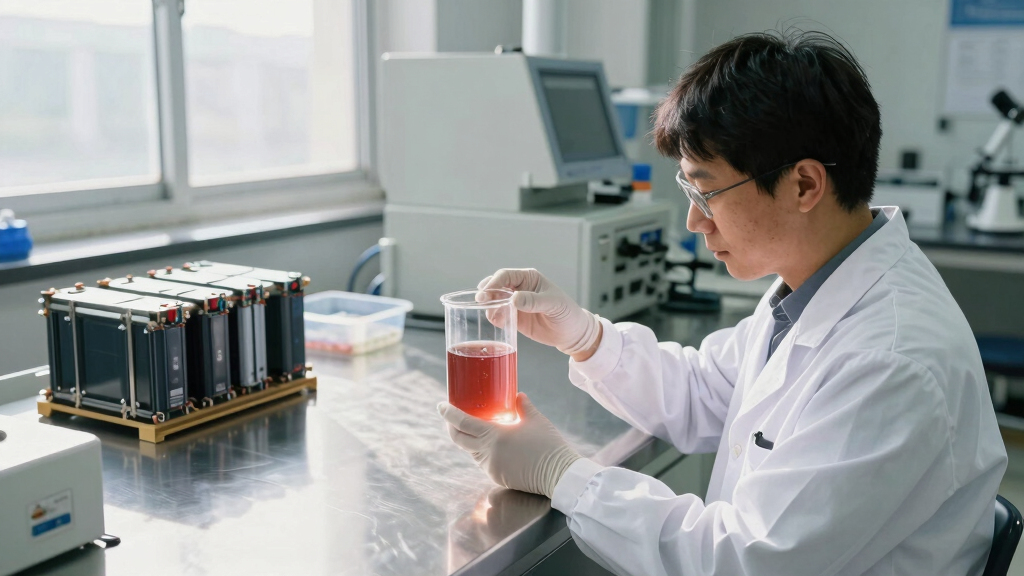
Japan has developed a new recycling method that can recover up to 90% of lithium from used EV batteries. This breakthrough could significantly impact battery supply chains and environmental sustainability.
Japan has announced the development of a new recycling method capable of recovering up to 90% of lithium from used electric vehicle (EV) batteries. This breakthrough, confirmed by Japanese research institutions, could significantly reduce reliance on raw lithium extraction and address environmental concerns associated with battery disposal.
The new process was developed by a collaborative effort between Japan’s National Institute of Advanced Industrial Science and Technology (AIST) and several industry partners. According to official statements, the method employs a novel chemical treatment that selectively extracts lithium with high efficiency, even from heavily degraded batteries.
Japan’s Ministry of Economy, Trade and Industry (METI) highlighted that this technology could be commercially viable within the next few years, aiming to scale up recycling capacities to meet rising demand for EV batteries. The process reportedly achieves a recovery rate of approximately 90%, surpassing current recycling methods that typically recover between 50% and 70% of lithium.
Environmental groups and industry analysts see this as a promising development, potentially reducing the environmental footprint of battery production and disposal. However, it remains to be seen how quickly the technology can be adopted at large scale and integrated into existing recycling infrastructure.
Implications for Battery Supply and Sustainability
This development could dramatically alter the landscape of battery recycling, making lithium recovery more efficient and sustainable. By reclaiming up to 90% of lithium, Japan’s method could reduce dependence on new lithium mining, which has significant environmental impacts. It also offers a pathway to address the growing volume of end-of-life EV batteries, which pose environmental disposal challenges. If widely adopted, this technology may influence global supply chains, lower costs, and support the transition to greener transportation. Industry experts emphasize that such advancements are critical for scaling EV adoption without exacerbating resource depletion or environmental degradation.As an affiliate, we earn on qualifying purchases.
Japan’s Progress in Battery Recycling Technologies
Japan has been a leader in battery recycling research, with several initiatives aimed at improving recovery rates and reducing environmental impacts. Prior efforts have focused on mechanical and pyrometallurgical methods, which typically recover a limited percentage of lithium. The new chemical process represents a significant leap forward, building on Japan’s longstanding commitment to sustainable resource management. Globally, demand for lithium is projected to increase sharply as EV adoption accelerates, making efficient recycling technologies increasingly vital. This announcement follows recent developments in other countries seeking to improve lithium recovery, but Japan’s claimed 90% efficiency marks a notable advancement.“Our new method significantly enhances lithium recovery, reducing waste and environmental impact, and could transform how we handle end-of-life EV batteries.”
— Dr. Hiroshi Takeda, Lead Scientist at AIST
As an affiliate, we earn on qualifying purchases.
Scale, Cost, and Industry Adoption Still Unclear
It is not yet clear how quickly the new recycling method can be scaled to industrial levels or integrated into existing facilities. Details about the cost of implementing this technology at large scale and its economic competitiveness compared to current methods are still emerging. Additionally, the timeline for widespread adoption remains uncertain, as regulatory approvals and infrastructure upgrades may be required.As an affiliate, we earn on qualifying purchases.
Next Steps for Commercial Deployment and Policy Support
The focus will likely be on pilot projects to demonstrate large-scale feasibility and cost-effectiveness. Industry stakeholders and government agencies may collaborate to develop infrastructure and regulatory frameworks to support adoption. Further research could also optimize the process, potentially increasing recovery rates or reducing costs further. Monitoring how quickly this technology moves from lab to industry will be crucial for assessing its real-world impact.battery recycling chemical treatment
As an affiliate, we earn on qualifying purchases.
As an affiliate, we earn on qualifying purchases.
Key Questions
How does this new lithium recovery method differ from existing recycling techniques?
The new process employs a chemical treatment that selectively extracts lithium with up to 90% efficiency, compared to current methods that typically recover between 50% and 70% of lithium. It is designed to work effectively even with heavily degraded batteries.
When might this technology be available for large-scale industrial use?
Officials suggest that commercial-scale deployment could occur within the next few years, pending pilot projects and infrastructure development. Precise timelines are still being determined.
What are the environmental benefits of this new recycling method?
By recovering a higher percentage of lithium, the process reduces the need for new lithium mining, which has significant environmental impacts. It also minimizes waste from discarded batteries, supporting sustainability goals.
Could this technology lower the cost of EV batteries?
Potentially, yes. Higher lithium recovery rates could reduce raw material costs, but the economic impact depends on the scalability and operational costs of the new process. Further analysis is needed.
Are other countries developing similar lithium recycling technologies?
Yes, several countries are investing in advanced recycling methods. However, Japan’s claim of up to 90% recovery efficiency represents a notable advance in the field.
Source: hn
Fall Picks
fall essentials
As an affiliate, we earn on qualifying purchases.