
TL;DR

Get school and study supplies delivered free — and shop member deals
- Fast, free delivery on millions of items
- Access to Prime Big Deal Days deals on October 6–7
- Prime Video, Amazon Music and more included
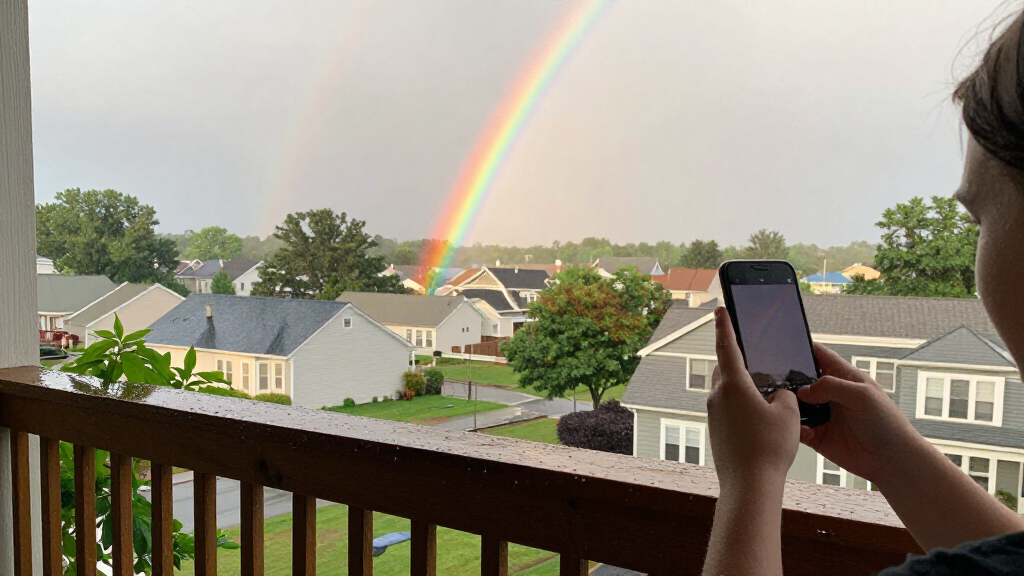
NASA’s Astronomy Picture of the Day for October 4, 2026, features a photograph taken at the Jersey Shore after the remnants of Hurricane Florence passed in 2018. The image captures at least five supernumerary rainbows, an effect caused by light waves interacting after passing through similarly sized water droplets.
NASA’s Astronomy Picture of the Day on October 4, 2026, features a photograph showing at least five supernumerary rainbows over the Jersey Shore in New Jersey. The image was taken in 2018 after the remnants of Hurricane Florence passed through the area, and NASA’s explanation describes how the unusual bands form through the wave behavior of light.
According to NASA’s APOD explanation, the photographer and his daughter watched as vibrant extra bands of color appeared and faded over about half an hour. The featured image captured at least five of them. The Sun was in one direction, while the rainbows appeared in the opposite part of the sky, where sunlight met falling raindrops.
NASA says supernumerary rainbows form when the droplets are nearly the same size and typically less than a millimeter across. Light entering the drops can reflect internally, while waves of light also interfere with one another. That interference produces the additional, closely spaced bands beside the main rainbow. The effect is not simply a second conventional rainbow: it depends on light behaving as a wave.
The APOD entry credits the photograph to John Entwistle and lists Robert Nemiroff, Jerry Bonnell, Cecilia Chirenti and Keighley Rockcliffe among its authors and editors. NASA presents the picture as a daily astronomy feature with an accompanying explanation, rather than as a report of a new observation made in 2026. The scene itself dates to 2018; October 4, 2026, is the date it was featured.
A Visible Demonstration of Light Waves
The photograph makes a subtle physical process visible in an everyday setting. Supernumerary bands are difficult to explain using only a simple account of rays reflecting through raindrops; their formation depends on wave interference. NASA’s account connects the phenomenon to the history of optics: observations of supernumerary rainbows in the early 19th century were regarded as early evidence for light’s wave nature.
For readers, the image links familiar weather to a fundamental idea in physics. Rainbows do not require a rare astronomical event, but this particular display depends on suitable conditions in the droplets and the sunlight. The APOD feature gives viewers a clear example of how the size and uniformity of water droplets can affect what appears in the sky. It also illustrates why close observation of natural phenomena has helped scientists understand light.
As an affiliate, we earn on qualifying purchases.
The 2018 Jersey Shore Photograph
The scene was photographed after the remnants of Hurricane Florence passed over the Jersey Shore in 2018. NASA’s description says the Sun emerged in one direction while the rainbow display appeared opposite it. It does not give a precise date or location along the shore, and it does not state that the rainbows were caused by the hurricane itself. The storm’s passage is the setting provided for the photograph, not a complete explanation of the optical conditions.
NASA’s Astronomy Picture of the Day publishes an image or photograph with an explanation written by a professional astronomer. The October 4 entry revisits an earlier photograph to explain its unusual feature. The image credit is John Entwistle; the listed APOD contributors include editors and authors affiliated with NASA’s Astronomy Picture of the Day service. The page also points readers to an APOD feature inviting them to find the image published on their birthday, for dates after 1995.
As an affiliate, we earn on qualifying purchases.
Details the APOD Does Not Give
NASA’s entry does not specify the photograph’s exact date in 2018, its precise Jersey Shore location, or measurements of the droplets. It describes the display as lasting about half an hour and says at least five bands were captured, but it does not provide a count of every band visible during the full display. The source also does not report independent measurements or a separate scientific study tied to this particular photograph.
The explanation attributes the supernumerary effect to similarly sized, small droplets and light-wave interference. It does not establish that every detail of the weather after Florence was unusual, nor does it say the storm produced the droplet conditions. The image is a featured observation and an educational illustration; claims beyond the description and explanation on the APOD page are not confirmed by the supplied material.
light wave physics demonstration kit
As an affiliate, we earn on qualifying purchases.
As an affiliate, we earn on qualifying purchases.
Further APOD Features and Viewing
The October 4 entry is a completed daily feature, and NASA’s page does not announce a related investigation, follow-up observation or later milestone for the photograph. Readers can use the APOD page to view the image and its explanation, or consult NASA’s birthday-image feature for APOD entries published after 1995. Any further details about the original photograph would require additional information from the photographer or NASA beyond the material provided here.
For anyone hoping to spot the effect outdoors, NASA’s explanation points to the relevant conditions: sunlight, falling rain and droplets that are small and similar in size. The page does not provide a forecast or say when another display might occur over New Jersey, so the featured photograph remains a record of the 2018 sighting rather than a prediction of a future one.
As an affiliate, we earn on qualifying purchases.
Key Questions
What did NASA feature on October 4, 2026?
NASA’s Astronomy Picture of the Day featured a John Entwistle photograph of at least five supernumerary rainbows over the Jersey Shore, taken after the remnants of Hurricane Florence passed in 2018.
What makes a supernumerary rainbow different?
It has additional, closely spaced colored bands associated with a main rainbow. NASA explains that these bands form when light waves interfere after passing through nearly uniform, small raindrops.
How long did the rainbow display last?
NASA’s account says the colors faded in and out over about half an hour. It does not give a more exact duration for any individual band.
Did Hurricane Florence create the rainbows?
The APOD says the photograph was taken after the storm’s remnants passed over the Jersey Shore. It does not claim that Florence itself caused the rainbow effect; the explanation focuses on sunlight and similarly sized water droplets.
Source: primary
Fall Picks
fall essentials
As an affiliate, we earn on qualifying purchases.