
TL;DR

Prime made for students and young adults
- Fast, free delivery for dorm and study essentials
- Prime Video and Amazon Music included
- Member-only deals
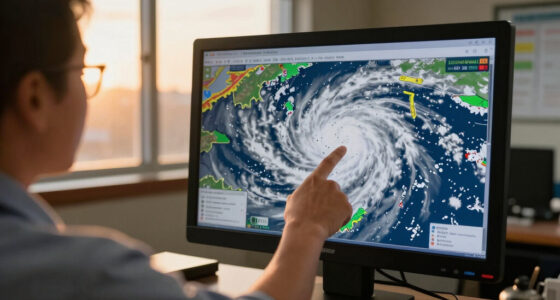
Meteorological agencies forecast the likelihood of an El Niño event in 2026. This development could influence global weather patterns, impacting agriculture, water resources, and disaster preparedness. The exact timing and severity remain uncertain.
Meteorological agencies around the world are increasingly confident that an El Niño event is likely to develop in 2026, with potential significant impacts on global weather patterns. While the precise timing and severity are still uncertain, early indicators suggest conditions favorable for El Niño formation later this year or early next year.
Multiple agencies, including the National Oceanic and Atmospheric Administration (NOAA) and the World Meteorological Organization (WMO), have issued preliminary forecasts indicating a high probability of El Niño development in 2026. This marks a shift from neutral or La Niña conditions observed in recent years.
El Niño is characterized by warmer-than-average sea surface temperatures in the central and eastern tropical Pacific Ocean, which can disrupt typical weather patterns globally. Historically, El Niño events have been linked to increased droughts, heavy rainfall, and extreme weather events in various regions.
Experts caution that while the likelihood of El Niño forming in 2026 is high, the exact timing, intensity, and regional impacts remain uncertain. Monitoring continues as climate models are refined and more data becomes available.
Impacts of El Niño on Global Climate and Societies
The potential development of El Niño in 2026 is significant because it can cause widespread weather disruptions, including droughts, floods, and storms. These events affect agriculture, water supply, and disaster preparedness efforts worldwide. Understanding and preparing for these impacts is crucial for governments, businesses, and communities.
Historically, El Niño has been associated with economic costs and humanitarian challenges, especially in vulnerable regions. Early warnings and adaptive strategies can mitigate some of these risks, making the forecast a critical element for planning.
As an affiliate, we earn on qualifying purchases.
Historical Patterns and Recent Climate Trends
El Niño occurs irregularly, roughly every two to seven years, and has been linked to significant climate anomalies globally. The last major El Niño event occurred in 2015-2016, causing severe weather events in many parts of the world.
In recent years, climate scientists have observed a trend toward more intense and unpredictable El Niño and La Niña cycles, possibly driven by climate change. This has increased the importance of accurate seasonal forecasts and climate modeling.
Current oceanic and atmospheric conditions, including sea surface temperatures and atmospheric pressure patterns, are aligning with early signs of El Niño development, according to climate models.
“While we cannot confirm the exact timing or strength of El Niño in 2026, current indicators suggest a high probability of its development later this year.”
— Dr. Maria Lopez, NOAA Climate Scientist
waterproof flood emergency supplies
As an affiliate, we earn on qualifying purchases.
As an affiliate, we earn on qualifying purchases.
Uncertainties About El Niño’s Timing and Impact
While forecasts indicate a high likelihood of El Niño developing in 2026, there remains considerable uncertainty regarding its exact onset, intensity, and regional effects. Climate models are still refining their predictions, and oceanic conditions can change rapidly.
Scientists caution that unexpected shifts in ocean temperatures or atmospheric patterns could alter the forecast, making precise predictions difficult at this stage.
As an affiliate, we earn on qualifying purchases.
Monitoring and Preparing for El Niño Development in 2024-2025
Climate agencies will continue to monitor oceanic and atmospheric indicators closely over the coming months. Updates on the likelihood and expected severity of El Niño are expected as more data becomes available.
Authorities in vulnerable regions are advised to review disaster preparedness plans and consider potential impacts on agriculture, water resources, and infrastructure. Researchers will also refine climate models to improve forecast accuracy.
As an affiliate, we earn on qualifying purchases.
Key Questions
What is El Niño, and why does it matter?
El Niño is a climate phenomenon characterized by warmer sea surface temperatures in the tropical Pacific Ocean, which can disrupt weather patterns globally. It matters because it can cause extreme weather events like droughts, floods, and storms, impacting agriculture, water supply, and economies.
When is El Niño expected to develop in 2026?
Current forecasts suggest El Niño could develop later in 2024 or early 2025, but the exact timing remains uncertain as climate models are still being refined.
How severe could the 2026 El Niño be?
It is too early to determine the severity. The impact depends on the strength of the event, which is still uncertain. Past El Niño events have ranged from moderate to strong, with varying regional effects.
What regions are most affected by El Niño?
Regions including North and South America, Australia, Southeast Asia, and parts of Africa are typically affected, experiencing droughts, heavy rains, and related weather extremes.
How can governments prepare for El Niño?
By reviewing and updating disaster response plans, strengthening infrastructure resilience, and monitoring climate data closely, governments can better mitigate potential damages caused by El Niño-related weather events.
Source: google-trends
Fall Picks
fall essentials
As an affiliate, we earn on qualifying purchases.