TL;DR

Prime made for students and young adults
- Fast, free delivery for dorm and study essentials
- Prime Video and Amazon Music included
- Member-only deals
A 2016 University of Bristol field experiment found significantly fewer aerial insects at cool- and warm-white LED lights than at incandescent and compact fluorescent lamps. The finding helps explain why some households see fewer insects around newer outdoor lights, but it does not establish that every LED attracts fewer insects or that LEDs alone can reverse insect declines.
A University of Bristol field study found that LED lamps attracted significantly fewer aerial insects than incandescent and compact fluorescent lights, a result that may explain why some people see fewer bugs around outdoor lighting after switching to LEDs. The study compared four domestic light types at 17 sites, but its findings do not mean that every LED has the same effect or that lighting alone explains changes in insect populations.
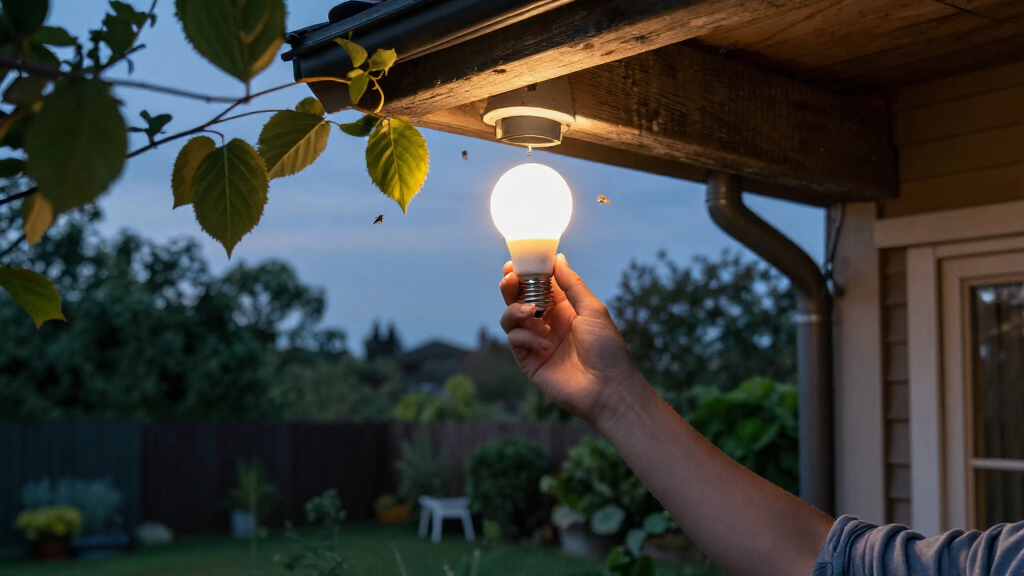
The 2016 experiment compared tungsten-filament incandescent bulbs, compact fluorescent lamps, cool-white LEDs and warm-white LEDs. Researchers measured insects caught during evening sampling periods that began at sunset. Their report said LEDs attracted significantly fewer insects than the other tested light sources. It found no significant difference in attraction between the two LED color temperatures.
The study focused particularly on aerial insects, including flies. The researchers also reported fewer Culicoides midges at LEDs than at alternative light sources. They said LED use could have potential to reduce disturbance to wildlife and occurrences of insect-borne diseases relative to other lighting technologies; that is a stated potential, not evidence that the experiment directly measured disease rates or population-level outcomes.
A November 3, 2026 report on Birds Outside My Window connects the research to an everyday observation: after a family replaced outdoor lights with LEDs, the geckos that had gathered to eat insects were seen less often. The report says the geckos had not disappeared; fewer insects were gathering around the lights. That account is an anecdote, rather than a separate controlled experiment.
Fewer Insects at Outdoor Lamps
The findings matter because artificial light at night can change where insects gather and how they behave. A lamp that draws insects into a small area can affect feeding opportunities for predators, including geckos, and may interfere with insects’ normal activity. The 2026 report’s gecko example illustrates one possible local effect: when fewer insects gathered at a light, the animals that hunted them had less reason to visit.
LEDs are widely used in homes and streets, so the type of lighting may influence insect exposure around buildings. The Bristol researchers suggested LEDs could mitigate some disturbances compared with the alternatives they tested. However, the experiment measured insect attraction to particular lamps; it did not establish that changing a single light, or switching all lights to LEDs, would halt broader insect declines. Other conditions and sources of harm are outside the evidence presented here.
Popular right now

Samsung QN65LS03FAFXZA 65 The Frame QLED 4K Art Mode Vision AI Smart TV (2025)

iRobot Roomba 105 Combo Robot Vacuum and Mop

Philips Café Aromis Automatic Espresso Machine with LatteGo Pro Milk System
As an affiliate, we earn on qualifying purchases.
How the Lamp Comparison Worked
Insect attraction to lights has long been used by researchers and enthusiasts to observe night-flying species. A light and a white sheet can bring insects within view, making lamps a practical tool for surveys. But the amount and type of light emitted can affect which insects are drawn in, so the choice of lamp matters to anyone interpreting a light-based observation.
The source report offers an explanation based on insects’ use of light for orientation: it says insects may respond to artificial light as if it were a navigational cue. It also notes that traditional incandescent bulbs emit ultraviolet wavelengths, while typical LEDs produce most of their output in the visible range. The 2016 researchers likewise wrote that LEDs generally emit less UV and infrared radiation, with more electrical energy converted into visible light. This is a proposed explanation for the experimental difference, not a finding that every insect species responds identically.
The cited experiment was conducted in 2016, comparing commercially available household lights in field conditions. The 2026 article revisits that result and its implications; it does not report a new trial or updated measurements.
““We found that LEDs attracted significantly fewer insects than other light sources, but found no significant difference in attraction between the ‘cool’ and ‘warm white’ LEDs.””
— Researchers in the 2016 study, “Experimentally comparing the attractiveness of domestic lights to insects”
Limits of the Evidence
The source material does not establish how strongly the result applies across different insect species, LED designs or outdoor settings. The study tested four types of domestic lights at 17 sites, and the report does not provide enough detail here to determine how its results vary with brightness, placement, shielding or other local conditions.
The proposed explanation involving ultraviolet light and insect orientation is presented as background, but the supplied material does not show that the experiment isolated UV as the sole cause of the difference. Nor does it quantify how much LED adoption changes insect populations over time. The gecko story is an individual observation, and the claim that artificial light is a major contributor to insect declines is not quantified in the supplied account. The scale of any conservation benefit remains unclear.
What Further Research Could Show
No new study, policy change or follow-up measurement is announced in the source report. The next useful evidence would include comparable field tests across a wider range of LED products, locations and insect groups, alongside measurements of brightness and emitted wavelengths. Longer-term monitoring could help distinguish fewer insects gathering at lamps from changes in local insect abundance.
For now, the supported takeaway is limited but practical: in the cited field comparison, the tested LEDs attracted fewer insects than incandescent and compact fluorescent lamps. The available material does not say how much an individual lighting change affects nearby wildlife, or whether the result holds for every outdoor light.
Key Questions
Did the study find that LEDs attract no insects?
No. The 2016 study reported that the tested LEDs attracted significantly fewer insects than the other tested lights, not that they attracted none.
Did warm-white LEDs attract fewer insects than cool-white LEDs?
The researchers found no significant difference in insect attraction between the warm-white and cool-white LEDs they tested.
Why might LEDs attract fewer insects?
The study authors noted that LEDs generally emit less ultraviolet and infrared radiation than traditional lighting, concentrating more output in visible wavelengths. The supplied material does not establish that this is the sole explanation for the observed difference.
Does switching to LEDs prevent insect declines?
The evidence cited here does not show that. The study compared insects attracted to different lamps; it did not measure whether LED use reverses wider population declines.
Were geckos harmed when the family changed its lights?
The 2026 report says the geckos had not disappeared. It describes fewer insects gathering around the LEDs and suggests the geckos had less reason to visit the lights.
Source: birdsoutsidemywindow.org