
TL;DR

Prime made for students and young adults
- Fast, free delivery for dorm and study essentials
- Prime Video and Amazon Music included
- Member-only deals
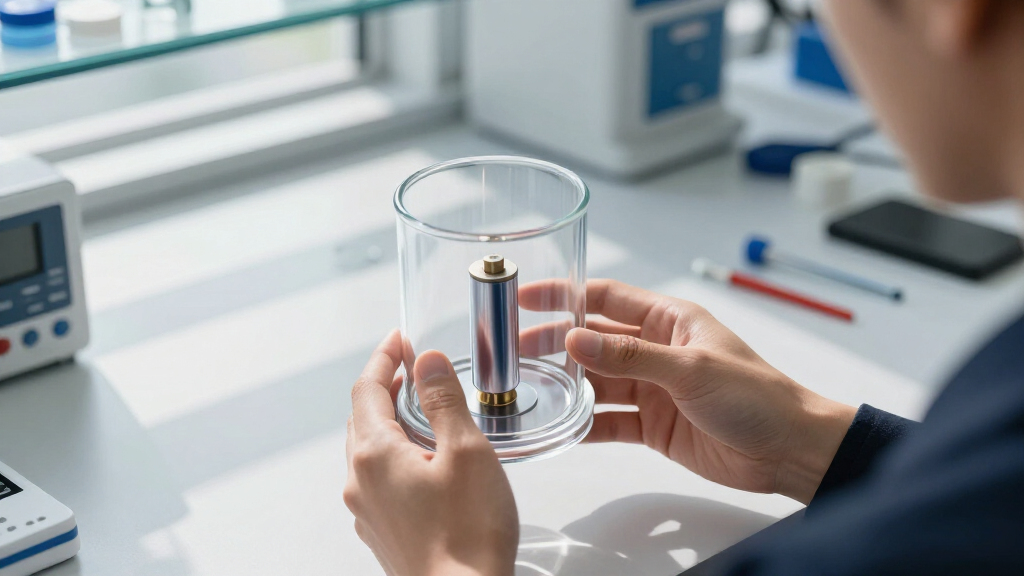
Many companies are investing heavily in solid-state battery technology due to its potential for higher energy density and safety. This development could revolutionize electric vehicles and portable devices, but significant technical hurdles remain.
Multiple leading companies, including Toyota, QuantumScape, and Samsung, are actively working to commercialize solid-state battery technology due to its potential for higher energy density, improved safety, and longer lifespan. This surge is driven by the increasing demand for more efficient electric vehicles and portable electronics, making solid-state batteries a key focus for the future of energy storage.
Confirmed efforts include Toyota’s recent prototypes and QuantumScape’s announced pilot production lines, both aiming for commercial deployment within the next few years. These batteries replace the liquid electrolyte used in conventional lithium-ion cells with a solid material, promising greater safety and energy density.
Industry experts acknowledge that while early results are promising, several technical challenges remain, including manufacturing scalability, material stability, and cost reduction. No company has yet announced a fully commercial product based on solid-state batteries, but multiple prototypes are undergoing testing.
Potential Impact on Electric Vehicle Industry and Energy Storage
Solid-state batteries could significantly enhance electric vehicle range, reduce charging times, and improve safety, thereby accelerating EV adoption. They also hold promise for portable electronics, aerospace, and grid storage, potentially transforming multiple sectors. However, the technology’s commercial viability depends on overcoming current manufacturing and cost hurdles.
Popular right now

Dreame D30 Ultra CE Robot Vacuum and Mop

Ninja DualBrew Pro Specialty Coffee Maker, Black, CFP301

KitchenAid Artisan Series 5-Quart Tilt-Head Stand Mixer with Pouring Shield, Cherry Tomato
As an affiliate, we earn on qualifying purchases.
Recent Advances and Industry Commitments to Solid-State Tech
Over the past two years, several automakers and tech firms have announced substantial investments in solid-state battery research. Toyota, for instance, has showcased prototypes and set a target for production by the mid-2020s. QuantumScape, backed by Volkswagen and Bill Gates, has reported progress in laboratory testing and pilot manufacturing. Despite these developments, no fully commercialized solid-state battery is available yet, and industry-wide scaling remains a challenge.
“We are committed to bringing solid-state batteries to market within the next few years, as they represent the future of electric mobility.”
— Toyota spokesperson
Unresolved Technical and Commercial Challenges
Despite promising prototypes, it is not yet clear when solid-state batteries will be commercially viable at scale. Manufacturing processes, material stability, and cost reductions are still under development, with timelines ranging from a few years to over a decade. Additionally, competing battery technologies continue to evolve, adding uncertainty to the market outlook.
Next Steps Toward Commercial Deployment
Automakers and tech companies are expected to continue testing prototypes, scaling pilot production, and refining manufacturing techniques over the next 1-3 years. Regulatory approvals, cost reductions, and supply chain development will be critical milestones before widespread adoption. Industry analysts anticipate more public demonstrations and potential pilot programs in the coming years.
Key Questions
What are solid-state batteries?
Solid-state batteries are energy storage devices that replace the liquid electrolyte in traditional lithium-ion batteries with a solid material, potentially offering higher energy density and improved safety.
Why are companies investing heavily in this technology?
Because solid-state batteries promise longer range, faster charging, and enhanced safety for electric vehicles and portable electronics, making them highly attractive for future applications.
What are the main challenges remaining?
Manufacturing scalability, material stability, and cost reduction are the primary hurdles that need to be addressed before commercial deployment.
When might solid-state batteries become commercially available?
Most industry experts estimate that commercial products could appear within the next 3-5 years, but widespread adoption may take longer depending on technological progress and economic factors.
How will solid-state batteries impact electric vehicle adoption?
If successfully commercialized, they could significantly increase vehicle range, reduce charging times, and improve safety, thereby accelerating the shift to electric mobility.
Source: hn