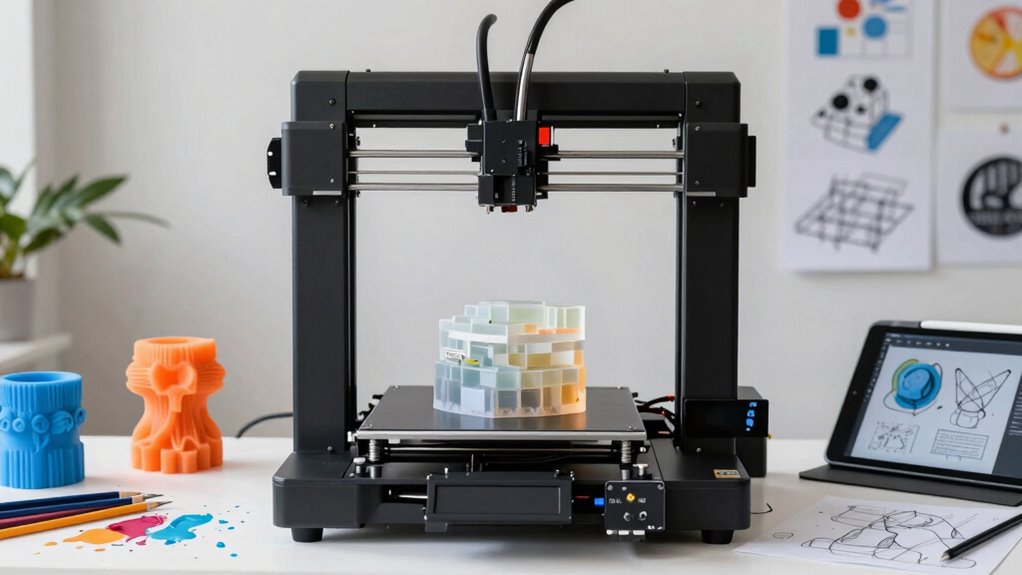

3D printers help you transform ideas into detailed, complex art pieces with ease, allowing experimentation with diverse materials like plastics, resins, and metals. They improve visualization and enable refinement before final production. However, mastering digital sculpting, managing high costs, and dealing with potential print failures can complicate your workflow. Post-processing adds extra steps, and not all printers support every material. Want to discover how to make these tools work smarter for your art?
Open a free Amazon Business account
Business pricing, bulk buying and tax-exempt orders.
As an affiliate, we earn on qualifying purchases.
Key Takeaways
- 3D printers enable artists to quickly prototype complex designs that are difficult with traditional methods.
- Material versatility allows experimentation with textures, finishes, and structural properties in artworks.
- Technical challenges, such as software complexity and print failures, can hinder smooth creative workflows.
- Post-processing requirements add time and skill demands, impacting overall project timelines.
- High initial costs and environmental concerns may limit accessibility and sustainable use for artists.

If you’re an artist looking to push your creative boundaries, 3D printers can be powerful tools that transform your ideas into tangible masterpieces. They open up new avenues for experimentation and allow you to realize complex designs that might be impossible with traditional methods. One of the main advantages is digital sculpting, which gives you the freedom to craft intricate, detailed models straight from your computer. With digital sculpting software, you can refine your work endlessly before committing to a physical form, ensuring precision and control. This process makes it easier to visualize your ideas and make adjustments on the fly, saving you time and material in the long run. Additionally, understanding the fundamentals of 3D printing technology can help you troubleshoot issues and optimize your workflow more effectively. Mastering these fundamentals can also help you better understand the environmental impacts and sustainability of different materials and processes.
3D printers empower artists to create intricate, customizable designs with precision and endless experimentation.
Material versatility is another key benefit. 3D printers support a range of materials—from plastics and resins to metals and flexible filaments—allowing you to choose the right medium for your project. Whether you’re creating delicate jewelry, textured sculptures, or functional prototypes, the variety of materials means you don’t have to be confined to a single type of medium. Instead, you can experiment with different textures, finishes, and structural properties to bring your vision to life. This flexibility helps you push the boundaries of traditional art forms and explore new creative territories. Moreover, staying informed about material compatibility can help prevent issues like warping or poor adhesion during printing. Understanding the properties of different materials can also guide you in selecting the best option for your specific project needs. Additionally, gaining knowledge about material processing techniques can enhance the quality of your finished pieces and reduce waste.
However, while 3D printing offers significant advantages, it also introduces complications. Mastering digital sculpting software can be a steep learning curve, especially if you’re new to 3D modeling. It requires patience and technical know-how, which might slow down your initial progress. Additionally, material costs can be high, particularly for specialty filaments or resins, making it expensive to produce large or multiple pieces. The process of printing itself can also be time-consuming, with some projects taking several hours or more to complete, and there’s always the risk of failed prints due to technical glitches or material issues.
Furthermore, not all 3D printers support every material equally well, which can limit your options or necessitate investing in multiple machines. Post-processing is another factor—many prints require cleaning, curing, or finishing touches to achieve the desired aesthetic, adding more steps and complexity to the workflow. While digital sculpting and material versatility open up exciting possibilities, they also demand a certain level of technical skill and investment, which can be intimidating for artists just starting out. Being aware of the environmental impact of 3D printing and exploring sustainable practices can help mitigate some of these concerns and promote responsible art creation.
In essence, 3D printers can revolutionize your artistic process, enabling you to create with unprecedented precision and flexibility. But they also require an open mind, patience, and a willingness to learn new skills. When used thoughtfully, they can elevate your creative practice—just be prepared for the initial hurdles along the way.
As an affiliate, we earn on qualifying purchases.
Frequently Asked Questions
What Is the Initial Cost of a Quality 3D Printer for Artists?
A quality 3D printer for artists typically costs between $2,000 and $5,000. When considering cost comparison, remember that higher-end models often offer better precision and reliability. You should also factor in printer maintenance, which can include replacing parts and filament, adding to ongoing expenses. Investing in a durable, well-supported model minimizes long-term costs and guarantees consistent creative output.
How Durable Are 3D Printed Art Pieces Over Time?
Like a fragile sculpture from a Greek myth, your 3D printed art pieces can last for years if you consider material longevity and environmental effects. Quality materials resist wear, fading, and cracking over time, but exposure to sunlight, humidity, or chemicals can weaken them. Proper care, storage, and choosing durable filament types help guarantee your creations remain vibrant and intact, standing the test of time like timeless masterpieces.
Can 3D Printers Produce Large-Scale Artworks?
Yes, you can produce large-scale artworks with 3D printers, but scaling limitations and material restrictions pose challenges. You might need to print in sections and assemble them later, which can compromise the artwork’s integrity or aesthetic. Additionally, the choice of materials impacts the size and durability of your piece. While feasible, creating large-scale 3D printed art requires careful planning and sometimes innovative solutions to overcome these constraints.
What Safety Precautions Are Needed When Operating 3D Printers?
When operating 3D printers, you should always wear safety gear like gloves and goggles to protect yourself from hot surfaces and fumes. Make certain proper ventilation to avoid inhaling potentially harmful particles or vapors from materials like ABS or resin. Keep the workspace clean, follow manufacturer instructions, and never leave the printer unattended during operation. These precautions help you stay safe while creating your artwork efficiently.
Are There Eco-Friendly Filament Options Available for Artists?
Yes, eco-friendly filament options are available for you. You can choose biodegradable filaments made from materials like PLA, which break down more easily in the environment. Recycled plastic options, such as recycled PET or other plastics, are also accessible, allowing you to create art sustainably. These options help reduce your carbon footprint and promote eco-conscious practices, making your artistic process more environmentally responsible.
resin 3D printer for detailed sculptures
As an affiliate, we earn on qualifying purchases.
As an affiliate, we earn on qualifying purchases.
Conclusion
In the end, 3D printers can be a double-edged sword for artists—opening new doors but also adding complexity. While they boost creativity and enable intricate designs, they can also feel like a wild card, demanding patience and technical know-how. If you’re willing to roll with the punches, these tools can transform your artistic journey. Just remember, sometimes you’ve got to weather the storm to see the rainbow.
As an affiliate, we earn on qualifying purchases.
3D printing filament for art projects
As an affiliate, we earn on qualifying purchases.
As an affiliate, we earn on qualifying purchases.
Flea & tick season Picks
flea and tick prevention
As an affiliate, we earn on qualifying purchases.