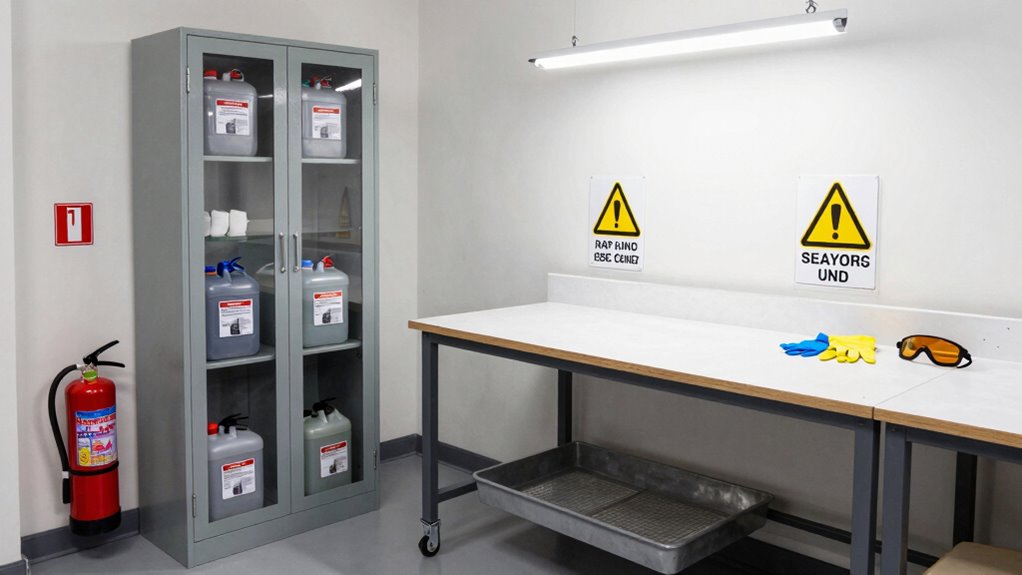

To keep your solvent studio safe, guarantee all chemicals are stored in labeled, sealed containers and placed in a well-ventilated area away from heat or flames. Install proper ventilation, including local exhaust systems, and regularly check filters and airflow. Follow safety protocols, stay updated on regulations, and document procedures clearly. Regular inspections help prevent leaks and fumes. Keep learning the essential safety measures to create a secure workspace that protects everyone involved.
Key Takeaways
- Store solvents in clearly labeled, sealed containers in a dedicated, well-ventilated area away from heat and flames.
- Maintain proper ventilation systems, including local exhausts and general airflow, to prevent fume buildup.
- Regularly inspect storage containers and ventilation equipment for damage or inefficiencies.
- Implement and follow comprehensive safety protocols, including proper labeling and emergency response procedures.
- Ensure staff are trained on safe chemical handling, storage practices, and ventilation system operation.
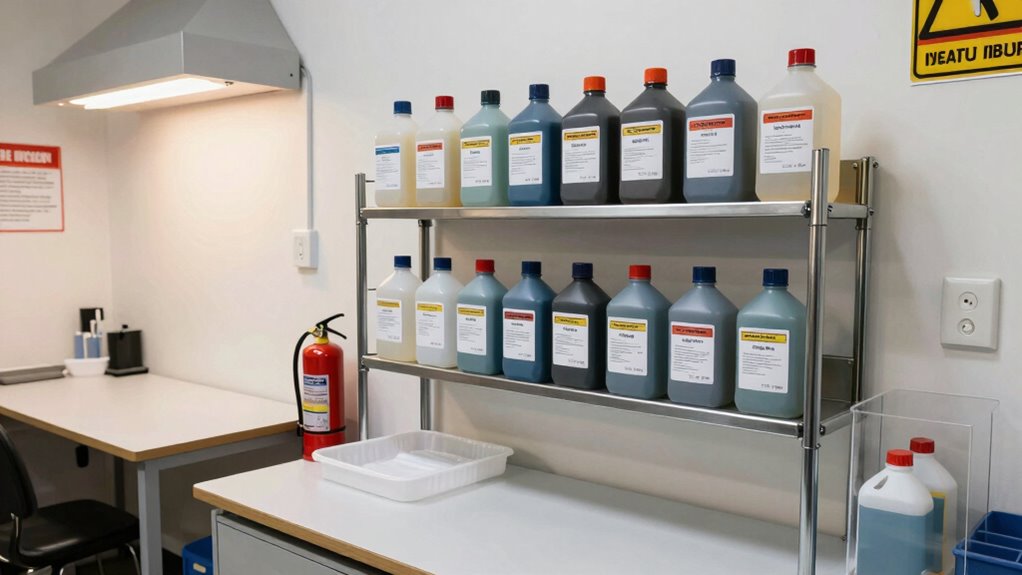
Have you ever wondered what it takes to keep a solvent-using studio safe? The key lies in implementing proper safety measures that protect you from potential hazards associated with chemicals and their fumes. One of the most critical aspects is chemical storage. You need to keep all solvents in clearly labeled, tightly sealed containers to prevent leaks or spills. Store these containers in a dedicated, well-ventilated area away from heat sources or open flames. Using cabinets designed specifically for chemical storage adds an extra layer of safety, providing containment in case of accidental leaks. Remember, storing chemicals properly isn’t just about organization—it’s about minimizing risk. Keeping incompatible chemicals apart is also essential to prevent dangerous reactions. Regularly inspect containers for signs of deterioration, such as cracks or corrosion, and replace damaged ones immediately. Proper chemical storage helps create a safer workspace by reducing the chances of accidental exposure or fires. Additionally, understanding the importance of chemical safety standards ensures your studio complies with safety regulations and best practices. Implementing these standards can also help you stay aware of evolving safety requirements and innovations in chemical handling. Maintaining a thorough safety protocol can further enhance your preparedness for emergencies and help you respond effectively if an incident occurs. Incorporating proper labeling practices is also crucial in preventing accidental misuse or mixing of chemicals, which can lead to hazardous situations.
Another vital safety component is a well-designed ventilation system. Effective ventilation keeps toxic fumes and vapors from accumulating, safeguarding your health and reducing fire hazards. You should install local exhaust ventilation directly at workstations where solvents are used, pulling fumes away from your breathing zone. Additionally, a general ventilation system should be in place to circulate air throughout the studio, diluting any lingering vapors. Make sure your ventilation system is maintained regularly, with filters cleaned or replaced as needed. Proper airflow not only minimizes health risks but also helps prevent the buildup of flammable vapors, which could ignite if exposed to sparks or open flames. You should also keep windows or secondary exhaust fans operational, especially if your studio lacks a dedicated ventilation system. When working with solvents, never underestimate the importance of good airflow—it’s your frontline defense against inhalation hazards and potential fires. Having a comprehensive understanding of ventilation best practices can further enhance your safety measures. Regularly testing your ventilation system’s effectiveness can help identify any issues before they compromise safety.
chemical storage cabinets for solvents
As an affiliate, we earn on qualifying purchases.
As an affiliate, we earn on qualifying purchases.
Frequently Asked Questions
How Often Should Safety Equipment Be Inspected and Maintained?
You should inspect and maintain your safety equipment regularly, ideally monthly, to guarantee everything functions properly. Personal protective equipment like gloves and goggles need frequent checks for damage. Ventilation systems should be inspected quarterly to ensure proper airflow and remove fumes effectively. Regular maintenance helps prevent accidents, keeps your studio safe, and ensures your safety gear and ventilation systems perform at their best when you need them most.
What Training Is Required for New Studio Staff?
You need to train new studio staff on essential safety procedures immediately, ensuring they understand how to properly use personal protective equipment and operate ventilation systems—imagine a tiny superhero suit and powerful air filters working together to shield them from invisible dangers. They should learn the hazards of solvents, emergency protocols, and proper handling techniques. Hands-on demonstrations and safety manuals make these lessons stick, preventing disasters and keeping everyone safe.
Are There Specific Disposal Procedures for Solvent Waste?
You should follow specific disposal procedures for solvent waste, focusing on proper solvent labeling and waste segregation. Clearly label all waste containers with the solvent type and hazard information. Separate solvent waste from other waste streams to prevent reactions or contamination. Use designated, approved disposal containers, and follow local regulations for disposal. Regularly review procedures with staff to guarantee everyone understands proper waste segregation and labeling to maintain a safe, compliant studio environment.
How Should Emergency Spills Be Handled Effectively?
Imagine a fire brigade ready to douse flames—that’s how you should handle emergency spills. Act swiftly with emergency response protocols, don protective gear, and contain the spill immediately with spill containment materials like absorbent pads or barriers. Evacuate if needed, ventilate the area, and notify emergency services. Staying calm guarantees you control the situation effectively, minimizing hazards and preventing further damage or injury.
What Are the Legal Requirements for Solvent Storage?
You need to follow storage regulations that specify proper labeling, containment, and ventilation for solvents. Ensuring chemical compatibility is essential; store incompatible substances separately to prevent reactions. Comply with local, state, and federal laws, such as OSHA and EPA standards, which detail safe storage practices. Regularly review and update your procedures to meet evolving regulations, and always keep safety data sheets accessible to inform staff about proper handling and storage requirements.
ventilation exhaust fan for studio
As an affiliate, we earn on qualifying purchases.
As an affiliate, we earn on qualifying purchases.
Conclusion
Remember, safety isn’t just a rule—it’s your foundation. By keeping proper ventilation, fire extinguishers, and protective gear on hand, you create a secure space to release your creativity. Stay vigilant and follow these basics consistently; after all, an ounce of prevention is worth a pound of cure. When you prioritize safety, you’ll enjoy your studio and your art without unnecessary worries. Keep safety first, and let your passion thrive!
As an affiliate, we earn on qualifying purchases.
flammable chemical storage containers
As an affiliate, we earn on qualifying purchases.
As an affiliate, we earn on qualifying purchases.