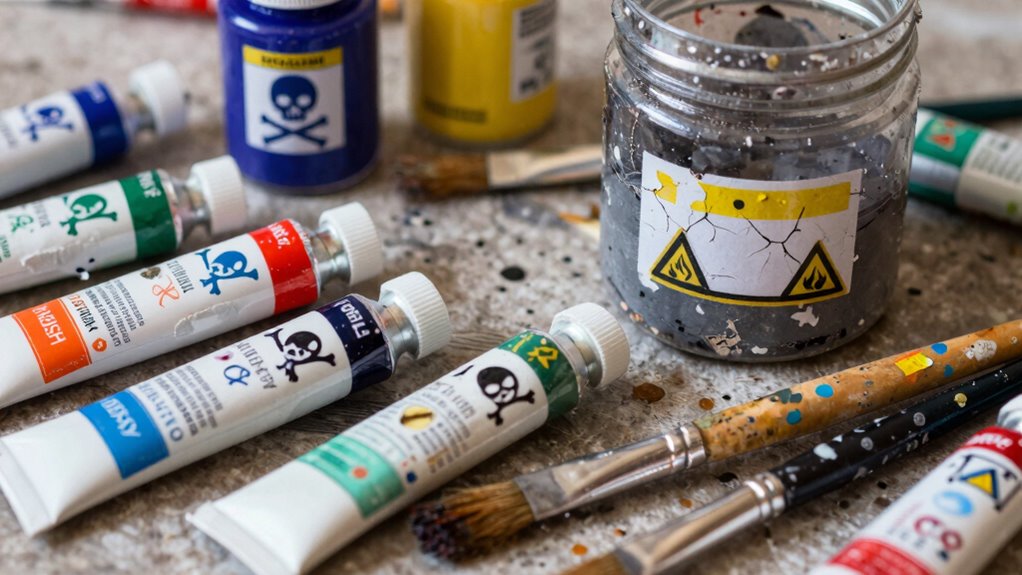

Many artists overlook safety labels on art supplies, missing hidden toxins like heavy metals or VOCs that pose serious health risks. Recognizing hazard symbols and understanding what labels reveal can help you avoid skin irritation, breathing problems, or long-term issues like neurological damage. Proper handling, storing, and choosing safer alternatives are essential. If you want to identify these dangers and protect yourself better, you’ll discover vital safety tips that could save your health.
Key Takeaways
- Many art material labels are incomplete or confusing, hiding toxic ingredients that require further research and safety data sheets.
- Recognizing hazard symbols like skulls or flames helps identify risks often ignored or overlooked by users.
- Proper handling, ventilation, and protective gear are essential since labels may not fully warn about long-term health effects.
- Heavy metal pigments and solvent-based paints contain hidden toxins, emphasizing the importance of understanding safety labels and alternatives.
- Educating artists about safety symbols and ingredient transparency reduces exposure to hazardous chemicals in art supplies.

Shuttle Art Acrylic Paint, 36 Colors Acrylic Paint Set with Brushes & Palette, 2oz/60ml Bottles, Rich Pigments Non-toxic for Artists Kids & Adults, Painting on Canvas Rocks Ceramic Wood
36 VIBRANT COLORS : Shuttle Art 36 colors acrylic paint set contains 36 unique colors highly pigmented paints,…
As an affiliate, we earn on qualifying purchases.
As an affiliate, we earn on qualifying purchases.
Decoding Hazard Symbols on Art Supplies

Understanding hazard symbols on art supplies is essential for ensuring safe use and handling. Label symbols provide quick, visual cues about potential dangers, such as toxicity, flammability, or irritants. Incorporating safety automation features can help monitor and alert you to hazardous conditions during creative processes. Familiarizing yourself with these symbols helps you follow safety guidelines properly, reducing risk during creation and cleanup. For example, a symbol with a skull indicates toxicity and warns you to avoid ingestion or prolonged skin contact. Always check the labels before opening a new product and pay attention to any precautionary statements. Proper understanding of these symbols enables you to handle supplies responsibly, protect your health, and create in a safe environment.

OSHA Gown, Gloves And Mask Sign, 8.5 x 11 in" OSHA Compliant PPE Multiple Sign, Weatherproof Plastic, UV resistant & Easy-to-Read Signage
MESSAGE TEXT: Gown, Gloves And Mask Required In This Room
As an affiliate, we earn on qualifying purchases.
As an affiliate, we earn on qualifying purchases.
Why Ignoring Safety Labels Is Dangerous
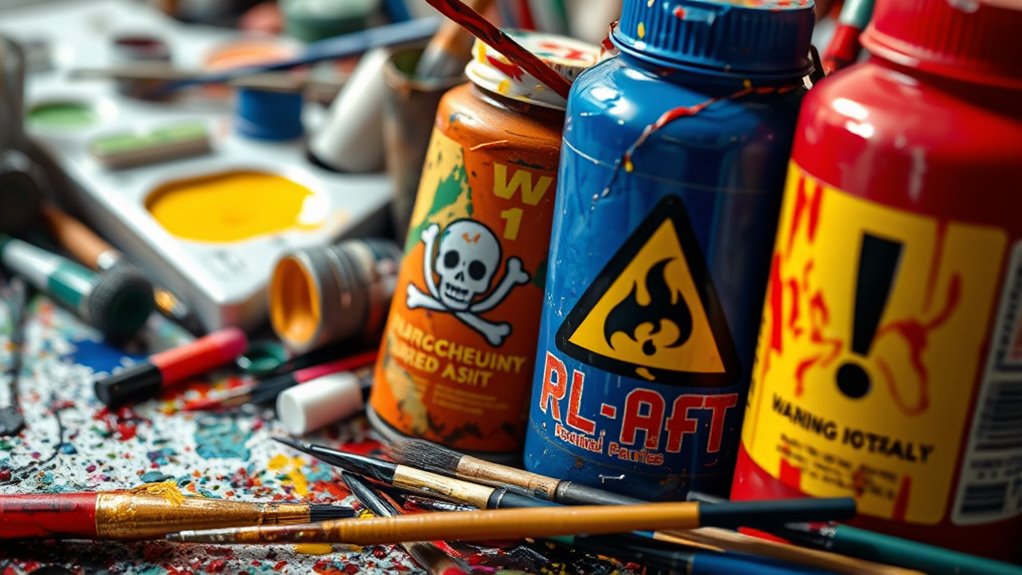
Ignoring safety labels can expose you to hidden toxic ingredients you mightn’t realize are dangerous. Immediate health issues, like skin irritation or breathing problems, can happen if you overlook warnings. Over time, prolonged exposure increases the risk of serious health consequences you definitely want to avoid. Additionally, understanding toxic art materials helps you make safer choices and protect your well-being. Recognizing the hazardous nature of certain chemicals in art supplies can further prevent accidental poisoning or long-term health effects.
Hidden Toxic Ingredients Risks
Many artists overlook the dangers hidden in seemingly harmless art supplies, often because safety labels can be confusing or incomplete. Chemical masking tricks manufacturers use can hide toxic ingredients, making it hard to identify harmful substances. A thorough understanding of Chemical masking tricks can help artists better recognize hidden risks. Additionally, ingredient transparency plays a crucial role in ensuring safer art practices. Without ingredient transparency, you might assume a product is safe because it lacks obvious warnings. However, some ingredients are concealed or listed under vague terms, masking their true toxicity. This deceptive practice increases your risk of exposure to harmful chemicals over time, especially if you use certain materials frequently. Being aware of labeling practices can help you identify misleading information on product labels. Recognizing regulatory gaps in safety standards is also essential, as they can allow manufacturers to omit critical safety information. Understanding testing standards and how they are applied can further help you assess product safety. Ignoring these hidden risks can lead to long-term health issues. To protect yourself, prioritize products with clear ingredient labels and avoid those that obscure or mask chemical content. Being vigilant about ingredient transparency is essential for your safety.
Immediate Health Consequences
When safety labels are overlooked or unclear, you risk immediate health problems from exposure to toxic art materials. You might experience allergic reactions or skin irritations right away, which can be painful or distracting. Ignoring labels prevents you from recognizing hazards that can cause redness, itching, or swelling. To understand the risks better, consider this:
| Symptom | Cause | Action Needed |
|---|---|---|
| Skin irritation | Contact with toxic chemicals | Wash immediately, seek care |
| Allergic reactions | Sensitization to certain pigments | Discontinue use, consult a doctor |
| Breathing issues | Inhalation of fumes | Move to fresh air, seek help |
Being aware of these consequences encourages safer practices and reduces your immediate health risks. Proper handling techniques are essential for minimizing exposure and safeguarding your health while working with art materials. Additionally, staying informed about safety labels can help prevent accidental exposures before they occur.
Long-term Exposure Dangers
Overlooking safety labels on art materials doesn’t just cause immediate discomfort—it can lead to serious health problems over time. Chronic exposure to toxic substances in certain paints, solvents, and dyes can silently damage your body, affecting your long term health.
Repeated contact without proper precautions may increase your risk of developing respiratory issues, neurological problems, or even cancers later in life. Many artists underestimate how dangerous these chemicals are, assuming occasional use won’t harm them.
But the reality is, continuous exposure builds up toxins in your system, leading to cumulative health effects. Ignoring safety labels jeopardizes your well-being long after the initial use.
Protect yourself by understanding these risks and always following safety guidelines to minimize the danger of long-term health consequences.
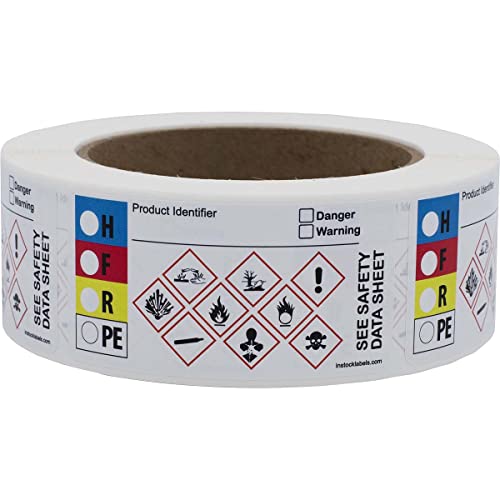
Small Write-On GHS and HMIG Combo Label with GHS Hazard Symbols, 1.5 x 3 Inch Rectangles, 500 Total Labels per Roll
MADE IN THE USA: All of our labels are printed in the United States. If you’re not satisfied,…
As an affiliate, we earn on qualifying purchases.
As an affiliate, we earn on qualifying purchases.
Which Art Supplies Are Most Toxic?
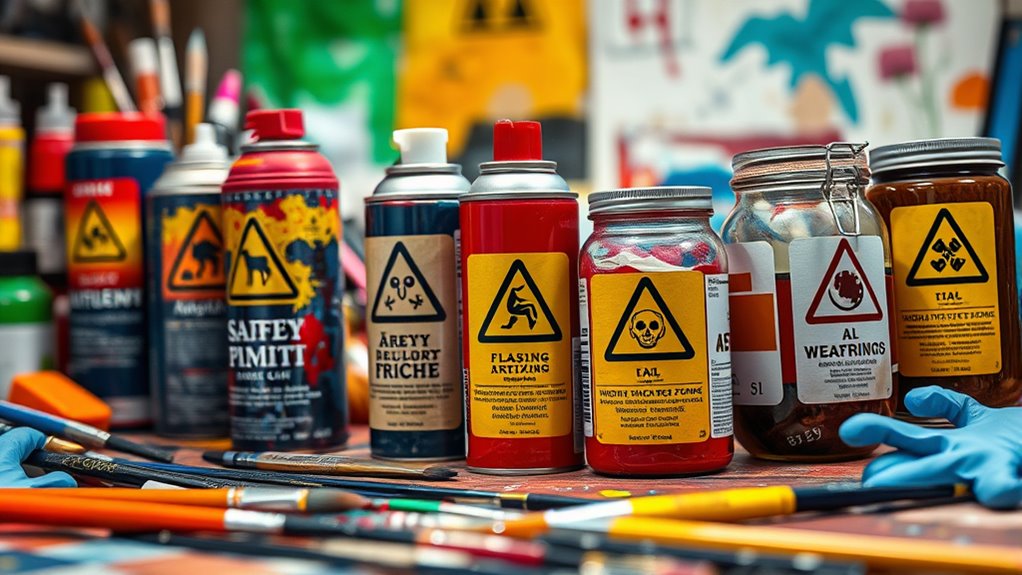
You should be aware that solvent-based paints release harmful fumes, which can irritate your lungs and skin. Heavy metal pigments in some colors pose serious health risks if ingested or inhaled over time. Additionally, toxic art markers often contain chemicals that can be absorbed through your skin or inhaled, making them especially dangerous. Being aware of safe art practices and proper material handling can help minimize exposure to these hazardous materials. It’s also important to recognize the potential health risks associated with prolonged exposure to certain art materials.
Solvent-based Paints Risks
Solvent-based paints pose significant health risks due to their volatile organic compounds (VOCs) and toxic fumes. As paint evaporates, solvent fumes are released into your environment, which you might unknowingly inhale. These fumes can cause headaches, dizziness, and long-term health issues. To understand the risks better, consider this table:
| Risk | Exposure Source | Health Effect |
|---|---|---|
| VOC inhalation | Paint evaporation | Respiratory problems |
| Skin contact | Handling solvents | Skin irritation |
| Inhalation of fumes | Opening cans, spraying | Nervous system damage |
| Eye contact | Splashing or splattering | Eye irritation |
| Prolonged exposure | Continuous use | Liver and kidney damage |
Protect yourself by working in well-ventilated areas and limiting direct contact with solvent fumes.
Heavy Metal Pigments
Did you know that some traditional art pigments contain toxic heavy metals? These pigments, like cadmium, lead, and chromium, pose serious health risks if ingested or inhaled over time. Heavy metal pigments can be especially hazardous during the mixing and disposal processes. Metal poisoning can occur with prolonged exposure, especially when working without proper ventilation or protective gear. Despite their vibrant colors and pigment stability, these materials remain dangerous. Many artists underestimate the risks, mistakenly assuming they’re safe once dried. However, particles can become airborne during mixing, handling, or disposal, especially when working with volatile toxic substances. To protect yourself, always use gloves, work in well-ventilated areas, and opt for safer alternatives when possible. Recognizing the toxicity of heavy metal pigments is essential for minimizing long-term health hazards and ensuring your creative process doesn’t come at a cost to your well-being.
Toxic Art Markers
While many artists rely on markers for their convenience and vibrant colors, some art markers contain toxic chemicals that pose serious health risks. Permanent markers, especially those labeled as “industrial” or “professional,” often contain solvents like xylene and toluene, which can cause headaches, dizziness, and long-term health issues. Understanding chemical safety is crucial for artists to make informed choices about their supplies. To stay safe, you need to follow safety guidelines and learn how to interpret labels correctly. Always read the label for hazard symbols, ingredient lists, and warnings. Look for markers marked as non-toxic or labeled as safe for children, which usually contain water-based inks. Avoid inhaling fumes or getting ink on your skin. Proper label interpretation helps you choose safer options and protect your health while creating art. Being aware of toxic chemical exposure risks can help prevent health problems associated with unrecognized hazards. Additionally, recognizing piercing aftercare requirements can prevent infections and complications, emphasizing the importance of proper safety measures in all health-related practices. Furthermore, understanding best practices for handling art supplies can minimize accidental exposure and ensure a safer creative environment.

Nicpro Metallic Gold Acrylic Paint, 33.8oz/1000ml Large Heavy Body Gold Acrylic Paint, Non Toxic, Non Fading, Rich Pigment Gold Leaf Paint for Metal, Wood, Canvas, Furniture, Handcrafts, DIY Decor
STUNNING METALLIC GOLD FINISH – Creamy, high-pigment metallic gold heavy body acrylic paint delivers great coverage for large…
As an affiliate, we earn on qualifying purchases.
As an affiliate, we earn on qualifying purchases.
How to Safely Handle and Store Toxic Materials
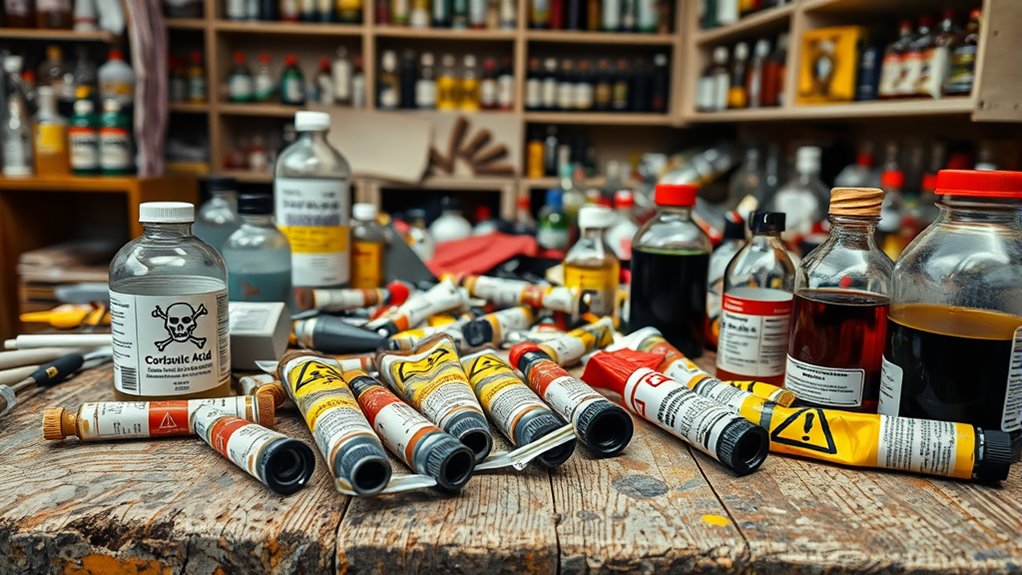
Handling and storing toxic art materials safely is essential to prevent health risks and accidents. Always work in a well-ventilated area to disperse fumes and reduce inhalation hazards. Use proper ventilation systems or open windows and doors whenever possible. A well-ventilated environment reduces the risk of global chaos caused by exposure to hazardous fumes and ensures safer working conditions. Wearing protective gear, such as gloves, masks, and goggles, shields your skin and eyes from direct contact with toxic substances. Store materials in clearly labeled, airtight containers away from children and pets. Keep lids tightly sealed when not in use and avoid transferring toxic substances into unmarked or makeshift containers. Regularly check storage areas for leaks or spills, and clean up any mess immediately. Proper ventilation is a key factor in maintaining a safe workspace and reducing the buildup of harmful fumes. Additionally, understanding the cost‑of‑ownership of safety equipment can help ensure ongoing protection in your workspace. Incorporating safety protocols can further minimize the risk of accidental exposure and ensure compliance with safety standards. Taking time to educate yourself about hazardous material handling can significantly improve overall safety in your art practice.
Recognizing and Avoiding Hidden Dangers in Art Supplies
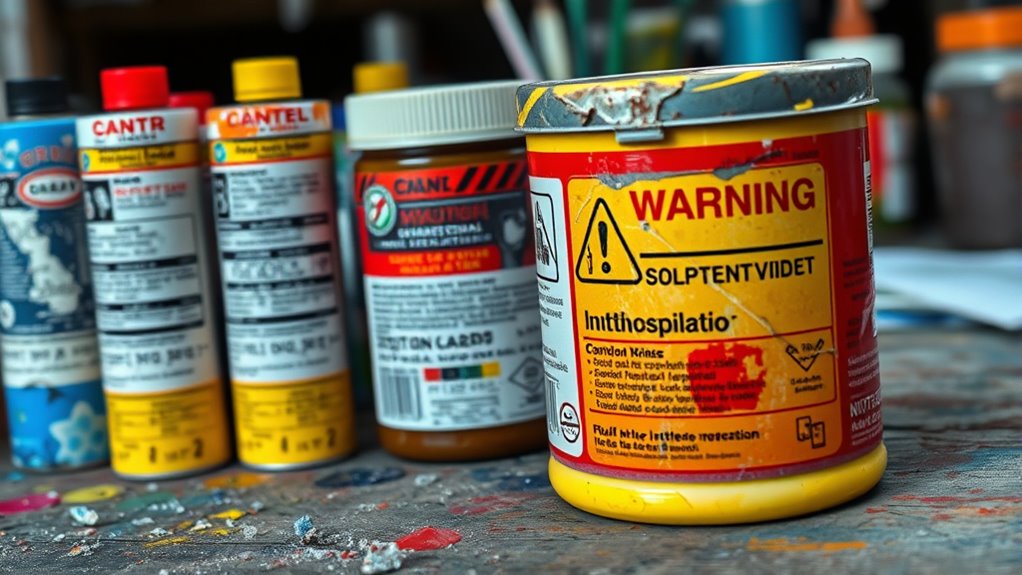
Even when you follow proper handling and storage procedures, some dangers in art supplies can remain hidden. Art supply labeling often fails to reveal the full extent of chemical risks, so don’t rely solely on labels to identify hazards. Instead, familiarize yourself with chemical safety guidelines, which help you understand how certain ingredients can affect your health. Look beyond the front label; check for detailed ingredient lists and hazard symbols, especially for older or imported products. Be cautious of products with vague or incomplete labeling, and research unfamiliar materials before use. Recognizing hidden dangers means staying informed and skeptical of marketing claims. Additionally, understanding safety data sheets can provide comprehensive information about potential chemical hazards and proper handling procedures. Being aware of regulatory standards can also help you identify products that meet safety requirements and reduce exposure risks. Remember that some chemicals may be present in art supplies even if they are not explicitly listed on the label.
Educating Yourself and Others About Art Safety
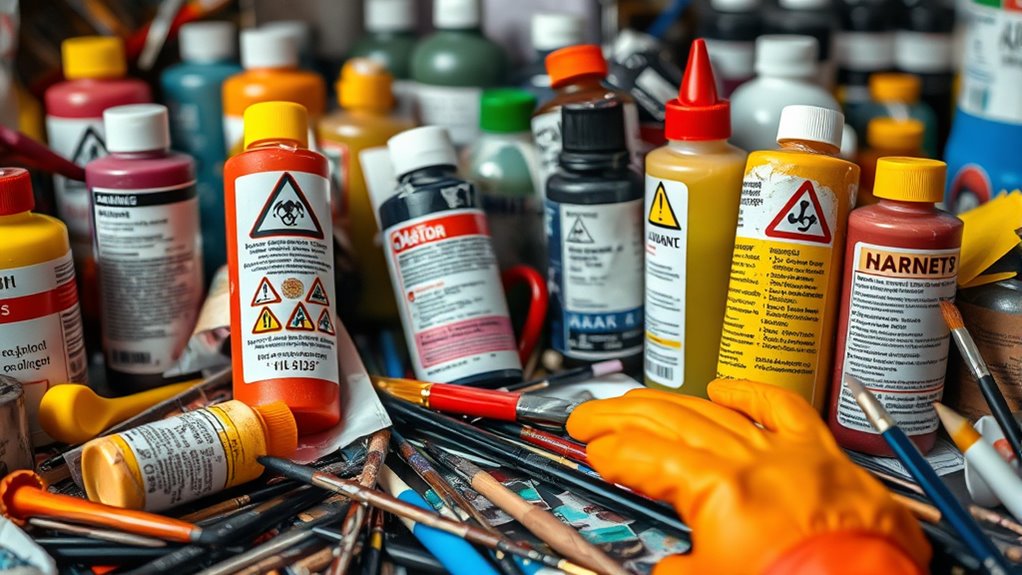
Educating yourself and others about art safety is vital for creating a secure creative environment. Developing art safety awareness helps you recognize potential hazards and understand the importance of proper handling.
Learning about art safety fosters a secure, healthy creative environment for all.
Label literacy plays a fundamental role, enabling you to interpret safety warnings and ingredient lists accurately. By learning to read labels, you can avoid toxic materials and choose safer alternatives.
Share this knowledge with fellow artists, students, or anyone involved in art creation. Encourage questions and discussions about safety practices to foster a safety-conscious community.
Staying informed about the risks associated with art supplies empowers you to make smarter choices, reducing exposure to harmful substances.
Ultimately, ongoing education ensures everyone involved maintains a safe and healthy artistic space.
Frequently Asked Questions
Are There Non-Toxic Alternatives for Commonly Used Toxic Art Supplies?
Yes, you can find non-toxic alternatives for toxic art supplies. Look for eco-friendly pigments made from natural sources like plant-based or mineral-based colors.
Use natural adhesives such as beeswax or plant-based glues instead of synthetic ones. These options are safer for your health and the environment.
Switching to eco-friendly pigments and natural adhesives not only reduces exposure to harmful chemicals but also supports sustainable art practices.
How Can I Test Art Materials for Hidden Chemical Hazards?
You can start by conducting chemical testing through certified labs that specialize in hazard identification. These labs analyze your art materials for hidden chemical hazards, such as toxic heavy metals or volatile compounds.
You might also look for DIY test kits, but professional testing offers more accurate results. Always prioritize hazard identification to guarantee your art supplies are safe, especially if you’re concerned about hidden dangers lurking in seemingly benign materials.
What Symptoms Indicate Exposure to Toxic Art Materials?
If you’re exposed to toxic art materials, watch for allergic reactions like skin rashes or swelling, and respiratory issues such as coughing, wheezing, or shortness of breath.
You might also experience headaches, dizziness, or nausea. If any of these symptoms appear, stop using the materials immediately, move to fresh air, and seek medical attention.
Always prioritize safety and trust your body’s signals when working with potentially hazardous art supplies.
Are Children More Vulnerable to Toxic Art Materials Than Adults?
Yes, children are more vulnerable to toxic art materials than adults because of their developmental vulnerability and ongoing growth. Their smaller bodies absorb chemicals more easily.
Their curiosity often leads them to ingest or mishandle art supplies. For child safety, you should always supervise their use of art materials, choose non-toxic options, and educate them about potential hazards to minimize health risks.
How Often Should I Check for Updates on Safety Regulations?
You should check for safety updates on a regular basis, ideally every few months, to stay current with regulatory compliance. Safety update frequency can vary, but staying proactive helps you avoid hazards and guarantee proper handling of toxic art materials.
Make it a habit to subscribe to industry newsletters or alerts from regulatory agencies, so you’re always informed about new safety regulations and updates that could affect your work or safety practices.
Conclusion
Always pay attention to safety labels on your art supplies, even if they seem harmless. Recognize hazard symbols and understand the risks of toxic materials. Handle and store your supplies carefully, and stay informed about hidden dangers. Educate yourself and others to prevent accidents and health issues. Prioritizing safety guarantees your creative process stays enjoyable and safe, so don’t ignore those warning labels—they’re there to protect you every step of the way.