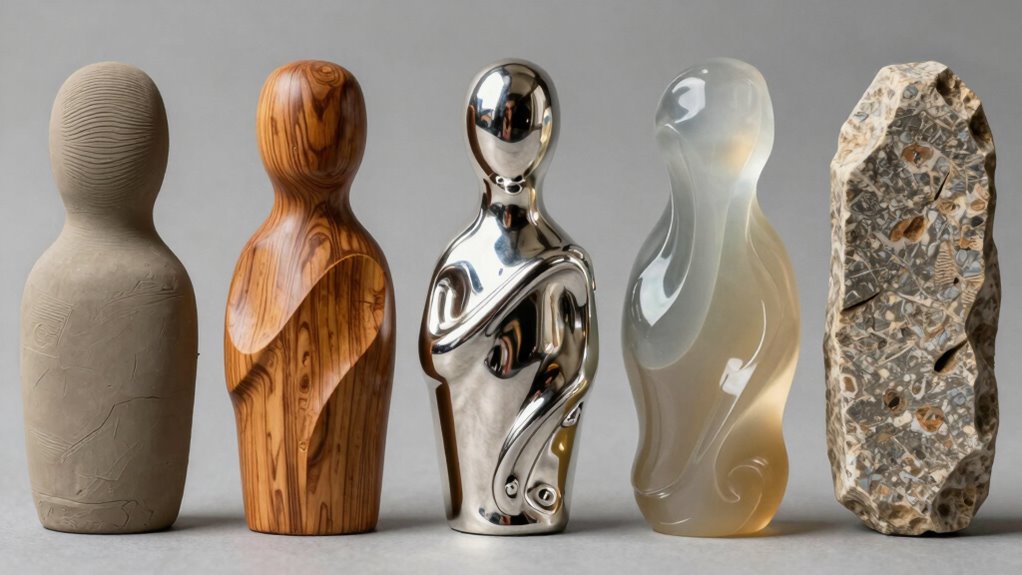

Sculpture materials include clay, known for its versatility and ease of shaping, and wood, which offers natural beauty and workability. Metals like bronze and steel provide strength and shine, while resin allows for detailed, flexible designs. Stone remains timeless for durability and texture. Each material has unique properties affecting its use, care, and artistic style. Exploring their features further will help you understand how to choose the right medium for your artistic goals.
Key Takeaways
- Clay is a malleable, versatile material ideal for detailed modeling, with cultural significance across civilizations.
- Wood offers natural beauty, easy carving, and distinctive grain patterns, suitable for warm, organic sculptures.
- Metal provides strength, durability, and shine, often used for large or intricate artworks with potential patinas.
- Resin is a flexible, detail-rich synthetic material, perfect for complex designs but with environmental considerations.
- Stone is a durable, timeless medium valued for its natural textures and cultural symbolism, suitable for lasting outdoor sculptures.
Clay: The Versatile Sculptor’s Medium
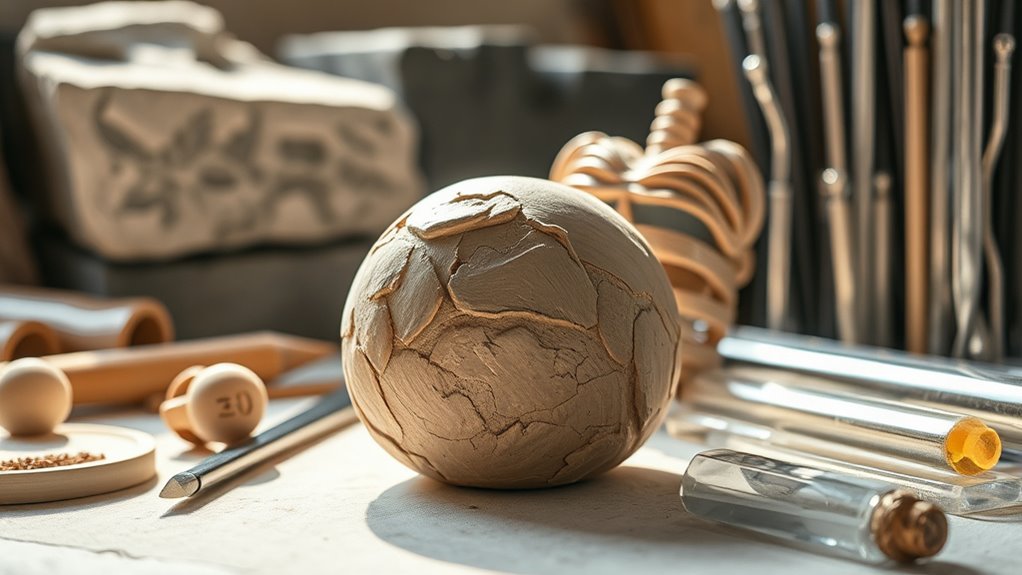
Have you ever wondered why clay remains one of the most popular materials among sculptors? Its texture variations allow you to create everything from smooth, polished surfaces to rough, expressive finishes, giving you endless artistic possibilities. Historically, clay holds significant cultural importance, dating back thousands of years across diverse civilizations. It enabled ancient artists to craft detailed figurines, vessels, and religious icons, shaping early artistic expression. Its malleability makes it easy to mold and reshape, perfect for both beginners and seasoned sculptors. Plus, clay’s accessibility means you can work without expensive tools. Its natural origin and ease of use contribute to its enduring popularity among artists of all levels. Whether you’re exploring traditional techniques or pushing creative boundaries, its rich historical significance and versatile textures make clay an enduring choice for sculpture. Understanding sculpture materials can enhance your appreciation and mastery of this versatile medium. Additionally, the affordability and availability of clay make it an ideal starting point for anyone interested in sculpture. A long-standing tradition of use in art history further cements its role as a foundational material.
Wooden Sculptures: Natural Elegance and Workability

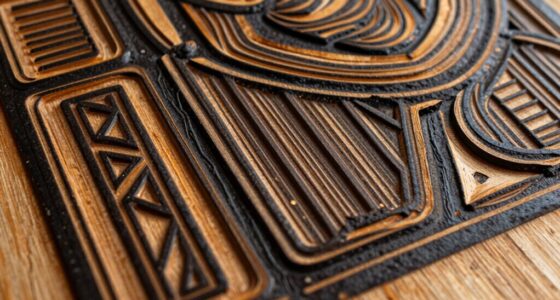
Wooden sculptures showcase the natural beauty of grain patterns, adding warmth and character to your work. You’ll find wood easy to carve and shape, making the creative process smooth and satisfying. This combination of aesthetics and workability makes wood a popular choice for artists. For those interested in diversifying their art investments, understanding precious metals investment can offer additional options for financial security. Additionally, proper maintenance and understanding of battery lifecycle can help preserve the integrity of wooden sculptures over time. Embracing traditional craftsmanship techniques can also enhance the authenticity and lasting value of your wooden creations.
Natural Grain Aesthetics
The natural grain of wood enhances sculptures with unique patterns and textures that highlight the material’s organic beauty. This grain creates visual interest, making each piece one-of-a-kind. The surface texture varies from smooth to richly ridged, adding depth and character to your work. When working with wood, you can leverage these features to emphasize natural elegance. To maximize the aesthetic impact, consider these points:
- Highlight the grain’s flow to guide viewers’ eyes across your sculpture.
- Use contrasting finishes to accentuate the surface texture.
- Select wood types with distinctive grain patterns for a more striking appearance.
- Understanding the workability of different woods can help you choose the best material for your design and achieve desired effects.
- Recognizing the grain patterns can also influence the overall mood and style of your sculpture, adding to its uniqueness. Additionally, exploring how sound vibrations interact with different wood types can inspire unique surface treatments and textures, further enriching your artistic expression.
- Being aware of market trends in woodworking materials can help you select woods that are both aesthetically appealing and readily available, enhancing your creative options.
- Incorporating knowledge of material durability can ensure your sculpture withstands environmental factors and maintains its beauty over time.
Carving and Shaping Ease
Building on the natural beauty of wood’s grain, understanding its carving and shaping ease can considerably enhance your sculpture-making process. Wood offers excellent texture variation, allowing you to achieve diverse surface finishes—from smooth, polished surfaces to rough, rustic textures. Softer woods like pine or cedar are easier to carve, making them ideal for detailed work or quick shaping. Harder woods, such as oak or walnut, provide durability and a refined surface finish but require more effort. As you work, you’ll notice that the grain influences how cleanly you can carve without splintering. Mastering these nuances helps you control your tools better and ensures your final sculpture exhibits both the desired texture variation and a polished surface finish.
Metals in Sculpture: Strength and Shine
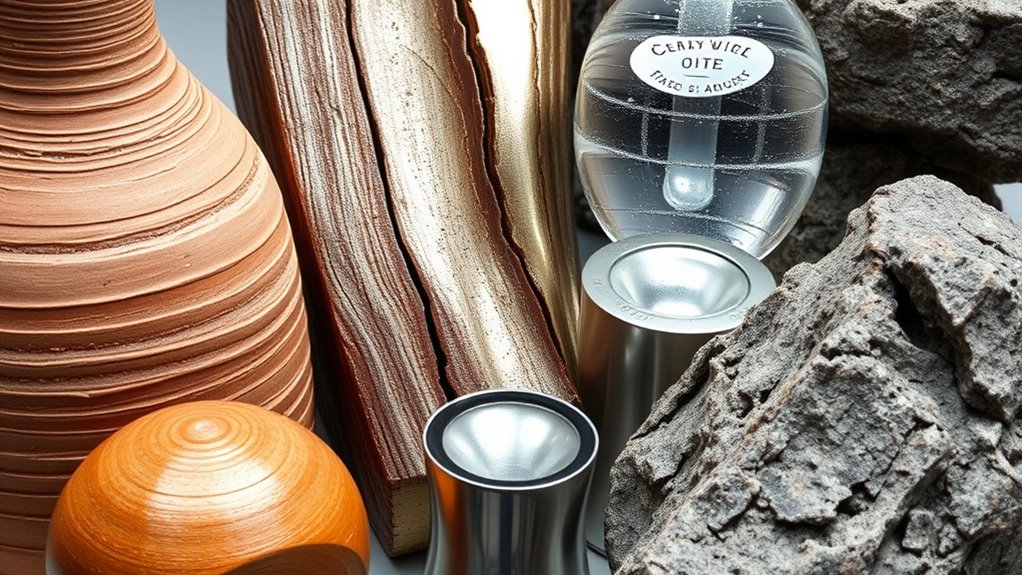
Metals have long been favored in sculpture because of their remarkable strength and natural shine. Their durability allows for intricate details and large-scale works that withstand the elements. You can enhance their appearance with a metal patina, creating unique colorations and textures that add character. To guarantee longevity, many metals offer corrosion resistance, protecting your sculpture from rust and deterioration over time. When selecting a metal, considering its performance ratings based on suction power and durability can help ensure your sculpture remains both beautiful and resilient. Additionally, the manufacturing process of the metal can influence its final appearance and structural properties, impacting how well it holds up over the years. Understanding the metal properties can further assist in choosing the right material for specific environmental conditions and artistic goals. Incorporating knowledge of energy alignment can also enhance the artistic process, ensuring your creation resonates positively with viewers and the environment.
Resin: Modern Flexibility and Detail
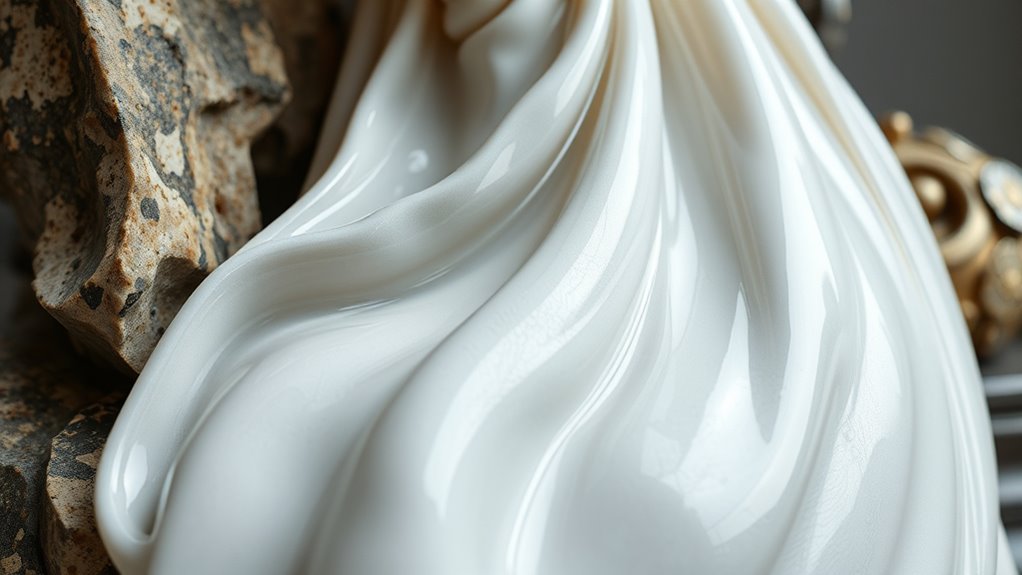
Resin has revolutionized sculpture by offering unmatched flexibility and detail that metals can’t easily match. Its ability to capture fine textures and intricate shapes makes it ideal for complex, detailed works. However, you should consider biocompatibility challenges, especially if your sculpture involves contact with skin or biological environments. Resin’s chemical components can pose health risks during handling and curing, so proper safety measures are essential. Additionally, environmental impacts are a concern; many resins are derived from petroleum and are not biodegradable, contributing to environmental pollution if not disposed of properly. Despite these issues, advances in eco-friendly resins are emerging. Eco-friendly resins are becoming more accessible, providing sustainable options for artists. Moreover, understanding the environmental impact of resin materials is crucial for making responsible artistic choices. Overall, resin provides a versatile, modern material that allows for remarkable detail and adaptability, but balancing its benefits with environmental and health considerations is vital.
Stone: Timeless Durability and Texture
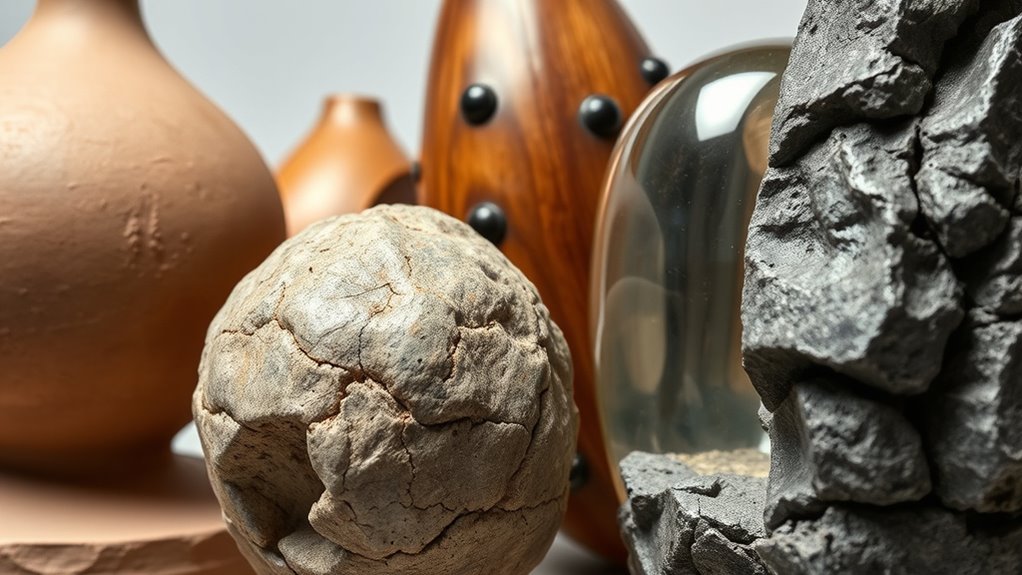
Stone has long been favored for its durability and rich textures, making it a timeless choice for sculpture. Its historical significance is evident in ancient monuments and statues that have endured centuries. You’ll notice how stone’s natural surface conveys deep cultural symbolism, often representing strength, permanence, or spiritual beliefs. When working with stone, consider these aspects:
- Historical Significance: Many famous sculptures, like Greek statues or Egyptian monuments, showcase stone’s lasting legacy.
- Cultural Symbolism: Different stones symbolize various qualities—granite for resilience, marble for beauty.
- Texture and Finish: Stone’s natural grain and polish highlight intricate details and add expressive depth to your work.
- Surface Treatment and Preservation: Proper surface treatment and preservation techniques ensure your stone sculpture maintains its appearance over time, respecting its natural properties.
Additionally, understanding material properties helps artists select the most suitable stone for their specific artistic goals.
Choosing stone connects your art to a long tradition of timeless craftsmanship, and an awareness of its surface properties can further enhance your artistic outcomes.
Being aware of environmental factors also aids in maintaining the sculpture’s durability and appearance over the years. Understanding how weathering processes affect stone can be crucial for outdoor sculptures’ longevity.
Comparing the Characteristics of Common Sculpture Materials
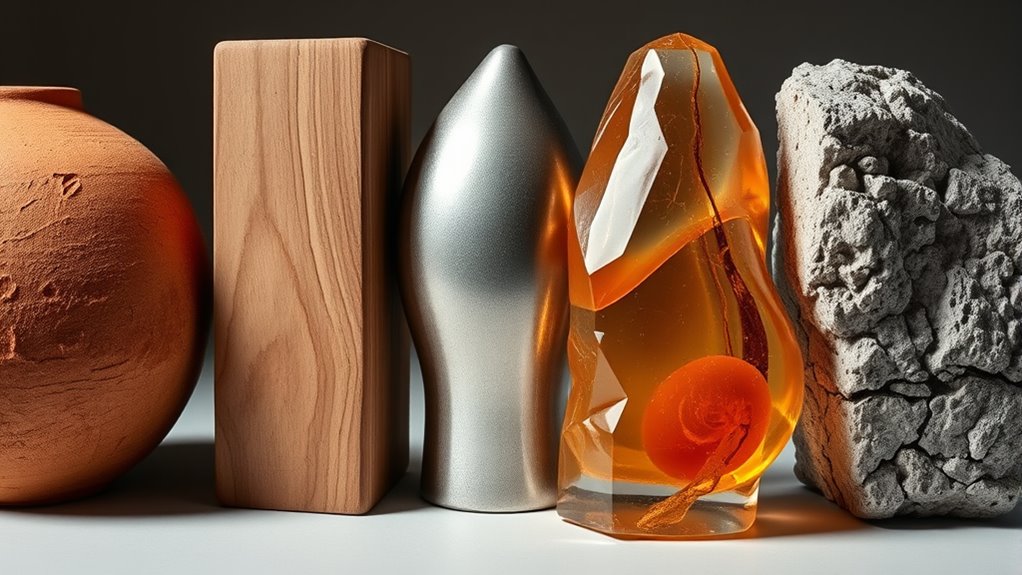
When comparing common sculpture materials, you’ll find that each offers unique qualities that influence both the creative process and the final appearance. Clay is affordable, versatile, and easy to manipulate, but its environmental impact can be significant if not sourced sustainably. Vetted – Flat Iron Bike Wood provides warmth and texture, yet it can be limited by availability and durability concerns. Metal offers strength and a sleek finish, though it often comes with higher cost considerations and energy-intensive production. Resin is lightweight and cost-effective, but it may pose environmental issues due to its synthetic nature and disposal challenges. Stone is durable and timeless, yet it can be expensive and environmentally taxing to quarry. Understanding these differences helps you select materials aligned with your project’s goals, budget, and sustainability priorities. Additionally, considering the environmental impact of materials can guide you toward more sustainable choices in your sculpture projects. For example, exploring eco-friendly materials can help reduce your project’s carbon footprint while still achieving your artistic vision. Incorporating sustainable sourcing practices ensures your work supports environmental responsibility throughout the creative process.
Tools and Techniques for Working With Each Material
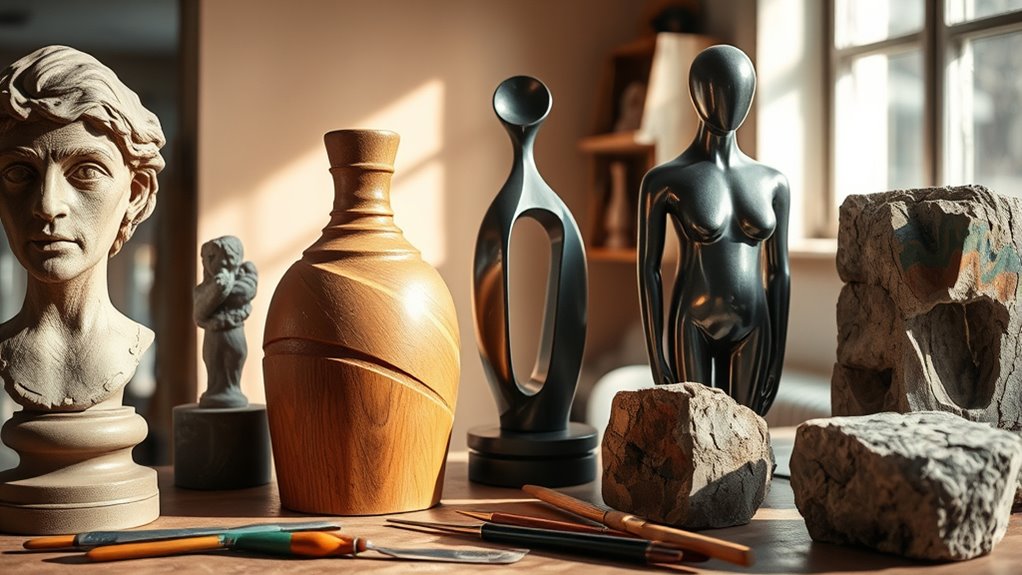
Working with different sculpture materials requires specific tools and techniques that optimize your workflow and achieve desired results. For clay, use fine-tipped tools for detailing and incorporate innovative surface treatments like glazes or slips to add texture and color. When working with wood, employ chisels and sanders for precision shaping, and consider eco-friendly finishes to reduce environmental impact. Metal sculpture benefits from welding equipment and patination techniques to create unique surfaces. Resin artists should utilize molds and UV curing lamps, paying attention to environmental impact considerations by choosing low-VOC resins.
- Use specialized tools tailored to each material to enhance detail and efficiency.
- Apply innovative surface treatments to elevate aesthetic appeal.
- Incorporate environmentally conscious methods to reduce ecological footprint.
Considerations for Choosing the Right Material for Your Project
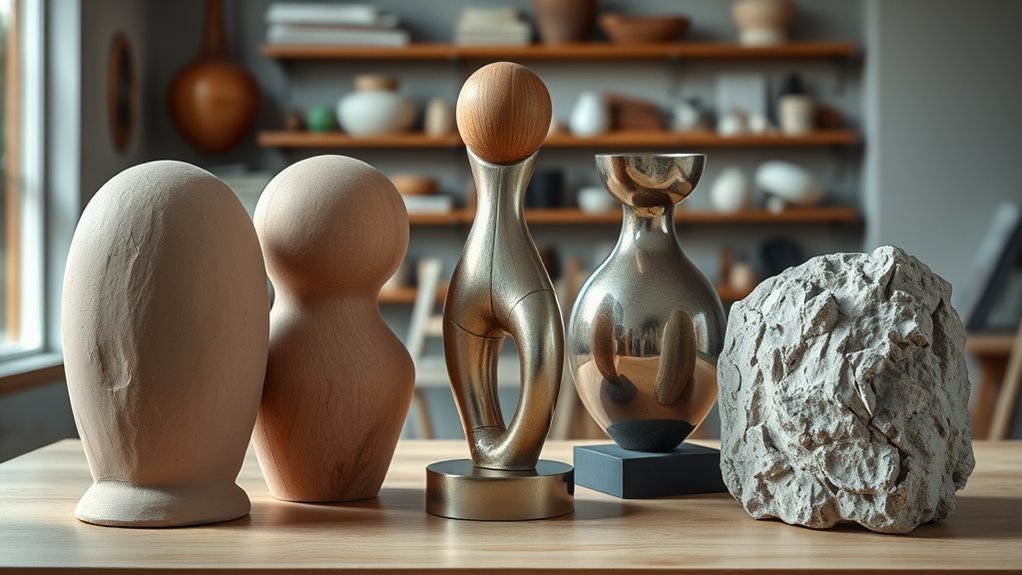
Choosing the right sculpture material depends on your project’s goals, environment, and desired aesthetic. Consider material sustainability — some materials, like wood or clay, are renewable and eco-friendly, while others, like certain resins, may have higher environmental impacts. Your budget considerations also play a key role; materials like resin and metal can be costly, whereas clay and wood often cost less. Think about where the sculpture will be displayed; outdoor pieces need durable materials like stone or metal, while indoor works might suit more delicate options. Additionally, assess your own skill level and available tools. Balancing these factors helps you select a material that aligns with your vision, budget, and environmental values, ensuring your project is both feasible and impactful.
Preservation and Care of Different Sculpture Materials
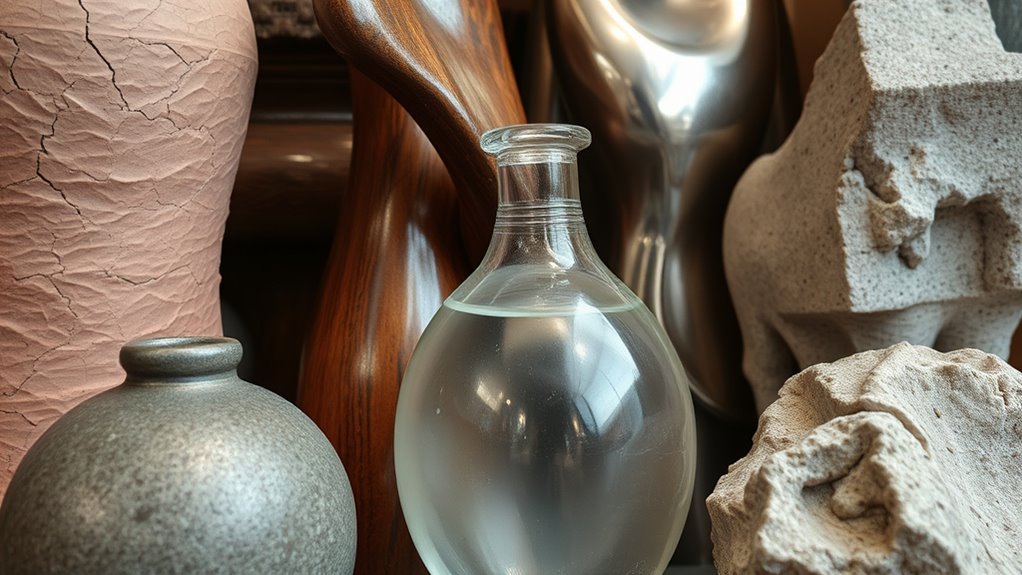
Preservation and care are essential to maintaining the integrity and appearance of your sculpture over time. Environmental effects like humidity, temperature fluctuations, and sunlight can cause deterioration, so understanding proper conservation techniques is vital. To protect your artwork, consider these steps:
- Control environmental conditions by maintaining stable temperature and humidity levels.
- Use appropriate cleaning methods tailored to each material, avoiding harsh chemicals.
- Apply protective coatings or supports to prevent damage from physical contact or pollutants.
Different materials require specific approaches; for example, clay sculptures may need sealing, while metal pieces benefit from corrosion inhibitors. Regular inspections help identify early signs of deterioration, ensuring your sculpture remains vibrant and intact through proper preservation and conservation techniques.
Frequently Asked Questions
How Do I Properly Store and Handle Fragile Sculpture Materials?
To properly store and handle fragile sculpture materials, you should prioritize art preservation by using appropriate packaging and environment controls. Handle materials gently, avoiding sudden movements, and always use gloves when necessary. Guarantee compatibility with storage containers to prevent damage. Keep sculptures in a stable, climate-controlled space, away from direct sunlight and moisture. Regularly inspect and maintain your pieces to preserve their integrity and longevity, respecting each material’s unique needs.
Can Different Materials Be Combined in a Single Sculpture?
Your sculpture can absolutely combine different materials—it’s like creating a masterpiece of mixed media! Just make sure to consider material compatibility, as some materials may react badly or weaken over time. Using mixed media allows you to push creative boundaries and add texture or contrast. Experiment carefully, and ensure the materials are properly bonded or supported to prevent future issues. With the right approach, your sculpture will be a breathtaking fusion of diverse elements!
What Are Eco-Friendly Options for Sculpture Materials?
You can choose eco-friendly sculpture materials like biodegradable options such as bamboo, cork, and certain biodegradable plastics. Recycled material sources also work well; for example, reclaimed wood, recycled metal, and repurposed resin. These choices help reduce environmental impact while allowing creativity. By selecting sustainable materials, you contribute to environmental conservation and create meaningful art that aligns with eco-conscious values.
How Do Weather Conditions Affect Outdoor Sculptures?
Weather impact plays a significant role in outdoor preservation of sculptures. You need to contemplate rain, snow, and sun exposure, which can cause corrosion, cracking, or fading over time. Temperature fluctuations lead to expansion and contraction, risking structural damage. By understanding these effects, you can implement protective measures like sealants or shelters, helping your outdoor sculptures withstand weather conditions and maintain their beauty and integrity longer.
Are There Safe Disposal Methods for Used Sculpture Materials?
You can recycle sculpture waste whenever possible by donating unused materials or repurposing them creatively. For environmentally friendly disposal, identify local recycling centers that accept specific sculpture materials like metal or resin. Avoid dumping waste in regular trash to prevent environmental harm. Always follow safety guidelines, wear protective gear, and contact local authorities for proper disposal procedures to guarantee you handle used sculpture materials responsibly and sustainably.
Conclusion
Now that you understand the unique qualities of clay, wood, metal, resin, and stone, you’re equipped to choose your perfect material. Whether you seek versatility, natural beauty, strength, flexibility, or timeless durability, each option offers a distinct path. Embrace the possibilities, explore your options, and let your creativity guide your choice. Because the right material fuels your vision, enhances your technique, and brings your sculpture to life.