Textile weaving as art combines structure, pattern, and tension to create expressive, durable fabrics. You choose fibers carefully to influence texture and strength, while pattern design adds visual impact through motifs and color. Managing tension guarantees the fabric’s durability and appearance, affecting how fibers interlace and absorb dyes. By exploring different techniques and materials, you can craft unique textiles that reflect culture and creativity—discover more if you continue exploring this fascinating craft.
Listen free for 30 days with Audible
Thousands of audiobooks and originals — cancel anytime.
As an affiliate, we earn on qualifying purchases.
Key Takeaways
- The structure of woven textiles depends on fiber choice, weaving techniques, and tension control, affecting strength and appearance.
- Pattern creation involves selecting motifs, weave types, and color variations to produce visual effects and artistic expression.
- Tension influences fiber alignment, fabric durability, and surface texture, requiring precise management during weaving.
- Innovative materials and dyeing techniques enhance aesthetic appeal and sustainability in textile art.
- Cultural history and modern practices inform how structure, pattern, and tension convey artistic and cultural identity.
As an affiliate, we earn on qualifying purchases.
Understand the Foundations of Textile Weaving
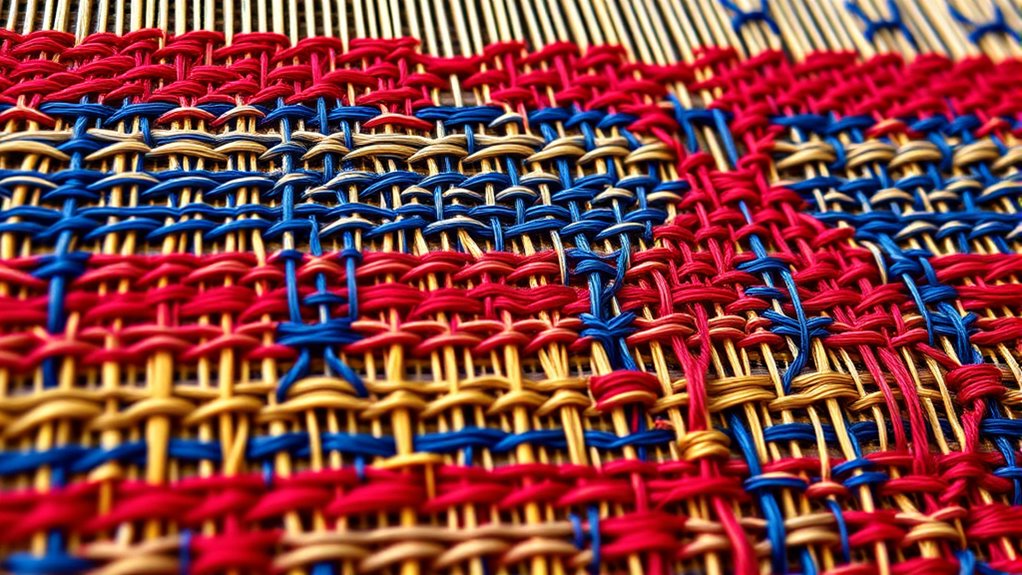
To truly understand textile weaving, you need to grasp its fundamental techniques and materials. Fiber selection is essential because it determines the texture, strength, and appearance of your woven piece. You choose fibers based on desired qualities, such as cotton for softness or wool for warmth. Developing your creative skills in choosing and combining fibers can greatly enhance the artistic value of your work.
Once you’ve selected your fibers, dye techniques come into play, allowing you to add color and pattern to your textiles. Using natural or synthetic dyes, you can achieve vibrant hues or subtle shades, depending on your artistic vision.
Mastering these basics helps you create durable, visually appealing textiles. Understanding how different fibers behave and how dye techniques influence color fastness enables you to craft meaningful, high-quality woven art. These foundational skills set the stage for more advanced weaving practices.
As an affiliate, we earn on qualifying purchases.
Discover How Pattern Enhances Weaving Design
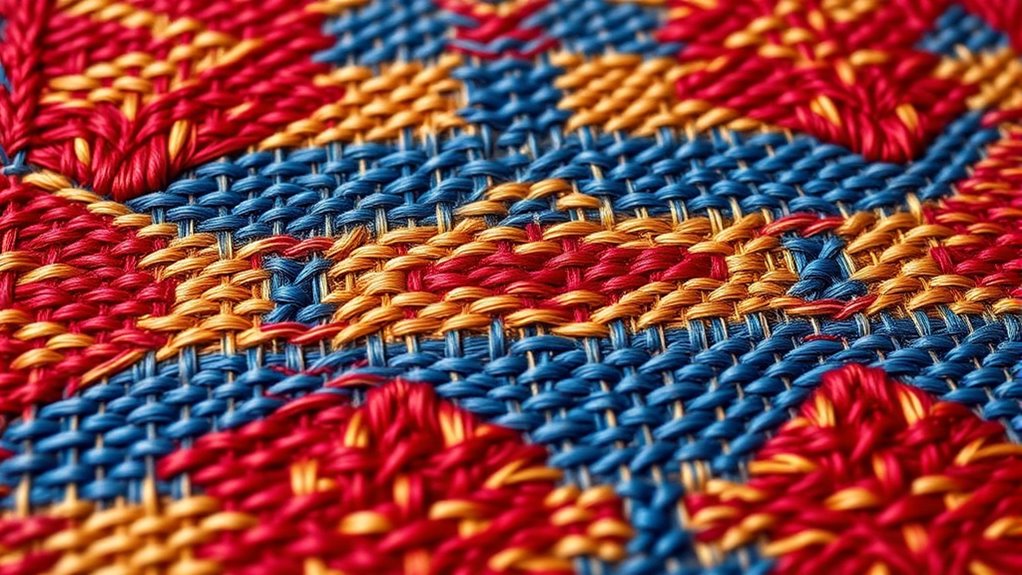
Patterns come in many types and variations, each adding a unique character to your weaving. As you experiment, you’ll see how different patterns influence the overall design and feel of your textile.
Pattern Types and Variations
Have you ever noticed how different weave patterns can dramatically change the look and feel of a textile? Pattern types and variations play a vital role in this transformation. Geometric motifs, like chevrons or diamonds, create bold, structured designs that catch the eye. Floral patterns, on the other hand, introduce softness and organic beauty, often adding a delicate touch to woven textiles. You can experiment with plain weaves, twill, or jacquard to achieve these effects, each offering unique possibilities for pattern variation. By adjusting tension, thread color, and weave technique, you enhance the visual impact of your design. Understanding these pattern types helps you craft textiles that not only serve a functional purpose but also elevate their artistic expression through diverse visual styles. Additionally, exploring innovative European cloud servers can provide sustainable and secure solutions for digital design and textile pattern development. Incorporating knowledge of pattern variation techniques can further expand creative possibilities and refine your craft.
Visual Rhythm Creation
By varying weave techniques and color combinations, you can create a visual rhythm that guides the viewer’s eye across the textile. Strategic use of color harmony guarantees smooth transitions, while contrasting textures add dynamic interest. Incorporating texture contrast emphasizes certain areas, creating focal points and movement within the pattern. Repeating motifs or alternating colors establish a beat that draws attention and maintains engagement. You can experiment with different weave structures to produce rhythmic variations, making the design lively or subtle. This deliberate manipulation of pattern, color, and texture forms a cohesive visual flow, enhancing the overall aesthetic. Understanding contrast ratio is essential when designing textiles, as it influences the perception of depth and clarity in the pattern. Mastering this balance allows you to craft textiles that not only serve functional purposes but also evoke emotion through their rhythmic visual language. Additionally, exploring Free Floating weaving techniques can add an element of unpredictability and artistic expression to your textile compositions.
As an affiliate, we earn on qualifying purchases.
See How Tension Shapes Fabric Strength and Appearance

Tension plays a crucial role in determining both the strength and appearance of woven fabric. When you adjust tension during weaving, you influence fiber flexibility, making the fabric more or less pliable.
Proper tension ensures the fibers are snugly interlaced, boosting fabric strength and durability. It also affects dye absorption; tighter tension can create a more uniform surface, leading to consistent color application, while uneven tension may cause variations in dye uptake.
The way you handle tension impacts the fabric’s surface texture, making it look smoother or more textured. Ultimately, controlling tension allows you to craft textiles that are both resilient and visually appealing, highlighting the intricate relationship between tension, fiber behavior, and the final look of your woven masterpiece.
As an affiliate, we earn on qualifying purchases.
Explore Key Weaving Techniques and Their Artistic Significance
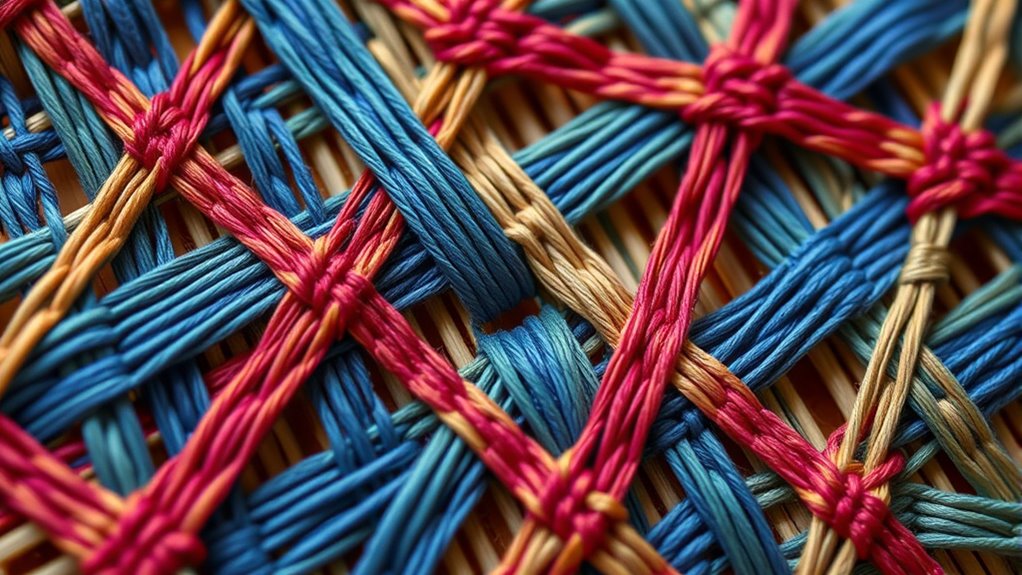
Mastering various weaving techniques allows you to transform simple fibers into intricate works of art. By exploring different methods, you can create diverse textures, patterns, and visual effects.
Weaving tools, such as shuttles, heddles, and looms, are essential for executing these techniques with precision. For example, using specific dyeing techniques like resist dyeing or ikat adds vibrant color and depth, enhancing the artistic impact.
Combining weaving methods like plain weave, twill, or tapestry allows you to achieve unique textures and motifs, each carrying its own artistic significance. These techniques enable you to infuse your textiles with personal expression, cultural symbolism, or aesthetic innovation.
Ultimately, understanding and applying various weaving techniques elevates your craft from mere fabric to compelling art.
Learn How Structure, Pattern, and Tension Build Durable Textiles
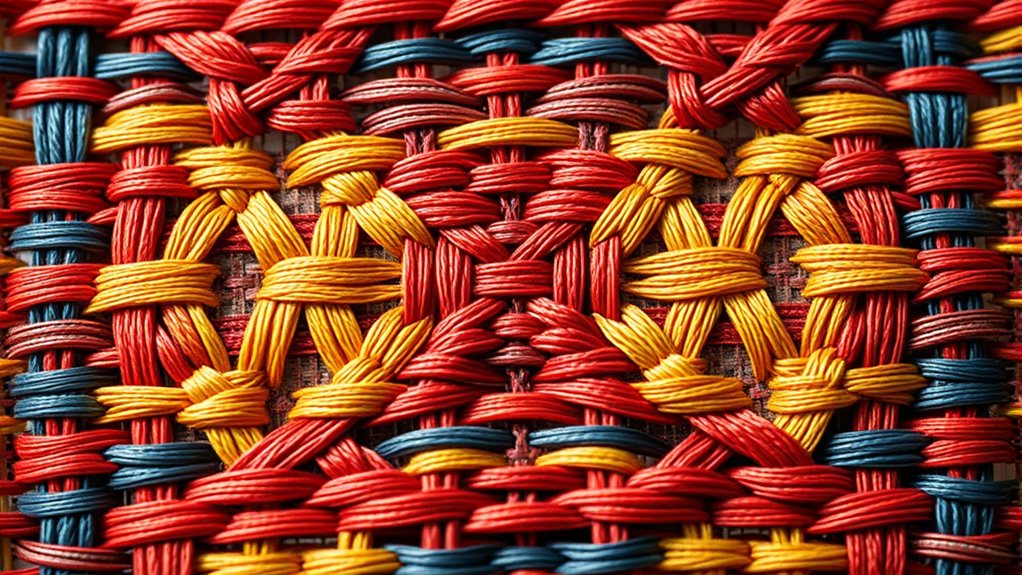
You can see how the interplay of structure and pattern creates textiles that are both beautiful and strong.
Tension plays a pivotal role in ensuring these fabrics hold together over time.
Interplay of Structure and Pattern
The interplay of structure and pattern is fundamental to creating durable textiles, as each element influences the others to enhance strength and resilience. You’ll notice how the structure provides a framework that supports pattern choices, like color harmony and texture contrast.
For example, a tight weave offers a solid base that can showcase vibrant colors through harmonious combinations, while contrasting textures—smooth versus rough—add visual interest and durability. These elements work together, ensuring the textile resists wear and tear.
When you select a pattern, consider how the underlying structure affects its longevity. A well-balanced relationship between structure and pattern not only elevates the textile’s aesthetic appeal but also strengthens its overall durability, making it a lasting work of art.
Role of Tension in Durability
Tension plays a crucial role in determining the durability of woven textiles, as it directly influences how well the fibers hold together under stress. Proper tension control during weaving ensures that yarns are evenly tensioned, preventing weak spots or overstretched areas that can lead to tears or unraveling. Total‑cost clarity is important to consider when selecting tensioning equipment, as it affects long-term maintenance and performance. When tension is maintained consistently, it enhances fabric resilience, allowing the textile to withstand daily wear and tear without losing strength. Adjusting tension appropriately also affects the tightness of the weave, which directly impacts durability. If tension is too loose, the fabric becomes fragile; too tight, and fibers may weaken or break. Consistent tension management is essential for creating textiles that aren’t only beautiful but also long-lasting, and understanding the importance of visual and auditory cues can aid in monitoring tension accuracy during the weaving process. Additionally, maintaining optimal tension can help prevent fiber damage that compromises the integrity of the final product. Moreover, employing advanced tensioning techniques can further improve the consistency and quality of woven textiles, reducing waste and rework.
Trace the History and Cultural Styles of Weaving

Tracing the history and cultural styles of weaving reveals a rich tapestry of human creativity that spans thousands of years. You can see how its historical origins date back to ancient civilizations like Mesopotamia, Egypt, and China, where early techniques laid the groundwork for future innovations. Each culture developed unique styles influenced by their environment, resources, and artistic traditions, showcasing incredible cultural diversity. For example, Andean textiles feature vibrant geometric patterns, while Japanese weaving emphasizes subtle textures and natural dyes. Moreover, contemporary festivals like the Burning Sands Festival highlight how modern events incorporate sustainability practices into artistic performances, reflecting ongoing cultural evolution in the textile arts. Additionally, the evolution of weaving techniques often reflects broader cultural identities, illustrating how textiles serve as a form of storytelling and heritage preservation. The use of natural dyes and eco-friendly materials further demonstrates the connection between traditional practices and sustainable development in textile arts. These ongoing innovations in traditional techniques continue to influence contemporary textile art and design practices worldwide, while also being affected by environmental factors such as climate and available resources.
Check Out Modern Materials and Innovations in Weaving
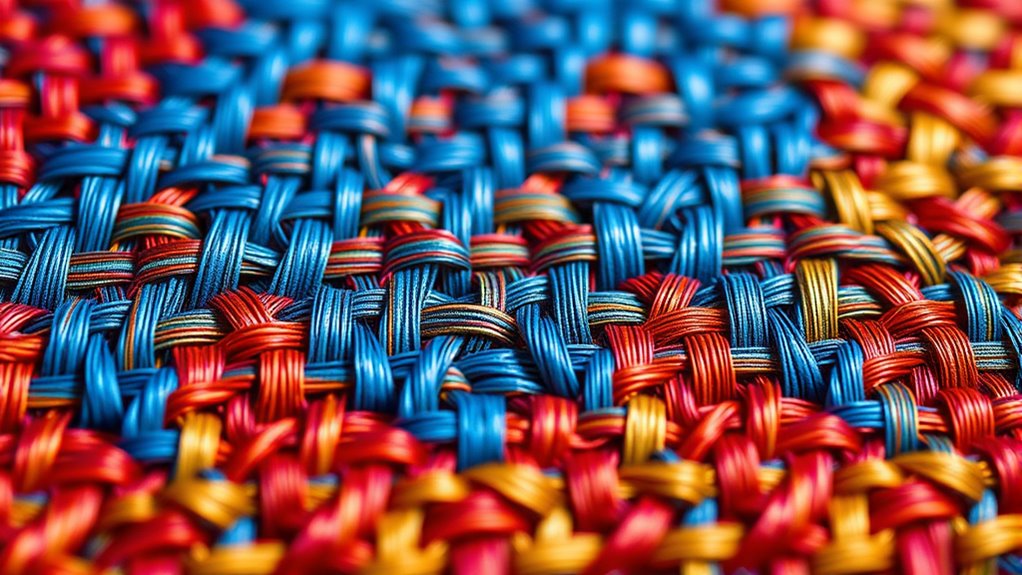
Modern weaving has been transformed by innovative materials and technological advances, opening new creative possibilities. You can now experiment with sustainable fibers like recycled polyester, hemp, and organic cotton, making your work more eco-friendly. These fibers not only reduce environmental impact but also offer unique textures and finishes. Incorporating vetted materials ensures durability and quality in your woven creations. Furthermore, advancements in smart textiles are enabling weavers to create interactive and responsive fabrics that adapt to environmental conditions or user input. These modern innovations are expanding the potential of textile art, allowing for more dynamic and functional designs. Exploring innovative fibers broadens your creative scope, enabling you to craft textiles that are both beautiful and forward-thinking. With these innovations, you have the tools to push boundaries, blending artistry with technology. Embracing sustainable fibers and smart textiles broadens your creative scope, enabling you to craft textiles that are both beautiful and forward-thinking.
Appreciate Weaving as a Form of Artistic Expression
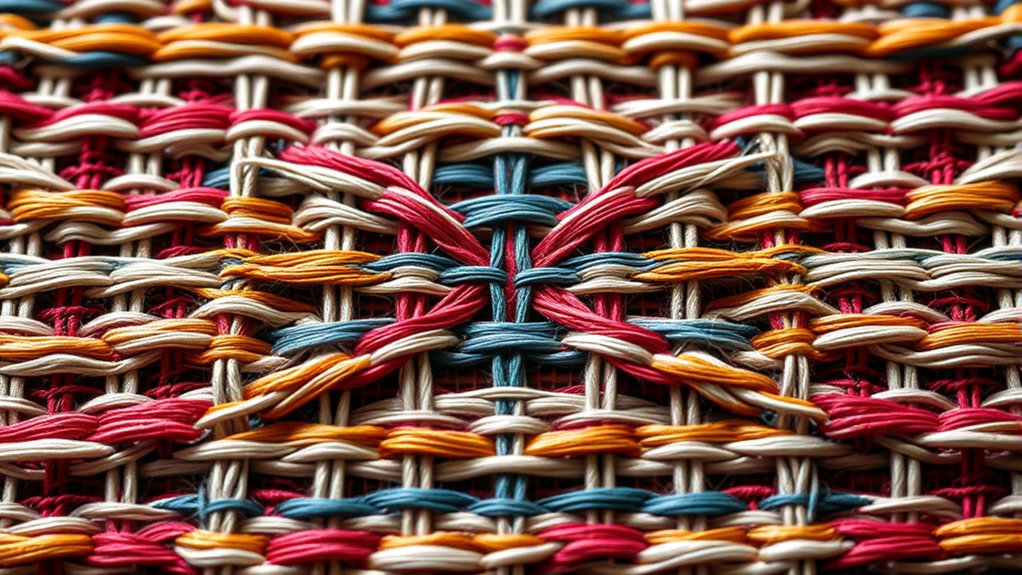
Weaving transcends its practical origins to become a powerful form of artistic expression, allowing you to convey emotion, culture, and identity through intricate patterns and textures. By exploring fiber dyeing techniques, you can infuse your work with vibrant colors and personal meaning, transforming simple threads into storytelling tools. Maintaining your loom is essential to guarantee smooth tension and flawless execution of your designs, highlighting your craftsmanship. As you experiment with different fibers and dyeing methods, you enhance your ability to create visually striking and meaningful textiles. Understanding ergonomics in your workspace setup can help prevent fatigue and injury, ensuring you can work comfortably for longer periods. Proper workspace ergonomics supports sustained creativity and reduces strain, enabling you to focus on your artistic process. Weaving as art invites you to interpret cultural symbols, express personal narratives, and evoke emotion through the deliberate arrangement of patterns and textures. It’s a dynamic art form that celebrates creativity, precision, and cultural heritage.
Frequently Asked Questions
How Do Different Fibers Impact Weaving Techniques and Aesthetics?
Different fibers notably impact your weaving techniques and aesthetics because fiber properties dictate texture, strength, and drape.
For example, silk creates smooth, shiny textures, while wool adds warmth and a plush feel. You’ll need to adjust tension and weaving methods based on fiber stiffness or elasticity.
What Role Does Color Theory Play in Textile Pattern Design?
Color theory guides your textile pattern design by helping you achieve color harmony and create visual contrast. You can select harmonious colors that evoke a sense of balance, or use contrasting shades to make patterns stand out.
How Can Weaving Be Integrated Into Contemporary Digital Art?
You can integrate weaving into contemporary digital art by exploring digital integration and creating interactive textiles. Use sensors and microcontrollers to make woven pieces respond to movement, sound, or touch, enhancing viewer engagement.
Incorporate digital techniques like augmented reality or projection mapping to add layers of complexity. This approach blends traditional craftsmanship with modern technology, making your woven art dynamic, immersive, and relevant in the digital age.
What Environmental Considerations Are Involved in Sustainable Weaving?
You should prioritize eco-friendly dyes and renewable resources to make weaving more sustainable. Using natural dyes diminishes chemical pollution.
While sourcing renewable fibers like organic cotton or bamboo minimizes environmental impact. By choosing these options, you actively lower your carbon footprint and promote eco-conscious practices.
Incorporating sustainable materials ensures your weaving process protects ecosystems and supports long-term resource availability, aligning your art with environmental responsibility.
How Do Cultural Influences Shape Traditional Weaving Motifs and Styles?
You see that cultural influences strongly shape traditional weaving motifs and styles through cultural symbolism and regional techniques.
These motifs often represent beliefs, social status, or natural elements, making each pattern meaningful.
Regional techniques, like specific weaving methods or materials, reflect local traditions and resources.
Conclusion
By exploring the structure, pattern, and tension in textile weaving, you gain a deeper appreciation for its artistry and craftsmanship. Understanding these elements helps you see how they create durable, beautiful fabrics that reflect cultural heritage and modern innovation. Whether you’re a creator or admirer, recognizing weaving’s intricate techniques enriches your connection to this timeless art form. Embrace weaving as a powerful form of artistic expression that combines tradition, creativity, and skill.
Fall Picks
fall essentials
As an affiliate, we earn on qualifying purchases.