The best portable science lab kits give kids hands-on experiments without requiring a dedicated classroom setup. My best overall pick is the National Geographic Amazing Chemistry Set for its broad chemistry program, while the Thames & Kosmos Ooze Labs Chemistry Station stands out for focused, structured activities and the National Geographic Kids Microscope Kit for close-up observation. The main tradeoff is breadth versus depth: large experiment counts cover more activities, while subject-focused kits can offer a clearer path through one topic. Age fit, adult help, storage, and the need for household supplies also affect how portable a kit feels in practice. Read on for the full breakdown and help matching a kit to your learner.

Prime made for students and young adults
- Fast, free delivery for dorm and study essentials
- Prime Video and Amazon Music included
- Member-only deals
Key Takeaways
- Experiment count alone did not determine the strongest picks: the 100-plus-activity National Geographic Amazing Chemistry Set ranked ahead of higher-count general kits because a focused subject can make a kit easier to use as a learning sequence.
- Portable does not always mean ready to use anywhere: chemistry and gross-science activities may need water, kitchen supplies, cleanup space, or adult supervision, so a compact case is only part of the portability picture.
- Subject-focused kits serve different goals: Ooze Labs emphasizes chemistry activities, the Matifaner kit concentrates on mechanics, and the microscope kit supports observation rather than a broad mix of experiments.
- Beginners may benefit more from clear steps than a huge activity list: junior and age-targeted kits can feel more approachable than a large collection that asks families to choose among many experiments.
- The broadest kits trade focus for variety: UNGLINGA’s 150-experiment kit and Butterfly EduFields’ 150-plus-activity kit suit families seeking many activity options, while a specialist kit may be a better match for a child with a clear science interest.
| National Geographic Gross Science Kit, 45 Experiments for Kids Ages 8–12 |  | Best for Gross-Themed Learning | Brand: Blue Marble | Age range: 8 years and up | Experiments: 45 total: 15 with included supplies and 30 using household items | VIEW LATEST PRICE | See Our Full Breakdown |
| National Geographic Science Magic Kit for Kids Ages 8+ |  | Best for Science Demonstrations | Brand: Blue Marble | Age range: 8 years and up | Included experiments: 20 | VIEW LATEST PRICE | See Our Full Breakdown |
| Thames & Kosmos Ooze Labs Chemistry Station Experiment Set |  | Best Portable Lab-Station Format | Brand: Thames & Kosmos | Age range: 6 years and up | Number of pieces: 57 | VIEW LATEST PRICE | See Our Full Breakdown |
| UNGLINGA 70-Experiment Science Kit for Kids |  | Best for Varied STEM Activities | Brand: UNGLINGA | Age range: 8 years and up | Experiments: 70 | VIEW LATEST PRICE | See Our Full Breakdown |
| Kuovei Science Kit for Kids with 80 Experiments |  | Best for Younger Experimenters | Brand: Kuovei | Age range: 6 years and up | Experiments: 80 | VIEW LATEST PRICE | See Our Full Breakdown |
| Matifaner Physics Mechanics Experiment Kit, 26 Experiments |  | Best for Hands-On Mechanics | Brand: Matifaner | Experiments: 26 | Recommended age: 14 years and up | VIEW LATEST PRICE | See Our Full Breakdown |
| National Geographic Amazing Chemistry Set, 100+ Experiments, Ages 8+ |  | Best for Chemistry Variety | Brand: Blue Marble | Age range: 8 years and up | Experiments: 100+ total: 15 with included materials and 85 using household items | VIEW LATEST PRICE | See Our Full Breakdown |
| UNGLINGA 150-Experiment Science Kit for Kids | 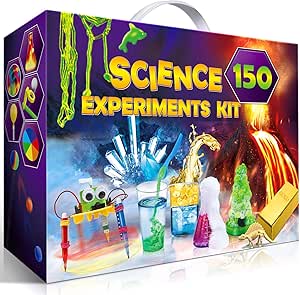 | Best for Broad Subject Coverage | Brand: UNGLINGA | Experiments: 150 | Recommended age: 8 years and up | VIEW LATEST PRICE | See Our Full Breakdown |
| National Geographic Junior Chemistry Set with 50 Experiments |  | Best for Young Beginners | Brand: Blue Marble | Age range: 4 years and up | Experiments: 50 | VIEW LATEST PRICE | See Our Full Breakdown |
| National Geographic Chemistry Set with 45 Experiments for Kids Ages 8+ |  | Best for Dramatic Chemistry Activities | Brand: National Geographic | Age range: 8 years and up | Experiments: 45 | VIEW LATEST PRICE | See Our Full Breakdown |
| National Geographic Kids Microscope Kit, Up to 400x Magnification |  | Best for Beginner Microscopy | Maximum magnification: 400x | Magnification levels: 3 | Lighting: LED lights above and below | VIEW LATEST PRICE | See Our Full Breakdown |
| Bill Nye’s VR Science Lab Kit for Kids, Ages 8–12 |  | Best for AR and VR Science | Recommended age: 8–12 years | Experiments: 30 | Kit pieces: 50 | VIEW LATEST PRICE | See Our Full Breakdown |
| National Geographic Mega Science Lab with 75 Experiments for Kids Ages 8–12 |  | Best for Variety Across Science Topics | Brand: Blue Marble | Age range: 8 years and up | Experiments: 75 | VIEW LATEST PRICE | See Our Full Breakdown |
| Doctor Jupiter Ultimate Science Experiments Kit for Kids Ages 8+ |  | Best for a Large Guided Experiment Collection | Brand: Doctor Jupiter | Recommended age: 8 years and above | Experiments: 135+ | VIEW LATEST PRICE | See Our Full Breakdown |
| Butterfly EduFields Science Kit for Kids, 150+ Experiments |  | Best for Colorful, Sensory Experiments | Brand: Butterfly EduFields | Age range: 8 years and up | Experiments: 150+ | VIEW LATEST PRICE | See Our Full Breakdown |
| portable science lab kit | Brand | Experiments | Age range |
|---|---|---|---|
| National Geographic Gross Scie | Blue Marble | 45 total: 15 with included supplies and 30 using household items | 8 years and up |
| National Geographic Science Ma | Blue Marble | — | 8 years and up |
| Thames & Kosmos Ooze Labs Chem | Thames & Kosmos | Approximately 20 | 6 years and up |
| UNGLINGA 70-Experiment Science | UNGLINGA | 70 | 8 years and up |
| Kuovei Science Kit for Kids wi | Kuovei | 80 | 6 years and up |
| Matifaner Physics Mechanics Ex | Matifaner | 26 | — |
| National Geographic Amazing Ch | Blue Marble | 100+ total: 15 with included materials and 85 using household items | 8 years and up |
| UNGLINGA 150-Experiment Scienc | UNGLINGA | 150 | — |
| National Geographic Junior Che | Blue Marble | 50 | 4 years and up |
| National Geographic Chemistry | National Geographic | 45 | 8 years and up |
| National Geographic Kids Micro | — | — | — |
| Bill Nye’s VR Science Lab Kit | — | 30 | — |
| National Geographic Mega Scien | Blue Marble | 75 | 8 years and up |
| Doctor Jupiter Ultimate Scienc | Doctor Jupiter | 135+ | — |
| Butterfly EduFields Science Ki | Butterfly EduFields | 150+ | 8 years and up |
More Details on Our Top Picks
National Geographic Gross Science Kit, 45 Experiments for Kids Ages 8–12
For kids who would rather investigate slime and squishy reactions than follow a conventional chemistry lesson, this kit makes a portable science session feel like play. It supplies materials for 15 gross-themed experiments, while illustrated instructions help children work through the activities without relying on dense explanations. A bonus booklet adds 30 household-item experiments covering polymers, chemical reactions, and pH, giving the kit more runway than its supplied materials alone suggest.
Compared with the National Geographic Science Magic Kit, this pick puts the gross-out theme ahead of performance tricks; the Magic Kit offers more bonus activities but is built around demonstrations. The tradeoff here is that only 15 experiments have included supplies, and the other 30 depend on items at home. It also targets ages 8 and up, so it is not the easiest choice for younger children who need more direct adult-led activities.
Pros:- Includes materials for 15 gross-themed experiments
- Adds 30 more activities using common household items
- Illustrated, kid-friendly instructions support independent participation
- Introduces polymers, chemical reactions, and pH science
Cons:- The 30 bonus experiments require supplies gathered at home
- The age guidance makes it a less suitable pick for younger children
Best for: Families with children ages 8–12 who want a compact, themed activity kit and are happy to gather household supplies for extra experiments.
Not ideal for: Buyers seeking one box with materials for every listed experiment, or families with children younger than eight.
- Brand:Blue Marble
- Age range:8 years and up
- Experiments:45 total: 15 with included supplies and 30 using household items
- Educational objective:STEM
- Included components:Gross Science Kit with 45 experiments
- Model number:NGMEGAGRS
- Batteries:No batteries required
Our verdict“Choose this kit for an older child who enjoys gross science and can use household supplies to extend the activities.”
National Geographic Science Magic Kit for Kids Ages 8+
This kit is suited to children who like presenting an experiment as a trick, then learning how the effect works. It comes with materials for 20 science-magic experiments, illustrated instructions, a wand, and white gloves, so the performance element is built into the activity rather than left to imagination. The bonus booklet adds more than 85 household-item experiments and explanations, making it a strong choice for families who want repeat activities beyond the supplied set.
Compared with the National Geographic Gross Science Kit, the Magic Kit offers more bonus experiments but less of a single-theme gross-science experience. Its main limitation is the same boundary: only 20 activities have included materials, while the larger bonus collection calls for household supplies. The presentation props may also matter less to children who prefer building or handling lab equipment over performing for an audience.
Pros:- Supplies materials for 20 experiments presented as magic tricks
- Includes illustrated instructions and explanations of the science
- Bonus booklet offers more than 85 experiments using household items
- Wand and white gloves support an entertaining presentation
Cons:- The bonus experiments require household supplies
- The magic-performance format may not suit children who prefer conventional lab activities
Best for: Families with children ages 8 and up who enjoy performing demonstrations and want a large collection of follow-up activities using household items.
Not ideal for: Children who prefer a hands-on lab-station format or buyers who want materials included for every experiment.
- Brand:Blue Marble
- Age range:8 years and up
- Included experiments:20
- Bonus experiments:More than 85, using common household items
- Educational objective:STEM
- Materials:Metal and paper
- Included components:Materials for 20 experiments, bonus booklet, magic wand, and white gloves
- Model number:NGMEGAMAGIC
Our verdict“Pick this for a child who likes performing science tricks and can use home supplies for the extensive bonus activities.”
Thames & Kosmos Ooze Labs Chemistry Station Experiment Set
The defining advantage here is not the experiment count but the plastic chemistry station: vessels and tools have a dedicated home, while experiment cards clip onto the station for reference. That setup gives children a more organized, lab-like workspace than the book-and-supplies format of the National Geographic Gross Science Kit. About 20 activities range from slime and fizzing reactions to chromatography and an underwater volcano, providing a wider mix of chemistry experiences than a single-theme kit.
The set is aimed at ages 6 and up and uses non-hazardous chemicals; it also does not contain borax. Its tradeoff is portability: the station and 57 pieces create a more involved kit to pack than a simple booklet-based option. Some activities depend on chemicals included in the set, so it is not a household-supplies-only collection. Choose it for an organized tabletop session, not for the lightest possible travel pack.
Pros:- Lab station keeps tools and experiment cards organized
- Includes varied equipment such as vessels, a syringe, pipette, funnel, and petri dish
- Offers approximately 20 activities across several chemistry concepts
- Uses non-hazardous chemicals and contains no borax
Cons:- The station and 57 pieces are less compact than simpler activity kits
- Some experiments rely on chemicals supplied with the set
Best for: Families with children ages 6 and up who want a contained, organized chemistry workspace for supervised tabletop experiments.
Not ideal for: Travelers seeking a lightweight booklet-and-supplies kit, or buyers who want a large number of activities based mostly on household items.
- Brand:Thames & Kosmos
- Age range:6 years and up
- Number of pieces:57
- Experiments:Approximately 20
- Included components:Plastic chemistry station, experiment cards, vessels, syringe, measuring cup, pipette, spatula, tube, petri dish, funnel, non-hazardous chemicals, and full-color manual
- Manual:16 pages
- Chemicals:Non-hazardous; does not contain borax
- Model number:642105
- Warranty:1 year against manufacturer defects
Our verdict“Choose this for a child who benefits from a dedicated chemistry workspace more than a minimal travel-ready kit.”
UNGLINGA 70-Experiment Science Kit for Kids
This kit stands out for pairing chemistry activities with examples from other STEM areas: the listed projects include crystal growing and a volcano, but also a balloon rocket and fruit circuits. That variety can help keep a child interested across different kinds of experiments, while the illustrated instructions and learning guide explain both steps and underlying ideas. At 11 × 8.66 × 3.54 inches, the stated dimensions offer a clearer sense of its footprint than the Kuovei kit’s listed dimensions.
The tradeoff is that the product information does not identify the specific included components, so buyers have less certainty about what is ready to use straight from the box. Compared with the Thames & Kosmos Ooze Labs Chemistry Station, this set lists many more experiments but does not describe a dedicated station or comparable equipment. It is best for families prioritizing activity breadth over a clearly specified lab setup, and its age guidance starts at eight.
Pros:- Lists 70 hands-on experiments
- Includes varied examples such as crystals, volcanoes, balloon rockets, and fruit circuits
- Illustrated instructions and a learning guide explain procedures and science
- Provides stated package dimensions for planning storage
Cons:- Specific included components are not listed in the product information
- Age guidance starts at eight, limiting its fit for younger children
Best for: Families with children ages 8 and up who want a broad mix of chemistry and STEM activities and can accept limited detail about the supplied equipment.
Not ideal for: Buyers who need a clearly itemized equipment list or a dedicated, organized chemistry station.
- Brand:UNGLINGA
- Age range:8 years and up
- Experiments:70
- Educational focus:STEM and chemistry
- Dimensions:11 × 8.66 × 3.54 inches
- Material:Plastic
- Model number:HZDZKH030
- Packs:1
Our verdict“Choose this for an older child who values a wide range of STEM activities more than a fully specified lab setup.”
Kuovei Science Kit for Kids with 80 Experiments
Among these five kits, this one has the youngest stated starting age: 6 years and up. Its 80 experiments and broad list of supplied materials—including goggles, gloves, droppers, test tubes, and measuring cups—give families a ready collection of tools for activities such as a rainbow fountain and volcano. Guidance cards are intended to explain both the procedure and the scientific idea, making the kit a reasonable fit for children who are beginning to explore hands-on science with adult support.
Compared with the UNGLINGA 70-Experiment Science Kit, Kuovei lists more experiments and names many of its components, which helps buyers gauge what comes in the box. But its stated dimensions of 1 × 1 × 1 inches do not clarify the actual package size, a real drawback for portable storage planning. Chemical materials also call for careful handling and storage, so the lower age threshold does not mean it is a set-and-forget activity kit.
Pros:- Lists 80 experiments, including a rainbow fountain and volcano
- Names a broad assortment of included tools and materials
- Guidance cards explain experiment steps and scientific principles
- Includes goggles and gloves for activities requiring protective gear
Cons:- Some chemical materials require careful handling and storage
- Listed dimensions of 1 × 1 × 1 inches do not clarify the kit’s actual package size
Best for: Families with children ages 6 and up who want a large activity collection with named tools and can supervise chemical handling.
Not ideal for: Buyers who need reliable package-size information or want a kit that children can use without adult oversight.
- Brand:Kuovei
- Age range:6 years and up
- Experiments:80
- Included components:Goggles, chemical materials, petri dishes, ping-pong ball, pigments, effervescent tablets, measuring cups, test tubes, gloves, rubber bands, droppers, straws, toothpicks, rotary needles, measuring spoons, balloons, twisting rods, rainbow candy, color-changing flower, and guidance cards
- Material:Plastic
- Item dimensions:1 × 1 × 1 inches, as listed
- Item weight:0.75 kg
- Set name:Single Set
Our verdict“Pick this for a younger, supervised beginner who wants many activities and a broad assortment of listed equipment.”
Matifaner Physics Mechanics Experiment Kit, 26 Experiments
The Matifaner kit is the most focused option here for learners who want to investigate how forces and motion work, rather than sample a broad mix of science topics. Its 26 experiments use equipment such as a trolley and ramp, pulleys, lever ruler, and spring dynamometer to make mechanics concepts more tangible than the chemistry-centered National Geographic Amazing Chemistry Set. A manual with operating steps and principle analysis supports classroom demonstrations or independent study, while the storage box gives the small parts a home between sessions.
The tradeoff is its narrower subject range: buyers seeking colorful reactions or activities for younger children may prefer the National Geographic Chemistry Set with 45 Experiments. Matifaner is recommended for ages 14 and up, so its mechanics focus and equipment are better suited to teens than early elementary learners. It also trades a large experiment count for a more specialized toolkit.
Pros:- Explores a focused range of mechanics topics through hands-on experiments.
- Includes varied tools such as a trolley, ramp, pulleys, and pressure gauge.
- Manual includes operating steps and explanations of underlying principles.
- Storage box helps keep experiment components together.
Cons:- Recommended for ages 14 and up, making it a poor match for younger learners.
- More specialized than broad chemistry or multi-topic kits in this roundup.
- Its 26 experiments offer fewer listed activities than several other kits here.
Best for: Teens aged 14 and up, or educators seeking portable equipment for teaching forces, motion, pressure, and buoyancy.
Not ideal for: Families with younger children or buyers who want one kit covering chemistry and several other science fields.
- Brand:Matifaner
- Experiments:26
- Recommended age:14 years and up
- Topics:Mechanics, physics, STEM
- Included equipment:Tray balance, pulleys, lever ruler, U-tube pressure gauge, spring dynamometer, trolley, and ramp
- Materials:Plastic and metal
- Storage:Storage box
Our verdict“Choose Matifaner for teen-level, equipment-based mechanics lessons, but pick a chemistry or multi-topic kit for younger children or broader subject coverage.”
National Geographic Amazing Chemistry Set, 100+ Experiments, Ages 8+
The National Geographic Amazing Chemistry Set stands out for pairing supplied experiment materials with a longer trail of activities to try later. The kit includes materials for 15 experiments, including color-changing solutions, glowing test tubes, and crystal growth, plus a guide to 85 more activities using household items. That split matters: the headline count signals potential for continued exploration, but only the first set comes with its materials. Compared with the National Geographic Chemistry Set with 45 Experiments, this pick offers more listed activities and a clear path to improvised follow-ups, while the 45-experiment set foregrounds a smaller, specified set of dramatic activities.
Test tubes, beakers, and pipettes give children familiar lab tools, and the compact 1.8-pound package is easy to store or carry. The main limitation is preparation: families need to source household supplies for the bonus experiments, so it is less ready-to-go than the included-material portion suggests.
Pros:- Supplies materials for 15 hands-on chemistry experiments.
- Adds a guide to 85 further activities using household items.
- Includes test tubes, beakers, and pipettes for basic lab-style work.
- Compact package weighs 1.8 pounds.
Cons:- Materials for the 85 bonus experiments are not included.
- Chemistry-focused scope offers less subject variety than the UNGLINGA 150-Experiment Science Kit.
- The 100-plus activity count can overstate how many experiments are ready to start from the box.
Best for: Families with children aged 8 and up who want a chemistry starter set plus household-supply activities for continued projects.
Not ideal for: Buyers who expect all materials for 100 experiments to be in the box or want a kit spanning physics and Earth science.
- Brand:Blue Marble
- Age range:8 years and up
- Experiments:100+ total: 15 with included materials and 85 using household items
- Included tools:Test tubes, beakers, and pipettes
- Educational objective:STEM
- Dimensions:8.78 x 3.19 x 11.93 inches
- Weight:1.8 pounds
Our verdict“Pick this set if you want supplied starter experiments and do not mind gathering household items for its larger follow-on activity collection.”
UNGLINGA 150-Experiment Science Kit for Kids
For families who want one portable kit to move among several branches of science, the UNGLINGA 150-Experiment Science Kit has the broadest stated scope in this group. Its activities cover chemistry, physics, Earth science, and surface tension, giving it a wider subject mix than the chemistry-only National Geographic Amazing Chemistry Set. An illustrated, step-by-step manual helps make that variety usable for children aged 8 and up, while included tools and child-friendly materials provide a starting point for experiments.
The tradeoff is that the 150 activities are not all ready from the box: some require common household items. That makes this a flexible option for families comfortable with a little preparation, not necessarily the best choice for a child expecting every project to be self-contained. Compared with the National Geographic Junior Chemistry Set, it reaches beyond introductory chemistry, but it may be less tightly focused for a first chemistry experience.
Pros:- Lists 150 experiments across chemistry, physics, Earth science, and surface tension.
- Illustrated step-by-step manual supports following activities.
- Includes science tools and child-friendly materials.
- Some experiments use common household items, extending the kit’s activities.
Cons:- Some projects require materials that are not included.
- Broad coverage may be less focused than a dedicated chemistry kit.
- Plastic is the listed material type for the kit.
Best for: Families with children aged 8 and up who want a portable kit with activities across multiple science subjects and can supply some household materials.
Not ideal for: Buyers who want every experiment’s materials included or want a focused, simple chemistry introduction for a young beginner.
- Brand:UNGLINGA
- Experiments:150
- Recommended age:8 years and up
- Topics:Chemistry, physics, Earth science, and surface tension
- Included components:Science experiment tools and materials
- Material type:Plastic
- Dimensions:11.42 x 8.67 x 3.94 inches
- Packs:1
Our verdict“Choose UNGLINGA when subject variety matters more than having every experiment supplied and ready to start.”
National Geographic Junior Chemistry Set with 50 Experiments
The National Geographic Junior Chemistry Set is the clearest fit for younger children starting with guided, hands-on science. It is designed for ages 4 and up and includes more than 20 lab tools and materials for 50 experiments, with illustrated instructions that make activities easier to follow. Many projects use household items, so the supplied kit works as a base rather than a completely self-contained lab. Compared with the National Geographic Amazing Chemistry Set, this junior version is aimed at a younger audience and lists materials for 50 experiments, while the Amazing set reserves many of its additional activities for household supplies.
Its accessible age range is also its limit. Older children may find the introductory chemistry less challenging than the Matifaner mechanics kit, which targets ages 14 and up and uses specialized equipment. For a portable science kit, its 11-by-4.22-by-9.64-inch package is compact, though families should expect to gather ingredients such as baking soda or vinegar for some activities.
Pros:- Designed for children as young as 4 years old.
- Includes more than 20 lab tools and materials for 50 experiments.
- Illustrated step-by-step instructions support guided activities.
- Compact dimensions make it practical to store between experiments.
Cons:- Some experiments need additional household ingredients such as baking soda and vinegar.
- Introductory activities may not hold the interest of older learners.
- Chemistry focus offers less subject range than the UNGLINGA 150-Experiment Science Kit.
Best for: Families introducing preschool and early elementary children to guided chemistry activities, with an adult available to help source household ingredients.
Not ideal for: Older learners seeking more advanced concepts, or families who want every experiment to run using only materials in the box.
- Brand:Blue Marble
- Age range:4 years and up
- Experiments:50
- Lab tools:20+
- Included components:Chemistry kit with test tubes, goggles, and other lab tools
- Educational objective:STEM
- Dimensions:11 x 4.22 x 9.64 inches
- Weight:0.72 kg
- Battery required:No
Our verdict“Choose the Junior Chemistry Set for a young beginner who benefits from illustrated guidance, but look elsewhere for advanced or multi-subject projects.”
National Geographic Chemistry Set with 45 Experiments for Kids Ages 8+
The National Geographic Chemistry Set with 45 Experiments is a good match for children who are drawn to visible reactions rather than a broad survey of science. Its listed activities include a volcano eruption, geyser, and rocket launch, and the illustrated guide introduces chemistry fundamentals, the scientific process, and safe experiment practices. Compared with the Amazing Chemistry Set, this kit presents a defined collection of 45 activities rather than 15 experiments with supplied materials plus 85 household-item extensions. That makes its activity count easier to interpret, although the product details do not specify that every activity has dedicated materials in the box.
At ages 8 and up, it suits school-age learners better than the National Geographic Junior Chemistry Set, which starts at age 4 and keeps its approach more introductory. This kit remains chemistry-specific, though, so the UNGLINGA set is a stronger fit for families seeking physics and Earth science alongside chemical reactions.
Pros:- Lists 45 hands-on chemistry experiments.
- Includes dramatic activities such as a volcano, geyser, and rocket launch.
- Illustrated guide introduces chemistry fundamentals and the scientific process.
- Guide includes safe experiment practices.
Cons:- Focused on chemistry rather than a range of science subjects.
- Product details do not specify materials supplied for every activity.
- Children younger than 8 may need adult guidance and may be outside the stated age range.
Best for: Children aged 8 and up who are motivated by visible chemistry demonstrations and want illustrated guidance on safe experiment practices.
Not ideal for: Families looking for a multi-subject kit, or buyers who need confirmation that materials for every listed experiment are included.
- Brand:National Geographic
- Age range:8 years and up
- Experiments:45
- Educational objective:STEM
- Included activities:Volcano eruption, geyser, rocket, and chemical reactions
- Dimensions:8.78 x 3.19 x 11.93 inches
- Weight:2.9 pounds
- Battery required:No
Our verdict“Pick this kit for school-age children who want guided, showy chemistry activities, not for families seeking broad science coverage or fully specified experiment supplies.”
National Geographic Kids Microscope Kit, Up to 400x Magnification
For a child whose science interests lean toward examining specimens rather than mixing experiments, this is the most focused portable lab in this group. Three magnification levels up to 400x, an adjustable platform, and large focus knobs make it easier to learn the basics of viewing a prepared slide than a broad activity kit such as the National Geographic Mega Science Lab. The included plant slides, blank slides, and rock and mineral specimens give kids several starting points without turning the kit into a general chemistry set. LED lights above and below support viewing different kinds of specimens. The tradeoff is that its activities are narrower: it is designed for beginner microscopy, and viewing requires a slide or specimen. I’d skip it for a child expecting dozens of varied experiments.
Pros:- Three magnification levels, reaching up to 400x, offer a clear progression for beginner viewing.
- LED lights above and below the specimen accommodate different viewing needs.
- Prepared and blank slides plus rocks and minerals provide ready-to-use starting materials.
- Large focus knobs and an adjustable platform support easier handling for young learners.
Cons:- Its focus is microscopy, so it offers less activity variety than the National Geographic Mega Science Lab.
- Viewing depends on having a prepared slide or another specimen available.
- The beginner design may not satisfy children seeking more advanced microscope work.
Best for: Children ages 6 and up who want an introductory microscope, guided slide viewing, and a small collection of specimens.
Not ideal for: Families seeking a broad set of chemistry, physics, or build-and-test activities rather than microscope-based observation.
- Maximum magnification:400x
- Magnification levels:3
- Lighting:LED lights above and below
- Slides:6 prepared plant slides and 6 blank slides
- Specimens:6 rocks and minerals
- Real angle of view:45 degrees
- Recommended age:6+
- Included accessories:Pipette, specimen dish, tweezers, lab guide, and merit badge stickers
Our verdict“Choose this kit for a young beginner who wants to learn specimen viewing, not for a family looking for a wide-ranging experiment set.”
Bill Nye’s VR Science Lab Kit for Kids, Ages 8–12
This kit makes the most sense for kids who want a screen-linked layer alongside hands-on science. Across 30 projects, its reusable tools and 80-page activity book pair physical experiments with augmented- and virtual-reality activities covering topics such as chemistry, physics, thrust, and density. That gives it a different role from the National Geographic Kids Microscope Kit, which centers on close observation through an eyepiece rather than digital activities. The smartphone-compatible VR goggles add variety, but they also add a requirement: a compatible phone is needed, and tablets are not supported. Some activities call for household materials, so the listed kit pieces do not cover every project. I’d choose it for a child comfortable following phone-based instructions, not for a screen-free portable lab.
Pros:- Combines hands-on projects with AR and VR activities across several science topics.
- Reusable lab tools support multiple projects rather than a single activity.
- The 80-page interactive activity book provides structured project guidance.
- Includes VR goggles, so the digital component does not depend on sourcing a separate viewer.
Cons:- Requires a compatible smartphone; tablets are not supported.
- Some projects need common household items beyond the kit contents.
- VR sessions are listed as 2–3 minutes, limiting the length of that activity format.
Best for: Families with a compatible iOS or Android smartphone and children ages 8–12 who enjoy alternating between physical experiments and digital activities.
Not ideal for: Households without a compatible smartphone, tablet-only users, or families who want a screen-free kit with every experiment material included.
- Recommended age:8–12 years
- Experiments:30
- Kit pieces:50
- Activity book:80 pages
- Included:VR goggles, reusable lab tools, baking soda, paint brush, and activity book
- Smartphone compatibility:iOS 11.0 and up; Android 8.0 and up
- Tablet compatibility:Not supported
- VR session length:2–3 minutes
Our verdict“Pick this for a phone-equipped family seeking a mix of physical experiments and short VR activities; skip it for tablet-only or screen-free use.”
National Geographic Mega Science Lab with 75 Experiments for Kids Ages 8–12
Rather than concentrating on one branch of science, this kit combines Earth science, chemistry, and science magic, giving a child several ways to find a preferred activity. It lists 75 experiments, with materials for 45 and a guide to 30 additional projects that use household items. That split makes it more immediately stocked than a kit that relies heavily on home supplies, while the rock, mineral, and crystal activities add a collection angle beyond reactions and demonstrations. Compared with the Doctor Jupiter Ultimate Science Experiments Kit, which offers a larger stated experiment count, this one’s advantage is its range of distinct themes rather than sheer volume. The tradeoff is that not all 75 activities come with materials, and some need household items. I’d favor it for kids who like switching topics, not those wanting one sustained chemistry track.
Pros:- Combines Earth science, chemistry, and science magic in one kit.
- Includes materials for 45 experiments, with 30 more described using household items.
- Rock, mineral, and crystal activities add specimen collecting to the experiments.
- The varied themes suit children whose interests span several areas of science.
Cons:- The 30 additional experiments rely on common household items.
- Its broad mix may feel less focused than the chemistry activities in Doctor Jupiter’s kit.
- Not every listed experiment has dedicated materials included.
Best for: Children ages 8–12 who want a mix of Earth science, chemistry, specimen collecting, and science-themed tricks in one kit.
Not ideal for: Kids who want every listed experiment supplied with kit materials or prefer a focused, in-depth chemistry set.
- Brand:Blue Marble
- Age range:8 years and up
- Experiments:75
- Experiments with included materials:45
- Additional activities:30 using household items
- Experiment kits:Earth science, chemistry, and science magic
- Included components:Earth science kit, chemistry kit, and science magic kit
- Educational objectives:Critical thinking, observation skills, and STEM
Our verdict“Choose this for a child who wants varied science themes and ready materials for many projects, but not a fully supplied kit for all 75.”
Doctor Jupiter Ultimate Science Experiments Kit for Kids Ages 8+
For families prioritizing a high count of guided activities, Doctor Jupiter pairs materials for 135+ experiments with illustrated, step-by-step instructions. Its listed tools—including a measuring cylinder, conical flask, test tube stand, and tray—give it a more lab-like setup than the Bill Nye VR Science Lab Kit, whose distinctive appeal is smartphone-linked activities. The headline count is backed by a bonus booklet with access to 90+ additional experiments using household items, so the experience can extend beyond the supplied ingredients. Separate leak-proof bottles also help contain chemical materials between sessions. The tradeoff is that the bonus activities depend on items from home, and the broad experiment count alone does not mean every activity is ready to run from the box. I’d pick it for a child who likes structured, hands-on projects over digital science features.
Pros:- Includes materials and instructions for more than 135 experiments.
- Illustrated, step-by-step directions support independent project following.
- Separate leak-proof bottles help contain chemical materials.
- Bonus booklet adds access to 90+ household-item experiments.
Cons:- Bonus experiments require everyday household items.
- Its hands-on format lacks the AR and VR component found in Bill Nye’s kit.
- A large activity count may require planning and adult help to source materials for bonus projects.
Best for: Children ages 8 and up who enjoy following illustrated instructions and want a broad collection of hands-on experiments using lab-style tools.
Not ideal for: Families seeking a screen-based science experience or expecting all bonus experiments to use only included materials.
- Brand:Doctor Jupiter
- Recommended age:8 years and above
- Experiments:135+
- Bonus experiments:90+ using everyday household items
- Included tools:Measuring cylinder, conical flask, spatula, stirring sticks, test tube stand, cups, and funnel
- Other included components:Tray, soap moulds, glycerin flakes, food essences, food colours, experiment ingredients, instruction manual, and bonus booklet
- Chemical packaging:Separate leak-proof bottles
- Manufacturer:Metis Learning Solutions Pvt. Ltd.
Our verdict“Choose Doctor Jupiter for a child who wants many guided, hands-on experiments and lab-style tools, while accounting for extra household supplies for bonus activities.”
Butterfly EduFields Science Kit for Kids, 150+ Experiments
Slime, bubbles, color reactions, and volcano activities give this kit a more tactile, visually varied feel than the National Geographic Kids Microscope Kit, which is built around observation through slides. With materials for 150+ experiments, illustrated instructions, and a bonus booklet, it suits children who want to mix, shape, and watch results rather than spend a session at an eyepiece. The included gloves and volcano mold help support hands-on projects, while ingredients such as glow-in-the-dark powder and bubble solution broaden the activity styles. The tradeoff is that the kit is aimed at ages 8 and up, and some experiments may need adult supervision. The listing does not specify how many activities rely on household supplies, so I wouldn’t assume every project is fully self-contained. It’s a stronger fit for sensory variety than for a narrowly structured lab curriculum.
Pros:- Offers materials for more than 150 hands-on experiments across several activity styles.
- Illustrated, step-by-step instructions support project following.
- Includes safety gloves and a volcano mold for hands-on activities.
- Ingredients such as glow-in-the-dark powder and bubble solution add variety beyond basic color reactions.
Cons:- Designed for ages 8 and up, so it is not aimed at younger beginners.
- Some experiments may require adult supervision.
- The supplied information does not specify which activities need extra household materials.
Best for: Children ages 8 and up who enjoy colorful, tactile activities such as slime-making, bubbles, and volcano experiments.
Not ideal for: Younger children, families seeking microscope-based work, or buyers who need a clearly itemized supply list for every experiment.
- Brand:Butterfly EduFields
- Age range:8 years and up
- Experiments:150+
- Included tools:50 ml test tube, measuring spoon, stirring stick, 3 measuring cups, and tray
- Included materials:Safety gloves, volcano mold, 3 food colors, baking powder, corn starch, snow powder, glow-in-the-dark powder, bubble solution, and gum arabic
- Instructions:English instruction manual and bonus experiment booklet
- Safety standard:Meets U.S. ASTM standards
- Manufacturer part number:508
Our verdict“Choose this for an older child who prefers colorful, tactile projects to microscope work, while checking activity needs and supervision before starting.”

How We Picked
I compared these portable science lab kits on the factors that shape real use: subject coverage, the range and structure of activities, age guidance, likely adult involvement, and how easily the materials can be stored and set up. I also weighed whether a kit offers a coherent introduction to a topic or a large assortment of experiments that may require families to supply extra materials. A high activity count was treated as a point of variety, not proof of better learning or easier use.
The ranking favors kits with a clear identity, approachable activities, and useful scope for the intended learner. Broad chemistry sets rank well for families wanting one kit to support repeated sessions; focused kits move up for buyers whose child already likes a particular subject. Kits with more specialized formats or narrower use cases rank lower overall, even when they may be the better choice for a specific learner. Since packaging, included materials, and activity requirements can vary, I recommend checking the current kit contents and age guidance before buying.
Factors to Consider When Choosing Portable Science Lab Kits
Choosing among these kits is less about finding the biggest number on the box and more about matching the kit to your space, supervision, and the kind of science your child wants to explore. I would use these factors to narrow the field before comparing individual activities.
Choose a Subject Before Chasing Experiment Counts
A large mixed kit can keep options open, but a child who repeatedly asks about reactions, machines, or tiny organisms may get more from a focused kit. Subject-focused sets also make it easier for an adult to support a sequence of related activities rather than switching between unrelated topics. The common mistake is assuming that more listed experiments means more meaningful variety; several activities may rely on similar steps or materials. If the child is still exploring interests, a broad kit is a sensible starting point. If they already have a favorite science topic, depth and clarity may matter more than a bigger activity tally. Choose for the kind of curiosity you want to encourage, not the largest number printed on the package.
Check What “Portable” Means in Your Home
Portability depends on more than the size of the box: activities may need a flat work surface, water, household ingredients, or room for cleanup. Before buying, check whether the kit stores its tools together and whether experiments can be paused and packed away between sessions. A kit that fits on a shelf can still be awkward for travel if it depends on supplies that are hard to bring along. Families with limited space may prefer activities that use small pieces and short setup times. Avoid assuming every experiment can be done in a car, outdoors, or away from an adult simply because the kit is marketed as portable. Match the activities to the places where your child will actually use them.
Match the Kit to the Child’s Independence
Age labels are useful starting points, but they do not tell the whole story about reading, measuring, patience, or cleanup. A child who enjoys following detailed instructions may be ready for a more involved set, while a curious beginner may do better with short activities and visible results. Check whether instructions appear to guide each activity clearly and whether adult assistance is expected for handling materials or preparing the workspace. Buying a kit that is too advanced can leave the adult doing most of the work; choosing one that is too simple can reduce the challenge. Think about whether you want a shared activity or something the child can manage with limited help. That distinction often matters more than a small difference in the suggested age range.
Look Beyond the Box for Refill and Supply Needs
Some kits provide most of the tools, while others may rely on common household items or use up materials during experiments. That can affect both convenience and the number of sessions a child can complete without another shopping trip. Read the included-material list and any activity notes before treating a kit as ready for repeated use. Families may find household-supply experiments easy to replenish, but those activities can add prep and cleanup. A kit with specialized consumables may feel more organized at first yet be harder to continue once those materials run out. Decide whether you prefer easy-to-source ingredients or a more self-contained activity set.
Balance Variety Against Storage and Cleanup
More tools and activity types can create a richer menu, but they also add pieces to sort, store, and keep track of. Consider where the kit will live and whether its components can be returned to the package after each session. Chemistry and gross-science activities may be especially engaging, but they can involve spills or cleanup that make them less convenient for a quick tabletop session. A microscope or mechanics set may focus on fewer kinds of activity while keeping the work area more predictable. The frequent misstep is buying for the most exciting demonstration without planning for what happens before and after it. A kit that fits your family’s cleanup habits is more likely to get used repeatedly.
Pay More for Fit, Not Just a Bigger Kit
A broader or more specialized kit can be worthwhile when its format matches the child’s interests and the family’s available time. It is less useful to pay for a large activity assortment if the child only wants to explore one subject or an adult cannot regularly help with setup. Before choosing a more elaborate option, ask whether the added scope brings new types of learning or simply more activities that use similar methods. For a first science kit, a clear and manageable set may be a better starting point than a highly varied collection. A focused instrument-based kit can also justify its place when observation or mechanics is the specific goal. Let the child’s interest and your practical routine guide the upgrade.
Frequently Asked Questions
Are portable science lab kits suitable for use away from home?
Some activities travel well, but a portable box does not mean every experiment can be done anywhere. Many kits need a stable work surface, water, household materials, or adult help, and some activities create mess. Check the instructions for setup and cleanup needs before taking a kit on a trip. For travel, favor activities that use contained components and do not depend on supplies you cannot easily bring. It can also help to choose a few activities in advance rather than packing the full kit.
Should I pick a kit with the most experiments?
Not automatically. A high activity count can offer variety, but it does not show how distinct, well-explained, or repeatable those activities are. The National Geographic Amazing Chemistry Set offers a broad chemistry-focused choice, while the UNGLINGA 150-experiment kit and Butterfly EduFields 150-plus kit appeal to families seeking a larger menu. A smaller or more focused set may be easier for a beginner to start using. Compare the activity types and required supplies, not just the number on the package.
How much adult supervision should I expect?
That depends on the child, the activity, and the kit’s instructions. Younger users may need help reading steps, measuring materials, preparing a workspace, and cleaning up, even when an activity is labeled for their age group. Chemistry and gross-science activities can call for closer involvement than an observation-based task. Read the guidance for the specific experiments your child wants to try instead of assuming one supervision level applies to the whole kit. If you want more independent play, choose activities with simple setup and plan to review them first.
What should I check before buying a chemistry kit for a beginner?
Start with the age guidance, the clarity of the instructions, and whether the activities build confidence without requiring a long preparation process. Check which materials are included and which must come from home, since missing supplies can interrupt a first session. Also think about workspace and cleanup: an activity that needs a protected surface may be a poor fit for a small shared table. A focused set such as Ooze Labs may suit a child who already enjoys chemistry, while a junior option can feel less demanding for a first introduction. Adult availability matters too, especially for learners who need help following steps.
Which kind of kit is best if my child already has a specific science interest?
A subject-led kit is often a better match than a broad assortment when a child already knows what they want to explore. The Matifaner mechanics kit fits an interest in motion and physical systems, while the microscope kit centers on observing small details; chemistry-focused sets suit children drawn to reactions and mixtures. A general kit may still be useful if you want to introduce several topics, but its range can mean less time spent on the favorite subject. Think about whether the child wants to build, observe, or experiment with materials. That preference can narrow the choice more effectively than comparing activity counts.
Conclusion
For an all-around choice, I would start with the National Geographic Amazing Chemistry Set, which pairs broad activity scope with a clear chemistry focus. Families seeking a best value in activity variety can compare the UNGLINGA 70- and 150-experiment kits against the included materials and the child’s appetite for a large menu; the higher count is only useful if those activities fit your routine. For a premium, more structured experience, the Thames & Kosmos Ooze Labs Chemistry Station is the stronger specialist direction, while the National Geographic Kids Microscope Kit is my pick for a child drawn to observation. Beginners may prefer the National Geographic Junior Chemistry Set, with adult support matched to the child and activity. For specific interests, choose Matifaner for mechanics, a microscope kit for close-up viewing, or a chemistry-focused set for reactions. The best choice is the one your child can use safely and return to without turning every session into a major setup.
Black Friday Picks

Sony WH-1000XM4C (M4 2nd Gen) Wireless Noise-Cancelling Headphones, Black
As an affiliate, we earn on qualifying purchases.