
For a turntable audiophile, the Pro-Ject Debut Carbon EVO is my best overall pick for its balanced, upgrade-friendly setup, while the Fluance RT85 stands out for its Ortofon 2M Blue cartridge and acrylic platter. The Technics SL-40CBT is a strong match for listeners who want direct drive and Bluetooth, and the Audio-Technica AT-LP70X keeps setup simple with automatic operation. The main tradeoff is between hands-on control and convenience: manual decks generally offer more room to tailor a system, while automatic models reduce the effort of everyday listening. Drive type, cartridge, phono preamp needs, and upgrade path all affect which turntable makes sense. Read on for the full comparison, buying advice, and picks by listener type.

Prime made for students and young adults
- Fast, free delivery for dorm and study essentials
- Prime Video and Amazon Music included
- Member-only deals
Key Takeaways
- The Pro-Ject Debut Carbon EVO is the most balanced enthusiast choice: its manual belt-drive design and replaceable cartridge make it a more flexible long-term starting point than the fully automatic entry models.
- The Fluance RT85 and RT85N share a platform but suit different cartridge preferences: the RT85 comes with an Ortofon 2M Blue, while the RT85N uses a Nagaoka MP-110, so cartridge sound and replacement preferences can guide the choice.
- Direct drive serves different needs across the lineup: the Pioneer PLX-1000 emphasizes DJ-style control, the AT-LP120XUSB adds USB conversion, and the Technics SL-40CBT pairs direct drive with Bluetooth.
- Automatic operation is the clearest convenience advantage: the AT-LP60X and AT-LP60XBT simplify playback, while the AT-LP70X offers a step toward a more adjustable listening setup.
- Bluetooth and USB solve different system problems: Bluetooth supports wireless playback, while USB helps digitize records; neither feature by itself guarantees a better analog listening chain.
| Pioneer DJ PLX-1000 Professional Direct-Drive Turntable, Black |  | Best for Vinyl DJs and Turntablists | Drive type: Direct drive | Start-up speed: 33⅓ rpm in 0.3 seconds | Pitch range: ±8%, ±16%, ±50% | VIEW ON AMAZON | See Our Full Breakdown |
| Pro-Ject Debut Carbon EVO Wired Turntable with Sumiko Rainier Cartridge (Black) |  | Best for Straightforward Audiophile Listening | Nominal speeds: 33 and 45 rpm | Cartridge: Sumiko Rainier | Effective tonearm mass: 6 g | VIEW ON AMAZON | See Our Full Breakdown |
| Audio-Technica AT-LP70X Automatic Turntable (Black/Bronze) |  | Best for Beginner-Friendly Convenience | Drive type: Belt drive | Operation: Fully automatic | Speeds: 33⅓ and 45 rpm | VIEW ON AMAZON | See Our Full Breakdown |
| Technics SL-40CBT-K Direct Drive Turntable with Bluetooth |  | Best for Wireless Direct-Drive Listening | Model: SL-40CBT-K | Drive type: Coreless direct drive | Connectivity: Bluetooth | VIEW ON AMAZON | See Our Full Breakdown |
| Fluance RT85 Turntable with Ortofon 2M Blue Cartridge and Acrylic Platter, Walnut |  | Best for Detailed Cartridge-Led Playback | Drive type: Belt drive | Cartridge: Ortofon 2M Blue elliptical | Platter: High-density acrylic | VIEW ON AMAZON | See Our Full Breakdown |
| Fluance RT85N Reference Vinyl Turntable with Nagaoka MP-110 Cartridge, Acrylic Platter, and Walnut Finish |  | Best for a Warm, Balanced Cartridge | Cartridge: Nagaoka MP-110 elliptical diamond | Platter: High-density acrylic | Plinth: High-mass MDF with real wood finish | VIEW ON AMAZON | See Our Full Breakdown |
| Audio-Technica AT-LP60X-BK Fully Automatic Belt-Drive Turntable, Black | 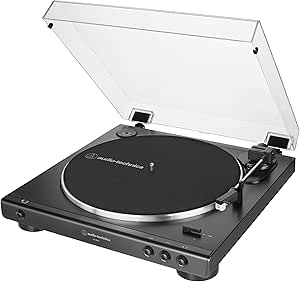 | Best for Simple Vinyl Playback | Model: AT-LP60X-BK | Drive type: Belt drive | Operation: Fully automatic | VIEW ON AMAZON | See Our Full Breakdown |
| Fluance RT87 Reference Turntable with 2M Blue Cartridge, Acrylic Platter, and Natural Walnut Finish |  | Best for Cartridge Setup Tuning | Model: RT87 | Finish: Natural Walnut | Tonearm: 9-inch carbon fiber, adjustable VTA | VIEW ON AMAZON | See Our Full Breakdown |
| Audio-Technica AT-LP60XBT-BK Fully Automatic Bluetooth Belt-Drive Turntable |  | Best for Wireless Listening | Model: AT-LP60XBT-BK | Drive type: Belt drive | Operation: Fully automatic | VIEW ON AMAZON | See Our Full Breakdown |
| Audio-Technica AT-LP120XUSB-BK Direct-Drive Turntable (Analog & USB) |  | Best for Manual Control and Digitizing | Model: AT-LP120XUSB-BK | Drive type: Direct-drive DC servo motor | Speeds: 33-1/3, 45, and 78 RPM | VIEW ON AMAZON | See Our Full Breakdown |
| Fluance RT82 Reference High Fidelity Vinyl Turntable with Ortofon OM10 Cartridge, Piano Black |  | Best Upgrade for Analog Purists | Model: RT82 | Cartridge: Ortofon OM10 elliptical | Tonearm: Balanced S-shaped | VIEW ON AMAZON | See Our Full Breakdown |
| Pro-Ject Debut Carbon EVO Turntable with Sumiko Rainier Cartridge (Walnut) |  | Best for Cartridge-Led Listening | Model: Debut Carbon EVO | Cartridge: Sumiko Rainier | Nominal speeds: 33/45 RPM | VIEW ON AMAZON | See Our Full Breakdown |
| Technics SL-40CBT Direct Drive Turntable with Bluetooth |  | Best for Flexible Listening Setups | Motor: Coreless direct drive | Connectivity: Bluetooth | Cartridge: Audio-Technica AT-VM95C | VIEW ON AMAZON | See Our Full Breakdown |
| turntable audiophile | Cartridge | Drive type | Tonearm | Model |
|---|---|---|---|---|
| Pioneer DJ PLX-1000 Profession | — | Direct drive | S-shaped | — |
| Pro-Ject Debut Carbon EVO Wire | Sumiko Rainier | — | — | — |
| Audio-Technica AT-LP70X Automa | AT-VM95C | Belt drive | J-shaped | — |
| Technics SL-40CBT-K Direct Dri | Audio-Technica AT-VM95C | Coreless direct drive | Aluminum S-shaped | SL-40CBT-K |
| Fluance RT85 Turntable with Or | Ortofon 2M Blue elliptical | Belt drive | — | — |
| Fluance RT85N Reference Vinyl | Nagaoka MP-110 elliptical diamond | — | — | — |
| Audio-Technica AT-LP60X-BK Ful | Integral Dual Magnet | Belt drive | — | AT-LP60X-BK |
| Fluance RT87 Reference Turntab | Ortofon 2M Blue nude elliptical | — | 9-inch carbon fiber, adjustable VTA | RT87 |
| Audio-Technica AT-LP60XBT-BK F | — | Belt drive | — | AT-LP60XBT-BK |
| Audio-Technica AT-LP120XUSB-BK | — | Direct-drive DC servo motor | Balanced S-shaped with hydraulically damped lift control and lockable rest | AT-LP120XUSB-BK |
| Fluance RT82 Reference High Fi | Ortofon OM10 elliptical | — | Balanced S-shaped | RT82 |
| Pro-Ject Debut Carbon EVO Turn | Sumiko Rainier | — | — | Debut Carbon EVO |
| Technics SL-40CBT Direct Drive | Audio-Technica AT-VM95C | — | Aluminum S-shaped tonearm | — |
More Details on Our Top Picks
Pioneer DJ PLX-1000 Professional Direct-Drive Turntable, Black
The Pioneer DJ PLX-1000 earns its place for listeners who need hands-on control as much as playback. Its direct-drive motor reaches speed quickly, while the heavy chassis is designed to resist vibration and feedback during demanding use. Compared with the Technics SL-40CBT-K, it puts more emphasis on DJ controls and broad pitch adjustment than on wireless convenience. The ±8%, ±16%, and ±50% pitch ranges and DVS compatibility suit beatmatching and digital-vinyl setups, but they matter less to someone who mainly wants relaxed home listening. The tradeoff is its substantial weight and pro-focused feature set; it also arrives without a cartridge. I’d choose it for active mixing, while a cartridge-equipped audiophile deck is a simpler start for listening alone.
Pros:- Direct-drive motor reaches 33⅓ rpm in 0.3 seconds
- Heavy, rigid chassis is designed to resist vibration and feedback
- Pitch ranges of ±8%, ±16%, and ±50% support varied mixing styles
- Detachable power and audio cables simplify setup and replacement
Cons:- Cartridge is not included
- Heavy construction makes it less convenient to move
- DJ-focused controls add little value for casual record playback
Best for: Vinyl DJs and turntablists who want fast direct-drive response, wide pitch control, and DVS compatibility
Not ideal for: Home listeners seeking an out-of-the-box audiophile setup, since a cartridge is not included and the DJ controls may go unused
- Drive type:Direct drive
- Start-up speed:33⅓ rpm in 0.3 seconds
- Pitch range:±8%, ±16%, ±50%
- Tonearm:S-shaped
- DVS compatibility:Yes
- Included accessories:Slip mat and sheet, dust cover, head shell, balance/sub/shell weights, audio cable, ground wire
- Warranty:1 year parts and labor
Our verdict“Choose the PLX-1000 if hands-on DJ control and DVS readiness matter more to you than a cartridge-equipped listening setup.”
Pro-Ject Debut Carbon EVO Wired Turntable with Sumiko Rainier Cartridge (Black)
The Pro-Ject Debut Carbon EVO makes the most sense for a listener who wants a conventional wired deck with a cartridge already supplied. Its Sumiko Rainier cartridge removes a setup decision that the Pioneer DJ PLX-1000 leaves to the buyer, and 33 and 45 rpm support covers the two common record speeds. The 8.6-inch tonearm and 68 dB signal-to-noise specification give useful context for a dedicated listening setup, but the supplied details don’t establish a built-in phono preamp or automatic operation. Compared with the Audio-Technica AT-LP70X, this is the more traditional choice for someone willing to handle records and setup directly; the AT-LP70X offers automatic operation and a switchable preamp for an easier connection. The EVO’s appeal is focused simplicity, though buyers should check their amplifier’s phono input or plan for a separate preamp.
Pros:- Includes a Sumiko Rainier cartridge
- Supports both 33 and 45 rpm playback
- 8.6-inch effective tonearm length is specified for setup reference
Cons:- The supplied product data does not specify a built-in phono preamp
- The supplied product data does not specify automatic operation
Best for: Vinyl listeners who want a wired, manual-style setup with a Sumiko cartridge supplied and already have a phono input or preamp
Not ideal for: Beginners seeking automatic operation and a built-in phono preamp, features specified on the Audio-Technica AT-LP70X
- Nominal speeds:33 and 45 rpm
- Cartridge:Sumiko Rainier
- Effective tonearm mass:6 g
- Effective tonearm length:8.6 in (218.5 mm)
- Signal-to-noise ratio:68 dB
- Dimensions:16.3 × 4.6 × 12.6 in
Our verdict“Pick the Debut Carbon EVO if you want a cartridge-equipped wired deck and already have the phono stage your system needs.”
Audio-Technica AT-LP70X Automatic Turntable (Black/Bronze)
For an audiophile-curious listener who values easy operation, the Audio-Technica AT-LP70X trades hands-on setup for a straightforward listening routine. Its fully automatic operation handles the tonearm’s start and return, while the switchable phono preamp lets it connect to a line-level input without a separate phono stage. The included AT-VM95C cartridge also gives owners a path to compatible VM95 Series replacement styli. Compared with the manual-style Pro-Ject Debut Carbon EVO, the LP70X asks less of a new owner but provides less of the traditional setup experience. It is belt-drive, unlike the DJ-oriented direct-drive Pioneer DJ PLX-1000, so its appeal is convenient home listening rather than mixing. Buyers seeking detailed manual adjustment or more audiophile-focused hardware may outgrow its convenience-first design.
Pros:- Fully automatic operation simplifies starting and ending playback
- Switchable phono preamp supports phono- or line-level output
- AT-VM95C cartridge is compatible with VM95 Series replacement styli
- Includes a detachable RCA cable, 45 rpm adapter, and hinged dust cover
Cons:- Belt-drive, automatic design is less suited to hands-on DJ mixing
- Convenience-focused operation offers less manual control than the Pro-Ject Debut Carbon EVO
Best for: New vinyl listeners who want automatic playback, a built-in phono preamp, and a replaceable VM95 Series stylus path
Not ideal for: Experienced listeners prioritizing manual adjustment or DJ mixing features such as the Pioneer DJ PLX-1000’s pitch controls
- Drive type:Belt drive
- Operation:Fully automatic
- Speeds:33⅓ and 45 rpm
- Cartridge:AT-VM95C
- Stylus compatibility:VM95 Series replacement styli
- Preamp and output:Built-in switchable phono preamplifier; phono- or line-level output
- Tonearm:J-shaped
- Included accessories:Detachable RCA output cable with ground, 45 rpm adapter, removable hinged dust cover
Our verdict“Choose the AT-LP70X if simple automatic playback and flexible connection matter more than manual control.”
Technics SL-40CBT-K Direct Drive Turntable with Bluetooth
The Technics SL-40CBT-K bridges a dedicated turntable setup and wireless listening. Its coreless direct-drive motor is designed for stable, low-vibration playback, and the included Audio-Technica AT-VM95C means the buyer does not need to select a cartridge separately. Bluetooth gives it a practical advantage over the wired Pro-Ject Debut Carbon EVO when the listening system lacks a convenient analog connection. The built-in phono EQ also simplifies connection to compatible line-level equipment. Compared with the DJ-focused Pioneer DJ PLX-1000, this Technics model prioritizes home-system flexibility over broad pitch control and DVS use. Its tradeoff is that Bluetooth convenience may not suit a listener building an all-wired signal path, and the supplied product data does not specify more advanced cartridge or adjustment options.
Pros:- Coreless direct-drive motor is designed for stable, low-vibration playback
- Includes an Audio-Technica AT-VM95C cartridge
- Bluetooth supports wireless listening setups
- Built-in phono EQ reduces the need for a separate phono stage
Cons:- Bluetooth may not fit listeners building an all-wired analog chain
- The supplied product data does not specify DJ pitch controls or DVS compatibility
Best for: Home vinyl listeners who want direct drive, an included cartridge, and the option to send audio over Bluetooth
Not ideal for: Turntablists who need broad pitch control and DVS compatibility, or purists committed to an all-wired setup
- Model:SL-40CBT-K
- Drive type:Coreless direct drive
- Connectivity:Bluetooth
- Cartridge:Audio-Technica AT-VM95C
- Tonearm:Aluminum S-shaped
- Phono stage:Built-in phono EQ
- Dimensions:16.9 × 5.0 × 13.9 in
- Included:Dust cover
Our verdict“Choose the SL-40CBT-K for a cartridge-equipped direct-drive deck that can connect to a wireless home system.”
Fluance RT85 Turntable with Ortofon 2M Blue Cartridge and Acrylic Platter, Walnut
The Fluance RT85 is the strongest fit here for a listener whose priority is a more detail-focused cartridge and a platter designed to damp unwanted vibration. Its Ortofon 2M Blue elliptical cartridge, high-density acrylic platter, isolated motor, and adjustable resonance-damping feet all serve a dedicated listening setup. Compared with the Pro-Ject Debut Carbon EVO, the RT85 specifies more of its vibration-control hardware and names a different supplied cartridge, helping buyers weigh the character of the overall package. It also stands apart from the convenience-oriented Audio-Technica AT-LP70X: the Fluance emphasizes playback hardware over automatic operation and built-in amplification. The main system requirement is a phono preamp, which is not included. Its focus makes sense for deliberate listening, but adds a component decision for anyone starting from scratch.
Pros:- Ortofon 2M Blue elliptical cartridge is included
- High-density acrylic platter is designed to help damp unwanted vibration
- Isolated motor and speed control support consistent playback
- Adjustable resonance-damping feet help address micro-vibrations
Cons:- Phono preamp is not included
- Requires more system planning than the preamp-equipped Audio-Technica AT-LP70X
Best for: Dedicated vinyl listeners who want an Ortofon 2M Blue cartridge and vibration-control features, and already have or plan to add a phono preamp
Not ideal for: First-time buyers seeking an all-in-one setup with a built-in phono preamp, such as the Audio-Technica AT-LP70X
- Drive type:Belt drive
- Cartridge:Ortofon 2M Blue elliptical
- Platter:High-density acrylic
- Plinth:High-mass MDF with real wood finish
- Finish:Walnut
- Wow and flutter:0.07%
- Isolation:Isolated motor and adjustable resonance-damping feet
- Phono preamp:Not included
Our verdict“Choose the RT85 if cartridge detail and vibration control are priorities and your system can supply the phono preamp.”
Fluance RT85N Reference Vinyl Turntable with Nagaoka MP-110 Cartridge, Acrylic Platter, and Walnut Finish
The RT85N pairs an acrylic platter with a Nagaoka MP-110, making it a distinct choice for listeners who want a fuller, balanced presentation without buying a cartridge separately. Its isolated motor, high-mass MDF plinth, and adjustable damping feet address vibration at several points, a more audiophile-focused setup than the convenience-first Audio-Technica AT-LP60X-BK. The tradeoff is that the RT85N does not include a phono preamp, so a compatible amplifier or separate preamp is part of the system plan. Compared with the Fluance RT87 and its Ortofon 2M Blue plus adjustable VTA, this model offers fewer stated setup adjustments, but its included MP-110 gives it a clear cartridge identity. I’d choose it for a dedicated listening system where isolation and cartridge character matter more than plug-and-play simplicity.
Pros:- Includes a Nagaoka MP-110 elliptical diamond cartridge
- Acrylic platter is designed to damp unwanted vibration
- Isolated motor and speed control support consistent playback
- Adjustable isolation feet help limit micro-vibrations
Cons:- No built-in phono preamp, so compatible amplification is required
- Lacks the stated VTA adjustment offered by the Fluance RT87
Best for: Vinyl listeners building a stereo system who want an included Nagaoka cartridge and vibration-conscious construction.
Not ideal for: First-time buyers without a phono input or separate preamp, since the turntable has no built-in phono preamp.
- Cartridge:Nagaoka MP-110 elliptical diamond
- Platter:High-density acrylic
- Plinth:High-mass MDF with real wood finish
- Finish:Walnut
- Wow and flutter:0.07%
- Phono preamp:Not included
Our verdict“Choose the RT85N if you want its included Nagaoka cartridge and vibration-focused design and already have a phono stage.”
Audio-Technica AT-LP60X-BK Fully Automatic Belt-Drive Turntable, Black
The AT-LP60X-BK makes playing records straightforward: its automatic operation handles the arm movement, and its built-in switchable phono preamp lets it connect to many systems without a separate phono stage. That makes it an easier entry point than the manual Audio-Technica AT-LP120XUSB-BK, which offers more control and 78 RPM playback but asks the listener to cue records by hand. The LP60X supports 33-1/3 and 45 RPM, with a replaceable diamond stylus and an anti-resonance aluminum platter. Those features cover everyday listening, though the supplied product data does not describe the adjustment options or cartridge flexibility found on the more advanced Fluance RT85N. Convenience is its defining strength; listeners focused on system tuning and upgrade flexibility may outgrow its simpler design.
Pros:- Fully automatic operation simplifies starting and finishing a record
- Built-in switchable phono preamp supports flexible system connections
- Plays 33-1/3 and 45 RPM records
- Replaceable diamond stylus and included hinged dust cover
Cons:- Does not play 78 RPM records
- Its simpler design offers fewer stated setup and adjustment features than the AT-LP120XUSB-BK
- The supplied data does not specify cartridge-upgrade flexibility
Best for: New vinyl listeners who want automatic playback and a built-in preamp for a straightforward connection to powered speakers or a stereo.
Not ideal for: Audiophiles who want manual setup control, 78 RPM playback, or the more elaborate vibration isolation described for the Fluance RT85N.
- Model:AT-LP60X-BK
- Drive type:Belt drive
- Operation:Fully automatic
- Speeds:33-1/3 and 45 RPM
- Platter:Anti-resonance die-cast aluminum
- Cartridge:Integral Dual Magnet
- Stylus:Replaceable diamond stylus (ATN3600LC)
- Preamp:Built-in switchable phono pre-amplifier
- Connectivity:Detachable RCA output cable
Our verdict“Pick the AT-LP60X-BK for easy, automatic playback and a built-in preamp, rather than extensive manual control.”
Fluance RT87 Reference Turntable with 2M Blue Cartridge, Acrylic Platter, and Natural Walnut Finish
The RT87 is the lineup’s clearest pick for listeners who want to fine-tune cartridge alignment: its carbon fiber tonearm offers adjustable VTA, while the dual-plinth design aims to isolate the arm from motor vibration. It also arrives with an Ortofon 2M Blue nude elliptical cartridge and a 22 mm acrylic platter, giving it a more explicitly adjustable setup than the Fluance RT85N. The RT85N instead pairs its acrylic platter with a Nagaoka MP-110, so the choice comes down to cartridge preference and whether VTA adjustment is a priority. Compared with the automatic Audio-Technica AT-LP60X-BK, the RT87 puts system setup and tracking control ahead of ease of operation. Its appeal depends on careful setup; the provided data does not specify a built-in phono preamp, so buyers should check their amplification needs.
Pros:- Includes an Ortofon 2M Blue nude elliptical cartridge
- Adjustable VTA supports cartridge setup changes
- Dual-plinth construction is designed to isolate tonearm vibration
- 22 mm anti-static acrylic platter
Cons:- The available product data does not specify a built-in phono preamp
- Setup flexibility may be unnecessary for listeners who prefer the automatic AT-LP60X-BK
- The product data provides no real-world drawback details
Best for: Experienced vinyl listeners who want an Ortofon 2M Blue and VTA adjustment for more deliberate cartridge setup.
Not ideal for: Listeners who want automatic operation or a clearly specified built-in phono preamp before connecting a turntable.
- Model:RT87
- Finish:Natural Walnut
- Tonearm:9-inch carbon fiber, adjustable VTA
- Cartridge:Ortofon 2M Blue nude elliptical
- Platter:22 mm anti-static acrylic
- Isolation:Dual-plinth vibration isolation
- Warranty:2-year manufacturer warranty
Our verdict“Choose the RT87 if VTA adjustment and its included Ortofon cartridge matter more to you than automatic convenience.”
Audio-Technica AT-LP60XBT-BK Fully Automatic Bluetooth Belt-Drive Turntable
The AT-LP60XBT-BK brings automatic playback and Bluetooth output together for listeners who want to hear records through compatible wireless speakers or devices. Its aptX support and dual RCA output provide both wireless and wired routes, so it is more connection-flexible than the AT-LP60X-BK, whose supplied data lists a detachable RCA cable but no Bluetooth. Both models prioritize ease over extensive manual adjustment; the AT-LP120XUSB-BK is the better fit for listeners who want pitch control, anti-skate adjustment, and USB digitizing. The LP60XBT plays 33-1/3 and 45 RPM records and uses an anti-resonance die-cast aluminum platter. Wireless convenience comes with system tradeoffs: Bluetooth requires compatible receiving equipment, while a wired setup may suit listeners who want to choose every component in the signal chain.
Pros:- Bluetooth output supports wireless listening
- aptX codec support
- Dual RCA output allows a wired connection
- Fully automatic operation and two playback speeds
Cons:- Bluetooth playback depends on compatible receiving equipment
- Does not offer the stated USB digitizing and adjustment controls of the AT-LP120XUSB-BK
- Does not play 78 RPM records
Best for: Listeners with Bluetooth speakers who want automatic record playback without adding a wired turntable connection.
Not ideal for: Listeners seeking manual tonearm adjustments, USB recording, or a turntable aimed at detailed system tuning.
- Model:AT-LP60XBT-BK
- Drive type:Belt drive
- Operation:Fully automatic
- Speeds:33-1/3 and 45 RPM
- Connectivity:Bluetooth and dual RCA output
- Codec:aptX
- Platter:Anti-resonance die-cast aluminum
- Color:Black
Our verdict“Choose the AT-LP60XBT-BK if wireless speakers and automatic operation are central to your listening setup.”
Audio-Technica AT-LP120XUSB-BK Direct-Drive Turntable (Analog & USB)
The AT-LP120XUSB-BK is the most hands-on pick here: direct drive, adjustable anti-skate, variable pitch with quartz speed lock, and three speeds give experienced listeners more control than either automatic LP60X model. Its USB output also supports converting records to digital files, which makes it the lineup’s practical choice for listeners building a library beyond the turntable. That flexibility asks for effort: this model is fully manual, while the AT-LP60X-BK handles arm operation automatically. The Fluance RT87 offers VTA adjustment and a supplied Ortofon 2M Blue, but its listed features do not include USB digitizing or 78 RPM playback. The LP120XUSB includes useful setup accessories and Audacity software; its broader feature set makes it a better fit for involved listening than simple, hands-off playback.
Pros:- Direct-drive motor with 33-1/3, 45, and 78 RPM speeds
- USB output supports vinyl digitizing
- Adjustable dynamic anti-skate and variable pitch with quartz speed lock
- Includes Audacity software and a broad accessory set
Cons:- Fully manual operation requires the listener to cue and return the tonearm
- More controls and setup steps than the automatic AT-LP60X-BK
- The supplied data does not specify a built-in phono preamp
Best for: Hands-on vinyl listeners who want 78 RPM playback, manual tracking controls, and USB recording for digitizing records.
Not ideal for: Beginners who want automatic arm operation or listeners who do not plan to use its pitch controls and USB output.
- Model:AT-LP120XUSB-BK
- Drive type:Direct-drive DC servo motor
- Speeds:33-1/3, 45, and 78 RPM
- Operation:Fully manual
- Tonearm:Balanced S-shaped with hydraulically damped lift control and lockable rest
- Pitch control:Variable pitch with quartz speed lock
- Anti-skate:Adjustable dynamic anti-skate control
- USB:Yes, converts vinyl to digital
- Software:Audacity, free and Mac/PC compatible
Our verdict“Choose the AT-LP120XUSB-BK if you want manual control, 78 RPM playback, and USB digitizing in one turntable.”
Fluance RT82 Reference High Fidelity Vinyl Turntable with Ortofon OM10 Cartridge, Piano Black
The Fluance RT82 makes a strong fit for an audiophile who wants a fully analog setup and a capable cartridge from the start. Its Ortofon OM10 elliptical cartridge, isolated motor and metal platter are aimed at stable, detailed playback, while the high-mass MDF plinth and isolation feet help limit vibration reaching the stylus. Compared with the Technics SL-40CBT, the RT82 leaves out built-in phono EQ and Bluetooth, so it needs a separate phono stage and offers no wireless route to speakers. That makes setup less immediate, but gives the buyer more choice over the amplification chain. The main tradeoff is practical: the separate preamp adds another component. For a listener building a traditional stereo system, that is a worthwhile path to flexibility; for a simple all-in-one setup, it is extra work.
Pros:- Ortofon OM10 elliptical cartridge is included
- Isolated motor and speed control support consistent playback
- High-mass MDF plinth and isolation feet help reduce unwanted vibration
- Fully analog signal path suits listeners choosing their own phono stage
Cons:- A separate phono preamp is required if the amplifier lacks a phono input
- No Bluetooth connection is specified
Best for: Analog-focused listeners assembling a stereo system with a separate phono preamp or phono input
Not ideal for: Buyers who want Bluetooth or a built-in phono stage for a quick, minimal-component setup
- Model:RT82
- Cartridge:Ortofon OM10 elliptical
- Tonearm:Balanced S-shaped
- Plinth:High-mass MDF with real wood finish
- Platter:Metal
- Wow and flutter:0.07%
- Phono preamp:Not included
- Finish:Piano Black
Our verdict“Choose the RT82 if you want an analog-first turntable with an included OM10 and already have a plan for phono amplification.”
Pro-Ject Debut Carbon EVO Turntable with Sumiko Rainier Cartridge (Walnut)
The Pro-Ject Debut Carbon EVO is a considered choice for listeners who want a supplied Sumiko Rainier cartridge and a conventional wired turntable setup. It plays both 33 and 45 RPM records, and its 8.6-inch tonearm gives the cartridge a defined tracking platform. The steel enclosure sets it apart from the Fluance RT82, whose stated design emphasizes a high-mass MDF plinth and isolation feet; buyers choosing between them are weighing distinct construction approaches rather than built-in convenience. The EVO’s supplied specifications do not list a phono preamp or media cover, so plan the rest of the system around those needs. Compared with the Technics SL-40CBT, it does not offer specified Bluetooth connectivity or built-in phono EQ. Its appeal is a straightforward wired path with a named cartridge, at the cost of extra system components.
Pros:- Sumiko Rainier cartridge is included
- Supports 33 and 45 RPM playback
- Steel enclosure provides a substantial platform
- Published tonearm mass and length help system matching
Cons:- A phono preamp is not specified in the supplied product data
- A built-in media cover is not specified
- No Bluetooth connectivity is listed
Best for: Vinyl listeners who want a wired turntable with a supplied Sumiko cartridge and already own suitable phono amplification
Not ideal for: Buyers seeking wireless playback, built-in phono EQ, or a setup with a specified included dustcover
- Model:Debut Carbon EVO
- Cartridge:Sumiko Rainier
- Nominal speeds:33/45 RPM
- Effective tonearm mass:6 g
- Effective tonearm length:8.6 in (218.5 mm)
- Signal-to-noise ratio:68 dB
- Enclosure material:Steel
- Dimensions:16.3 × 4.6 × 12.6 in
- Warranty:2 years
Our verdict“Pick the Debut Carbon EVO if a supplied Sumiko cartridge and wired listening fit your system better than the Technics SL-40CBT’s built-in conveniences.”
Technics SL-40CBT Direct Drive Turntable with Bluetooth
The Technics SL-40CBT brings audiophile-minded playback together with a more flexible connection setup. Its coreless direct-drive motor is designed for stable, low-vibration operation, while the included AT-VM95C cartridge and built-in phono EQ reduce the number of components needed to start listening. Bluetooth adds a wireless option, though the turntable still needs a compatible speaker or receiver; the speakers are not included. That makes it easier to place in a modern listening setup than the Fluance RT82, which requires separate phono amplification and is fully analog. The tradeoff is less control over the phono stage than a separate component can offer. Audiophiles who prioritize choosing every link in the signal chain may prefer the Pro-Ject Debut Carbon EVO; the Technics is better for listeners who value direct drive and connection flexibility.
Pros:- Coreless direct-drive motor is designed for stable, low-vibration playback
- Built-in phono EQ and included AT-VM95C simplify system setup
- Bluetooth enables wireless connection to compatible audio equipment
- Dustcover is included
Cons:- Bluetooth speakers or another compatible audio system must be supplied separately
- Built-in phono EQ offers less choice than selecting a separate phono stage
- The listed specifications do not provide a speed-stability figure
Best for: Listeners who want direct-drive playback with a built-in phono stage and the option to connect compatible Bluetooth speakers
Not ideal for: Analog purists who want a fully separate phono stage or buyers who expect the turntable to include speakers
- Motor:Coreless direct drive
- Connectivity:Bluetooth
- Cartridge:Audio-Technica AT-VM95C
- Tonearm:Aluminum S-shaped tonearm
- Phono EQ:Built-in; tuned for the included cartridge
- Dimensions:16.9 × 5.0 × 13.9 inches
- Included:Dustcover
Our verdict“Choose the SL-40CBT if you want direct drive and wireless flexibility with fewer separate components in your listening system.”

How We Picked
I compared these turntables by the factors that shape an audiophile listening setup: drive design, cartridge supplied, adjustment and upgrade options, day-to-day operation, connectivity, and build approach. I gave more weight to a coherent analog setup and room to grow than to convenience features alone, while recognizing that an automatic arm or wireless connection can be the right priority for a particular listener. The ranking favors models that balance sound-system flexibility with a practical ownership experience.
The Debut Carbon EVO ranks first as the most even fit for a dedicated stereo system; the Fluance RT85 and RT85N follow for listeners choosing between distinct cartridge packages. The Technics SL-40CBT and Pioneer PLX-1000 appeal to buyers who prioritize direct drive, but their different feature sets make them less universal picks. Automatic Audio-Technica models rank lower for enthusiast customization, though they make vinyl easier to start and use. Closely related finishes and configurations are treated as variants, with the buying decision centered on the differences that matter to the listener.
| turntable audiophile | Drive type |
|---|---|
| Pioneer DJ PLX-1000 Profession | Direct drive |
| Pro-Ject Debut Carbon EVO Wire | — |
| Audio-Technica AT-LP70X Automa | Belt drive |
| Technics SL-40CBT-K Direct Dri | Coreless direct drive |
| Fluance RT85 Turntable with Or | Belt drive |
| Fluance RT85N Reference Vinyl | — |
| Audio-Technica AT-LP60X-BK Ful | Belt drive |
| Fluance RT87 Reference Turntab | — |
| Audio-Technica AT-LP60XBT-BK F | Belt drive |
| Audio-Technica AT-LP120XUSB-BK | Direct-drive DC servo motor |
| Fluance RT82 Reference High Fi | — |
| Pro-Ject Debut Carbon EVO Turn | — |
| Technics SL-40CBT Direct Drive | — |
Factors to Consider When Choosing Turntable Audiophile
Choosing an audiophile turntable means choosing how much of the playback chain you want to manage yourself. Before focusing on a single feature, decide what your amplifier, speakers, room, and listening habits require.
Match the Turntable to Your Phono Setup
A turntable’s output needs a compatible phono stage before it reaches most line-level inputs. Check whether your amplifier or powered speakers have a phono input, and confirm that it supports the cartridge type you plan to use. If they do not, you will need an external phono preamp or a turntable with a built-in one. This choice can affect sound and system cost more than a small difference in platter material. Avoid assuming that Bluetooth means the turntable can connect directly to every speaker. Map the full signal path before buying so you know which cables and components are needed.
Choose Between Belt Drive and Direct Drive by Use
Belt-drive and direct-drive designs are different engineering approaches, not a simple ranking of sound quality. Belt drive isolates the platter from the motor with a belt, while direct drive couples the motor to the platter and is often chosen for quick start-up and speed control. For home listening, prioritize stable playback, suitable speed options, and the deck’s overall execution rather than the drive label alone. If you mix records or value DJ-style handling, direct drive may suit your routine better. If you mostly play albums through a stereo system, a well-made belt-drive model can be a natural fit. Think about how you will use the deck before treating one drive type as inherently superior.
Treat the Cartridge as a System Choice
The included cartridge is a starting point that shapes setup, maintenance, and future spending. Moving-magnet cartridges are common in this group and typically allow stylus replacement, but cartridge bodies and styli are not universally interchangeable. Before buying a replacement, confirm compatibility with the cartridge manufacturer’s recommendations and the turntable’s arm. A cartridge upgrade can bring less benefit than correct alignment or a suitable phono stage if the rest of the system is not ready. Check whether the supplied cartridge arrives mounted and aligned, since that affects how much setup work falls to you. Choose the package whose cartridge you are comfortable keeping or maintaining, rather than shopping by model name alone.
Decide How Much Manual Control You Want
Manual decks ask you to place and lift the stylus yourself, while automatic models handle some or all of that sequence. Automation can reduce friction for casual listening and help prevent a record from spinning unattended at the end of a side. It also adds mechanisms and can limit adjustment options compared with a straightforward manual deck. Audiophiles who enjoy fine-tuning tracking force, alignment, or cartridge choice may prefer a more adjustable platform. New listeners should not assume that manual operation produces better sound by itself. Choose based on whether setup and record handling feel like part of the hobby or a barrier to playing music.
Pay for Connectivity Only When It Fits Your Workflow
Bluetooth is useful when the rest of your system is wireless, but it sends audio through a wireless link and may not suit a listener seeking a fully wired analog chain. USB serves a separate purpose: it can support recording vinyl to a computer for archiving or portable listening. Neither connection replaces the need to check how the turntable handles phono-level output. A wired connection may be simpler if your amplifier already has a phono input and your speakers are nearby. Think about whether you will use wireless listening or record capture regularly before giving those features priority. A feature that stays unused can mean paying attention to the wrong part of the deck.
Plan for Setup, Placement, and Long-Term Care
Even a capable turntable can perform poorly if it sits on a wobbly surface or near speakers that feed vibration back into the stylus. Give the deck a stable, level spot away from strong vibrations, and allow enough space to handle records without bumping the tonearm. Dust, stylus wear, and belt condition are routine ownership concerns, so find out what replacement parts are available before settling on a model. Manual decks may ask more of the owner during initial setup, while automatic mechanisms can call for specialized service if they develop a fault. Keep records clean and handle them by their edges to reduce buildup on the stylus. A realistic care routine matters more than an elaborate accessory collection.
Frequently Asked Questions
Do I need a separate phono preamp for these turntables?
That depends on the specific model and the equipment receiving its signal. A phono input on an amplifier usually includes a phono stage; a standard line input usually does not. Check each turntable’s connection options and the input labels on your receiver or powered speakers before ordering. If neither side provides a phono stage, add an external one to the system plan. Bluetooth output, where present, does not automatically mean a wired phono connection is ready for a line input.
Is the Fluance RT85 or RT85N the better choice?
Both models pair an acrylic platter with a different supplied cartridge, so the main distinction is the cartridge package rather than a wholly different kind of turntable. The RT85 uses an Ortofon 2M Blue, while the RT85N comes with a Nagaoka MP-110. Compare the cartridges’ sound character, stylus replacement options, and compatibility with your phono stage and future plans. If you already favor one cartridge family, that preference can make the decision straightforward. Check current product specifications before purchase, since package details can change.
Should I choose an automatic turntable if I care about sound quality?
Automatic operation does not rule out enjoyable sound, but it may limit how much you can adjust or change compared with a more manual design. The right choice depends on the cartridge, setup, condition, and the rest of your audio system, not automation alone. If ease of starting and stopping records matters most, automatic operation can help you play records more often. If you want to experiment with cartridges and alignment, check the model’s adjustment options before buying. Avoid paying for manual control you do not want to use.
Will Bluetooth preserve the sound of a wired audiophile setup?
Bluetooth is convenient, but wireless transmission introduces a different signal path from a wired analog connection. The result depends on the turntable’s electronics, the Bluetooth codec supported at both ends, and the receiving speaker or headphones. For a system built around a phono stage and wired amplifier, connect through the analog outputs when available. Bluetooth can be a sensible option for casual listening or rooms where running cables is impractical. Treat it as a convenience feature rather than a substitute for evaluating the complete audio chain.
What should I upgrade first after buying a turntable?
Start with correct placement, level setup, and cartridge alignment, since mistakes there can affect every record you play. Keep the stylus clean and replace it when worn according to its maker’s guidance. If the system lacks a suitable phono stage, addressing that gap may be more useful than immediately buying a different cartridge. After the basics are right, consider a cartridge or stylus change only if it fits the arm and your listening goals. There is no universal upgrade order, so let a real limitation in your setup guide the next purchase.
Conclusion
For most dedicated stereo listeners, I recommend the Pro-Ject Debut Carbon EVO as best overall for its balanced manual setup and upgrade potential. Choose the Fluance RT82 as the value-minded entry to the Reference line, or the Fluance RT85 as a stronger cartridge package if its Ortofon setup suits your system. The Pioneer PLX-1000 is my premium pick for buyers who want a robust, DJ-oriented direct-drive deck, while the Audio-Technica AT-LP70X is the easier starting point for beginners who want automatic operation. For wireless convenience, consider the Technics SL-40CBT; for digitizing records, look at the AT-LP120XUSB. Match the pick to your system and listening habits, and the differences in this lineup become much easier to sort through.
Fall Picks
fall essentials
As an affiliate, we earn on qualifying purchases.