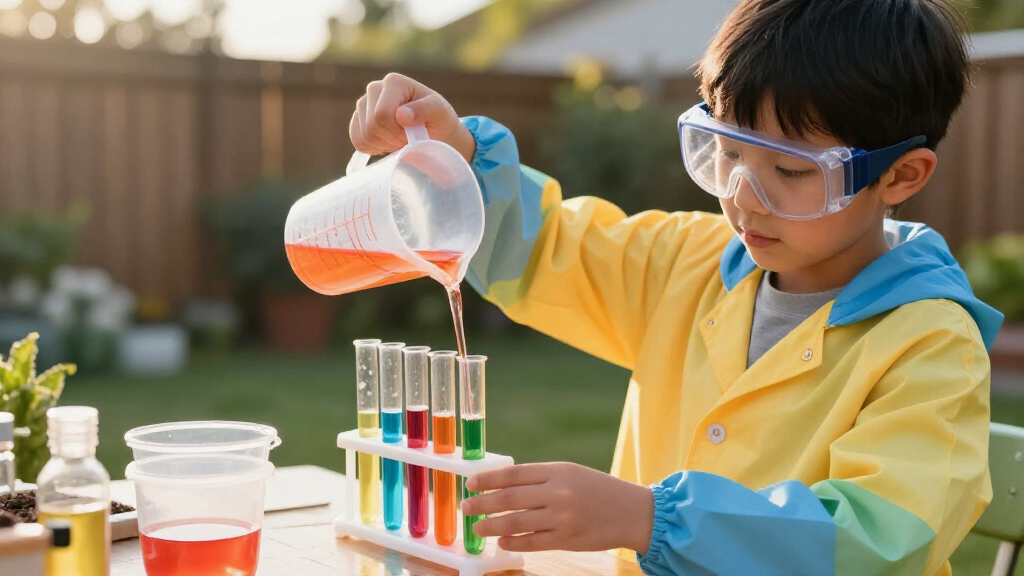
Science experiment kits for kids range from big-box chemistry sets with 100+ activities to focused STEM kits built around electronics or live habitats, and the right pick depends heavily on your child’s age and how much supervision you can give. The National Geographic Amazing Chemistry Set with 100+ Experiments earns the top spot for its balance of real lab equipment, safe but genuinely impressive reactions, and clear illustrated instructions that kids ages 8-12 can follow with minimal help. If you’re shopping for a preschooler, the Doctor Jupiter My First Science Experiments Kit is the standout beginner option, with simpler activities designed for ages 4 and up. The main tradeoffs in this category are experiment count versus quality, price versus refillability, and one-and-done kits versus sets kids return to. Keep reading for the full breakdown of all nine kits.

Prime made for students and young adults
- Fast, free delivery for dorm and study essentials
- Prime Video and Amazon Music included
- Member-only deals
Key Takeaways
- Experiment counts are misleading: the UNGlinga 150-experiment kit and the 80-experiment role play kit pad their totals with variations of the same activity, while the National Geographic sets deliver more genuinely distinct experiments despite lower headline numbers.
- Age labeling matters more than brand: the two kits marked for ages 4+ (Doctor Jupiter) and the Aqua Dragons habitat work well for younger kids, but the National Geographic and UNGlinga chemistry sets genuinely frustrate children under 8.
- The VATOS circuit kit is the only option here that teaches electronics rather than chemistry, making it the pick for kids who prefer building over mixing — but its 100+ projects are combinations, not unique experiments.
- Refillability separates good value from disposable fun: National Geographic chemistry sets use common household items for many experiments, while single-tank kits like the Aqua Dragons Volcano Aquarium depend on one-time hatch packets.
- The Science Kit for Kids 80 Experiments set overlaps heavily with the cheaper UNGlinga 70-experiment kit; unless the role-play costume matters, the smaller UNGlinga set is the smarter budget buy.


| science experiment kits for kid | Brand | Age Range | Number of Experiments | Included Components |
|---|---|---|---|---|
| UNGlinga 150 Experiments Scien | UNGlinga | 8 years and up | 150 | Science experiments, tools, and materials |
| UNGlinga 70 Lab Experiments Sc | UNGlinga | 8 years and up | 70 | Science experiments, manual |
| Animagic Aqua Dragons Volcano | Animagic | 6 years and up | — | — |
| Science Kit for Kids | Kuovei | 6+ years | 80 | Goggles, gloves, chemical materials, test tubes, petri dishes, balloons, pigments, droppers, guidance cards |
| Doctor Jupiter My First Scienc | Doctor Jupiter | 4 years and up | 100+ | 2 beakers, conical flask, spatula, stirring sticks, spray bottles, funnel, safety goggles, tray, food colors and additives, instruction manual, bonus booklet |
| National Geographic Junior Che | Blue Marble (National Geographic) | 4 years and up | 50 | — |
| National Geographic Amazing Ch | Blue Marble (National Geographic) | 8 years and up (best for 8-12) | 100+ (plus 85 bonus household-item experiments) | Test tubes, beakers, lab tools, and experiment materials |
| VATOS Space Science Circuit Ki | VATOS | 6 years and up | — | — |
More Details on Our Top Picks
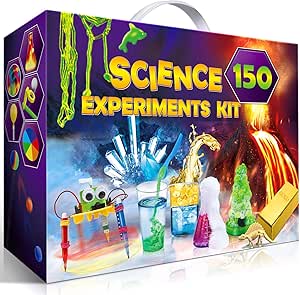
UNGlinga 150 Experiments Science Kits for Kids – Chemistry & STEM Activities
If sheer variety is the goal, this kit is hard to beat: 150 experiments spanning chemistry, physics, earth science, and surface tension for a price that undercuts bigger brands. Where the National Geographic Science Magic Kit goes deep on one theme, UNGlinga goes wide — a better fit for kids who flit between interests or siblings sharing one kit. The illustrated instruction cards are genuinely beginner-friendly, and the included child-sized tools make kids feel like real scientists rather than spectators. The catch is quality control: expect more one-and-done experiments, occasional duds, and regular trips to the kitchen cupboard for vinegar, oil, or food coloring. It’s a volume play, not a premium one.
Pros:- 150 experiments offer the longest runway of any kit in this lineup
- Spans multiple science disciplines, not just chemistry
- Kid-friendly tools and well-illustrated instructions
- Works equally well for home or classroom use
Cons:- Many experiments require supplemental household items
- Individual experiments are simpler and less memorable than themed kits
- Needs supervision for younger children
Best for: Budget-conscious families or multi-kid households that want maximum experiments per dollar
Not ideal for: Parents who want a polished, themed experience — the breadth here comes at the cost of depth and consistent quality
- Brand:UNGlinga
- Age Range:8 years and up
- Number of Experiments:150
- Topics Covered:Chemistry, physics, earth science, surface tension
- Included Components:Science experiments, tools, and materials
- Best Sellers Rank:#2,545 in Toys & Games, #24 in Educational Science Kits
Our verdict“The smart pick when you want the most experiments and topics covered for the least money, as long as you accept some supply-gathering.”
UNGlinga 70 Lab Experiments Science Kit for Kids Chemistry Set
This is the on-ramp kit: 70 experiments built around the classic wow moments — erupting volcanoes, crystal growing, fruit circuits — that reliably hook kids who’ve never done science at home. It sits neatly between the Doctor Jupiter My First Science Kit (ages 4+), which is simpler but quickly outgrown, and the UNGlinga 150 Experiments kit, which can feel sprawling for a first-timer. The instructions teach the ‘why’ behind each reaction, which matters for kids just starting to think scientifically rather than just mixing things. The drawback is longevity and component quality — the tools are basic, some experiments need household items, and there’s little here for a child who already knows their way around a test tube.
Pros:- Focuses on proven, high-impact experiments kids love
- Clear instructions with educational explanations included
- Safe, child-friendly ingredients throughout
- Well-sized trial before investing in a larger kit
Cons:- Component durability is a known weak point
- Some experiments require additional household items
- Fewer experiments than similarly priced alternatives
Best for: Kids around 8 doing their first independent science kit who need crowd-pleasing classics with clear guidance
Not ideal for: Experienced young scientists — the experiment selection is standard-issue and won’t hold attention after the first pass
- Brand:UNGlinga
- Age Range:8 years and up
- Number of Experiments:70
- Focus:Chemistry and scientific processes
- Included Components:Science experiments, manual
- Model Number:HZDZKH030
Our verdict“A confident first science kit that trades breadth for reliable, repeatable classics — great as a starter, skippable for veterans.”
Animagic Aqua Dragons Volcano Aquarium Kit with LED Light-Up Tank and Exclusive Red Aqua Dragons
Every other kit in this roundup is about reactions that end in minutes; this one is about a living ecosystem that unfolds over weeks. Kids hatch and raise prehistoric Aqua Dragons in a volcano-shaped tank with an LED lava light, learning life cycles, caretaking, and biology through daily observation rather than one-off experiments. The 6+ age rating makes it the most accessible pick here alongside the Doctor Jupiter kit for ages 4+, but unlike that kit it teaches patience and responsibility. The tradeoffs are real: hatching takes days, creatures are fragile, and the science content is narrow — there’s no chemistry or physics here. Think of it as a pet that teaches, not a lab.
Pros:- Teaches biology, ecosystems, and responsibility through a real life cycle
- LED light-up volcano tank doubles as engaging bedroom decor
- Accessible to kids as young as 6, lower than most kits here
- Everything needed to hatch and raise the creatures is included
Cons:- Hatching and growth take days to weeks, testing kids’ patience
- Fragile living creatures can die with improper care
- Setup process is more involved than a typical experiment kit
Best for: Parents of 6-8 year olds, especially animal lovers, who want slow-burn biology learning over quick experiments
Not ideal for: Impatient kids or families wanting varied experiments — this is one ongoing project, not dozens of activities
- Brand:Animagic
- Age Range:6 years and up
- Type:Live aquatic ecosystem / biology kit
- Includes:Volcano tank with lid, LED lava light, Aqua Dragons eggs, food, spoon, pipette, adoption certificate, instructions
- Creature Type:Exclusive Red Aqua Dragons
- Number of Items:1 kit
Our verdict“Choose this for a younger child who’d rather nurture a living world than mix chemicals — just be ready for a multi-week commitment.”
Science Kit for Kids, 80 Science Lab Experiments, Scientist Role Play
What separates this kit is the costume angle: it ships with goggles, gloves, test tubes, petri dishes, and droppers, so kids don’t just do experiments — they dress and act the part of a scientist. For a 6-7 year old, that role-play scaffolding often matters more than the chemistry itself, boosting focus and willingness to follow steps. Compared with the UNGlinga 70 Lab kit, this one skews younger (6+) and trades experiment sophistication for theatrical engagement and included safety gear. The rainbow rain and erupting volcano activities are visually satisfying but chemically simple, and parents should note the small parts and bottled chemicals require real supervision — this is a do-together kit, not an independent one.
Pros:- Includes real safety gear that doubles as role-play costume
- 80 experiments provide plenty of variety for the price
- Guidance cards help young kids follow steps independently
- Visual, colorful experiments like rainbow rain land well with younger children
Cons:- Small parts and bottled chemicals pose hazards without close supervision
- Experiments are simpler than those in 8+ kits like UNGlinga’s
- Role-play appeal fades quickly as kids age
Best for: Kids aged 6-8 who love imaginative play and will engage more when equipped with goggles, gloves, and lab gear
Not ideal for: Older or more advanced kids (9+) — the experiments are simple and the role-play framing will feel babyish
- Brand:Kuovei
- Age Range:6+ years
- Number of Experiments:80
- Focus:Hands-on science with role-play elements
- Included Components:Goggles, gloves, chemical materials, test tubes, petri dishes, balloons, pigments, droppers, guidance cards
- Model Number:MYJ886-A
Our verdict“Pick this when the goal is getting a young child excited to play scientist — the gear makes the difference — not for serious experiment depth.”
Doctor Jupiter My First Science Experiments Kit for Kids Ages 4+
While the National Geographic Junior Chemistry Set targets the same 4+ age group, this kit pulls ahead for the youngest learners by pairing its 100+ experiments with real lab gear scaled down for small hands — beakers, a conical flask, a funnel, and properly fitted safety goggles. That equipment matters: it turns kitchen-table chemistry into genuine role play, which is how preschoolers actually absorb science concepts. Materials meet ASTM safety standards, and the bonus experiment booklet stretches the kit well past its printed experiments. Compared with the UNGlinga 70 Lab Experiments kit, it trades raw experiment count for a gentler, more guided entry point. The tradeoff is that many activities demand a parent alongside, and the trays and beakers need dedicated storage space — this isn’t a grab-and-go toy.
Pros:- Over 100 experiments with real beakers, flasks, goggles, and tools sized for young kids
- ASTM-certified safe materials and very clear instruction manual
- Bonus experiment booklet adds long-term value
- Excellent gift-ready packaging for birthdays and holidays
Cons:- Adult supervision is required for most experiments
- Requires dedicated setup and storage space
- Content may skew easy for kids past age 7
Best for: Parents of 4-to-6-year-olds who want supervised, hands-on STEM time with real lab tools
Not ideal for: Households wanting independent play — most experiments need an adult present and organized setup space
- Brand:Doctor Jupiter
- Age Range:4 years and up
- Number of Experiments:100+
- Included Components:2 beakers, conical flask, spatula, stirring sticks, spray bottles, funnel, safety goggles, tray, food colors and additives, instruction manual, bonus booklet
- Safety Certification:ASTM safety standards
- Model Number:DJ Junior Science
- Manufacturer:Metis Learning Solutions Pvt. Ltd.
- Best Sellers Rank:#3 in Educational Science Kits
Our verdict“The strongest choice for preschoolers and kindergartners whose parents plan to do science alongside them.”
National Geographic Junior Chemistry Set with 50 Experiments for Kids
This is the budget-friendly way into the National Geographic science lineup. It costs meaningfully less than the National Geographic Amazing Chemistry Set while still delivering 20+ kid-safe lab tools and 50 illustrated experiments that children can largely follow on their own — a real advantage over the Doctor Jupiter kit, which leans on adult-led sessions. The catch is the chemistry itself: experiments rely on basic household items like baking soda and vinegar, so an 8-year-old will outgrow it quickly. That limitation is exactly why it earns a value slot rather than a top ranking — you’re paying for durable tools and a trusted brand, not for depth. If your child is younger or you’re testing whether science kits will stick at all, this is a smart, low-risk spend.
Pros:- 20+ durable, kid-safe lab tools included at a lower price than larger sets
- 50 experiments with illustrated instructions kids can follow semi-independently
- Trusted National Geographic STEM brand and curriculum design
Cons:- Relies on household chemicals, limiting experiment variety and wow-factor
- Too simple for older or experienced kids
- Some activities still need adult supervision
Best for: Budget-conscious buyers testing the waters with a 4-to-7-year-old who’s new to science kits
Not ideal for: Kids 8 and older who’ll find household-ingredient experiments too basic — step up to the Amazing Chemistry Set instead
- Brand:Blue Marble (National Geographic)
- Age Range:4 years and up
- Number of Experiments:50
- Lab Tools Included:20+ pieces including test tubes and goggles
- Educational Objective:STEM / Chemistry
- Model Number:NGJRCHEMT
- Manufacturer:JMW Sales, Inc.
- Best Sellers Rank:#3,417 in Toys & Games
Our verdict“A low-cost, low-commitment entry point that works best for younger kids and first-time science kit buyers.”
National Geographic Amazing Chemistry Set with 100+ Experiments for Ages 8-12
Where the National Geographic Junior Chemistry Set stops, this one begins. Aimed squarely at the 8-to-12 crowd, it delivers the reactions younger kits avoid — crystal growing, color-changing solutions, and genuine chemical reactions — plus a bonus guide with 85 additional experiments built from household items, pushing the total past most competitors including the Doctor Jupiter kit. The included test tubes and beakers are real scientific tools, not toys, which is what keeps older kids engaged. Two honest tradeoffs: several experiments run long (crystal growing takes days, not minutes), and younger siblings will need supervision rather than access. If your child has already burned through a beginner set and wants chemistry that actually feels like chemistry, this is the natural next step in the roundup.
Pros:- 100+ experiments including crystal growing and color-changing reactions
- Real lab tools like test tubes and beakers
- Bonus guide adds 85 household-item experiments
- Award-winning set with strong educational reputation
Cons:- Several experiments take days to complete
- Adult supervision needed for younger users
- Age range caps out around 12
Best for: 8-to-12-year-olds who’ve outgrown baking-soda kits and want real reactions and lab-style experiments
Not ideal for: Impatient kids or families wanting quick activities — some experiments span multiple days, and it’s not suited to under-8s
- Brand:Blue Marble (National Geographic)
- Age Range:8 years and up (best for 8-12)
- Number of Experiments:100+ (plus 85 bonus household-item experiments)
- Highlights:Crystal growing, chemical reactions, color-changing solutions, STEM projects
- Included Components:Test tubes, beakers, lab tools, and experiment materials
- Model Number:NGMEGACHEMAR
- Manufacturer:JMW Sales, Inc.
- Warranty:Backed by manufacturer satisfaction guarantee
Our verdict“The right upgrade for tweens ready for slower, more authentic chemistry than beginner kits can offer.”
VATOS Space Science Circuit Kits for Kids – 31PCS Electronics Exploration STEM Kit
Every other kit in this roundup is chemistry; this one teaches electrical circuits, which makes it the pick for kids who’d rather build than mix. With 31 modular ABS components snapping together into 100+ projects — a rocket launcher, a light-up astronaut, radar, even magnetic levitation — it feels closer to an electronics lab than a science kit. Compared with the National Geographic Amazing Chemistry Set, it offers more repeat-build value: once a child grasps circuit logic, they can invent projects beyond the manual. The tradeoff is thematic narrowness — if your kid doesn’t care about space, the rocket-and-astronaut framing will fall flat, and there’s zero wet-lab experimentation here. Younger builders under 8 will also need an adult for the first few projects while they learn the snap-together system.
Pros:- 100+ circuit projects teach real electrical science, not just spectacle
- Safe, durable snap-together ABS components
- Rocket launcher, light-up astronaut, and levitation builds create genuine wow moments
- Encourages open-ended building beyond the instruction manual
Cons:- Space-only theme won’t suit every child’s interests
- Younger kids need adult help for early projects
- No chemistry or life-science content at all
Best for: Space-obsessed kids 6 and up who prefer building circuits and gadgets over chemistry experiments
Not ideal for: Children drawn to fizzing, bubbling chemistry — or kids indifferent to space themes — should pick a lab kit instead
- Brand:VATOS
- Age Range:6 years and up
- Number of Projects:100+
- Number of Pieces:31 modular components
- Material:ABS plastic
- Features:Light-up astronaut, rocket launcher, radar, levitation, warning lights
- Educational Focus:Electrical circuits / STEM engineering
Our verdict“The roundup’s only electronics pick, and the clear choice for builders who’d rather wire an astronaut than grow a crystal.”
How We Picked
I evaluated each kit against four buyer-relevant criteria. Experiment quality and variety came first: a kit claiming 100+ experiments loses points if half of those are the same reaction with different food coloring. Instruction clarity mattered nearly as much, because a confusing manual turns a gift into a parent-run project. I also weighed age-appropriateness and safety — whether the chemicals, small parts, and required supervision match the stated age range — and replay value, meaning whether kids can repeat experiments with household supplies or the kit is effectively single-use.
The ranking reflects how well each kit serves its intended buyer rather than raw experiment counts. Sets that deliver distinct, repeatable activities with clear guides rank higher, while kits that inflate their numbers or rely on one-time consumables rank lower despite attractive headlines. Where two kits overlap closely, like the three chemistry sets aimed at ages 8-12, I differentiated them on equipment quality, price per experiment, and how independently a typical child can work through them.
| science experiment kits for kid | Brand | Model Number |
|---|---|---|
| UNGlinga 150 Experiments Scien | UNGlinga | — |
| UNGlinga 70 Lab Experiments Sc | UNGlinga | HZDZKH030 |
| Animagic Aqua Dragons Volcano | Animagic | — |
| Science Kit for Kids | Kuovei | MYJ886-A |
| Doctor Jupiter My First Scienc | Doctor Jupiter | DJ Junior Science |
| National Geographic Junior Che | Blue Marble (National Geographic) | NGJRCHEMT |
| National Geographic Amazing Ch | Blue Marble (National Geographic) | NGMEGACHEMAR |
| VATOS Space Science Circuit Ki | VATOS | — |
Factors to Consider When Choosing Science Experiment Kits For Kids
Before picking a specific kit, it helps to understand what actually separates a great science kit from one that ends up in a closet after one weekend. These are the factors I weighed most heavily, plus a few buying mistakes I see parents make repeatedly.Match the Kit to Your Child’s Actual Age, Not the Box
Manufacturers tend to stretch age ranges downward to widen their market, so treat the printed range as optimistic by a year or two. A chemistry set labeled for ages 8-12 typically assumes strong reading comprehension and fine motor control for measuring liquids, which many 7-year-olds don’t yet have. Kits for ages 4-6 should rely on observation and simple cause-and-effect — color changes, fizzing, growing things — rather than precise measurement. Buying above your child’s age usually backfires: the experiments fail, you end up running them yourself, and the child loses interest. Buying slightly below works far better, because a confident child who can complete activities independently will replay the kit repeatedly. Also check whether the kit contains small parts or chemicals that require adult handling regardless of the stated age.
Interrogate the Experiment Count
The biggest marketing trick in this category is inflating experiment numbers by counting variations. A kit that shows 15 base reactions might advertise ’50 experiments’ by adding different dyes or container shapes to each one. Read the manual preview or reviews to see how many genuinely different activities you’re getting — 30 distinct experiments beats 150 near-duplicates. Chemical-reaction kits also deplete: once the citric acid or baking soda runs out, the experiment count becomes theoretical unless refills use household items. Look for kits that flag which experiments need only kitchen supplies, because those effectively extend the kit’s life for free. A realistic rule: expect about half the advertised count to feel like real, memorable experiments.
Instruction Quality Determines Independence
The single best predictor of whether a kit gets used is whether a child can follow the manual without an adult hovering. Look for fully illustrated, step-by-step guides with photos of expected results, not text-heavy pages with tiny diagrams. The strongest manuals also explain why each reaction happens in kid-friendly language, which converts the activity from entertainment into actual learning. Some budget kits ship thin pamphlets with vague steps, and those consistently produce failed experiments and frustration. Before buying, check whether the manufacturer offers the manual online — you can often preview it and judge the clarity yourself. If your child is a reluctant reader, prioritize kits with picture-led instructions even if the experiment count is lower.
One-Time Fun Versus Repeatable Learning
Kits fall into two camps: consumable chemistry sets that burn through included powders, and reusable builds like circuit kits and habitats that kids return to. Neither is wrong, but mixing up the two leads to buyer disappointment. A chemistry set is a finite experience — budget roughly one to three weekends of heavy use. Circuit kits cost more upfront but keep working for years and support open-ended tinkering. Live-habitat kits like brine shrimp aquariums sit in between: the tank is reusable but the eggs and food are single-supply. If you’re gift-buying, consumable kits make a bigger opening-day impression; if you’re buying for long-term engagement, the reusable category wins clearly. Some parents pair one of each across birthdays to cover both needs.
Supervision Requirements and Mess Factor
Almost every kit in this category claims ‘adult supervision recommended,’ but the actual level of involvement varies from glancing over occasionally to actively running the experiment. Chemistry sets involving acids, colorings, or fizzing reactions tend to create the most mess and need the most oversight, so plan for a protected surface and old clothes. Electronics kits are the cleanest option and often need no supervision at all once snapping is mastered. Be honest about your own bandwidth: a kit requiring an hour of joint setup will sit unused if you can’t provide that time. Weekend kits beat after-school kits for messy chemistry, while low-mess options fill the weekday gap. Check whether the kit lists required-but-not-included items like vinegar or scissors, so you’re not caught mid-experiment.
Price Per Real Experiment, Not Price Per Box
Comparing sticker prices across kits with wildly different experiment counts is misleading. Divide the price by the number of distinct experiments, and premium sets often come out cheaper per activity than bargain boxes with padded counts. Also factor in durability: a kit with real lab tools like test tubes, stands, and measuring cylinders retains value as a toy long after the chemicals are gone, while a kit of pouches and plastic cups has zero residual value. National Geographic sets typically cost more than generic competitors but include sturdier equipment and better manuals, which is where the extra money goes. For occasional gift-giving, the cheaper generic kits are perfectly reasonable; for a child showing sustained science interest, the premium tier pays for itself in replayability.
Frequently Asked Questions
Are science experiment kits safe for kids to use alone?
Is a 150-experiment kit really better than a 50-experiment kit?
What’s the best science kit for a 5-year-old?
What happens when the chemicals run out — can kits be reused?
Which kit teaches actual science rather than just tricks?
Conclusion
For most families, the National Geographic Amazing Chemistry Set is the best overall choice: it combines genuinely distinct experiments, real lab equipment, and a manual kids can follow on their own, which is rare at this price. The UNGlinga 70 Lab Experiments Kit takes best value — it costs noticeably less than the big-box sets and skips most of the count-padding that plagues its 150-experiment sibling. On the premium side, the National Geographic Science Magic Kit with 100+ Experiments justifies its higher price with presentation-quality demonstrations that double as party tricks. For beginners, the Doctor Jupiter My First Science Experiments Kit is the safest bet for ages 4-6 thanks to its observation-based activities. And for specific needs: choose the VATOS Space Science Circuit Kit for a builder who prefers electronics over chemistry, and the Aqua Dragons Volcano Aquarium for a low-effort pet-and-habitat project that requires no experiments at all. Whatever you pick, match the kit to your child’s age and your available supervision time — those two factors predict satisfaction better than any experiment count on the box.
Fall Picks
fall essentials
As an affiliate, we earn on qualifying purchases.