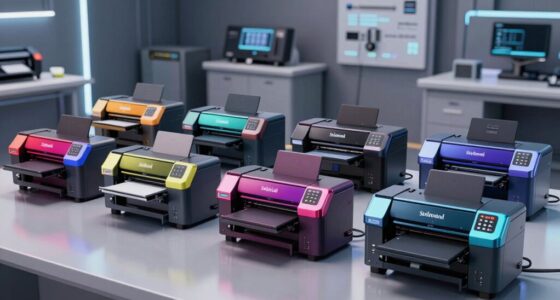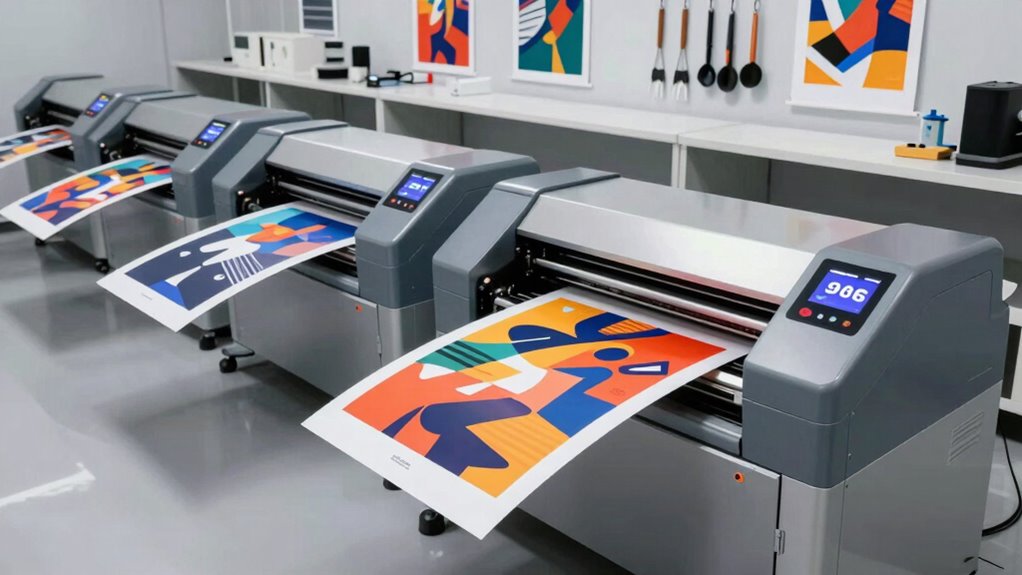

Shopping for a commercial laminator for posters means answering one question before anything else: thermal or cold? A heated roll laminator like the GBC Ultima 65 seals 3-mil thermal film with heat, delivering the glossy, durable finish most print shops associate with professional poster lamination. Manual cold-roll machines like the VEVOR 39-Inch skip heat entirely, which protects heat-sensitive materials such as vinyl, photos, and inkjet prints, but they demand physical effort and a steady crank. In this roundup, I compare one thermal option and three manual cold-roll laminators of different widths, because the real decision here isn’t brand versus brand — it’s finish type, width, and power source. My top pick for a busy print environment is the GBC Ultima 65 for its automated speed control and throughput; the VEVOR 39-inch model is my choice for shops handling oversized signage or mounting work without wanting an electric bill attached to every poster.

Prime made for students and young adults
- Fast, free delivery for dorm and study essentials
- Prime Video and Amazon Music included
- Member-only deals
Key Takeaways
- The GBC Ultima 65 is the only thermal machine here, making it the pick for high-volume, glossy-finish poster lamination — but film is sold separately.
- All three VEVOR models use a manual hand crank and cold lamination only, so they suit heat-sensitive media like vinyl and photos but not thermal pouches or heat-activated film.
- Width is the biggest price and workflow differentiator among the cold-roll machines: 25, 29.5, or 39 inches — match the machine to your largest common poster size, not your rarest job.
- Every option here accepts up to 10mm material thickness via adjustable rollers (cold models), which supports mounting posters to boards, not just encapsulating prints.
- Manual crank machines need no electricity and cost nothing to run, but they trade speed and consistency for durability and portability between locations.
| GBC Ultima 65 Thermal Roll Laminator, 27-Inch |  | Best Overall | Maximum laminating width: 27 inches | Warm-up time: Under 10 minutes | Laminating speed: Variable, with AutoSpeed | VIEW ON AMAZON | See Our Full Breakdown |
| VEVOR 39-Inch Manual Cold Laminator Machine (10mm) |  | Best for Large-Format and Mounting Work | Laminating width: 39 inches | Max material thickness: 10mm | Power source: Manual hand crank | VIEW ON AMAZON | See Our Full Breakdown |
| VEVOR 29.5-Inch Manual Cold Roll Laminator |  | Best Value Cold-Roll Machine | Working width: 29.5 inches | Operation: Manual hand crank | Laminating type: Cold roll | VIEW ON AMAZON | See Our Full Breakdown |
| VEVOR 25-Inch Manual Cold Roll Laminator | | Best Compact Pick | Maximum width: 25 inches | Maximum material thickness: 10mm | Construction: All metal | VIEW ON AMAZON | See Our Full Breakdown |
| commercial laminator for poster | Laminating type | Power | Table | Construction |
|---|---|---|---|---|
| GBC Ultima 65 Thermal Roll Lam | Thermal roll | Electric | — | — |
| VEVOR 39-Inch Manual Cold Lami | Cold roll | — | Folding | All metal |
| VEVOR 29.5-Inch Manual Cold Ro | Cold roll | No power supply required | Folding | — |
| VEVOR 25-Inch Manual Cold Roll | Cold roll | Manual; no power supply required | Folding | All metal |
More Details on Our Top Picks
GBC Ultima 65 Thermal Roll Laminator, 27-Inch
For a print shop or school media center that laminates posters every single day, this is the machine I’d put at the top of the list. The 27-inch thermal capacity covers the full range of standard poster sizes, and the AutoSpeed feature removes the guesswork that trips up less experienced operators — the machine selects an appropriate laminating speed for the document, which matters when you’re handing the machine to multiple staff members with different skill levels. Compared with the manual VEVOR models in this lineup, the Ultima 65 trades physical labor for electricity, and that trade pays off at volume: no crank fatigue, no inconsistent hand pressure, and a finish that comes out uniform across a long run.
Two operational details stand out as genuine workflow savers. The film footage counter lets you plan film orders before you run dry mid-job — a small thing that becomes a big thing the first time it prevents a stopped production line. And the EZ Load film system addresses the single most common error in roll lamination: loading film backward, which can waste an entire roll and require a lengthy cleanup. The warm-up time of under ten minutes is reasonable for a thermal machine this size, though it’s still ten minutes longer than the VEVOR cold-roll models, which are ready the moment you are.
The honest drawback: film is sold separately, and the Ultima 65 is locked into specific film types — 25- or 27-inch EZ Load Gray Cap NAP I film, or standard 1-inch core NAP I film up to 3 mil. That’s a real ongoing cost and a compatibility constraint the cold machines don’t impose as tightly. It’s also a heat-only machine, so heat-sensitive inkjet prints, vinyl, and certain photo media are off the menu. If your poster work involves those materials, the VEVOR 39-inch below is the better fit despite its manual operation.
Pros:- 27-inch width covers virtually all standard poster sizes
- AutoSpeed automates speed selection, reducing operator error across staff
- Film footage counter prevents surprise mid-job film shortages
- EZ Load film system reduces loading mistakes and film waste
Cons:- Film sold separately, adding ongoing consumable costs
- Thermal-only operation excludes vinyl and heat-sensitive media
- Warm-up time required before the first job, unlike cold machines
Best for: Schools, print shops, and offices running daily thermal lamination on standard poster sizes with multiple operators
Not ideal for: Shops working with heat-sensitive media like vinyl or inkjet photo prints, or anyone wanting a machine that runs without film purchasing commitments
- Maximum laminating width:27 inches
- Warm-up time:Under 10 minutes
- Laminating speed:Variable, with AutoSpeed
- Compatible film:25- or 27-inch EZ Load Gray Cap NAP I film; standard 1-inch core NAP I film up to 3 mil
- Film included:No
- Laminating type:Thermal roll
- Power:Electric
Our verdict“The most complete package here for high-volume poster lamination, provided thermal film matches your media and you budget for consumables.”
VEVOR 39-Inch Manual Cold Laminator Machine (10mm)
When poster jobs push past 27 inches — trade show signage, wide banners, mounted display boards — this is the only machine in the lineup that keeps up. The 39-inch working width opens up a category of work the GBC Ultima 65 simply cannot touch, and the 10mm maximum material thickness means you’re not limited to encapsulating prints: this machine can laminate onto and over mounting boards, which is a genuinely different capability than the thermal model offers. For a sign shop or framing business, that flexibility is the whole point.
The all-metal construction feels built for exactly the heavy-duty, commercial daily grind its spec sheet promises, and the soft rubber rollers are the detail that determines output quality on a cold machine — they press pressure-sensitive film smoothly onto the poster without trapping the wrinkles and air pockets that plague hard-roller designs. Because it runs on a hand crank with no electricity required, it can live anywhere in the shop, or travel to job sites, without a thought about power circuits.
The tradeoffs are the flip side of those strengths. Cranking a 39-inch roller by hand through mounted board is real physical work, and throughput will never match the Ultima 65’s automated speed — if you’re producing dozens of standard posters daily, the crank becomes the bottleneck. The footprint is also the largest here, so the folding table is a nice touch rather than a full solution. Compared with its 29.5-inch sibling, this model justifies itself only if oversized or mounted work is a regular part of your business; otherwise the smaller machine does the same job in less space.
Pros:- 39-inch width handles oversized posters and signage no other pick can
- 10mm material thickness supports mounting boards, not just film encapsulation
- All-metal construction stands up to daily commercial use
- Hand-crank operation needs no power, allowing flexible placement or job-site use
Cons:- Manual cranking is slow and physically demanding at volume
- Large footprint demands significant dedicated workspace
- Cold-only operation rules out thermal film finishes
Best for: Sign shops, framers, and display producers handling oversized posters or mounting to boards up to 10mm thick
Not ideal for: High-volume shops producing many standard-size posters quickly, or workspaces that can’t accommodate a 39-inch machine
- Laminating width:39 inches
- Max material thickness:10mm
- Power source:Manual hand crank
- Laminating type:Cold roll
- Construction:All metal
- Roller type:Soft rubber rollers
- Table:Folding
- Feet:Four non-slip rubber feet
Our verdict“The specialist’s choice — unmatched here for oversized and mounted poster work, but overkill if your jobs top out at 24 inches.”
VEVOR 29.5-Inch Manual Cold Roll Laminator
This model occupies a sweet spot in the lineup: 29.5 inches of working width is just enough to clear standard 24-by-36-inch posters with margin to spare, while the machine itself stays meaningfully smaller than the 39-inch version. That width advantage over the 25-inch sibling is the deciding factor in my ranking — 25 inches forces you to trim or turn certain posters, while 29.5 inches handles the common formats cleanly. For a small studio, classroom, or copy shop whose largest regular job is a standard poster, this is the cold-roll machine I’d point to first.
Mechanically, it mirrors the other VEVOR picks: an all-metal frame, soft rubber rollers for smooth film feed, adjustable rollers for differing material thicknesses, and a folding table for storage between jobs. The non-slip feet matter more than they sound like they would — a hand-crank machine transmits force into the frame, and a laminator that walks across the counter mid-pull ruins alignment on long posters. Stability is genuinely part of the output quality here.
What holds it back from a higher ranking is the same constraint across every VEVOR in this comparison: cold laminating only, with no heat capability, paired with the physical effort of cranking. If your clients expect the stiff, glossy thermal finish that the GBC Ultima 65 produces, no pressure-sensitive film will fully replicate it. And if you regularly handle mounted board projects, the 10mm capacity of the 39-inch model gives it a clear edge despite this machine’s friendlier footprint. This pick makes the most sense for buyers who know their work is flat, poster-sized, and heat-sensitive.
Pros:- 29.5-inch width clears standard 24-by-36-inch posters without trimming
- No power required, so it works anywhere including off-site jobs
- Adjustable rollers handle a range of material thicknesses
- Folding table and moderate footprint ease storage and placement
Cons:- Cold-only laminating; no thermal capability
- Hand-crank operation demands manual effort on long runs
- Less suited to thick mounting work than the 39-inch model
Best for: Small studios and copy shops laminating standard-size posters on heat-sensitive media, with limited space
Not ideal for: Buyers wanting thermal finishes, or shops that regularly mount to thick boards or run oversized signage
- Working width:29.5 inches
- Operation:Manual hand crank
- Laminating type:Cold roll
- Roller material:Soft rubber
- Frame material:Metal
- Roller position:Adjustable
- Table:Folding
- Power:No power supply required
Our verdict“The most balanced width-to-size ratio in the cold-roll lineup, ideal for standard poster work where heat would do more harm than good.”
VEVOR 25-Inch Manual Cold Roll Laminator
Of the four machines here, this is the one that fits in the smallest corner of a workshop, a classroom cart, or a mobile setup. The 25-inch maximum width is the practical minimum for poster work — it accommodates letter, tabloid, and 24-inch-wide poster prints, though anything wider needs the 29.5-inch sibling. If your poster output skews toward smaller formats, marketing flyers blown up to poster size, or photo prints, that narrower capacity costs you nothing and gains you floor space and easier maneuverability.
The core design is shared with the larger VEVOR models: all-metal construction, soft rubber rollers for smooth feeding, adjustable rollers for different material thicknesses, a folding table, and four non-slip feet for stability. The 10mm maximum material thickness is a standout at this size — it matches the 39-inch machine, meaning even this compact unit can handle mounted projects, which small framing operations will appreciate. Because it needs no power, it’s also the most plausible pick here for truly mobile use, such as laminating on-site at events or markets.
Its limits are defined entirely by that width. A 24-by-36-inch poster — arguably the most common poster format — cannot pass through cleanly, and trimming posters to fit a laminator wastes both material and time. Compared with the 29.5-inch model, the only real difference is capacity, and in my view the slightly larger machine is the smarter buy for most poster-focused buyers. This one is better suited to someone whose work is genuinely smaller-format, or who values the compact footprint above all else.
Pros:- Smallest footprint in the lineup, easiest to store or transport
- 10mm material thickness capacity matches the larger models for mounting work
- No power needed, making it well suited to mobile or off-site use
- Adjustable rollers and folding table add versatility for a compact machine
Cons:- 25-inch width can’t handle 24-by-36-inch posters without trimming
- Hand-crank operation requires sustained manual effort
- Cold-only; no thermal laminating capability
Best for: Studios, educators, and mobile operators laminating smaller posters, photos, and documents where space is the top constraint
Not ideal for: Anyone producing standard 24-by-36-inch posters, since the width can’t accommodate them without trimming
- Maximum width:25 inches
- Maximum material thickness:10mm
- Construction:All metal
- Rollers:Soft rubber
- Laminating type:Cold roll
- Power:Manual; no power supply required
- Table:Folding
- Feet:Four non-slip rubber feet
Our verdict“A capable compact cold-roll machine whose narrow width is a fair price for portability — as long as your posters stay under 25 inches.”

How We Picked
Because these four machines represent two fundamentally different laminating approaches, I judged each one against the specific demands of poster production rather than generic laminating tasks. The criteria I weighed most heavily: maximum width (posters routinely run 24 inches and wider, so anything narrower than 25 inches was disqualified immediately), throughput capability (a shop laminating fifty posters a day has very different needs from one doing five), and finish compatibility (thermal film gives a different result than pressure-sensitive cold film, and the right answer depends on your media).
I also factored in operational realities that spec sheets tend to bury: warm-up time, film availability and loading complexity, whether the machine needs a dedicated power circuit, and how much floor space it demands. The three VEVOR cold-roll machines forced me to think hard about width tiers, since they’re nearly identical in design apart from size — so the ranking among them came down to which width makes the most sense for the widest range of poster jobs. Finally, I held every pick to a tradeoff standard: no machine here is flawless, and I’ve called out who should skip each one rather than pretending one size fits all.
| commercial laminator for poster | Laminating type | Power |
|---|---|---|
| GBC Ultima 65 Thermal Roll Lam | Thermal roll | Electric |
| VEVOR 39-Inch Manual Cold Lami | Cold roll | — |
| VEVOR 29.5-Inch Manual Cold Ro | Cold roll | No power supply required |
| VEVOR 25-Inch Manual Cold Roll | Cold roll | Manual; no power supply required |
Factors to Consider When Choosing Commercial Laminator For Posters
Choosing a commercial poster laminator comes down to four decisions: thermal versus cold, working width, throughput, and material thickness. Here’s how I’d work through each one before spending money.Thermal vs. Cold Laminating
Thermal machines like the GBC Ultima 65 use heat to activate film adhesive, producing the rigid, glossy finish most people picture when they think of a laminated poster. Heat, however, damages vinyl, some photo papers, and certain inkjet outputs. Cold-roll machines use pressure-sensitive film instead, which is gentler on sensitive media and needs no warm-up, but produces a slightly different look and requires careful technique to avoid bubbles. Your media should make this decision for you before budget ever enters the conversation.
Working Width
Width is the single most important spec for poster work, and my advice is to size to your largest common job, not your largest imaginable one. A 25-inch machine fails on standard 24-by-36-inch posters; 29.5 inches clears them; 39 inches covers oversized signage and banners. Buying more width than you need costs you money, floor space, and crank effort for capability you’ll rarely use.
Throughput and Operation
If multiple people laminate daily and speed matters, an electric thermal machine with automated features wins — AutoSpeed and a footage counter reduce errors and downtime. If volume is low or the machine moves between locations, a manual crank model costs nothing to run, never needs a warm-up, and works anywhere. Be honest about how many posters you laminate per week; overestimating leads to paying for automation you don’t use, and underestimating leads to crank fatigue.
Material Thickness and Mounting
Adjustable rollers with a 10mm thickness capacity — standard across the VEVOR lineup — allow laminating onto mounted boards, not just encapsulating flat prints. If your business sells finished, mounted display pieces, this capability may matter more than width or automation. Check that any machine you consider specifies a thickness rating, because thermal machines are often more limited here than their cold counterparts.
Frequently Asked Questions
Can a cold laminator produce the same finish as a thermal laminator?
Not exactly, and the difference matters for client-facing work. Thermal lamination activates adhesive with heat, producing a stiff, high-gloss, fully sealed edge that most people associate with professionally laminated posters. Cold lamination uses pressure-sensitive film that adheres without heat, giving a finish that is durable and clear but slightly more flexible, with a somewhat different sheen depending on the film chosen. If your customers expect the classic rigid thermal look, a machine like the GBC Ultima 65 is the safer choice. If you’re laminating vinyl, photos, or inkjet prints that heat would damage, cold lamination isn’t a compromise — it’s the only correct option, and the finish difference is one most end viewers will never notice.
How wide should a poster laminator be?
Match the machine to the widest format you produce regularly, and add a small margin. Standard posters commonly run 18 by 24 inches or 24 by 36 inches, which means a 25-inch machine forces trimming on the larger format, while a 27- or 29.5-inch machine handles both cleanly. Oversized signage and banner work calls for something in the 39-inch range. My general recommendation for a mixed poster workload is to buy at least 27 inches, because the price gap between a 25-inch and 29.5-inch manual machine is usually small compared with the frustration of a poster that won’t fit.
Is a hand-crank laminator practical for a busy shop?
It depends entirely on volume. For a shop laminating a handful of posters a day, a manual crank machine is perfectly practical — it’s durable, free to operate, and ready instantly with no warm-up. At higher volumes, though, cranking becomes a real bottleneck: it’s physically tiring, it’s slower than a motorized feed, and consistency depends on the operator maintaining steady pressure and speed. If you’re producing dozens of posters daily or running long unattended batches, an electric machine like the GBC Ultima 65 will pay for itself in throughput alone, even accounting for its film costs and warm-up time.
What does a 10mm material thickness rating actually allow me to do?
A 10mm thickness capacity, adjustable via the rollers on the VEVOR machines, means you can pass far more than paper and film through the laminator. It opens up mounting work — laminating a print directly onto foam board, cardboard, or other rigid substrates up to that thickness — which turns the machine from an encapsulation tool into a finishing tool. That’s a different business capability entirely: a shop with mounting ability can sell finished, ready-to-hang display pieces rather than just protected prints. Thermal machines are typically much more limited in this respect, so if mounted poster output is part of your service offering, a cold-roll machine with a generous thickness rating deserves a close look.
Does the GBC Ultima 65 come ready to use out of the box?
No — film is sold separately, so you’ll need to order compatible rolls before your first job. The machine accepts 25- or 27-inch EZ Load Gray Cap NAP I film or standard 1-inch core NAP I film up to 3 mil, and I’d recommend ordering film at the same time as the machine to avoid a stalled setup. The upside is that the EZ Load system substantially reduces the risk of loading film incorrectly, which is one of the most common and costly mistakes in roll lamination, and the built-in footage counter helps you track consumption so you can reorder before running out mid-project.
Conclusion
After comparing these four machines, the right choice separates cleanly by buyer type. If you run a school media center, print shop, or busy office laminating standard posters daily with thermal film, the GBC Ultima 65 is my top recommendation — its automated speed control, footage counter, and 27-inch capacity make it the most productive machine here, provided you budget for film and don’t need heat-free operation.
If your work involves oversized signage, banners, or mounted display boards, the VEVOR 39-Inch is the only option in this lineup with the width and 10mm thickness capacity to handle it, and its no-power operation gives you placement freedom an electric machine can’t match. For the typical small studio or copy shop doing standard 24-by-36-inch posters on heat-sensitive media, the VEVOR 29.5-Inch hits the best balance of capacity and footprint — I’d choose it over the 25-inch model for most buyers, since the extra 4.5 inches is what allows full-size posters through untrimmed. Finally, the VEVOR 25-Inch earns its place for educators, mobile operators, and space-constrained workspaces whose poster output stays under 25 inches and who value portability and zero operating cost above raw capacity. Decide whether heat is a friend or an enemy to your media first, then let your widest common poster size settle the rest.
Columbus Day / Indigenous Peoples' Day Picks
long weekend sales
As an affiliate, we earn on qualifying purchases.