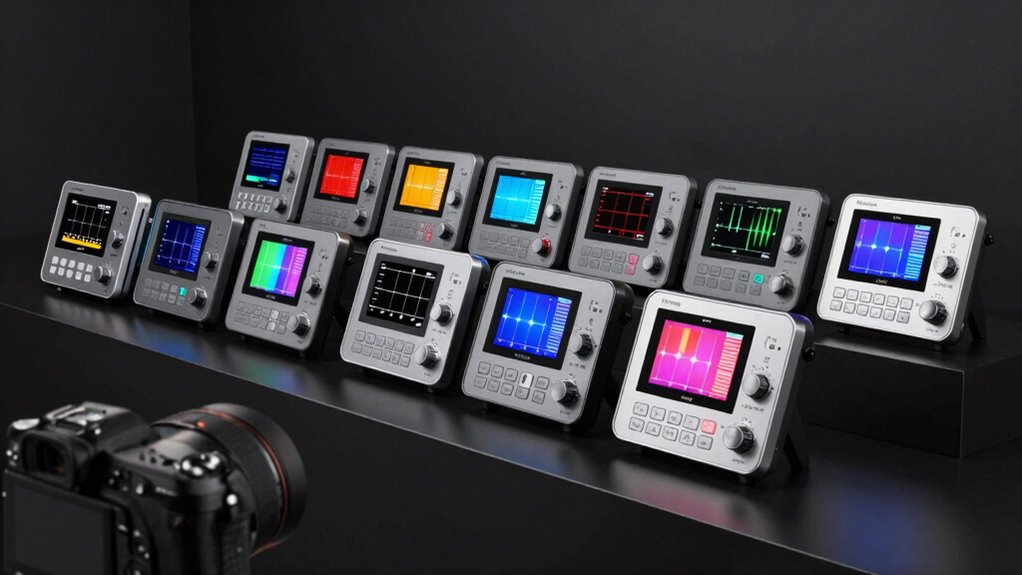

A kiln controller manages temperature and firing steps, but the right choice depends on whether you need a ready-to-connect unit or a programmable controller kit. My best overall pick is the Thermomart Programmable PID Temperature Controller with Ramp and Soak, whose 60 segments offer room for detailed firing schedules. The K2 Programmable Kiln Temperature Controller is a strong alternative for buyers who want a kiln-focused control option, while the Thermomart Plug-and-Play PID Kiln Temperature Controller, 20 A favors a simpler installation path. The main tradeoff is flexibility versus compatibility: advanced programming matters only if the controller matches your kiln’s voltage, current, sensor, and wiring. Continue reading for the full comparison and guidance on choosing a controller that fits your firing needs.

Prime made for students and young adults
- Fast, free delivery for dorm and study essentials
- Prime Video and Amazon Music included
- Member-only deals
Key Takeaways
- The 60-segment Thermomart PID leads this roundup for buyers who need detailed ramp-and-soak schedules; its programming depth is a better fit for varied firing profiles than a simpler plug-and-play unit.
- Plug-and-play convenience is not universal compatibility. Thermomart’s 20 A controller and its timer-and-breaker model may simplify setup, but buyers still need to match electrical ratings and connections to their kiln.
- The K2 controller is the clearest kiln-focused alternative to general PID kits, which may require more attention to wiring, sensors, and safe enclosure installation.
- The Happybuy kit includes a Type K thermocouple and two SSRs, making it a parts-rich option for a compatible build, though kit components do not remove the need to verify fit and electrical requirements.
- The jewelry casting burnout furnace serves a different need from standalone controllers: it is a furnace option for burnout work, not a direct substitute for upgrading an existing kiln’s control system.
| Thermomart Programmable PID Temperature Controller with Ramp and Soak, SSR Output, 60 Segments |  | Best for Complex Firing Profiles | Control method: PID with auto-tuning; ON/OFF | Output: Voltage pulse to drive SSR | Programmable segments: Up to 60: 30 ramp and 30 soak | VIEW ON AMAZON | See Our Full Breakdown |
| Thermomart Plug-and-Play PID Kiln Temperature Controller, 20 A |  | Best Plug-and-Play Pick | Model: DTXG-P&P20 | Input voltage: 120 V (North America) or 240 V (EU and Australia) | Maximum current: 20 A | VIEW ON AMAZON | See Our Full Breakdown |
| K2 Programmable Kiln Temperature Controller |  | Best for Preset Kiln Programs | Model: Oven Controller 1 | Programs: 20 total, including 14 preprogrammed | Program steps: 1–32 | VIEW ON AMAZON | See Our Full Breakdown |
| Thermomart Plug-and-Play PID Temperature Controller with Timer and Circuit Breaker |  | Best for Timed Single-Set-Point Runs | Model: CKP-DTX-P&P-DT | Input voltage: 120 V or 240 V | Maximum current: 15 A | VIEW ON AMAZON | See Our Full Breakdown |
| Happybuy Programmable Ramp and Soak PID Temperature Controller Kit with Type K Thermocouple and Two SSRs |  | Best Complete Kit for DIY Installations | Input power supply: 90–260 VAC | Controller temperature range: -200 to 1800 °C, depending on input type | Program segments: Up to 60: 30 ramp and 30 soak | VIEW ON AMAZON | See Our Full Breakdown |
| Dual-Temperature Jewelry Casting Burnout Furnace |  | Best for Jewelry Casting | Voltage: 110V/220V | Power: 1500W | Maximum temperature: 800°C listed | VIEW ON AMAZON | See Our Full Breakdown |
| Programmable Ramp and Soak PID Temperature Controller Kit with Type K Thermocouple and SSR |  | Best for Custom Kiln Builds | Controller type: Programmable ramp-and-soak PID | Program segments: Up to 60 (30 ramp and 30 soak) | Controller temperature range: -200 to 1800°C, depending on input type | VIEW ON AMAZON | See Our Full Breakdown |
More Details on Our Top Picks
Thermomart Programmable PID Temperature Controller with Ramp and Soak, SSR Output, 60 Segments
I’d choose this Thermomart controller when a kiln schedule needs more than a single target temperature: its 60 ramp-and-soak segments allow detailed, timed firing profiles. The universal input also gives it more sensor flexibility than the Type K-only Thermomart Plug-and-Play PID Kiln Temperature Controller, which may help when matching an existing setup. Auto-tuning PID control can help regulate temperature around the programmed profile, and the compact 48 × 48 mm panel format suits installations designed for that controller size.
The tradeoff is that this is a controller component, not a ready-to-use kiln power unit. Its voltage-pulse output is intended to drive an SSR, so buyers need compatible switching hardware and the knowledge to wire it safely. Its stated temperature range also depends on the selected input, so the controller’s maximum should not be mistaken for the range of every sensor.
Pros:- Supports up to 60 ramp-and-soak segments for multi-stage firing schedules.
- Accepts thermocouple, RTD, voltage, current, and resistance inputs.
- Auto-tuning PID control supports temperature regulation across programmed profiles.
- Compact 48 × 48 × 90 mm form factor fits compatible panel installations.
Cons:- Voltage-pulse output requires a compatible SSR rather than driving a heater directly.
- Temperature range varies with the selected input type.
- Requires configuration and suitable external hardware, unlike a plug-and-play controller.
Best for: Kiln owners building or upgrading an SSR-based control panel who need detailed ramp-and-soak schedules and multiple sensor input options.
Not ideal for: Buyers seeking a plug-and-play controller with a kiln probe and power hardware included, or anyone who cannot safely configure an SSR-based system.
- Control method:PID with auto-tuning; ON/OFF
- Output:Voltage pulse to drive SSR
- Programmable segments:Up to 60: 30 ramp and 30 soak
- Inputs:Thermocouple, RTD, voltage, current, and resistance
- Temperature range:-200 to 1800 °C, depending on input type
- Power supply:90–260 VAC
- Display:LCD; Fahrenheit or Celsius
- Dimensions:48 × 48 × 90 mm
Our verdict“Choose this Thermomart when detailed firing profiles and input flexibility matter more than an all-in-one installation.”
Thermomart Plug-and-Play PID Kiln Temperature Controller, 20 A
This Thermomart is the straightforward choice for a buyer who wants a ready-to-connect temperature controller rather than a panel component that needs a separate SSR. It includes a Type K ceramic kiln thermocouple, accepts a single set point, and handles loads up to 20 A. A circuit breaker, cooling fan, and audible and visual alarms add practical safeguards and alerts that the programmable K2 controller does not emphasize in the supplied specifications.
That simplicity limits firing control: unlike the K2 Programmable Kiln Temperature Controller or the 60-segment Thermomart, it does not offer ramp-and-soak programs. It suits basic temperature regulation, not carefully staged schedules. The 20 A ceiling also rules it out for higher-load kilns, and buyers need to match the specified 120 V or 240 V version to their electrical system.
Pros:- Plug-and-play design avoids assembling a separate controller and SSR setup.
- Includes a Type K ceramic kiln thermocouple that can be replaced.
- Supports readings up to 1300 °C with Celsius or Fahrenheit display.
- Circuit breaker, cooling fan, buzzer, and flasher provide built-in protection and alerts.
Cons:- One set point only; ramp-and-soak programming is not included.
- Maximum load is limited to 20 A.
- The 120 V and 240 V versions must be matched to the buyer’s supply.
Best for: Kiln owners who want a simple single-set-point controller with a supplied Type K probe, for a compatible setup drawing no more than 20 A.
Not ideal for: Artists running multi-stage firings, kilns above 20 A, or installations where the supplied Type K sensor is unsuitable.
- Model:DTXG-P&P20
- Input voltage:120 V (North America) or 240 V (EU and Australia)
- Maximum current:20 A
- Controller type:PID, one set point
- Sensor:Type K ceramic kiln thermocouple
- Temperature range:-50 to 1300 °C
- Sensor cable length:3.3 ft (1 m)
- Safety and alerts:Circuit breaker, cooling fan, buzzer, and flasher alarm
Our verdict“Pick this model for simple, probe-included temperature control, but choose the K2 or a 60-segment controller for programmed firing schedules.”
K2 Programmable Kiln Temperature Controller
The K2 stands out for buyers who want stored kiln programs without designing every schedule from scratch. It holds 20 editable programs, including 14 preprogrammed options, with as many as 32 steps per program. That makes it a more schedule-focused choice than the Thermomart 20 A plug-and-play controller, which offers only one set point. A Type K thermocouple is included, and the K2 can also work as a set-point controller when a programmed cycle is unnecessary.
Its main boundary is electrical compatibility: the standard setup is for kilns with 15 A household plugs. Higher-amperage use is possible with separately purchased parts, but adapting the system calls for electrical knowledge. Compared with the Happybuy kit, the K2 offers stored programs in a standalone controller format, while the Happybuy includes SSRs and heatsinks for buyers assembling a control setup.
Pros:- Stores 20 editable programs, with up to 32 steps each.
- Includes 14 preprogrammed schedules for several kiln applications.
- Can operate as either a programmable or set-point controller.
- Includes a quick-response Type K thermocouple and supports Fahrenheit or Celsius.
Cons:- Standard configuration is designed for kilns with 15 A plugs.
- Higher-amperage adaptations require separately purchased parts.
- Adapting it to other kiln setups requires electrical knowledge.
Best for: Craft and studio kiln owners with a 15 A plug who want editable, reusable programs for materials such as metal clay, glass, or enameling.
Not ideal for: Owners of higher-amperage kilns who want a simple, ready-made connection or lack the electrical knowledge to adapt the controller.
- Model:Oven Controller 1
- Programs:20 total, including 14 preprogrammed
- Program steps:1–32
- Supported kiln plug:15 A household plug
- Higher-amperage support:20 A, 30 A, 50 A, and other sizes with separately purchased parts
- Thermocouple:Quick-response Type K included; other types can be used
- Temperature units:Fahrenheit or Celsius
- Dimensions and weight:8 × 6 × 10 inches; 10 pounds
Our verdict“Choose the K2 if you want reusable multi-step programs for a compatible 15 A kiln and can handle any needed electrical adaptation.”
Thermomart Plug-and-Play PID Temperature Controller with Timer and Circuit Breaker
This Thermomart fills a narrower role than the 20 A Plug-and-Play PID Kiln Temperature Controller: it trades that model’s higher current limit for two configurable timers with five modes. Those timers can suit users who need timed cycles alongside one regulated temperature, without programming a multi-stage ramp-and-soak schedule. Its Type K probe and circuit breaker come in a plug-and-play package, making it less of a component-level project than the 60-segment Thermomart controller.
The limits are clear: temperature regulation uses only one set point, and the maximum load is 15 A. Its stated range tops out at 1000 °C, below the 20 A Thermomart’s 1300 °C specification. I’d skip it for higher-temperature firings, multi-step profiles, or kilns whose electrical demand exceeds its rating.
Pros:- Plug-and-play package includes a Type K kiln thermocouple.
- Two timers offer five modes for timed cycles.
- Includes a 15 A circuit breaker.
- Displays temperature in Celsius or Fahrenheit.
Cons:- Controls only one temperature set point and has no ramp-and-soak programming.
- Maximum load is 15 A, below the 20 A Thermomart plug-and-play alternative.
- Specified temperature range ends at 1000 °C.
Best for: Owners of compatible kilns drawing no more than 15 A who need a single temperature target plus configurable timer cycles.
Not ideal for: Kiln users who need ramp-and-soak schedules, temperatures above 1000 °C, or a load capacity above 15 A.
- Model:CKP-DTX-P&P-DT
- Input voltage:120 V or 240 V
- Maximum current:15 A
- Temperature range:-50 to 1000 °C
- Sensor:Type K kiln thermocouple, 6 in (15 cm)
- Sensor cable length:6.6 ft (2 m)
- Timer:Two timers, T1 and T2, with five modes
- Included components:ABS box, PID controller, timer switch, circuit breaker, SSR heatsink, and 12 V adapter
Our verdict“Choose this controller for timer-led, single-set-point operation on a compatible 15 A kiln, not for staged or higher-temperature firing.”
Happybuy Programmable Ramp and Soak PID Temperature Controller Kit with Type K Thermocouple and Two SSRs
Happybuy’s main advantage is what comes in the box: a programmable controller, Type K probe, two SSRs, and two heatsinks. For someone assembling a kiln control system, that kit approach can reduce parts hunting compared with the standalone Thermomart 60-segment controller. Both support up to 60 ramp-and-soak segments, but Happybuy also specifies 40 A SSRs, giving buyers the switching components as part of the package rather than requiring them separately.
The included probe sets the practical temperature ceiling: it measures up to 1300 °C, even though the controller’s stated range reaches higher depending on input type. The range is tied to the input selected, too. This is still a DIY control kit, not the plug-and-play Thermomart units, so installation and electrical compatibility need attention; buyers should not assume the listed SSR rating alone establishes suitability for every kiln.
Pros:- Includes the controller, Type K thermocouple, two SSRs, and two heatsinks.
- Supports up to 60 ramp-and-soak segments.
- Includes auto-tuning PID control and multiple alarm modes.
- Thermocouple length can be adjusted using ceramic insulators.
Cons:- The included thermocouple measures only up to 1300 °C, below the controller’s stated maximum.
- Controller temperature range depends on the selected input type.
- Requires DIY installation rather than offering a plug-and-play kiln connection.
Best for: DIY kiln owners assembling an SSR-based control system who want ramp-and-soak programming and key switching components in one kit.
Not ideal for: Buyers who need a plug-and-play controller, lack the skills to install control hardware, or require a probe rated beyond 1300 °C.
- Input power supply:90–260 VAC
- Controller temperature range:-200 to 1800 °C, depending on input type
- Program segments:Up to 60: 30 ramp and 30 soak
- Thermocouple:Type K; measuring range -50 to 1300 °C
- Thermocouple length and gauge:7.5 in; 11 gauge
- SSR control voltage:3–32 V DC
- Mounting dimensions:48 × 48 × 90 mm
Our verdict“Pick Happybuy when you want a 60-segment controller and included SSR hardware for a DIY installation, and its probe range suits your firing needs.”
Dual-Temperature Jewelry Casting Burnout Furnace
This is a complete burnout furnace, rather than a controller kit, making it the more direct choice for jewelry makers who need a chamber for plaster molds as well as temperature control. Its dual controllers pair manual adjustment with a programmable multi-stage cycle, while the exhaust port and wax collection design address practical needs during burnout. Compared with the Thermomart Plug-and-Play PID Kiln Temperature Controller, 20 A, this unit bundles heating hardware and a compact chamber instead of focusing on controlling an existing kiln. That convenience comes with less flexibility: its 150 × 150 × 200 mm chamber limits mold size, and the listed 800°C maximum conflicts with a program stage reaching 900°C. I would confirm the operating limit with the seller before relying on that higher stage.
Pros:- Combines a furnace chamber with manual and programmable temperature controls.
- Multi-stage heating supports scheduled plaster-mold burnout cycles.
- Exhaust port and wax collection design suit wax burnout work.
- Designed for jewelry making, metal melting, and enameling as well as burnout.
Cons:- The stated 800°C maximum conflicts with a program that includes a 900°C stage.
- The 150 × 150 × 200 mm chamber restricts mold capacity.
- At 15.8 kg, it is less portable than a standalone controller kit.
Best for: Jewelry casters who need a compact furnace with staged wax-burnout control, exhaust, and wax collection in one unit.
Not ideal for: Kiln owners seeking a controller to retrofit existing equipment, or casters whose molds require a chamber larger than 150 × 150 × 200 mm.
- Voltage:110V/220V
- Power:1500W
- Maximum temperature:800°C listed
- Chamber dimensions:150 × 150 × 200 mm
- Heating method:Resistance wire
- Controls:Dual temperature controllers; PID module
- Maximum steel bell size:4 × 7 in
- Product dimensions:400 × 330 × 410 mm
- Weight:15.8 kg (34.2 lb)
Our verdict“Choose this if you need a compact, purpose-built jewelry burnout furnace, but verify the conflicting temperature limit before using its 900°C program stage.”
Programmable Ramp and Soak PID Temperature Controller Kit with Type K Thermocouple and SSR
This kit suits builders who want to assemble a programmable kiln control system around their own heater and enclosure. It includes the PID controller, a Type K thermocouple, a 40A solid state relay, and heatsink, so the core control components arrive together; the 60 ramp-and-soak segments allow detailed firing schedules beyond a simple temperature setpoint. Compared with the Thermomart Plug-and-Play PID Temperature Controller with Timer and Circuit Breaker, this kit offers more profile programming but asks the buyer to handle installation and compatibility. Its broad controller input range should not be mistaken for the sensor’s usable range: the included thermocouple is specified only to 1300°C. I would match the sensor, relay, wiring, and kiln load to the planned firing temperatures and electrical setup before installation.
Pros:- Provides up to 60 program segments for detailed ramp-and-soak firing schedules.
- Includes a Type K thermocouple, 40A SSR, and heatsink.
- Supports Fahrenheit or Celsius display and configurable alarm modes.
- Wide controller supply range of 90–260V AC offers installation flexibility.
Cons:- Requires suitable wiring and installation rather than providing a plug-and-play kiln controller.
- Included thermocouple is rated to 1300°C, below the controller’s stated upper range.
- The 40A SSR rating alone does not confirm compatibility with every kiln load or electrical setup.
Best for: Experienced kiln owners and fabricators who can wire a control panel and want many programmable ramp-and-soak stages.
Not ideal for: Beginners seeking a ready-to-connect controller, or users whose firing temperatures exceed the included Type K thermocouple’s 1300°C limit.
- Controller type:Programmable ramp-and-soak PID
- Program segments:Up to 60 (30 ramp and 30 soak)
- Controller temperature range:-200 to 1800°C, depending on input type
- Thermocouple:Type K; -50 to 1300°C (-58 to 2372°F)
- Thermocouple length:7.5 in
- Controller power supply:90–260V AC
- Display units:Fahrenheit or Celsius
- Dimensions:48 × 48 × 90 mm
Our verdict“Pick this kit for a custom kiln installation with complex firing schedules if you can handle wiring and keep the operating temperature within the thermocouple’s rating.”

How We Picked
I ranked these options by how well they answer the practical question behind a kiln controller search: can the buyer get the firing control they need, and can they match the unit safely to their equipment? I weighed programming range, stated electrical details, included components, installation demands, and how clearly each product suits a particular job. A controller with more segments earns the lead for complex schedules, while ready-to-connect designs rank well for buyers who value a simpler setup.
The ranking also reflects important limits in the lineup. A standalone PID kit and a kiln-oriented controller are not interchangeable with a complete burnout furnace, so I judged each against its intended use rather than treating every listing as the same kind of product. I gave preference to options with a distinct buyer fit, and I treated missing compatibility details as a reason for buyers to confirm specifications before purchase—not as proof that a model will fit any kiln.
Factors to Consider When Choosing Kiln Controller
Controller features matter only when they match the kiln, firing schedule, and installation you actually have. I would start with compatibility and electrical safety, then decide how much programming control your work needs. These checks can prevent a capable controller from becoming an unsuitable or unsafe purchase.
Match Electrical Ratings Before Comparing Features
Check the kiln’s voltage, current draw, phase, and heating load against the controller’s documented ratings before choosing by segment count or convenience. A stated 20 A rating is useful information, but it does not by itself confirm compatibility with every kiln or circuit. Also check whether the controller switches the load directly or uses an external switching device such as a solid-state relay. Do not assume a plug-and-play label means the unit fits your existing outlet, wiring, or enclosure. If the listing does not give the needed electrical details, ask the seller or a qualified electrician rather than guessing. That extra check can matter more than any programming feature.
Choose a Schedule That Fits Your Firing Work
Ramp-and-soak programming lets you set temperature changes and hold periods, which can support more controlled heating and cooling routines. A higher segment count is useful when your work needs several carefully staged steps, but it can add setup complexity if you mainly run a small number of repeatable schedules. Before paying for more programming capacity, write down the firing stages you actually use and check whether the controller can store or reproduce them as needed. Confirm how the unit handles holds, temperature limits, and schedule changes; feature names alone do not describe the full workflow. A simpler controller may be easier to operate consistently for routine firings. More control is valuable when it solves a real scheduling need, not just because the specification is larger.
Treat Sensor Compatibility as a Separate Check
The temperature sensor must be compatible with both the controller input and the kiln’s operating range. A kit that includes a Type K thermocouple saves sourcing one component, but it does not prove that the sensor suits every kiln or firing application. Check the sensor type, connector, temperature limits, cable arrangement, and replacement availability. If the controller expects a different sensor, readings may be inaccurate or the unit may not function correctly. Buyers often focus on the controller’s display and overlook the sensor as a separate wear item. Confirming this detail early can make future maintenance simpler.
Decide Whether You Need a Kit or a Ready-to-Connect Unit
A kit can be a practical route when you are building or modifying a control system and can handle the required wiring and enclosure work. Included parts such as a thermocouple or SSR reduce sourcing work, but they do not establish that every component is correctly rated for your kiln. A plug-and-play controller may reduce installation steps, yet its connectors and electrical limits still have to match your setup. Do not treat either format as a substitute for safe installation or clear wiring instructions. If you are replacing a controller in an existing kiln, compare the old unit’s connections and ratings with the new unit before ordering. Buyers without electrical experience should favor a properly supported installation or ask a qualified professional for help.
Plan for Maintenance and Replacement Parts
A kiln controller is part of a system that also includes sensors, relays, wiring, and protective components. Check whether replacement thermocouples and SSRs are available and whether the controller’s documentation explains how to identify faults. A kit with more included components may be convenient at installation, but long-term support and parts compatibility still matter. Ask how the unit behaves after a power interruption and whether settings or firing programs are retained. Keep the controller away from heat and dust as directed by its instructions, since poor placement can shorten component life. A modest maintenance plan can reduce interrupted firings and make troubleshooting less uncertain.
Separate a Controller Upgrade from Buying a Furnace
A standalone controller is meant to control compatible equipment; a burnout furnace is a heating appliance for a specific process. The dual-temperature jewelry casting burnout furnace in this roundup should not be treated as a controller upgrade for an existing pottery kiln. Before choosing a furnace-style product, check chamber capacity, temperature range, power requirements, and whether its intended process matches your work. Buyers who already own a kiln should focus on controller compatibility rather than purchasing a separate appliance by mistake. Buyers starting jewelry casting may find a purpose-built furnace more relevant than a general controller kit. The distinction helps keep the comparison focused on the equipment you actually need.
Frequently Asked Questions
Can I install any of these controllers on my existing kiln?
No controller should be assumed to fit every kiln. Compare its voltage, current rating, phase, sensor input, switching method, and wiring connections with your kiln’s specifications. A plug-and-play design can make setup more direct, but it does not override electrical mismatches. If the product details do not answer those questions, get clarification before ordering. Have a qualified electrician handle installation if you are unsure about the wiring.
Do I need a controller with 60 segments?
You may benefit from 60 segments if your firing schedule uses many distinct ramps and holds or you regularly adjust profiles for different work. For a small set of simple, repeatable firings, that much programming capacity may add steps without improving your results. Compare the controller’s actual scheduling functions with the firing profiles you use, rather than treating segment count as a quality measure by itself. The Thermomart 60-segment model stands out here for schedule flexibility, while a simpler option may be easier to set up for routine use. Also check how easily programs can be entered and reused.
Is a PID controller kit suitable for a first-time kiln owner?
A kit can suit a first-time owner who has the required electrical knowledge or access to professional installation, but included parts do not make wiring automatically safe. Check whether the instructions cover the controller, thermocouple, SSR, enclosure, and protective devices as a complete system. A buyer seeking less assembly work may prefer a plug-and-play model, provided its ratings match the kiln. The K2 option may appeal to someone seeking a kiln-focused controller rather than assembling a general-purpose kit. If you are new to kiln operation, prioritize clear documentation and support over advanced settings alone.
What should I check before choosing a kit with an included thermocouple and SSR?
Confirm that the thermocouple type and temperature range suit your kiln, then verify that the SSR’s ratings match the load and control setup. Check whether the kit includes the enclosure, heat management, wiring, and protective components your installation requires; the listed parts may not cover everything. Make sure the controller accepts the included sensor and that replacement parts are available. The Happybuy kit lists a Type K thermocouple and two SSRs, while the other programmable kit lists a Type K thermocouple and one SSR, but the count alone does not establish suitability. Have an electrician review the complete setup if any ratings or connections are unclear.
Should I choose the burnout furnace instead of a kiln controller?
Choose based on whether you need to control an existing kiln or buy a separate appliance for burnout work. The dual-temperature jewelry casting burnout furnace is a furnace option, not a standalone controller for retrofitting another kiln. If you already own compatible kiln hardware, compare the controller models and verify their electrical and sensor requirements. If your work is jewelry casting, check the furnace’s capacity, temperature range, and power needs against your process. Treating these as different purchase categories helps avoid buying equipment that cannot perform the job you had in mind.
Conclusion
For the broadest programming flexibility, I recommend the Thermomart 60-segment PID as the best overall pick; it is also the best premium choice for buyers who will use detailed ramp-and-soak schedules. The Thermomart 20 A plug-and-play controller is my best-value direction for shoppers who prioritize a more direct setup, as long as its ratings match their kiln. For beginners, I would start by comparing the Thermomart timer-and-breaker model and the plug-and-play 20 A option, then choose the one with clearer fit and installation support—not simply the most features. The K2 controller is the most relevant alternative for buyers seeking a kiln-focused control unit, while the Happybuy kit suits buyers assembling a compatible system who value included components. For jewelry burnout, consider the dual-temperature furnace as a separate appliance rather than a kiln-controller replacement. Whichever route you choose, verify electrical and sensor compatibility before buying.
Halloween Picks
halloween
As an affiliate, we earn on qualifying purchases.





![Terence Tao: Math 2.0 [Pdf]](https://kellerkunst.com/wp-content/uploads/2026/10/terence-tao-math-2-0-pdf-featured-260x140.jpg)