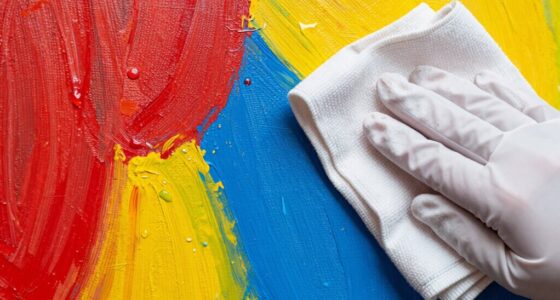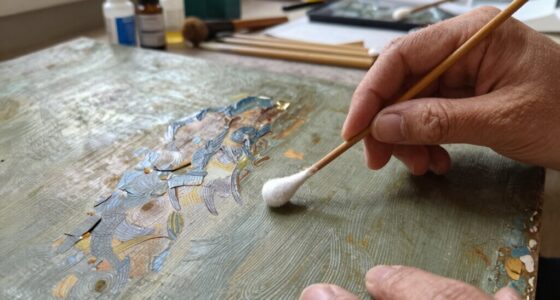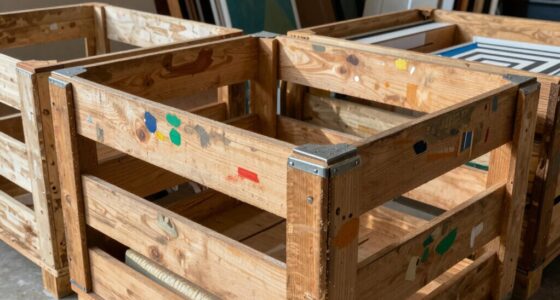
When receiving a crated artwork, start by preparing a clean, well-lit workspace with the right tools like a utility knife and gloves. Carefully inspect the crate and packaging for damages, taking photos and documenting conditions. Support the artwork from underneath as you gently remove it, avoiding pressure on fragile areas. Once uncrated, assess and photograph its condition, then handle it with care for display or storage. Continue exploring these steps to make certain safe uncrating and preservation.
Key Takeaways
- Prepare a clean, well-lit workspace with proper tools and protective gear before uncrating.
- Inspect the crate and packaging for damage, documenting their condition with photos.
- Support the artwork carefully from underneath and edges during removal to prevent stress or damage.
- Thoroughly examine, photograph, and record the artwork’s condition before handling further.
- Handle and display the artwork gently, using appropriate hardware and positioning in a stable environment.

The Army Painter Hobby Tool Kit with Glue & 6 Tools: Drill incl. 3 Bits, Knife, Side Cutter, Sculpting Tool & Green Stuff – for Warhammer & D&D Modeling Plastic, Resin & Metal Miniatures
This amazing set has been designed to give the wargamer a “one box fits all” tool kit. Includes…
As an affiliate, we earn on qualifying purchases.
As an affiliate, we earn on qualifying purchases.
Prepare Your Workspace for Uncrating
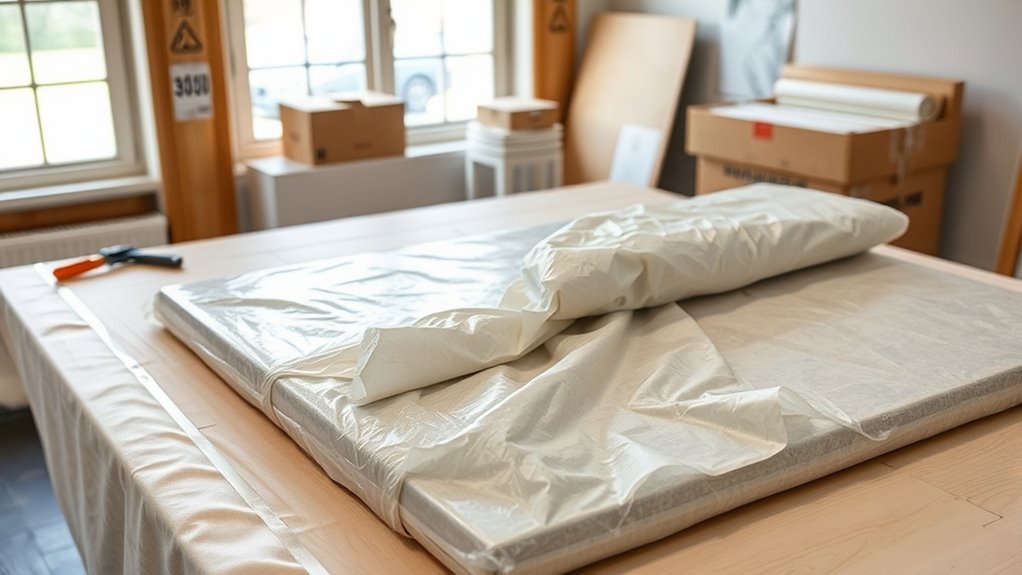
Before uncrating your artwork, you need to set up a clean, spacious workspace to guarantee safety and protect your piece. Clear the area of clutter and ensure there’s enough room to maneuver without risk of damaging the artwork or injuring yourself. Wear protective gear, such as gloves and safety glasses, to prevent any accidents during the uncrating process. Good ambient lighting is vital; it helps you see clearly and handle the packaging carefully. Make sure your workspace is well-lit but free from harsh shadows that could obscure details. Keep tools nearby for cutting and removing packaging materials. Ensuring proper air quality in your workspace helps prevent dust or particles from settling on your artwork during uncrating. Proper workspace setup also minimizes environmental risks and supports careful handling of delicate items. Creating a safe environment is essential to protect your artwork from accidental damage. Taking these steps creates a safe environment, minimizes damage, and allows you to handle your artwork with confidence and precision. Additionally, maintaining a dust-free zone helps safeguard your artwork’s surface from potential contaminants.

ENPOINT 10 Pairs Archival Photo Gloves, White Work Gloves for Handling Art Working Photography Womens Cloth Gloves Liners Bulk for Handling Jewelry, Film, Photo, Coin Metal Inspection Men & Women
Safe & Convenient to Use: The white work glove for photographs is absorb sweat, will dry your hands…
As an affiliate, we earn on qualifying purchases.
As an affiliate, we earn on qualifying purchases.
Gather the Right Tools for Uncrating Artwork
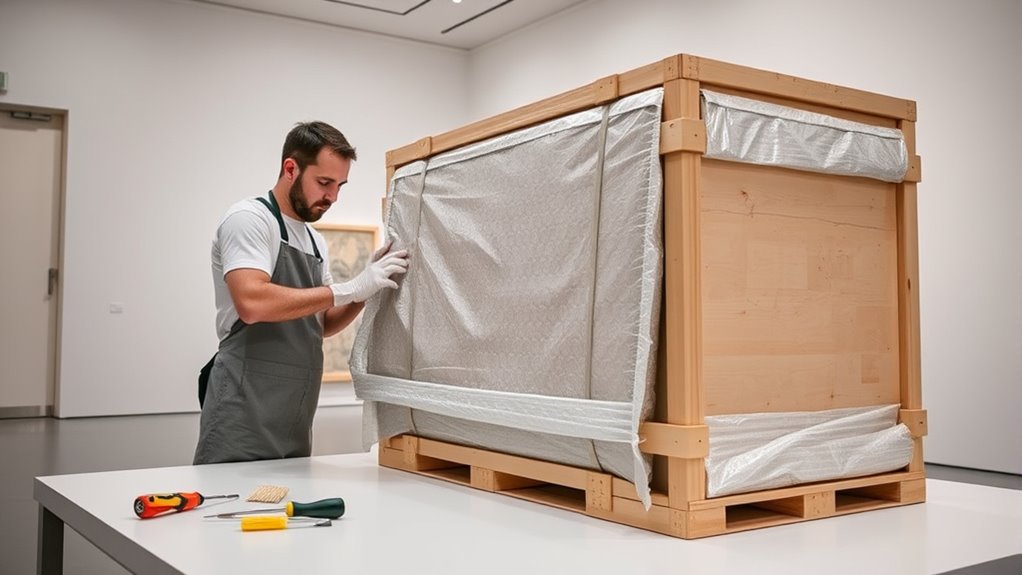
To uncrate your artwork safely and efficiently, gather all the necessary tools beforehand. Confirm you have protective gear like gloves, safety glasses, and a dust mask to prevent injuries and keep the artwork clean. Using proper handling techniques ensures the artwork remains undamaged during the uncrating process. You’ll also need basic tools such as a utility knife, screwdriver, and pliers to carefully remove crates and fasteners. A labeling system is essential—use markers or labels to identify each part of the crate, making reassembly easier and organized. Incorporating proper packaging methods can further safeguard delicate pieces during uncrating. Proper workspace organization helps prevent accidental damage and keeps the process smooth. Keep a clean workspace nearby to place packing materials and avoid clutter. Double-check that all tools are in good condition to prevent accidents. Preparing everything in advance minimizes delays and helps you focus on uncrating with care, ensuring your artwork remains safe throughout the process. Additionally, understanding artwork handling best practices can significantly reduce the risk of damage during this delicate process.
artwork inspection and photography kit
As an affiliate, we earn on qualifying purchases.
As an affiliate, we earn on qualifying purchases.
Inspect the Crate and Packaging Before Opening
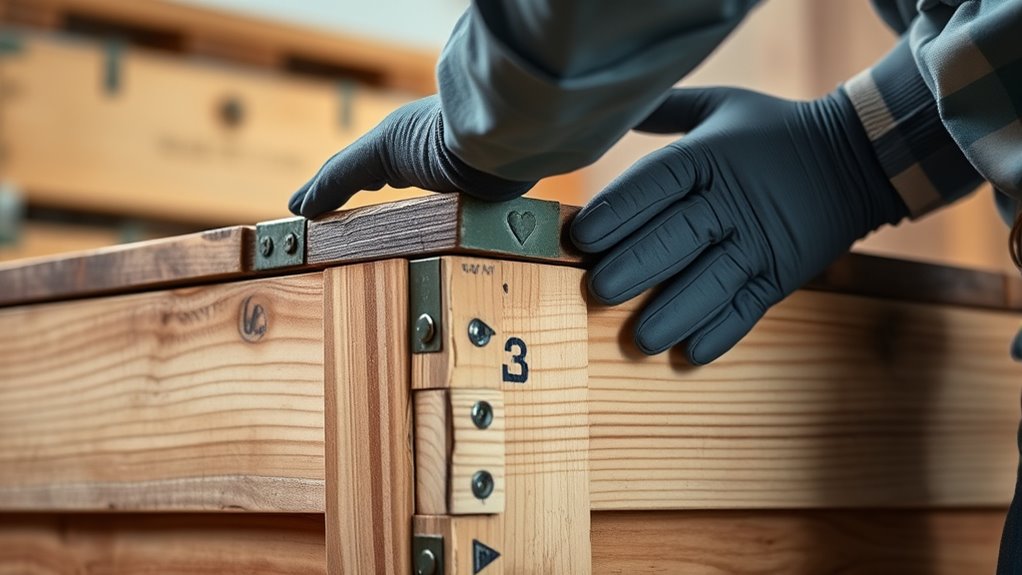
Inspecting the crate and packaging carefully is essential to guarantee your artwork’s safety before opening. Begin with a thorough crate inspection, looking for signs of damage like cracks, shifts, or punctures that could indicate mishandling. Next, analyze the packaging for tears, crushed areas, or broken seals, which may compromise the contents. Use this table to visualize your inspection:
| Crate Inspection | Packaging Analysis |
|---|---|
| Check for dents or cracks | Look for tears or punctures |
| Ensure stability and alignment | Confirm seals are intact |
| Watch for water or debris | Assess padding condition |
Additionally, verifying the shipping labels and documentation ensures the crate’s contents match your order and helps identify any discrepancies early. This step ensures you identify potential issues early, preventing damage during uncrating. Properly inspecting the crate can also reveal signs of improper handling, which might otherwise go unnoticed. Conducting a visual assessment allows you to detect subtle damages that could affect the artwork. Your careful inspection is vital for a smooth, safe uncrating process. Understanding nanotechnology applications can also help inform handling procedures for delicate or innovative materials. Additionally, being aware of home safety practices can guide you in preparing your workspace to prevent accidents during the uncrating process.

24 Pack Box Cutters, 9mm Razor Knife, Push-Sliding Button, Box Cutter Retractable, Break-off Utility Knife, Box Opener Tool for Office, Home, School, Art DIY
【What You Will Get】You will receive 24 utility knives, 2 colors. The utility knife size is 5.1×0.78 inches,…
As an affiliate, we earn on qualifying purchases.
As an affiliate, we earn on qualifying purchases.
Carefully Remove the Artwork From the Crate
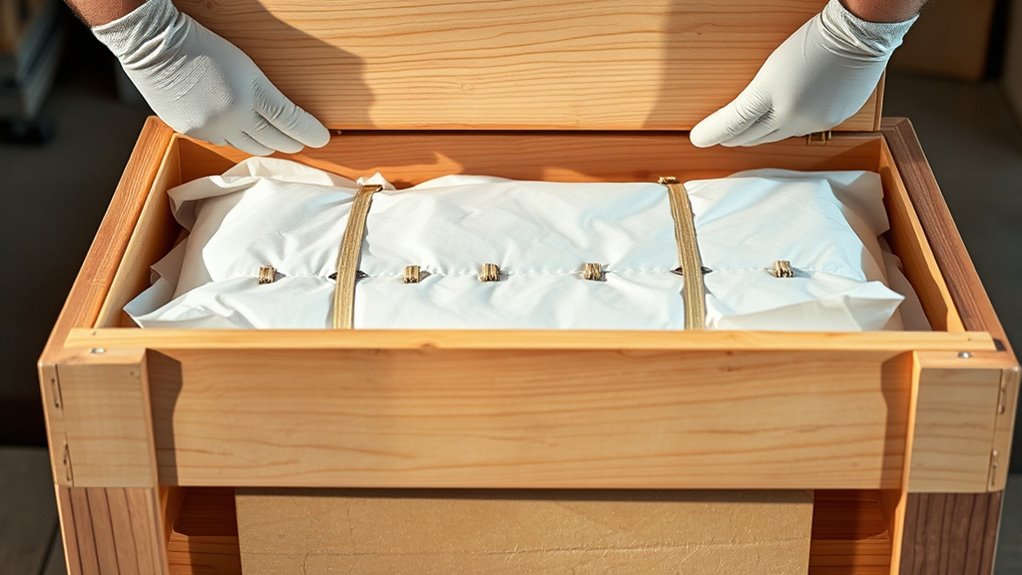
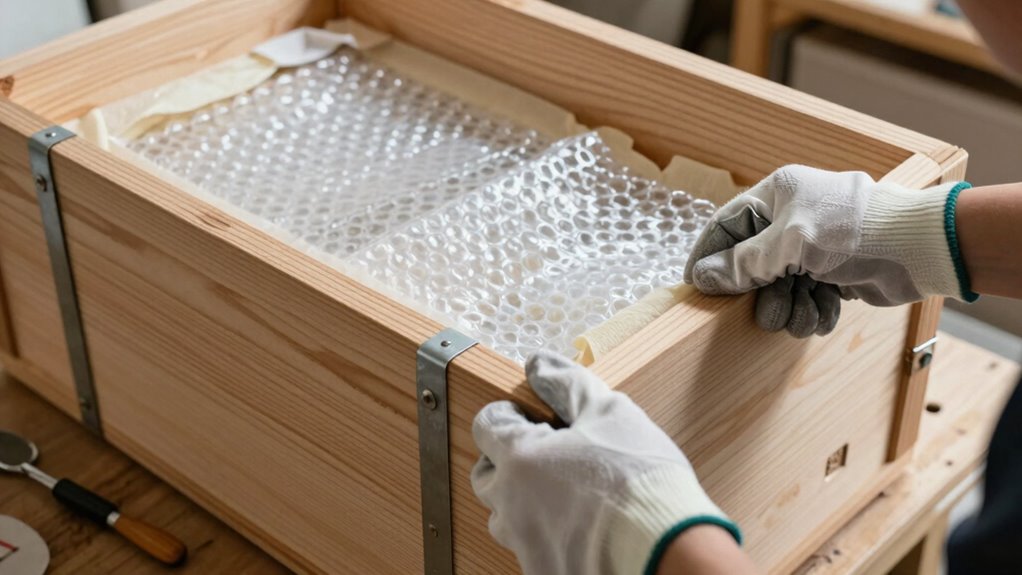
Once you’ve confirmed the crate and packaging are intact, it’s time to carefully remove the artwork. Put on protective gear, such as gloves and a dust mask, to prevent damage and guarantee safety. Proper handling techniques include supporting the artwork from underneath, avoiding any pressure on fragile surfaces. Gently loosen any securing materials or padding around the piece, taking care not to pull or tear. If necessary, work with a partner to lift larger works, maintaining a steady grip. Keep the artwork level and stable throughout the process. Move slowly and deliberately, paying close attention to any delicate areas. This careful approach minimizes the risk of damage and prepares you for the next steps in uncrating. Being mindful of artwork safety protocols ensures both your protection and the preservation of the piece. Additionally, understanding the Proper handling techniques can significantly reduce the risk of accidental damage during uncrating. Remember that appropriate protective gear plays a crucial role in safeguarding both the artwork and yourself throughout the uncrating process. Using proper lifting methods is essential to prevent strain or injury during the removal. Familiarizing yourself with safe uncrating procedures can further enhance your confidence and effectiveness in handling valuable artwork.
Check for Damage and Document the Condition
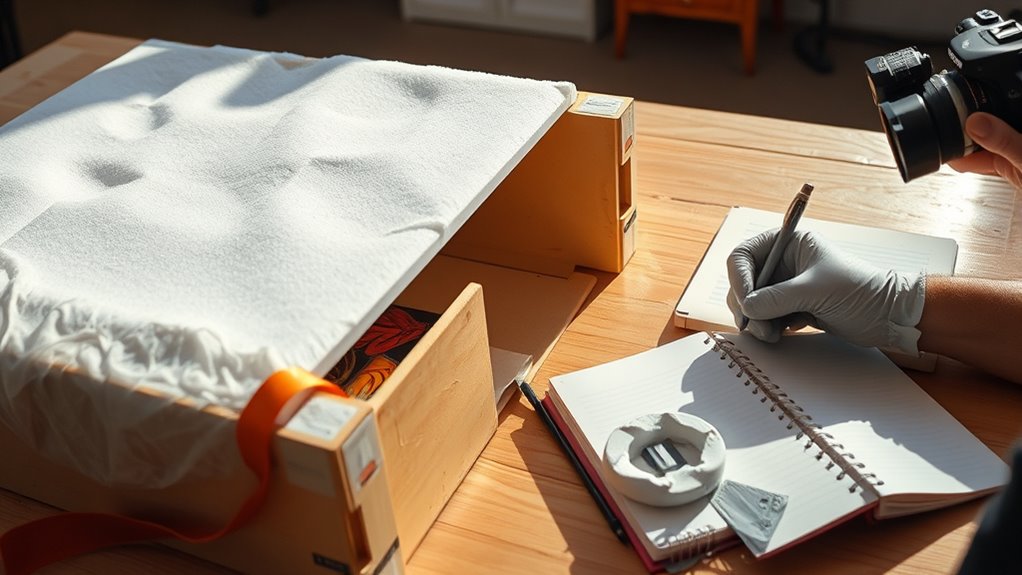
As you remove the artwork from the crate, carefully check for any visible damage or dents. Take clear photographs of its current condition to document any issues. These steps help protect your interests if future claims or repairs are needed. Additionally, inspecting for damage from crate handling can prevent overlooked issues that may worsen over time. Being aware of artwork preservation techniques can also guide you in proper handling and storage to maintain its condition. Recognizing the significance of vetted packaging and handling standards can further ensure your artwork remains in optimal condition during uncrating.
Inspect for Visible Damage
Have you thoroughly examined the artwork for any signs of visible damage? Conduct a detailed damage assessment by inspecting the entire piece, including edges and corners, for cracks, dents, or tears. Use proper documentation techniques to record your findings accurately. Note any discrepancies, such as scratches, paint loss, or warping, and take clear notes on their location and severity. It’s essential to be precise and systematic during this process to ensure nothing is overlooked. If you spot damage, document it immediately with detailed descriptions to support any insurance claims or future restoration efforts. Paying attention to proper handling techniques can help prevent further damage during inspection. Additionally, understanding the lifecycle and performance metrics of the artwork can assist in evaluating its condition over time and planning appropriate preservation measures. Regularly reviewing condition assessments can also help identify early signs of deterioration, allowing for timely interventions. Incorporating preventive conservation strategies is crucial for maintaining the artwork’s integrity over the long term.
Photograph the Artwork’s State
To accurately document the artwork’s condition, you need to photograph it thoroughly, capturing both its overall appearance and any specific damage. Use high-resolution images to guarantee details are clear, documenting areas like edges, corners, and surfaces.
Take multiple shots from different angles, including close-ups of any existing damage or irregularities. These photos are essential for artwork preservation and serve as a record if you need to file an insurance claim or assess handling techniques during unpacking.
Be systematic and organized, labeling each photo with date and details. Proper documentation helps you track the artwork’s state over time and ensures you have a visual record before any handling or adjustments.
This step protects both the artwork and your peace of mind.
Handle and Display Your Artwork Properly
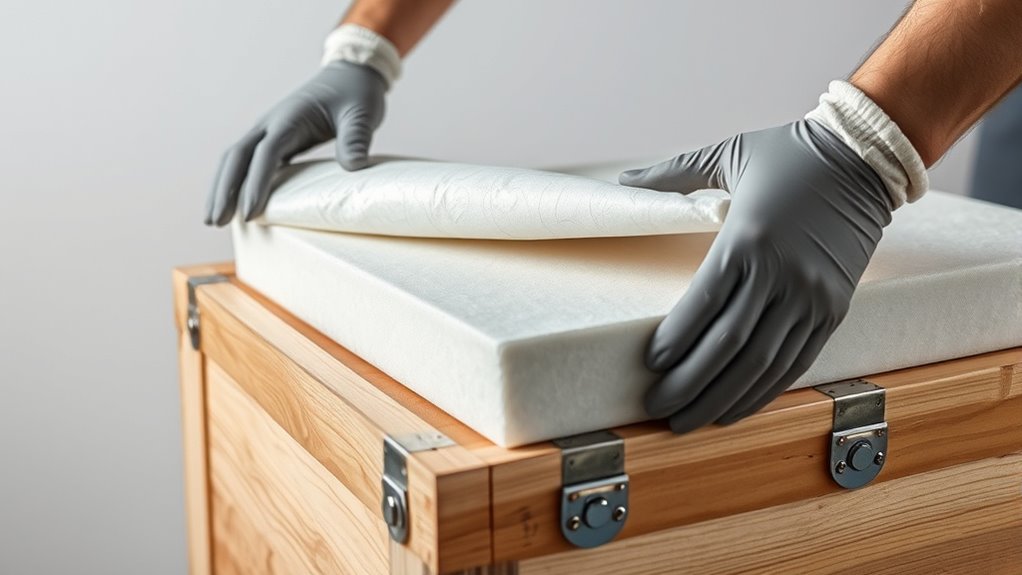
Handling and displaying your artwork carefully is essential to safeguard its condition and ensure it looks its best. Proper art handling involves supporting the piece from its edges and avoiding unnecessary contact with the surface. Use clean, dry gloves if possible to prevent oils and dirt from transferring.
When moving the artwork, keep it upright and avoid sudden movements or tilting. For display techniques, choose a stable, vibration-free location away from direct sunlight, heat, or moisture. Use appropriate hanging hardware that can support the weight, and ensure the artwork is level.
Regularly inspect the display setup to prevent accidental damage. By prioritizing careful handling and thoughtful display techniques, you preserve your artwork’s integrity and maintain its visual appeal over time.
Final Tips for Safe Uncrating Success

Ensuring a safe uncrating process starts with preparing your workspace and gathering the necessary tools. Clear the area of clutter and lay down soft padding if possible.
Handle delicate materials with care, supporting the artwork from beneath to prevent damage. As you remove packaging, take your time to avoid sudden movements that could cause harm.
Adjust to lighting gradually; avoid bright, direct light immediately, which can be harsh on sensitive pieces. Use a gentle touch when handling corners or fragile surfaces.
Keep tools organized and within reach to prevent accidental slips. If the artwork has protective coverings, remove them carefully to avoid scratches.
Following these final tips helps guarantee your uncrating is safe, preserving the artwork’s integrity and beauty from start to finish.
Frequently Asked Questions
How Do I Identify the Best Uncrating Environment?
You should assess the environment first for uncrating safety by choosing a spacious, well-lit area free of clutter and hazards. Verify the surface is sturdy and level to prevent accidents.
Check for proper ventilation and avoid areas with extreme temperatures or humidity that could damage the artwork.
An ideal environment allows for careful handling, ample workspace, and easy access to tools, making uncrating safer and more efficient.
What Are Common Mistakes to Avoid During Uncrating?
When uncrating, avoid rushing and using inappropriate uncrating tools that could damage the artwork. Don’t forget to carefully remove crating materials, like foam and packing peanuts, to prevent scratches.
Always inspect for hidden staples or nails that might harm the piece. Keep your workspace organized, and handle the artwork gently.
Using proper uncrating tools guarantees safety and preserves the artwork’s integrity, preventing costly mistakes.
How Should I Handle Fragile or Delicate Artwork?
When handling fragile or delicate artwork, you should carefully remove the protective packaging, supporting the piece from underneath to prevent stress on fragile areas.
Inspect these areas closely for any damage, and use gloves to avoid fingerprints or oils.
Take your time, and avoid rushing, guaranteeing each step is deliberate.
If you’re unsure, consider consulting a professional art handler to ensure the artwork’s safety during the uncrating process.
When Should I Seek Professional Help for Uncrating?
You should seek professional assistance when uncrating fragile or valuable artwork, especially if you’re unsure about handling it safely. Professionals understand the necessary safety precautions to prevent damage or injury.
If the crate is complex or heavy, don’t risk doing it alone. Calling in experts guarantees the artwork remains protected and the process is safe, giving you peace of mind and preserving your piece’s integrity.
How Can I Ensure Proper Storage After Uncrating?
After uncrating your artwork, you guarantee proper storage by maintaining climate control, keeping the environment stable in temperature and humidity.
Always use proper labeling on storage containers to identify the artwork and its specific needs.
Store the piece in a protected, secure area away from direct sunlight, pests, or fluctuating conditions.
Regularly monitor the storage environment to prevent damage, ensuring your artwork remains in pristine condition over time.
Conclusion
Now that you know the safe uncrating steps, you’re ready to handle your artwork with confidence. Take your time, stay attentive to details, and use the right tools and techniques to protect your piece. Remember to inspect carefully and document its condition. With patience and care, you’ll ensure your artwork arrives safely and looks stunning on display. Enjoy your new masterpiece, knowing you’ve taken the proper steps to preserve its beauty.