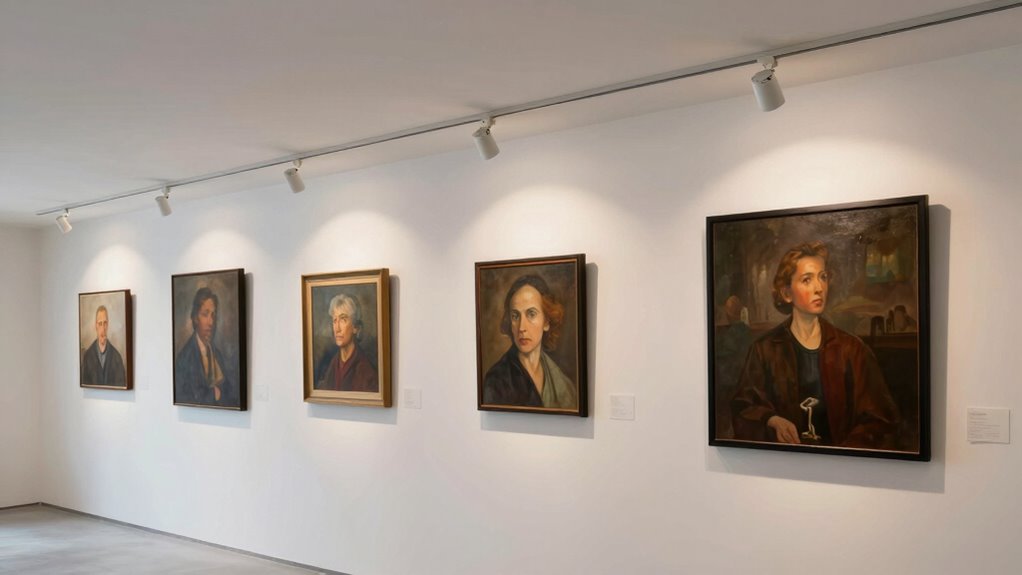

To choose the right picture lights for different artwork sizes, consider the size and style of each piece. For small artworks, opt for slim, adjustable lights mounted about 6-12 inches above the frame to prevent overshadowing details. For larger pieces, use brighter, wider coverage fixtures placed 12-24 inches above to evenly illuminate the surface. Proper positioning and beam spread are key. Keep exploring for more tips on creating the perfect display for every artwork you own.

Prime made for students and young adults
- Fast, free delivery for dorm and study essentials
- Prime Video and Amazon Music included
- Member-only deals
Key Takeaways
- Match fixture size and brightness to artwork dimensions for balanced illumination without overpowering or underlighting.
- Use proportional, unobtrusive lights for smaller pieces, and wider-beam, multiple sources for larger artworks.
- Mount lights 6-12 inches above small artwork and 12-24 inches above larger pieces for optimal coverage.
- Select adjustable, dimmable fixtures to fine-tune lighting effects based on artwork size and style.
- Consider beam spread and fixture placement to prevent glare, shadows, and uneven illumination across varying artwork sizes.
When it comes to showcasing your artwork, choosing the right picture lights can make all the difference. Proper lighting enhances colors, highlights details, and creates the desired mood in your space. To do that effectively, you need to take into account the size and type of your artwork, as well as how the light will interact with it. The key is to select lighting techniques that complement each piece and guarantee your display is both functional and visually appealing.
Choosing the right picture lights enhances artwork’s beauty and mood, ensuring a stunning, balanced display.
For smaller pieces, go for picture lights that are proportional and unobtrusive. Slim, adjustable fixtures work best because they won’t overpower the artwork or draw too much attention away from it. When installing these, keep in mind that the light should be centered or slightly above the artwork, avoiding glare or harsh shadows. Using installation tips like mounting the light approximately 6 to 12 inches above the top of the frame ensures even illumination without overwhelming the piece. Adjustable arms or dimmable lights give you more control, allowing you to fine-tune the lighting to achieve the perfect effect. Additionally, choosing fixtures with proper beam spread can help prevent light from spilling onto surrounding areas, maintaining focus on the artwork.
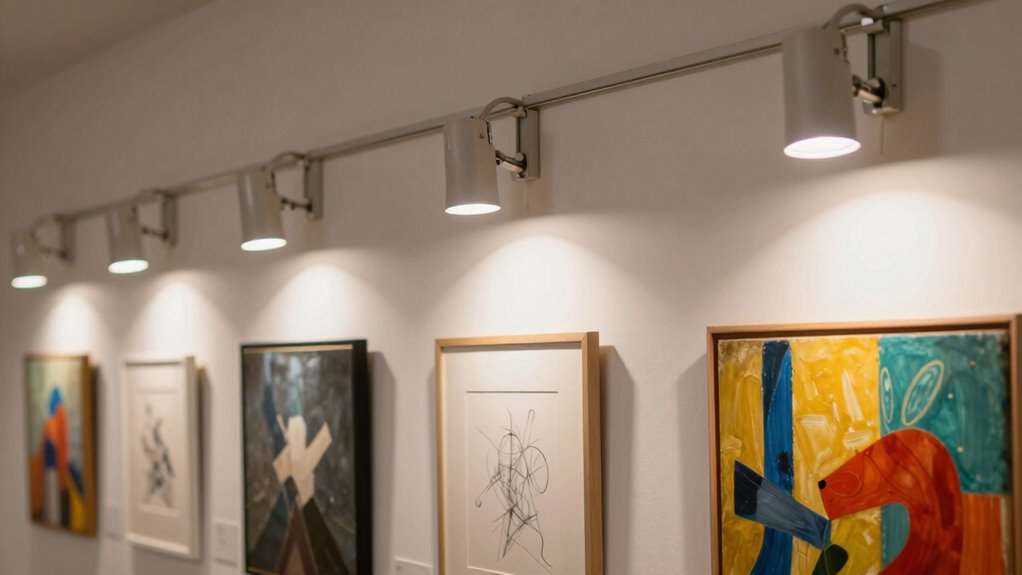
Larger artworks require a different approach. Bright, wide coverage is essential for properly illuminating the entire piece, especially if it’s a statement or focal point in your room. Consider using multiple light sources or track lighting that can be positioned to cast light evenly across the surface. When choosing fixtures, look for options with broader beams or adjustable heads so you can direct light precisely where it’s needed. Installation tips for bigger pieces often involve mounting lights about 12 to 24 inches above the artwork, ensuring the entire piece is bathed in light without creating unwanted shadows. If you’re hanging a large canvas or mural, spacing multiple lights evenly across the top or along the length of the artwork ensures consistent brightness and prevents dark spots. Additionally, understanding the lighting techniques that best suit your artwork’s style can significantly impact its presentation, whether you opt for warm white bulbs for a cozy feel or cooler tones for highlighting fine details.
Considering the color temperature of your bulbs can also influence how the artwork appears under different lighting conditions, making it an important factor in your selection process. Lighting techniques play a vital role in how your artwork is perceived. Warm white bulbs can evoke a cozy, inviting atmosphere, while cooler tones highlight details and give a modern feel. Dimmer switches are a smart addition, allowing you to adjust the light intensity depending on the time of day or mood you want to create. Remember, the goal is to enhance the artwork without overpowering it, so choose your lights carefully based on size and style. With these installation tips and thoughtful lighting techniques, you’ll be able to showcase your artwork beautifully, making every piece stand out just as you envision.
Popular right now

Hisense 75U6SF Pro 75-Inch U6 Pro Mini-LED 4K UHD Smart Fire TV

Ninja Espresso and Coffee Maker with Built-In Frother, CFN601

Vitamix Propel Series 510 Blender, 3 Programs, Slate
As an affiliate, we earn on qualifying purchases.
Frequently Asked Questions
Can Picture Lights Be Used Outdoors Safely?
Yes, picture lights can be used outdoors safely if they have proper outdoor durability and weather resistance. Look for lights specifically designed for exterior use, with features like waterproof seals and corrosion-resistant materials. These guarantee they withstand rain, humidity, and other weather conditions. Always check the manufacturer’s specifications to confirm outdoor suitability, and install them in sheltered areas if possible, to extend their lifespan and maintain safe operation.
What Are the Best Energy-Efficient Light Options?
For energy-efficient lighting, you should opt for LED bulbs or solar-powered fixtures. LED bulbs use less energy and last longer, making them eco-friendly and cost-effective. Solar-powered fixtures harness sunlight, reducing electricity use entirely. Both options provide bright, focused illumination without high energy costs. Choosing LED or solar lights guarantees you enjoy great lighting while minimizing your environmental impact and lowering your energy bills.
How Do I Install Picture Lights Myself?
You can definitely do a DIY installation of picture lights! Start by choosing the right mounting technique—either wall screws or adhesive mounts—based on your wall type and light weight. Use a level to guarantee the light is straight, then mark your holes carefully. Drill pilot holes, insert anchors if needed, and secure the fixture. With patience and proper tools, you’ll have your artwork beautifully illuminated in no time!
Are Dimmable Lights Suitable for All Artwork?
Dimmable lights are great for artwork illumination because they let you adjust brightness to highlight details or set the mood. However, they might not suit all artwork, especially if color consistency is vital. Pay attention to the light color temperature—ideally around 2700K to 3000K for warm tones or 4000K for cooler shades. This guarantees your artwork’s colors appear true and vibrant under different lighting conditions.
How Often Should I Replace or Upgrade Picture Lights?
You should replace or upgrade your picture lights every 5 to 10 years to ensure artwork preservation. Remarkably, outdated lights can emit harmful UV rays or improper light color temperature, damaging your pieces over time. Regular upgrades help maintain ideal lighting conditions, protecting your artwork’s vibrancy and integrity. Keep an eye on light performance and color consistency, and consider upgrading sooner if you notice dimming or color shifts, to safeguard your collection.
Conclusion
Now that you know how to select the right picture lights for different artwork sizes, you’re better equipped to showcase your pieces beautifully. Remember, the right lighting can make or break the display, so don’t cut corners. When in doubt, it’s wise to consult professionals or take your time to find the perfect fit. After all, a well-lit artwork can turn a good room into a showstopper — it’s worth the effort to get it just right.