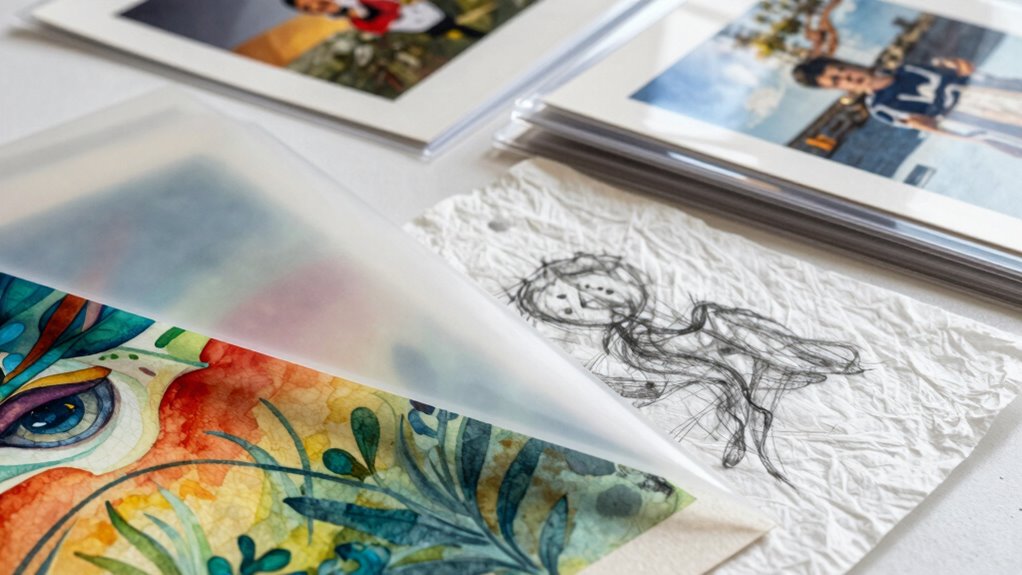

You use glassine, tissue paper, and sleeves because each offers unique protection suited to different artwork needs. Glassine’s smooth, inert surface prevents sticking, scratches, and moisture damage, making it ideal for delicate items like photographs or prints. Tissue paper cushions surfaces and prevents chemical interactions, perfect for wrapping or interleaving. Sleeves provide clear, rigid protection while allowing easy handling and viewing, ideal for storage or display. Learning more can help you choose the best options for each artwork type.

Prime made for students and young adults
- Fast, free delivery for dorm and study essentials
- Prime Video and Amazon Music included
- Member-only deals
Key Takeaways
- Glassine’s inert, semi-transparent, and breathable qualities prevent moisture buildup and chemical interactions, ideal for delicate, vintage, or fragile artworks.
- Tissue paper provides soft cushioning and chemical stability, protecting artworks with fragile surfaces or media from physical damage and abrasion.
- Sleeves made of durable, inert plastics offer clear, rigid protection, suitable for handling, storage, and display of artworks on paper.
- Different materials address specific risks: Glassine shields against moisture, tissue cushions against physical contact, sleeves safeguard during handling and transport.
- Each material’s properties—such as low friction, chemical stability, and transparency—are tailored to preserve different artwork types over time.
Protecting artwork is essential to preserving its condition and value over time, and using the right materials can make a significant difference. When it comes to safeguarding your pieces, understanding how different materials like glassine, tissue, and sleeves work is indispensable. These materials are chosen based on their conservation techniques and compatibility with various types of artwork. Proper handling guidelines ensure that your artwork remains safe during storage, transport, and display, minimizing the risk of damage.
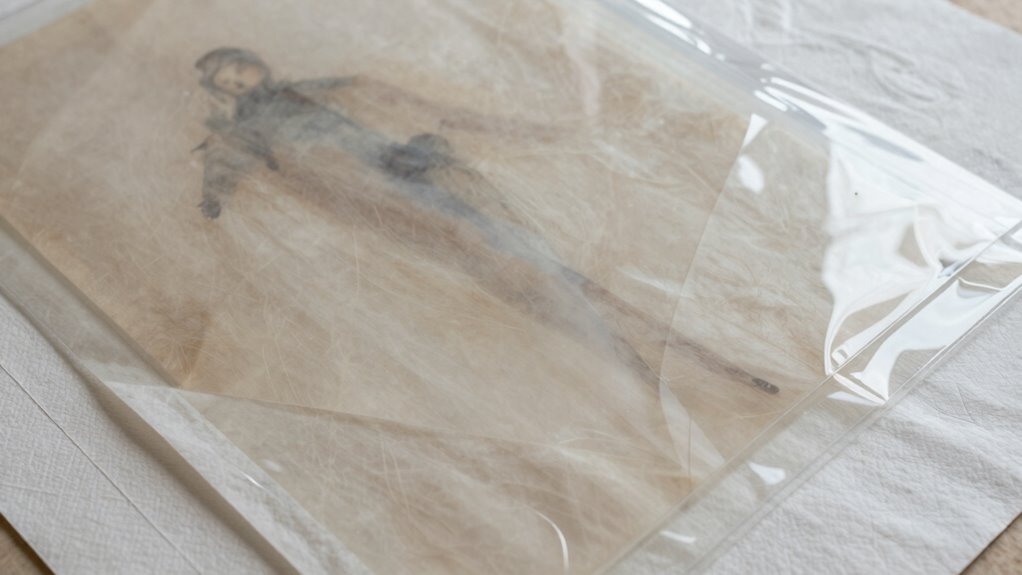
Glassine is a popular choice because of its smooth, inert, and semi-transparent qualities. Its low friction surface prevents artworks from sticking or scratching, making it ideal for delicate items like photographs, drawings, or prints. Because it’s acid-free and chemically stable, glassine doesn’t emit harmful fumes or acids that could degrade your artwork over time. Its breathability also helps prevent mold or moisture buildup, which can cause deterioration. When handling pieces wrapped in glassine, you should avoid folding or creasing the material, as this could transfer stress to the artwork. Following handling guidelines means always supporting the artwork fully and avoiding unnecessary contact with the surface, especially for fragile or sensitive media.
Glassine’s inert, semi-transparent surface protects delicate artworks from sticking, scratching, and moisture damage over time.
Tissue paper, particularly acid-free and lignin-free varieties, offers another layer of protection for artwork. It’s often used for wrapping or interleaving between pieces to prevent abrasion and chemical interaction. Tissue’s soft texture cushions the artwork, reducing the chances of tears or scratches. It’s especially useful for protecting artwork with delicate surfaces or media that could smudge or smear easily. When using tissue for conservation techniques, you should ensure that it’s acid-free to avoid acidic migration, which can cause yellowing or deterioration. Handling guidelines for tissue include avoiding excessive rubbing or pressing, which might damage the surface, and always using gloves when necessary to prevent oils from transferring onto the artwork.
Sleeves, typically made from clear polyester or polypropylene, provide a rigid yet flexible barrier that’s perfect for displaying or storing works on paper. They’re transparent, allowing you to view the artwork without removing it from storage, and they’re durable enough to withstand handling. Sleeves are especially useful for archiving or transporting artwork safely. To protect different kinds of artwork effectively, you need to select sleeves that are chemically stable and free from PVC or plasticizers that could cause long-term damage. When handling sleeves, always grip them by the edges to avoid touching the artwork directly, following handling guidelines that promote minimal contact and maximum protection.
Together, these materials—glassine, tissue, and sleeves—play fundamental roles in your conservation toolkit. Choosing the right one depends on the type of artwork and the conditions it’s stored or displayed in. By understanding conservation techniques and adhering to handling guidelines, you can guarantee your artwork remains in excellent condition for years to come.
glassine paper for artwork preservation
As an affiliate, we earn on qualifying purchases.
As an affiliate, we earn on qualifying purchases.
Frequently Asked Questions
Can Glassine Be Recycled Easily?
Yes, glassine can be recycled, but it depends on your local recycling facilities. Its environmental impact is relatively low, especially when recycled properly. The recycling process involves cleaning and reprocessing the material, which may be complicated by any adhesives or contaminants. You should check with local recycling programs to see if they accept glassine, as some facilities may not handle it due to its material composition.
Are Tissue Papers Acid-Free for All Artworks?
Tissue papers aren’t always acid-free, so you can’t assume they’re suitable for all artwork preservation. To guarantee proper material compatibility, look for tissue labeled as acid-free or pH-neutral. Acid-free tissue helps prevent deterioration, discoloration, and damage over time. Always choose preservation materials carefully, especially for valuable or delicate artworks, to maintain their condition and longevity effectively.
How Do Sleeves Prevent Artwork Damage Over Time?
Think of sleeve materials as your artwork’s shield, like a knight’s armor. They prevent dust, dirt, and handling oils from causing damage over time. For example, a well-chosen sleeve can stop the fading caused by light exposure or prevent moisture from warping delicate paper. In artwork preservation, sleeves act as a barrier, ensuring your pieces stay pristine and protected through years of display or storage.
What Is the Cost Difference Between Glassine and Tissue?
The cost comparison between glassine and tissue varies, with glassine generally being more expensive due to its material durability and smooth, archival qualities. You might find tissue to be more budget-friendly, but it’s less resistant to tearing and environmental damage. If you prioritize long-term protection, investing in glassine could be worth the extra cost, while tissue works well for lighter, short-term needs.
Can These Materials Be Used Outdoors?
While it might seem tempting, you shouldn’t use glassine, tissue, or sleeves outdoors for long-term protection. These materials lack outdoor durability and aren’t designed to withstand moisture, sunlight, or temperature changes, which can damage your artwork. Plus, using them outdoors increases environmental impact as they can break down and release pollutants. To safeguard your art outside, opt for weatherproof, UV-resistant materials specifically made for outdoor use.
acid-free tissue paper for art wrapping
As an affiliate, we earn on qualifying purchases.
As an affiliate, we earn on qualifying purchases.
Conclusion
By now, you see how each material plays an essential role in safeguarding your artwork—glassine, tissue, and sleeves each serve a unique purpose. Choosing the right protective layer depends on your piece’s needs, ensuring it stays pristine for years to come. So, next time you store or display your art, ask yourself: aren’t they worth the best protection? After all, your artwork deserves nothing less than thoughtful care.
artwork protective sleeves for prints
As an affiliate, we earn on qualifying purchases.
As an affiliate, we earn on qualifying purchases.
archival storage sleeves for photographs
As an affiliate, we earn on qualifying purchases.
As an affiliate, we earn on qualifying purchases.
Fall Picks
fall essentials
As an affiliate, we earn on qualifying purchases.