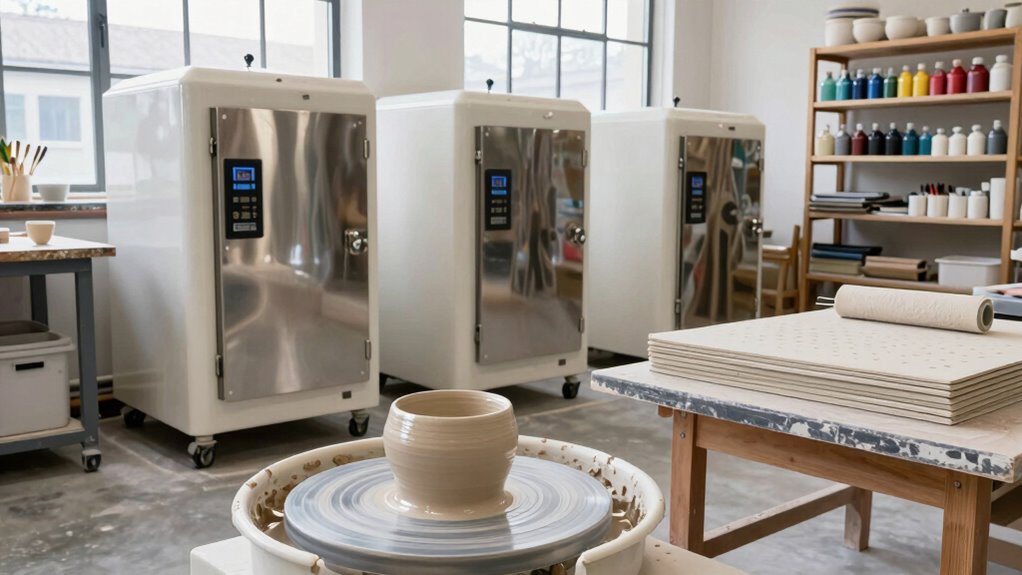
When setting up your ceramic studio, place your kiln on a stable, heat-resistant surface away from flammable materials and guarantee proper ventilation for safety. Position your wheel near a worktable with easy access to tools and water, keeping the workspace organized and ergonomic. Regularly maintain your equipment to prevent issues, and always have safety gear nearby. If you keep these tips in mind, you’ll create a safe, efficient environment—discover more tips to perfect your studio setup.
Key Takeaways
- Place kilns on stable, heat-resistant surfaces away from flammable materials, ensuring proper ventilation and easy access to safety equipment.
- Position wheels near worktables with adjustable height for ergonomic comfort and efficient workflow.
- Maintain regular cleaning and inspection of wheels, slab rollers, and kilns to ensure optimal performance and safety.
- Organize tools, materials, and safety gear for quick access, reducing clutter and hazards in the studio.
- Incorporate proper ventilation and environmental considerations to promote a safe, sustainable working environment.
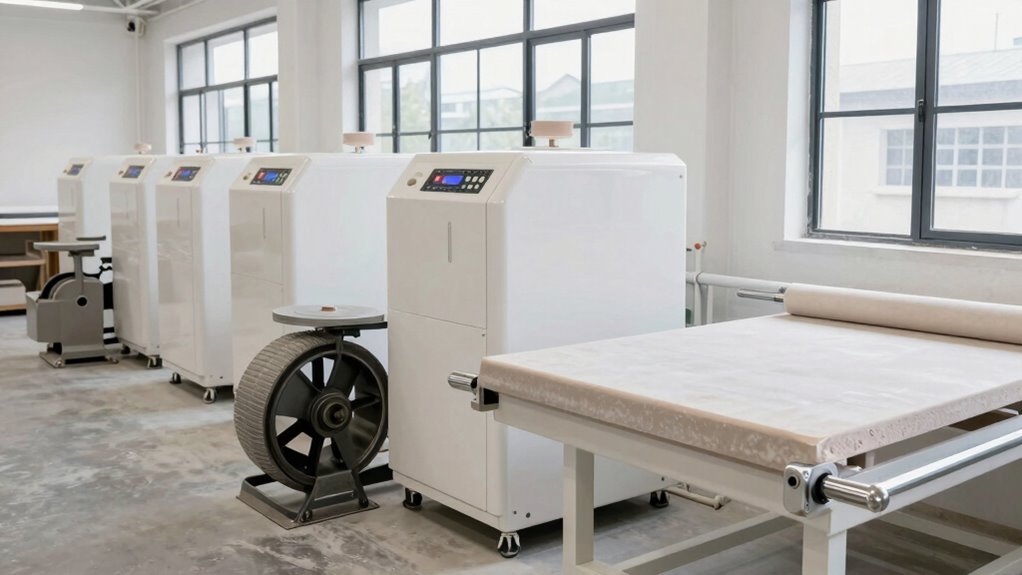
Setting up a ceramic studio can be an exciting, yet challenging task, especially if you’re new to pottery. One of your top priorities should be establishing a safe and efficient environment for working with kilns, wheels, and slab rollers. When it comes to kilns, understanding kiln safety is crucial. Always ensure your kiln is placed on a stable, heat-resistant surface, away from flammable materials. Keep a fire extinguisher nearby and regularly check for any signs of electrical issues or wear. Proper ventilation is essential during firing, so set up your kiln in a well-ventilated area to prevent harmful fumes from accumulating. Familiarize yourself with the kiln’s manual and safety protocols, including how to handle high-temperature operations safely. Never leave a firing unattended, and after each use, inspect the kiln for cracks or damage before the next firing. Proper ventilation helps ensure a safe working environment and reduces health risks associated with fumes and heat. Additionally, understanding electric kiln safety can prevent accidents and prolong the lifespan of your equipment. Incorporating safety protocols into your routine can further minimize risks and ensure a secure workspace. Recognizing the importance of environmental considerations in kiln operation can also help you adopt more sustainable firing practices. Being aware of fume extraction methods can significantly improve air quality in your studio, especially during large or frequent firings.
In addition, maintaining your wheel is just as important as safety precautions. Wheel maintenance involves regular cleaning to prevent clay buildup that could affect performance. Keep the wheel head and splash pan free of excess clay and debris, and periodically check the motor and moving parts for smooth operation. Lubricate any components as recommended by the manufacturer to avoid unnecessary wear. Consistent wheel maintenance ensures your pottery process remains smooth and predictable, reducing the risk of accidents caused by mechanical failure. When setting up your studio, position your wheel on a sturdy, level surface with easy access to water, tools, and storage. Proper ergonomics can help prevent strain and injury during long sessions, so adjust the height accordingly.
As you assemble your studio, consider the flow of your workspace. Place your wheel near your worktable for convenience, but keep enough space around your kiln for safe operation and access. Invest in quality safety equipment, including gloves, masks, and eye protection, especially when working with glazes or firing in the kiln. Organize your tools and materials efficiently so you can focus on your craft without unnecessary clutter or hazards. Remember, a well-thought-out setup isn’t just about productivity; it’s about creating a safe environment where you can focus on developing your skills and enjoying the process. With proper attention to kiln safety and wheel maintenance, you’ll set a strong foundation for your ceramic journey, making each step both safe and satisfying.

VEVOR Electric Kiln, 1500W Melting Furnace Max Temperature 2192℉/1200℃, Stainless Steel, for Wax Casting, Clay DIY, Metal Tempering, Glazing on Pottery, Silver
- Portable Desktop Design: Ideal for professional artists and DIYers
- Large Internal Chamber: Enlarged space with even heat distribution
- High Power Heating: 1500W for quick melting and firing
As an affiliate, we earn on qualifying purchases.
As an affiliate, we earn on qualifying purchases.
Frequently Asked Questions
How Much Space Is Needed for a Full Ceramic Studio?
You’ll need at least 200 to 400 square feet for a functional ceramic studio, depending on your equipment and workflow. Focus on a smart studio layout that maximizes space and promotes efficiency. Prioritize space optimization by organizing tools, clay storage, and drying areas effectively. Keep clear pathways and designated zones for different tasks to guarantee safety and productivity, making sure your studio remains comfortable and inspiring as you create.
What Safety Equipment Is Essential for Kiln Operation?
Did you know that proper safety equipment reduces kiln-related accidents by over 50%? When operating a kiln, you need protective gear like heat-resistant gloves, safety goggles, and a respirator to shield against harmful fumes. Always follow emergency procedures, such as knowing how to shut down the kiln quickly and having fire extinguishers nearby. Staying prepared guarantees your safety and keeps your studio a secure workspace.
How to Choose the Right Ventilation System?
To choose the right ventilation system, prioritize options with effective air filtration to remove harmful fumes and dust. Look for systems that offer odor control, especially near kilns, to keep your studio comfortable. Make certain it has sufficient capacity for your space and kiln size. Regular maintenance is key to keep it functioning properly. Proper ventilation safeguards your health and maintains a safe, pleasant studio environment.
What Are the Energy Costs for Running Kilns and Wheels?
Running kilns and wheels can considerably impact your studio’s energy costs, often making up 60% of total electricity use. On average, kiln operation costs $1 to $3 per firing hour, while wheels consume about $0.50 to $1.50 per hour. Prioritize energy efficiency and conduct a thorough cost analysis to minimize expenses. Investing in energy-efficient equipment can reduce your costs, making your studio more sustainable and budget-friendly over time.
How to Organize Tools and Materials Efficiently?
You should organize your tools with dedicated tool storage, such as shelves or bins, to keep everything accessible and tidy. Use clear labels on your materials so you can quickly identify clay types, glazes, and supplies. Regularly clean and maintain your storage areas to prevent clutter. This approach helps streamline your workflow, reduces frustration, and keeps your studio safe and efficient, allowing you to focus on creating.

VEVOR 14in Pottery Wheel for Adults Beginners, 0-6in Height-Adjustable, 450W Pottery Forming Machine 60-300RPM Electric Ceramic Wheel, Blue
- Large Aluminum Turntable: 14-inch diameter for large pieces
- Detachable Water Basin: Easy to clean and splash-proof
- Adjustable Height: Lift from 0 to 2 inches
As an affiliate, we earn on qualifying purchases.
As an affiliate, we earn on qualifying purchases.
Conclusion
Now that you know how to set up your ceramic studio with the right kilns, wheels, and slab rollers, you’re ready to start creating. With careful planning and smart choices, your space will inspire your best work yet. So, are you ready to turn your vision into reality and make beautiful art that truly reflects your passion? Remember, every great artist started with a well-equipped studio—why not you?

Bonoutil Manual Clay Slab Roller Machine, 12" Width Tabletop Clay Press
- Thickness Adjustment Range: 0-25mm with dedicated knobs
- Ease of Use: Smooth hand crank for effortless pressing
- Stable Construction: Heavy-duty stainless steel body
As an affiliate, we earn on qualifying purchases.
As an affiliate, we earn on qualifying purchases.

Large Microwave Kiln Kit for Glass Fusing (19.5cm) – DIY Jewelry Making Studio with COE90 Glass, Crafting Tools & Safety Gear – (Pro Glass Set)
- Large Capacity Kiln: 19.5cm size for larger projects
- Enhanced Safety & Tools: Includes safety gear and crafting tools
- COE90 Glass Starter Set: Wide variety of compatible glass pieces
As an affiliate, we earn on qualifying purchases.
As an affiliate, we earn on qualifying purchases.