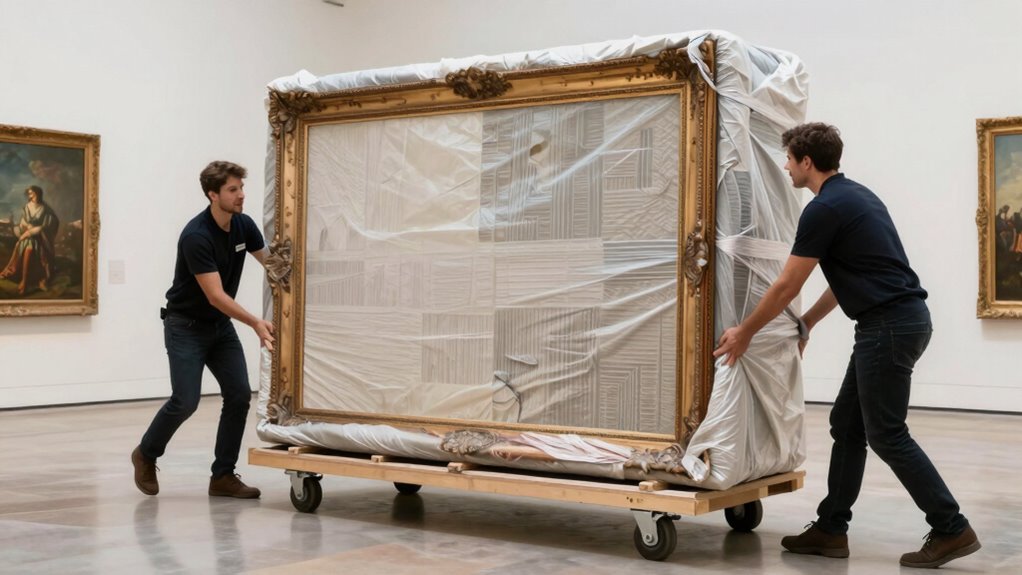

To move heavy framed works safely, start by using sturdy dollies to support the weight and keep artworks upright to avoid tipping. Wrap pieces in soft blankets or bubble wrap, securing them with tape to prevent scratches. Work with a team to lift from the bottom and sides, avoiding pressure on glass or delicate parts. Secure everything tightly with straps, making certain no sudden jolts or collisions. Keep these helpful tips in mind—there’s more to guarantee safety and protection during transport.
Key Takeaways
- Use sturdy dollies to transport heavy framed artworks upright and prevent tipping.
- Wrap artworks in blankets or bubble wrap and secure with tape to protect from scratches and impact.
- Support frames from the bottom and sides during lifting, avoiding pressure on glass.
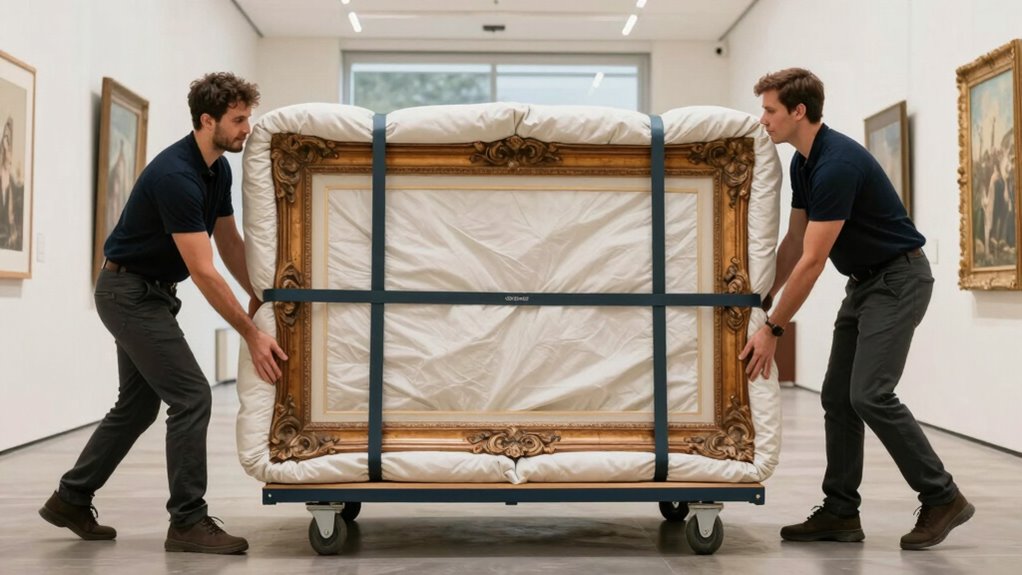
- Secure artworks with straps or ropes, ensuring a snug fit without damaging the frame.
- Coordinate teamwork, plan routes, and handle with care to minimize bumps and ensure safety.
Have you ever wondered how to move heavy framed works without risking injury or damage? It’s a common concern, especially when dealing with valuable or delicate pieces. The key is understanding the proper techniques for handling fragile glass and securing artwork during transit. With the right tools and approach, you can protect both yourself and your artwork, ensuring a smooth move from start to finish.
First, handling fragile glass requires extra caution. Before lifting, inspect the frame and glass for any existing cracks or weaknesses. When picking up the piece, always support it from the bottom and sides, avoiding pressure on the glass itself. If possible, remove glass or backing for added safety, but only if you’re experienced and confident in doing so. Otherwise, keep the entire frame intact. Cover the glass with painter’s tape in an “X” pattern—this helps prevent shards from scattering if the glass breaks during transit. Wrap the entire artwork with soft blankets or bubble wrap, securing the padding with packing tape. This extra layer of protection absorbs shocks and prevents scratches or dents. Using the correct handling techniques can make all the difference in keeping your artwork safe.
Securing artwork during transit is equally important. Use sturdy dollies designed for large, heavy objects. Place the artwork upright on the dolly—never flat—because this reduces pressure on the glass and minimizes the risk of tipping. Secure the piece with straps or ropes, making sure they’re snug but not so tight that they damage the frame. If you’re moving multiple pieces, arrange them carefully, so they don’t bump into each other. Padding between artworks can prevent scratches or other damage. Additionally, being aware of proper handling techniques can make the process safer and more efficient. Remember, proper planning and caution are essential to prevent accidents and preserve the integrity of your art pieces.

VEVOR Furniture Moving Dolly, 16 x 11in 500 lbs Capacity Furniture Movers Dollies 4 Wheels, Portable Moving Rollers Heavy Duty, Interlocking Small Flat Dolly Cart for Heavy Furniture, 2 Pack, Black
- High Load Capacity: Supports up to 500 pounds
- Interlocking Design: Stack vertically or horizontally
- 360° Swivel Wheels: Smooth, stable movement with four wheels
As an affiliate, we earn on qualifying purchases.
As an affiliate, we earn on qualifying purchases.
Frequently Asked Questions
How Do I Estimate the Weight of a Heavy Framed Artwork?
To estimate the weight of a heavy framed artwork, start with art handling techniques like checking the frame’s size and material. Use common weight estimation methods, such as comparing it to similar pieces or calculating based on known materials like wood, glass, and canvas. If unsure, weigh it on a scale or consult a professional. Accurate weight estimation guarantees you choose the right equipment and team for safe, effective handling.
What Are the Best Types of Dollies for Large Art Pieces?
Investing in sturdy, high-capacity platform dollies with smooth-rolling wheels is your best bet for large art pieces. These dollies support heavy weights and are easy to maneuver, especially when properly maintained. Regular dolly maintenance guarantees safety and smooth handling. Combining this with proper art handling techniques minimizes risks. Look for dollies with secure straps and wide bases to distribute weight evenly, making moving large artworks safer and more manageable.
How Do I Secure Artwork to Prevent Damage During Transport?
To prevent damage during transport, you should secure your artwork with ample artwork padding, like bubble wrap or foam, to cushion it from impacts. Place the protected piece into a sturdy transport crate, ensuring it fits snugly without shifting. Use straps or soft ties to hold the artwork securely inside the crate. This combination of padding and a proper crate helps safeguard your artwork from scratches, dents, and other damage during transit.
What Safety Gear Should Team Members Wear?
You must wear personal protective equipment like gloves, steel-toed boots, and back braces—it’s your armor against injury! Don’t forget to use proper lifting techniques, bending your knees and keeping the load close. This gear and these techniques turn a risky move into a smooth, safe operation. Protect yourself and your team, because even the strongest can be vulnerable without the right safety gear and proper lifting methods.
How Do I Handle Fragile or Delicate Frames?
When handling fragile or delicate frames, you should carefully handle glass components to prevent breakage. Use cushioning to protect fragile edges, like foam or bubble wrap, wrapping securely around the frame. Always lift with teamwork, keeping a steady grip and avoiding sudden movements. By handling glass components gently and cushioning fragile edges, you minimize the risk of damage and guarantee safe transport of delicate artwork.
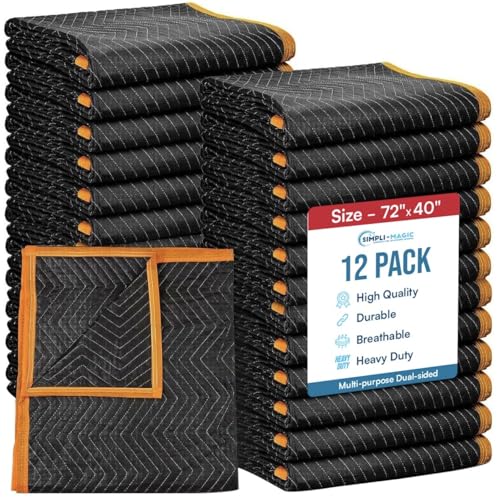
Simpli-Magic Heavy Duty Padded Moving Blankets 72" x 40" – 12 Pack – Packing Blankets, Furniture Covers for Moving
- Professional-grade: Oversized, 72" x 40" premium…
- Superior cushioning: Constructed with thick, padded recycled…
- Durable: Weighing approximately 2-3/4 pounds apiece,…
As an affiliate, we earn on qualifying purchases.
As an affiliate, we earn on qualifying purchases.
Conclusion
By using the right tools and teamwork, you can move heavy framed works safely and efficiently. Imagine a gallery curator carefully lifting a large, fragile painting with a dolly, blankets, and a team of helpers — avoiding damage and injury. Remember, proper planning and communication are key. When everyone’s on the same page, you’ll protect both your artwork and yourself, ensuring every move is smooth and secure.
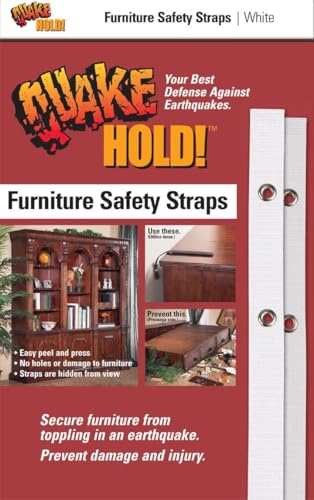
QuakeHold! 4164 Furniture Strap Kit, Anti Tip Protection, White
- Secure Heavy Furniture: Helps stabilize bookcases and cabinets
- Flexible Nylon Straps: Allows controlled movement during earthquakes
- Versatile Safety Use: Suitable for home, office, and child safety
As an affiliate, we earn on qualifying purchases.
As an affiliate, we earn on qualifying purchases.

wanguagua Bubble Packing Moving Wrap, 12 Inch x 72 ft Total, 2 Pack
- Thick multi-layer cushioning: Absorbs shocks during handling and transit
As an affiliate, we earn on qualifying purchases.
As an affiliate, we earn on qualifying purchases.