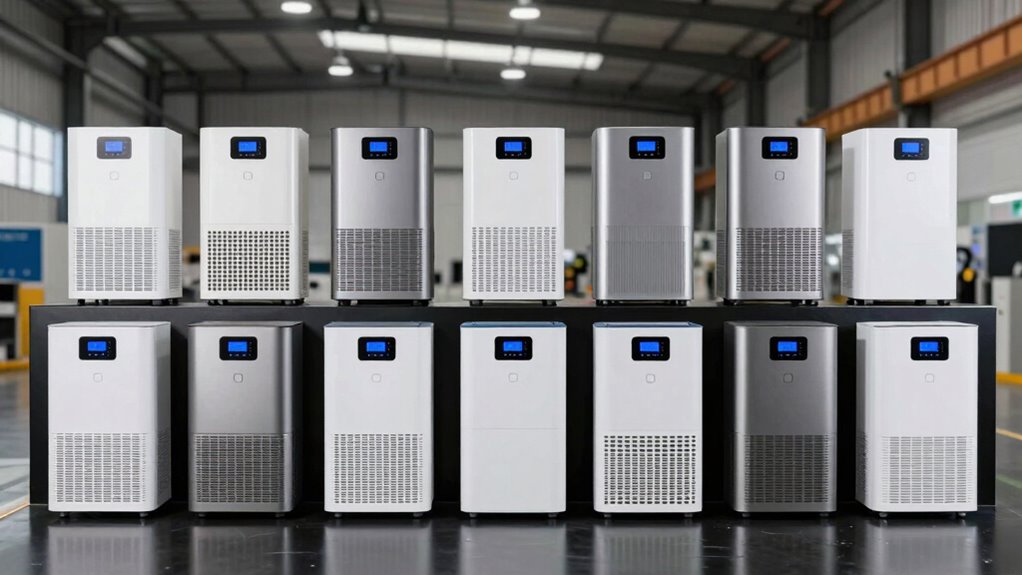

For most buyers seeking a commercial dehumidifier, the Moiswell 200-Pint is my best overall pick for its balance of substantial capacity and a built-in pump. The Waykar 150-Pint is a more approachable choice for moderate jobs, while the MOUNTO 310-Pint LGR is aimed at demanding restoration work. The main tradeoffs are moisture removal under your actual conditions, pump and drain setup, and how much capacity and portability your site needs. A larger pint rating alone does not guarantee faster drying in every space. Continue reading for the full breakdown of how these 14 options differ and which buyer each one suits.

Prime made for students and young adults
- Fast, free delivery for dorm and study essentials
- Prime Video and Amazon Music included
- Member-only deals
Complete the kit


Key Takeaways
- The Moiswell 200-Pint occupies the middle ground: it offers more capacity than the 145- to 155-pint options without jumping to the largest job-site units.
- The MOUNTO 310-Pint LGR and Moiswell VP320 target high-demand drying; their large capacities make more sense for restoration crews than for routine damp-room control.
- Built-in pumps appear across much of this lineup, but buyers still need to check lift height, hose routing, and whether gravity drainage is available at the installation site.
- The AEOCKY RHEA-003 is the residential-style outlier, with an 8,000-square-foot claim and an Energy Star Most Efficient 2025 designation; it should not be assumed equivalent to a job-site LGR unit.
- Capacity labels span a wide range, from 145 to 310-plus pints per day; the comparison makes operating conditions and intended workload as important as the headline number.
| AEOCKY RHEA-003 Energy Star Most Efficient 2025 Dehumidifier, 8,000 sq. ft. |  | Best for Energy-Conscious Large Spaces | Model: RHEA-003 | Coverage area: Up to 8,000 sq. ft. | Capacity: 140 pints/day at 95°F, 95% RH; 95 pints/day at 86°F, 80% RH | VIEW ON AMAZON | See Our Full Breakdown |
| Aegis H150 155-Pint Commercial Dehumidifier with Cycle Timer |  | Best for Scheduled Continuous Drainage | Model: H150 | Moisture removal: Up to 155 pints/day at saturation; 70 pints/day AHAM | Recommended / maximum area: 2,500 / 6,500 sq. ft. | VIEW ON AMAZON | See Our Full Breakdown |
| Waykar 150-Pint Commercial Dehumidifier with Pump and Drain Hose |  | Best for Flexible Drainage | Moisture removal capacity: Up to 150 pints/day | Coverage area: Up to 7,000 sq. ft. | Humidity range: 30%–80% | VIEW ON AMAZON | See Our Full Breakdown |
| 145-Pint Commercial Dehumidifier with Built-In Pump |  | Best for Smaller Commercial Rooms | Maximum capacity: 145 pints/day at 90°F and 90% RH | AHAM capacity: 60 pints/day at 80°F and 60% RH | Coverage area: 1,500 sq. ft. | VIEW ON AMAZON | See Our Full Breakdown |
| Airzentti 155-Pint Commercial Dehumidifier with Pump and Drain |  | Best for Elevated Drain Access | Moisture removal capacity: 155 pints/day | AHAM capacity: 70 pints/day | Floor area: 7,500 sq. ft. | VIEW ON AMAZON | See Our Full Breakdown |
| Moiswell 200-Pint Commercial Dehumidifier with Built-In Pump |  | Best for Mid-Scale Restoration | Maximum moisture removal: Up to 200 pints per day | AHAM capacity: 90 pints | Pump lift: Up to 16.4 feet | VIEW ON AMAZON | See Our Full Breakdown |
| Moiswell 260-Pint Commercial Dehumidifier with Pump |  | Best for Large Warehouses | Maximum dehumidification capacity: 260 pints per day | AHAM capacity: 110 pints per day | Pump lift: 16.4 feet | VIEW ON AMAZON | See Our Full Breakdown |
| MOUNTO 310-Pint LGR Commercial Dehumidifier with Built-In Pump |  | Best for High-Capacity Restoration | Capacity at saturation: 310 pints per day | Capacity at AHAM conditions: 165 pints per day | Power draw: 10.5 A | VIEW ON AMAZON | See Our Full Breakdown |
| Moiswell VP320 Commercial Dehumidifier with Pump, 305-Pint Capacity |  | Best for High-Airflow Coverage | Maximum capacity: 305 pints per day | AHAM capacity: 130 pints per day | Coverage area: Up to 8,500 sq. ft. | VIEW ON AMAZON | See Our Full Breakdown |
| AlorAir Storm 80X Commercial Dehumidifier with Pump |  | Best Compact Commercial Pick | Capacity at AHAM conditions: 80 pints per day | Capacity at saturation: Up to 170 pints per day | Airflow: 200 CFM | VIEW ON AMAZON | See Our Full Breakdown |
| TURBRO 165-Pint Commercial Dehumidifier with Pump |  | Best for Broad-Area Coverage | Coverage area: Up to 7,500 sq. ft. | Moisture removal: Up to 165 pints per day | Airflow: 276 CFM | VIEW ON AMAZON | See Our Full Breakdown |
| Abestorm 180-Pint Commercial Dehumidifier with Pump |  | Best for Cold-Site Work | Capacity at saturation: Up to 180 pints per day | Capacity at AHAM: 85 pints per day | Coverage area: Up to 2,300 sq. ft. | VIEW ON AMAZON | See Our Full Breakdown |
| Abestorm 190 PPD LGR Commercial Dehumidifier with Pump |  | Best for Rugged Restoration Jobs | Type: LGR commercial dehumidifier | Capacity at saturation: 190 pints per day | Capacity at AHAM: 90 pints per day | VIEW ON AMAZON | See Our Full Breakdown |
| SereneLife Industrial Dehumidifier, 180 Pints per Day, with Pump and Drain Hose |  | Best for Quieter Shared Spaces | Technology: Low Grain Refrigerant (LGR) | Moisture removal: Up to 180 pints per day | Airflow: 300 CFM | VIEW ON AMAZON | See Our Full Breakdown |
| commercial dehumidifier | Coverage area | Airflow |
|---|---|---|
| AEOCKY RHEA-003 Energy Star Mo | Up to 8,000 sq. ft. | — |
| Aegis H150 155-Pint Commercial | — | 253 CFM |
| Waykar 150-Pint Commercial Deh | Up to 7,000 sq. ft. | — |
| 145-Pint Commercial Dehumidifi | 1,500 sq. ft. | 132 CFM |
| Airzentti 155-Pint Commercial | — | 220 CFM |
| Moiswell 200-Pint Commercial D | — | — |
| Moiswell 260-Pint Commercial D | — | — |
| MOUNTO 310-Pint LGR Commercial | — | — |
| Moiswell VP320 Commercial Dehu | Up to 8,500 sq. ft. | 412 CFM |
| AlorAir Storm 80X Commercial D | 2,100 sq. ft. | 200 CFM |
| TURBRO 165-Pint Commercial Deh | Up to 7,500 sq. ft. | 276 CFM |
| Abestorm 180-Pint Commercial D | Up to 2,300 sq. ft. | — |
| Abestorm 190 PPD LGR Commercia | — | — |
| SereneLife Industrial Dehumidi | Up to 2,300 sq. ft. | 300 CFM |
More Details on Our Top Picks
AEOCKY RHEA-003 Energy Star Most Efficient 2025 Dehumidifier, 8,000 sq. ft.
The RHEA-003 pairs the broadest stated coverage in this group with an ENERGY STAR Most Efficient 2025 certification, making it a strong fit for large spaces where ongoing operation matters. Its capacity is listed at 140 pints per day in very humid conditions and 95 pints at a different, less humid test point, so those figures should not be treated as interchangeable. Compared with the Waykar 150-Pint, it offers a higher stated maximum and a larger coverage claim, but lacks Waykar’s built-in pump and multiple drainage options in the supplied specifications. Power-off memory and low-temperature defrost support unattended use; the tradeoff is a 43.4-pound cabinet and a 50 dB lowest fan-speed rating that may be noticeable nearby.
Pros:- ENERGY STAR Most Efficient 2025 certification
- Stated capacity of up to 140 pints per day in very humid conditions
- Power-off memory supports restart after an outage
- Low-temperature defrost operation
Cons:- At 43.4 pounds, it is not especially easy to reposition
- Lowest fan speed is listed at 50 dB
- No pump or continuous-drain arrangement is specified
Best for: Owners of large, damp basements or work areas who prioritize certified efficiency and automatic restart.
Not ideal for: Buyers who need pump-assisted drainage or a lighter unit to move frequently.
- Model:RHEA-003
- Coverage area:Up to 8,000 sq. ft.
- Capacity:140 pints/day at 95°F, 95% RH; 95 pints/day at 86°F, 80% RH
- Certification:ENERGY STAR Most Efficient 2025
- Lowest fan speed noise:50 dB
- Dimensions:17.68 x 11.14 x 24.09 in
- Weight:43.4 lbs
- Features:Humidity control, power-off memory, low-temperature defrost
Our verdict“Choose the RHEA-003 for a large space where certified efficiency and power-restoration memory matter more than built-in pumping.”
Aegis H150 155-Pint Commercial Dehumidifier with Cycle Timer
The H150 is the most explicitly commercial-style option here for buyers who want scheduled operation and a straightforward gravity-drain setup. Its 70-pint AHAM figure gives a more grounded comparison point than its 155-pint saturation maximum, while 253 CFM airflow supports circulation through larger damp areas. Against the Airzentti 155-Pint, the Aegis lists a cycle timer and a longer included gravity hose at 6.56 feet; the Airzentti instead specifies a built-in pump for elevated drainage. There is a notable coverage discrepancy: the product data lists a 2,500-square-foot recommended floor area and a 6,500-square-foot maximum. At 65.2 pounds, this is also a unit to place deliberately rather than move often.
Pros:- 70-pint AHAM capacity alongside a 155-pint saturation maximum
- Cycle timer, adjustable humidity control, and digital display
- Included 6.56-foot hose supports continuous gravity drainage
- Automatic defrost and restart
Cons:- 65.2-pound weight makes frequent relocation difficult
- Listed recommended area of 2,500 sq. ft. is far below the 6,500-square-foot maximum
- Gravity drainage may not suit drains above the unit
Best for: Property managers or workshop operators who can use gravity drainage and want a timer, auto restart, and clear humidity controls.
Not ideal for: Buyers needing a pump to lift water to a drain, or those relying on the 6,500-square-foot maximum as a guaranteed working area.
- Model:H150
- Moisture removal:Up to 155 pints/day at saturation; 70 pints/day AHAM
- Recommended / maximum area:2,500 / 6,500 sq. ft.
- Airflow:253 CFM
- Power:860 watts, 115 volts
- Drainage:Gravity drainage with included 6.56 ft hose
- Dimensions:14.6 × 24.4 × 15.2 in
- Weight:65.2 pounds
- Features:Cycle timer, adjustable humidity control, automatic defrost and restart, child lock, digital display, auto shutoff
Our verdict“Pick the Aegis H150 for a largely fixed commercial space with a nearby floor drain and a use for timed operation.”
Waykar 150-Pint Commercial Dehumidifier with Pump and Drain Hose
Waykar’s strongest case is the ability to match drainage to the room: use the built-in pump for a raised outlet, gravity drainage for a nearby floor drain, or the 1.85-gallon tank where a hose is inconvenient. That flexibility makes it more adaptable than the AEOCKY RHEA-003, whose supplied details do not specify a pump or multiple drainage routes. Its 150-pint maximum and stated 7,000-square-foot coverage suit sizable spaces, though the listed 3.3-foot hose may constrain pump placement unless a longer hose is available. The unit also weighs 38.6 pounds, lighter than the Aegis H150 and Airzentti, and has casters for repositioning. Pump settings may need resetting after unplugging, a relevant wrinkle for sites where equipment is routinely disconnected.
Pros:- Pump, gravity, and tank drainage options
- Pump can lift water up to 9.84 feet
- Casters and 38.6-pound weight aid repositioning
- Auto defrost, self-drying, and automatic restart
Cons:- Included drain hose is only 3.3 feet long
- Pump settings may need resetting after unplugging
- The 1.85-gallon tank requires periodic emptying when used without a hose
Best for: Owners of basements, crawl spaces, or utility rooms where the drain is elevated or the preferred drainage method may change.
Not ideal for: Facilities that need a long included discharge hose or expect pump settings to persist after frequent unplugging.
- Moisture removal capacity:Up to 150 pints/day
- Coverage area:Up to 7,000 sq. ft.
- Humidity range:30%–80%
- Tank capacity:1.85 gallons (7 liters)
- Drainage:Built-in pump, gravity drainage, or tank; pump lift up to 9.84 ft
- Included drain hose:3.3 ft
- Airflow and wattage:212 CFM; 520 watts
- Dimensions and weight:10.48 x 14.89 x 24.22 in; 38.6 lbs
- Features:ENERGY STAR certified, self-drying, auto defrost, humidity control, timer, automatic restart, casters
Our verdict“Choose Waykar when drainage flexibility and easier movement matter more than having a longer hose in the box.”
145-Pint Commercial Dehumidifier with Built-In Pump
This unit’s distinguishing detail is its 1,500-square-foot coverage claim, which is more restrained than the multi-thousand-square-foot ratings attached to the Waykar and Airzentti. That makes it easier to place on a shortlist for a defined room or section of a building rather than a sprawling facility. It lists 145 pints per day at 90°F and 90% RH, but its 60-pint AHAM capacity is the more useful figure for comparing performance under its stated standard conditions. The built-in pump, 19.6-foot pump hose, and 6.5-foot gravity hose give it more drainage reach than Waykar’s included hose. The tradeoffs are its 46.5-pound weight and the absence of a stated noise level or energy-efficiency certification.
Pros:- Built-in pump with a 19.6-foot hose for elevated drainage
- 60-pint AHAM capacity is stated alongside the saturation maximum
- Humidity-based auto on/off and power failure memory
- Wheels and handle support movement between rooms
Cons:- Coverage is listed at 1,500 sq. ft., below Waykar and Airzentti claims
- At 46.5 pounds, lifting it can be difficult
- Noise level and energy-efficiency certification are not specified
Best for: Small commercial operators drying a defined room who need a pump and long hose to reach a drain.
Not ideal for: Buyers seeking a documented efficiency certification or coverage for a large warehouse or multi-room site.
- Maximum capacity:145 pints/day at 90°F and 90% RH
- AHAM capacity:60 pints/day at 80°F and 60% RH
- Coverage area:1,500 sq. ft.
- Airflow:132 CFM
- Humidity control:35%–90% RH; 25–200 GPP
- Drainage:Built-in pump with 19.6 ft hose; 6.5 ft gravity hose
- Power:465 watts, 110 volts
- Dimensions and weight:15.5 × 16.1 × 24 in; 46.5 lb
- Warranty:5-year limited
Our verdict“This is a sensible match for a smaller commercial room that needs long-reach pump drainage and humidity-based cycling.”
Airzentti 155-Pint Commercial Dehumidifier with Pump and Drain
Airzentti combines a 70-pint AHAM capacity with a stated 7,500-square-foot floor area, positioning it for broad commercial or industrial spaces where moisture needs to move continuously to a drain. Its built-in pump can lift water 16.4 feet, a clear advantage over the Waykar’s 9.84-foot pump lift when the discharge point is high. The included 6.56-foot drain hose is also twice Waykar’s listed hose length, though it still limits placement if the outlet is farther away. Compared with the Aegis H150, Airzentti adds pump-assisted drainage while retaining the same listed AHAM capacity; the Aegis instead provides a cycle timer and gravity-only drainage. At 59 pounds and 860 watts, Airzentti is substantial equipment to position and run.
Pros:- 70-pint AHAM capacity and stated coverage up to 7,500 sq. ft.
- Built-in pump lifts water up to 16.4 feet
- Energy Star and TUV certifications
- Automatic defrost, restart, shutoff, and timer settings
Cons:- 59-pound weight makes frequent relocation awkward
- Included drain hose is 6.56 feet long
- Listed wattage is 860 watts
Best for: Commercial operators with a large damp area and an elevated drain point within reach of the pump hose.
Not ideal for: Buyers who need a lighter portable unit or who need the drain outlet more than 6.56 feet away.
- Moisture removal capacity:155 pints/day
- AHAM capacity:70 pints/day
- Floor area:7,500 sq. ft.
- Airflow:220 CFM
- Pump lift and drain hose:16.4 ft lift; 6.56 ft hose
- Power:860 watts
- Dimensions and weight:14.2 x 24.3 x 15 in; 59 lbs
- Certifications:Energy Star, TUV
Our verdict“Choose Airzentti for large spaces where a built-in pump’s 16.4-foot lift is more useful than Waykar’s lighter cabinet.”
Moiswell 200-Pint Commercial Dehumidifier with Built-In Pump
The Moiswell 200-Pint is a practical step up for contractors who need more drying capacity than a compact job-site unit but do not need the largest machines here. Its 90-pint AHAM rating gives a more grounded comparison point than the 200-pint maximum, while the built-in pump with 16.4-foot reach can route water to a drain that sits well above or away from the unit. Compared with the Moiswell 260-Pint, it has lower stated capacity and smaller 8-inch rear wheels, so it is less suited to the biggest warehouses or frequent moves over rough floors. Automatic defrost and detachable handles support job-site use, though the large commercial form may still be awkward in tight rooms. I would shortlist it for routine restoration and basement drying where pump drainage matters more than maximum throughput.
Pros:- 90-pint AHAM capacity provides a useful basis for comparing real operating conditions
- Built-in pump drains up to 16.4 feet vertically or horizontally
- Automatic defrost supports operation in cooler work areas
- Detachable handles and 8-inch rear wheels aid repositioning
Cons:- Large commercial design can be cumbersome in confined rooms
- No noise level or energy consumption figures are provided
Best for: Restoration crews and property managers drying basements or garages who need pump drainage and substantial capacity without stepping up to the 260-pint model.
Not ideal for: Teams handling very large warehouses or moving the unit frequently over uneven floors, since its capacity and 8-inch wheels trail the Moiswell 260-Pint.
- Maximum moisture removal:Up to 200 pints per day
- AHAM capacity:90 pints
- Pump lift:Up to 16.4 feet
- Drainage hose:16.4 feet
- Rear wheels:8 inches
- Drainage modes:Built-in pump and gravity-fed continuous drainage
- Defrost:Automatic
- Construction:Upgraded copper components
Our verdict“Choose the Moiswell 200-Pint for basement and restoration work that needs dependable pump drainage without the Moiswell 260-Pint’s higher capacity.”
Moiswell 260-Pint Commercial Dehumidifier with Pump
When a large space needs aggressive moisture removal, the Moiswell 260-Pint moves ahead of the 200-Pint model with a stated 110-pint AHAM capacity and 10-inch rear wheels. That extra capacity makes it better suited to warehouse zones and broad basement areas where a smaller machine may need more time. The 16.4-foot pump reach and gravity-drain option also help when the nearest outlet is inconvenient. It is still a sizable machine, so narrow access routes and confined rooms can make placement difficult; the MOUNTO 310-Pint is the more capable option for restoration crews comparing higher AHAM capacity. I would rank this Moiswell for buyers who want a high-capacity workhorse with more manageable mobility features, provided they can accommodate its footprint.
Pros:- 110-pint AHAM capacity exceeds the Moiswell 200-Pint’s 90-pint rating
- Built-in pump with 16.4-foot hose supports flexible drainage
- 10-inch rear wheels aid movement across work areas
- Automatic defrost supports continued operation
Cons:- Large size can make positioning in confined spaces difficult
- No customer review content is provided in the supplied product data
Best for: Warehouse operators and restoration teams who need substantial moisture removal, a pump drain, and larger wheels for repositioning.
Not ideal for: Owners working in tight utility rooms or seeking the highest stated AHAM capacity, where the MOUNTO 310-Pint offers more capacity and compact access may remain difficult.
- Maximum dehumidification capacity:260 pints per day
- AHAM capacity:110 pints per day
- Pump lift:16.4 feet
- Drainage hose:16.4 feet
- Rear wheels:10 inches
- Drainage modes:Built-in pump and gravity-fed continuous drainage
- Defrost:Automatic
Our verdict“Pick the Moiswell 260-Pint for large work areas that need more AHAM capacity and larger wheels than the Moiswell 200-Pint provides.”
MOUNTO 310-Pint LGR Commercial Dehumidifier with Built-In Pump
The MOUNTO 310-Pint LGR is the strongest fit here for demanding restoration work, pairing a 165-pint AHAM capacity with digital humidity and temperature displays. That AHAM figure is higher than the Moiswell 260-Pint’s 110 pints, which gives contractors a clearer reason to choose it when drying speed and monitoring matter across larger jobs. Its automatic restart with saved settings is useful where power interruptions could otherwise leave a site unattended. The pump lift is 15 feet, slightly shorter than the 16.4-foot reach on the Moiswell models, and the 310-pint headline applies at saturation rather than AHAM conditions. The supplied data also omits dimensions and weight, making transport and storage harder to plan. I would favor it for crews prioritizing measured capacity and controls over detailed portability information.
Pros:- 165-pint AHAM capacity is higher than the Moiswell 260-Pint’s 110 pints
- Digital displays show inlet and outlet temperature and relative humidity
- Automatic restart retains settings after a power outage
- Built-in pump supports continuous drainage from below-grade areas
Cons:- The 310-pint maximum is measured at saturation and falls to 165 pints under AHAM conditions
- 15-foot pump lift is shorter than the 16.4-foot reach on both Moiswell models
- Dimensions and weight are not specified in the product data
Best for: Water damage restoration crews managing large jobs who want high AHAM capacity, status displays, and automatic recovery after power interruptions.
Not ideal for: Buyers who need known dimensions and weight before planning transport, or a longer pump lift than the Moiswell models provide.
- Capacity at saturation:310 pints per day
- Capacity at AHAM conditions:165 pints per day
- Power draw:10.5 A
- COP:2.9 L/kWh
- Pump lift:15 feet
- Controls:Automatic digital humidistat
- Displays:Inlet/outlet temperature and relative humidity
- Restart function:Automatic restart with memory
Our verdict“Choose the MOUNTO 310-Pint for restoration work where high AHAM capacity and monitoring controls outweigh missing transport specifications.”
Moiswell VP320 Commercial Dehumidifier with Pump, 305-Pint Capacity
The Moiswell VP320 combines 305-pint maximum capacity with 412 CFM airflow and a stated coverage area of up to 8,500 square feet. Its 130-pint AHAM figure is lower than the MOUNTO 310-Pint’s 165 pints, but the VP320 specifies airflow, room coverage, dimensions, and weight, giving buyers more information for planning a large site. The 16.4-foot pump reach, automatic restart, and swivel casters suit continuous operation between work areas. A significant practical constraint is its 20-amp NEMA 5-20 receptacle requirement; a standard outlet may not be suitable. At 106.4 pounds, it also takes effort to move despite its handles and casters. I would place it ahead of the MOUNTO when specified airflow and site fit matter more than the highest AHAM capacity.
Pros:- 412 CFM airflow and coverage claim of up to 8,500 square feet suit broad spaces
- Pump drains up to 16.4 feet
- Automatic defrost, restart, and adjustable humidity control support unattended operation
- Dimensions and weight are specified for site planning
Cons:- Requires a 20-amp NEMA 5-20 receptacle
- At 106.4 pounds, it is heavy to transport
- 130-pint AHAM capacity is below the MOUNTO 310-Pint’s 165 pints
Best for: Facility teams drying broad commercial spaces who can provide a 20-amp NEMA 5-20 receptacle and want stated airflow and coverage details.
Not ideal for: Homeowners or crews limited to standard outlets, and anyone who needs a lighter unit for frequent solo transport.
- Maximum capacity:305 pints per day
- AHAM capacity:130 pints per day
- Coverage area:Up to 8,500 sq. ft.
- Airflow:412 CFM
- Pump drainage reach:16.4 feet
- Power and receptacle:1,700 W; 120 V; 20-amp NEMA 5-20
- Dimensions:19.49 × 16.14 × 32.68 in
- Weight:106.4 lb
Our verdict“Choose the VP320 for large spaces where airflow planning and a 16.4-foot pump reach matter, provided the site has the required 20-amp receptacle.”
AlorAir Storm 80X Commercial Dehumidifier with Pump
The AlorAir Storm 80X takes a different role from the high-output Moiswell VP320: its 80-pint AHAM capacity and 200 CFM airflow suit smaller commercial zones where moving a giant unit would be excessive. At 63.9 pounds and 24 × 14 × 15 inches, it is easier to position than the 106.4-pound VP320, while its 19.6-foot drain hose gives it the longest stated reach in this group. The 170-pint figure is measured under saturation conditions; buyers should use the 80-pint AHAM rating for a more comparable capacity benchmark. Its 607-watt draw is specified, though no direct operating-cost comparison is available. I would choose it for targeted basement, workshop, or residential restoration jobs, not open warehouses that call for the MOUNTO’s higher AHAM capacity.
Pros:- 63.9-pound weight and compact dimensions ease positioning compared with the Moiswell VP320
- 19.6-foot drain hose offers the longest stated reach in this batch
- Built-in pump, adjustable humidity control, and automatic defrost support continuous drainage
- 607 W power draw and 2.4 L/kWh COP are specified
Cons:- 80-pint AHAM capacity is far below the MOUNTO 310-Pint’s 165 pints
- The 170-pint maximum applies under saturation conditions
- At 63.9 pounds, it may still be cumbersome for one person to carry
Best for: Small restoration crews and property owners drying basements, workshops, or commercial rooms who need a more portable pump-equipped unit.
Not ideal for: Warehouse operators or restoration teams needing high AHAM throughput across large open areas; the MOUNTO 310-Pint is rated for substantially more moisture removal.
- Capacity at AHAM conditions:80 pints per day
- Capacity at saturation:Up to 170 pints per day
- Airflow:200 CFM
- Coverage area:2,100 sq. ft.
- Drain hose:19.6 feet
- Power:607 W; 115 V
- Dimensions and weight:24 × 14 × 15 in; 63.9 lb
- COP:2.4 L/kWh
Our verdict“Choose the Storm 80X for targeted drying where portability and a long drain hose matter more than the high AHAM capacity of the MOUNTO 310-Pint.”
TURBRO 165-Pint Commercial Dehumidifier with Pump
The TURBRO pairs 165-pint daily capacity with stated coverage up to 7,500 square feet, making it the broadest-coverage choice in this batch. Its built-in pump and 16.4-foot hose can send water vertically, which helps when a floor drain is unavailable. Compared with the Abestorm 180-Pint, TURBRO lists much larger coverage, though the Abestorm specifies its output at both saturation and AHAM conditions, giving buyers a clearer basis for comparing capacity. The 276 CFM airflow, wheels, and handles suit jobs where the unit needs to move between large areas. Its maximum removal figure applies under extreme conditions, and this much capacity can be excessive for a single small room. Choose it for wide, damp spaces where flexible drainage matters more than a clearly stated AHAM rating.
Pros:- Stated coverage reaches up to 7,500 square feet
- Built-in pump supports vertical drainage up to 16.4 feet
- Wheels and handles help move the unit between work areas
- Humidity settings span 20%–90% RH
Cons:- The 165-pint maximum applies under extreme conditions, so typical output may be lower
- Its large-area capacity can be excessive for smaller spaces
Best for: Property managers or restoration crews drying broad, connected areas that need pumped drainage
Not ideal for: Owners treating a small room, who may find the commercial capacity and overall size unnecessary
- Coverage area:Up to 7,500 sq. ft.
- Moisture removal:Up to 165 pints per day
- Airflow:276 CFM
- Drainage:Built-in pump with 16.4-foot hose
- Maximum pump lift:Up to 16.4 feet
- Humidity settings:20%–90% RH
- Dimensions:17 × 12.8 × 27.2 inches
- Refrigerant:R32
Our verdict“Pick the TURBRO for broad-area jobs where its long pump lift and stated coverage are more useful than an AHAM-rated capacity figure.”
Abestorm 180-Pint Commercial Dehumidifier with Pump
For cooler jobsites, the Abestorm’s automatic defrost and 36°F minimum operating temperature are its clearest distinction. That makes it a more targeted pick than the SereneLife Industrial Dehumidifier, whose supplied specs emphasize airflow, wattage, and noise but do not state a minimum operating temperature. Capacity is also reported in two conditions: 180 pints per day at saturation and 85 at AHAM, which helps set expectations better than a single maximum figure. Its 19.6-foot pump hose and 14.7-foot maximum vertical drainage give installers flexibility around drains. The tradeoff is stated coverage of 2,300 square feet, far below the TURBRO’s claim, and the supplied information leaves noise and energy use unspecified. I would favor it for cooler restoration spaces where operating range matters more than expansive coverage.
Pros:- Specified to operate at temperatures as low as 36°F
- Lists capacity at both saturation and AHAM conditions
- Built-in pump offers up to 14.7 feet of vertical drainage
- Auto restart and job-hours display support ongoing work
Cons:- Stated coverage is limited to 2,300 square feet, less than the TURBRO’s coverage claim
- Noise and energy-use details are not supplied
Best for: Restoration contractors drying cooler basements or jobsites who need automatic defrost and published AHAM capacity
Not ideal for: Crews drying spaces beyond 2,300 square feet or buyers who need stated noise and energy-use figures
- Capacity at saturation:Up to 180 pints per day
- Capacity at AHAM:85 pints per day
- Coverage area:Up to 2,300 sq. ft.
- Minimum operating temperature:36°F
- Drain hose:19.6 feet
- Maximum vertical drainage:14.7 feet
- Housing:Rotomolded polyethylene
- Controls and operation:Digital panel, humidity sensor, auto restart, automatic defrost, job-hours display
Our verdict“Choose the Abestorm for cooler drying sites where its low-temperature operation and dual capacity figures are more useful than broad coverage.”
Abestorm 190 PPD LGR Commercial Dehumidifier with Pump
The 190 PPD Abestorm is the batch’s strongest listed capacity at saturation, while its 90-pint AHAM rating gives a more grounded comparison point for ordinary conditions. Its rotomolded polyethylene shell and waterproof design point toward demanding restoration work; compared with the Abestorm 180-Pint, it adds a replaceable MERV-8 filter and error-code display, useful when equipment needs routine upkeep or troubleshooting on site. The built-in pump, 19.6-foot hose, and 18-foot power cord help with placement around a work area. The supplied data does not state its weight or portability details, and it gives no noise figure, so frequent moves or occupied-space drying may be harder to judge. It makes most sense for crews who value rugged housing and serviceable filtration over a detailed operating-noise profile.
Pros:- 190-pint saturation capacity and 90-pint AHAM rating are both specified
- Rotomolded housing and waterproof design suit demanding work environments
- Replaceable MERV-8 filter supports routine maintenance
- Error-code display can help identify operating faults
Cons:- Weight and portability details are not provided
- Noise information is not supplied, making occupied-space suitability harder to judge
Best for: Restoration crews working in rough conditions who want durable housing, a replaceable filter, and onboard fault information
Not ideal for: Buyers who need published weight, noise, or detailed portability information before choosing equipment
- Type:LGR commercial dehumidifier
- Capacity at saturation:190 pints per day
- Capacity at AHAM:90 pints per day
- Coverage:Up to 2,600 sq. ft.
- Housing:Rotomolded polyethylene
- Pump and drain hose:Built-in condensate pump; 19.6-foot hose
- Power cord:18 feet
- Filter:Replaceable MERV-8
- Other features:Auto defrost, waterproof design, low-temperature operation, memory start, timer
Our verdict“Choose this Abestorm for tough restoration work where rugged housing and a replaceable filter matter more than published portability and noise details.”
SereneLife Industrial Dehumidifier, 180 Pints per Day, with Pump and Drain Hose
The SereneLife stands out for pairing 300 CFM airflow with a stated noise level of 50 dB or less, a useful combination when drying a workshop, storage area, or other space where people may still be nearby. Its LGR design, built-in pump, automatic defrost, and memory restart make it a capable continuous-duty option. Compared with the Abestorm 180-Pint, SereneLife publishes airflow, wattage, and noise, while the Abestorm gives an AHAM capacity figure and a lower operating-temperature threshold. That makes the choice partly about which missing detail matters more for the job. SereneLife lists 180 pints per day but does not give an AHAM figure, so its capacity is harder to compare directly under standardized conditions. The 460-watt draw is also a stated operating cost factor. I would choose it when noise guidance and airflow are priorities.
Pros:- Noise is specified at 50 dB or less
- 300 CFM airflow supports circulation through the work area
- Built-in pump and hose allow continuous drainage
- Automatic defrost and memory restart support unattended operation
Cons:- The 180-pint capacity is not paired with an AHAM figure
- Listed wattage is 460 watts
- Warranty details require contacting customer service
Best for: Facility teams drying occupied workshops or storage areas who want stated airflow and noise details
Not ideal for: Buyers comparing capacity under AHAM conditions or prioritizing the lowest stated wattage
- Technology:Low Grain Refrigerant (LGR)
- Moisture removal:Up to 180 pints per day
- Airflow:300 CFM
- Coverage area:Up to 2,300 sq. ft.
- Power:460 watts; 120 volts
- Noise level:≤50 dB
- Dimensions:18.11 × 13.78 × 23.23 inches
- Drainage:Built-in pump and drain hose
- Features:Automatic defrost, adjustable humidity settings, memory restart, rolling casters
Our verdict“Pick the SereneLife for shared workspaces where published noise and airflow figures matter more than AHAM-based capacity comparison.”

How We Picked
I ranked these units around the demands that distinguish a commercial dehumidifier from a household model: stated moisture-removal capacity, drainage options, pump availability, portability cues, and fit for routine moisture control versus restoration work. A built-in pump can simplify continuous operation when a floor drain is unavailable, while a high-capacity or LGR design is more relevant when a crew needs to move substantial moisture from a wet structure. I also considered usability and maintenance implications, since a unit that is difficult to place, drain, or service can slow a job.
The ranking favors broad usefulness first, then clearer fits for a particular workload. The Moiswell 200-Pint leads as a capacity and pump balance; smaller 145- to 165-pint models suit less demanding sites, and the 260- to 320-pint class moves toward heavy drying needs. The AEOCKY’s residential-style positioning keeps it distinct from the commercial job-site choices. Product names and listed specifications provide the basis for comparison; buyers should confirm rated capacity conditions, pump lift, and service support before purchase.
Factors to Consider When Choosing Commercial Dehumidifier
Before choosing a unit, match the machine to the moisture load, drainage plan, and work pattern at your site. The label alone cannot tell you whether it will keep pace with a flood cleanup, a persistently damp basement, or ongoing use across several rooms.
Match Capacity to the Moisture Load
Start with the source and severity of moisture, then use room area as a secondary check. A large open space with mild dampness can call for a different machine than a smaller room with wet materials after a leak. Rated pints per day are measured under specified conditions, so results in a cool basement may differ from the published figure. Ask the seller for the test conditions behind the capacity claim and compare units on the same basis. A common mistake is to buy the largest number available without checking whether the power supply, drainage, and airflow suit the site. For recurring dampness, source control and ventilation may matter as much as added capacity.
Choose a Drainage Plan Before Placement
Continuous operation produces a steady volume of water, so decide where that water will go before moving the unit in. Gravity drainage is simple when the hose can run downhill to a suitable drain. A pump helps when water must travel upward or across a floor, but its maximum lift and hose requirements determine whether it works for your layout. Check whether the pump can move water to the intended destination and whether the hose connection is included. Avoid routing a drain hose where it can kink, freeze, or create a trip hazard. If a floor drain is nearby and lower than the unit, paying extra for a pump may not improve the setup.
Know When LGR Design Matters
Low-grain refrigerant, or LGR, units are aimed at extracting moisture in demanding drying conditions, including restoration work as materials become drier. That specialization can be more useful to a mitigation crew than a larger headline capacity on a general-purpose unit. For routine humidity control in a storage area or basement, an LGR model may add size and complexity without matching the workload. Ask whether the rating reflects the conditions you expect on site and whether the manufacturer publishes performance data as humidity falls. For flood response, the ability to run for long periods and move between locations may matter more than a feature list. A contractor handling different job sizes may value that performance headroom; a single-room user may not.
Plan for Power, Heat, and Airflow
Commercial units need a suitable electrical circuit, and larger machines may draw more power than a typical household outlet can comfortably support alongside other equipment. Check the unit’s voltage and amperage against the site supply before purchase. Refrigerant dehumidifiers also release heat into the space, which can affect comfort and the work environment. Leave room for air intake and exhaust rather than wedging the machine against a wall or behind stored goods. In a large or partitioned area, fans can help move damp air toward the dehumidifier. Poor placement can make a capable machine seem underpowered.
Compare Portability and Service Needs
A commercial dehumidifier may need to move between rooms, vehicles, or job sites, so look for practical handling details such as wheels, handles, unit weight, and cord length. Capacity can bring added bulk, which affects whether one person can reposition the machine safely. Ask how filters are accessed and cleaned, and whether replacement parts and service are available where you work. Dusty restoration sites can load filters faster than clean storage areas, making simple maintenance access valuable. Consider how the unit will be stored and transported when it is idle. A more portable mid-capacity model can be a better operational choice than a larger machine that stays in one place.
Spend for Workload, Not Headline Specs
Paying more is easier to justify when extra capacity, LGR performance, or pump capability solves a recurring site problem. For occasional dampness, the operating cost and storage footprint of an oversized machine may outweigh its speed advantage. Compare warranty coverage, service access, electrical demand, and drainage equipment along with the unit itself. A residential-style model with a large area claim should not automatically be treated as equivalent to equipment designed for restoration crews. Check whether the manufacturer defines the area claim, capacity test conditions, and intended duty cycle. The right purchase is the one that fits the work you actually repeat.
Frequently Asked Questions
Can I use a commercial dehumidifier in a home basement?
Yes, if the unit’s size, noise, heat output, and electrical requirements suit the basement. A 145- to 165-pint class machine may already be more capacity than a modest home space needs, while larger restoration models can take up substantial floor area. Check whether the unit supports the outlet and circuit you have, and plan a permanent drain route. For a basement with persistent seepage, fix the water entry first because a dehumidifier cannot stop new water from coming in. A household-oriented option may be easier to live with if the space is occupied every day.
Is a built-in pump necessary if the dehumidifier has a drain hose?
No. A drain hose can work without a pump when it can run downhill to a floor drain or other approved outlet. The pump becomes useful when water must move upward or to a distant drain. Before buying, check the pump’s rated lift and the hose path rather than assuming every built-in pump can handle your layout. Also consider where condensate may go if power fails or the hose becomes blocked. A straightforward gravity setup can be simpler when the site allows it.
How should I compare pint-per-day ratings across these models?
Compare ratings only when the test conditions are the same, because temperature and humidity affect how much water a unit removes. A listed figure is not a promise that the machine will collect that amount in a cool, dry basement. Ask for the conditions used to rate each model and look for performance details at conditions close to your job. Also compare duty cycle, airflow, and intended use; a high capacity figure by itself does not establish restoration performance. For this lineup, the 310- and 320-pint class is aimed at heavier workloads than the 145- to 155-pint options.
Should a restoration contractor choose an LGR model?
An LGR model is a strong candidate when the work regularly involves drying wet structures and extracting moisture as materials dry. The MOUNTO 310-Pint LGR and Abestorm 190 PPD LGR carry that positioning in this lineup. A contractor should still compare performance data, electrical needs, portability, pump lift, and access to service. For routine humidity control or occasional basement use, a general commercial unit may cover the job with less machine than an LGR model. The best fit depends on the drying workload the crew handles repeatedly.
What should I check before leaving a commercial dehumidifier running unattended?
Confirm that the drain hose is secure, routed without kinks, and directed to a drain that can handle continuous flow. If the unit uses a pump, check its lift limits and test the drainage route before leaving the site. Keep the air intake and exhaust clear, and verify that the electrical circuit can support the machine without overloading other equipment. Read the manufacturer’s instructions for automatic restart, temperature limits, and any required filter maintenance. On a site with active leaks or sensitive materials, arrange regular checks rather than relying on the machine alone.
Conclusion
For the broadest mix of capacity and drainage convenience, I recommend the Moiswell 200-Pint as best overall. The Waykar 150-Pint is my value-oriented choice for buyers whose workload does not call for a 200-pint-class machine, and the MOUNTO 310-Pint LGR is the premium fit for demanding restoration work. Beginners managing a moderately damp space can start with a simpler 145- to 155-pint option, after checking circuit needs and drain routing. For high-volume jobs, compare the Moiswell 260-Pint, MOUNTO 310-Pint LGR, and Moiswell VP320; for household-style operation, examine the AEOCKY separately from job-site models. Choose by workload and site setup first, then use capacity to narrow the field.