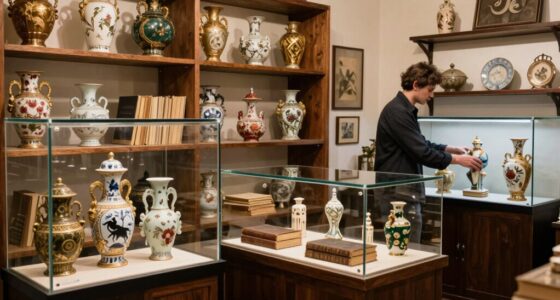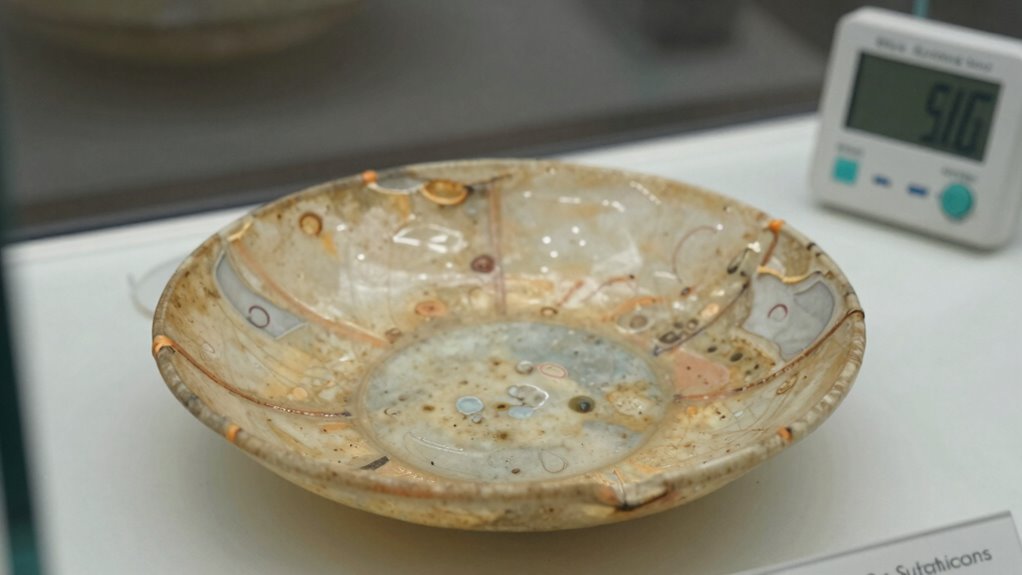
You can tell a piece needs better environmental control if you notice peeling, warping, or cracking, which indicate moisture or temperature issues. Look for mold, stains, or musty odors that suggest high humidity or moisture problems. Pest activity like tiny holes or shed skins also signals poor conditions. Fluctuating humidity levels and visible deterioration are clues you need to improve storage conditions. Keep watching for these signs—more tips are just ahead to help you protect your collection.

Prime made for students and young adults
- Fast, free delivery for dorm and study essentials
- Prime Video and Amazon Music included
- Member-only deals
Key Takeaways
- Observe signs of material deterioration like peeling, cracking, or mold growth.
- Monitor humidity fluctuations using a hygrometer for sudden changes.
- Look for pest activity such as tiny holes, frass, or shed skins.
- Notice musty odors, staining, or warped materials indicating moisture issues.
- Regularly inspect storage areas and maintain climate control to prevent environmental stress.
Environmental conditions play a crucial role in preserving the quality of your collection, and recognizing when these conditions are off can save you from costly damage. If you notice signs of deterioration or unexpected issues, it’s time to evaluate your environment. One of the most telling signs is humidity fluctuation. When the air’s moisture levels swing between too dry and too damp, your collection becomes vulnerable. For example, paper items may become brittle or warp, while textiles might develop mold or attract pests. If you see peeling, cracking, or warping, it’s likely your environment isn’t stable enough. Use a hygrometer to monitor humidity levels regularly, aiming for a consistent range that your specific collection requires. Sudden changes often indicate a need for better climate control. Maintaining proper environmental conditions helps prevent these issues before they escalate. Regularly inspecting your storage space for signs of moisture infiltration can also help catch problems early. Additionally, understanding the impact of temperature fluctuations on sensitive materials can guide you in creating a more stable environment. Monitoring for climate stability is essential in maintaining a healthy environment for your collection. Pest prevention is another critical factor. When pests like silverfish, beetles, or mold mites appear, they often point to environmental issues. Excess humidity creates an inviting habitat for these pests, especially if it remains unchecked. If you find tiny holes, frass, or shed skins, it’s a sign pests are thriving, and your environment needs adjustment. Keeping humidity levels steady discourages pest activity, as many pests prefer damp conditions. Additionally, maintaining good air circulation and cleanliness reduces their chances of settling in. If pests are already present, it’s a clear sign that your environment isn’t properly controlled. Addressing humidity fluctuations and improving pest prevention measures go hand-in-hand to protect your items. Ensuring proper ventilation and airflow can significantly reduce pest risks and moisture buildup. Other indicators include musty odors, mold growth, or visible damage—like stained paper or warped wood. These suggest moisture problems that could be tied to poor environmental management. You might also notice a rapid deterioration of materials that shouldn’t normally degrade so quickly, which often results from inconsistent temperature or humidity. If you’re experiencing these issues, it’s time to review your storage setup. Consider investing in climate control equipment, such as humidifiers, dehumidifiers, or temperature regulators, to keep conditions steady. In addition, establishing a routine maintenance schedule for your environment can help you identify issues before they cause serious damage. In essence, staying vigilant about humidity fluctuation and pest prevention is key to maintaining your collection’s integrity. Regularly check for signs of environmental stress and take prompt action to correct any issues. Proper environmental regulation not only prolongs the life of your items but also saves you the hassle and expense of restoring or replacing damaged pieces later on. Recognizing these signs early and responding quickly ensures your collection remains safe and well-preserved for years to come.
digital hygrometer for humidity monitoring
As an affiliate, we earn on qualifying purchases.
As an affiliate, we earn on qualifying purchases.
Frequently Asked Questions
How Often Should Environmental Conditions Be Monitored?
You should monitor environmental conditions daily to catch humidity fluctuations and temperature instability early. Regular checks help guarantee stable humidity levels and consistent temperature, preventing damage to sensitive pieces. Use reliable instruments like hygrometers and thermometers, and record readings consistently. If you notice sudden changes or irregular patterns, it’s a sign you need to improve your environmental control measures promptly to preserve your collection’s integrity.
What Specific Tools Are Best for Measuring Environmental Factors?
You should use digital hygrometers and thermometers to measure humidity levels and temperature stability accurately. Data loggers are also useful for continuous monitoring, helping you spot fluctuations over time. For precise readings, consider calibrated devices designed for your specific environment. By regularly checking these tools, you guarantee ideal conditions, protecting your collection from humidity and temperature swings that could cause damage or deterioration.
Can Poor Environmental Control Damage Artwork Over Time?
Poor environmental control can definitely damage artwork over time. Fluctuations in temperature and humidity compromise art preservation, causing warping, cracking, or mold growth. Without climate stability, your pieces become more vulnerable to deterioration. You need to maintain consistent conditions to protect your collection. Regularly monitoring and adjusting environmental factors guarantees long-term preservation, safeguarding your artwork’s integrity and value for years to come.
How Do Different Materials React to Environmental Fluctuations?
Different materials react uniquely to environmental fluctuations, so understanding their stability helps prevent damage. For example, paper and textiles are highly sensitive, showing warping or discoloration with humidity changes. Metals may corrode or tarnish, while ceramics remain relatively stable. Recognizing how fluctuation impact varies by material allows you to maintain consistent conditions, ensuring your artwork stays preserved and undamaged over time. Proper control minimizes risks and prolongs the integrity of your pieces.
Are There Industry Standards for Optimal Environmental Conditions?
Yes, industry standards for ideal environmental conditions guide your climate adaptation and storage solutions. You should aim for specific temperature, humidity, and light levels depending on your material. For instance, artworks require stable humidity, while archives need controlled temperature. Following these standards helps you prevent deterioration, ensuring your collection remains protected over time. Regular monitoring and adjusting your storage environment according to these guidelines is essential for effective preservation.
climate control storage case for collectibles
As an affiliate, we earn on qualifying purchases.
As an affiliate, we earn on qualifying purchases.
Conclusion
Knowing when your piece needs better environmental control is like noticing the first cracks in a fortress wall—small signs that can lead to bigger problems if ignored. Keep an eye on changes in appearance, humidity, and temperature. Acting early is your best defense against deterioration, preserving your collection’s beauty and integrity. Treat your artwork like a delicate garden; with the right care, it’ll flourish for generations to come.
As an affiliate, we earn on qualifying purchases.
dehumidifier for art and collectibles
As an affiliate, we earn on qualifying purchases.
As an affiliate, we earn on qualifying purchases.
Halloween Picks
halloween
As an affiliate, we earn on qualifying purchases.