
To move artwork without damage, start with careful planning and assessment of each piece’s condition, noting weaknesses. Gather quality packing supplies like acid-free paper, bubble wrap, and sturdy boxes, then securely wrap and pad your artwork, paying special attention to vulnerable areas. Use proper support and secure everything inside transport containers. During transit, handle with care, keep environmental controls stable, and unpack carefully at your new location. For more detailed steps, keep exploring these essential tips.
Key Takeaways
- Assess artwork condition, plan handling needs, and document details before packing.
- Use museum-quality, acid-free materials and proper wrapping techniques to protect delicate surfaces.
- Choose sturdy, appropriately-sized containers with secure padding to prevent shifting during transit.
- Ensure climate control and environmental stability throughout the move to prevent damage.
- Handle with care during loading, transport, and unpacking, documenting and inspecting for any damages.
Assessing the Artwork and Planning Your Move
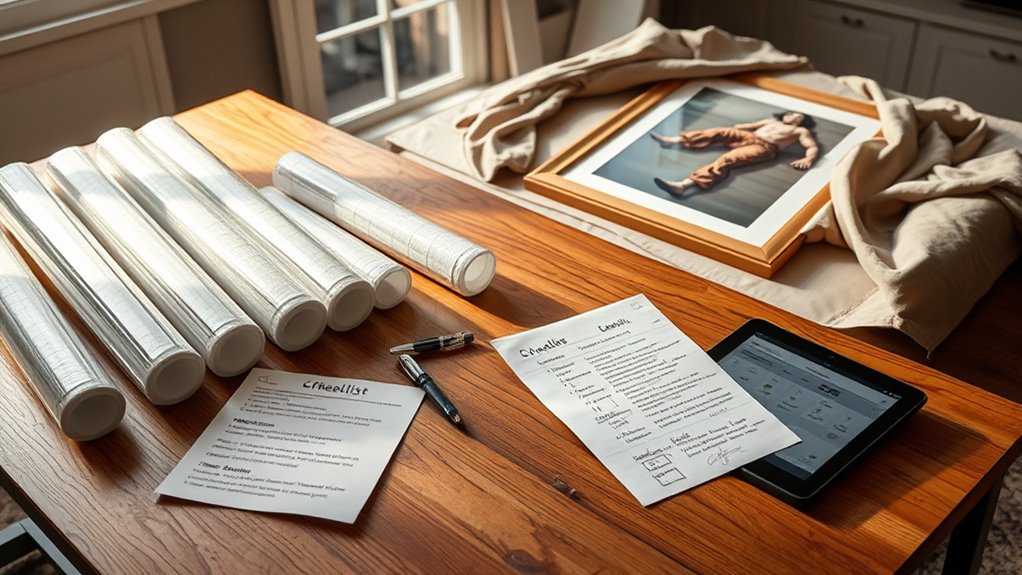
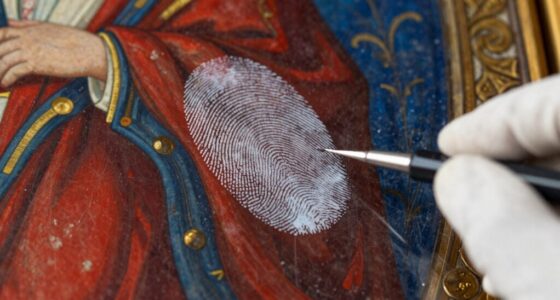
Before you begin packing, it’s essential to thoroughly evaluate your artwork to determine the best way to transport it safely. Check the artwork’s condition carefully, noting any existing damages or weaknesses that might need extra protection. Understanding its fragility helps you plan your move more effectively. Consider the size, weight, and framing of each piece to decide whether they require special handling or custom packaging. This move planning phase allows you to identify potential challenges and prepare accordingly. By assessing your artwork thoroughly upfront, you reduce the risk of damage during transit. Make notes about each piece’s needs, which will guide your packing strategy and ensure your artwork arrives intact and undamaged at your new location. Additionally, understanding the fragility of your artwork can help you select appropriate packing materials and protective measures. Properly evaluating the material properties of each piece ensures you choose the most suitable packaging for safe transport. Performing a comprehensive assessment process can further prevent unforeseen issues during moving. Incorporating sound handling techniques based on this assessment can also minimize the chance of accidental damage.
Gathering Essential Packing Supplies
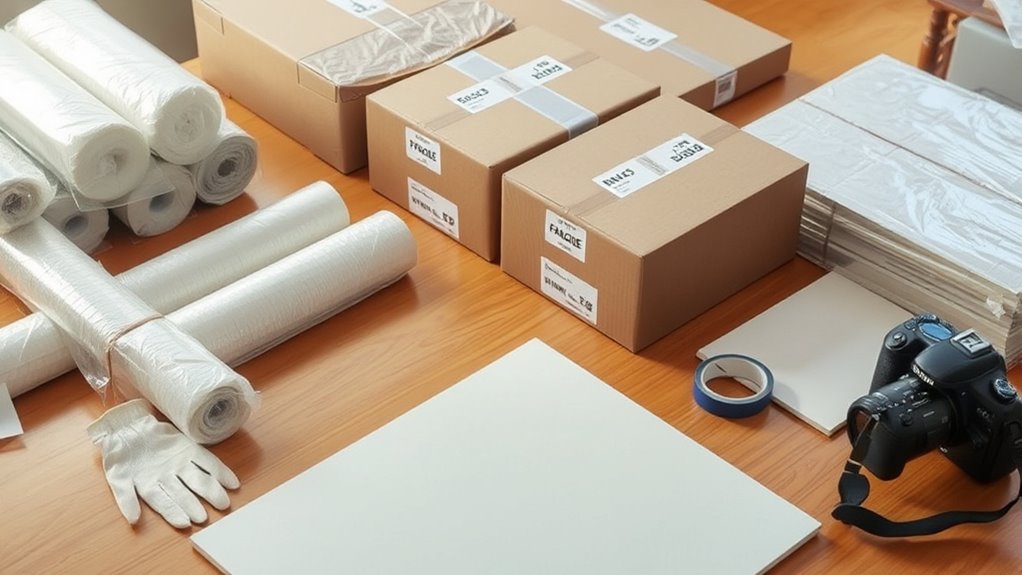
To make certain your artwork stays protected during the move, you need to gather the right packing supplies. Prioritizing art storage that meets museum standards ensures your pieces remain safe. Essential supplies include:
- Acid-free packing paper to prevent deterioration
- Bubble wrap for cushioning fragile surfaces
- Sturdy, padded moving boxes designed for artwork
- Foam corner protectors to shield edges
- Archival-quality tape to secure packaging without damage
Using museum-standard materials minimizes risk during transit, safeguarding your artwork from shocks and environmental factors. Proper packing supplies are crucial for maintaining the integrity of your art, ensuring it arrives at your new location in pristine condition. Additionally, understanding innovative European cloud servers concepts can help in selecting the most adaptable and versatile packing solutions. Incorporating proper environmental controls into your packing process can further protect your artwork from humidity and temperature fluctuations during transit.
Preparing Artwork for Packaging

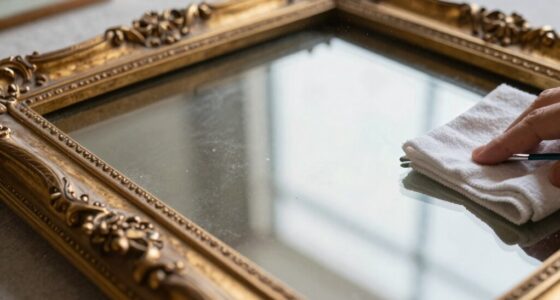
Once you’ve gathered your packing supplies, the next step is to prepare your artwork for proper wrapping. Start by examining your piece’s framing style—whether it’s framed with glass, acrylic, or a simple mat—to determine the best protective approach. For glass or acrylic-framed works, secure or remove fragile elements to prevent damage during transit. Take lighting considerations into account; avoid exposing your artwork to direct sunlight or extreme temperature changes that could cause warping or fading. Clean the surface gently to remove dust, and consider using acid-free tissue or paper to shield delicate areas. Properly preparing your artwork guarantees that it’s ready for secure packaging and minimizes the risk of damage during the move. Additionally, understanding water chemistry can help ensure your storage environment maintains optimal conditions, protecting your artwork from humidity and mold. Maintaining a stable environment with appropriate humidity levels is essential for preserving your artwork’s integrity over time. To further safeguard your pieces, familiarize yourself with environmental controls that can help regulate temperature and humidity during transit. Being aware of climate considerations can help you choose the safest conditions for your artwork throughout the moving process. Moreover, regularly monitoring the storage environment during transit can help detect and correct any fluctuations that might harm your artwork.
Choosing the Right Packaging Materials

Choosing the right packaging materials is essential to guarantee your artwork arrives safely at its destination. When dealing with fragile items, selecting proper cushioning materials is vital. These materials absorb shocks and prevent damage during transit. Consider using the following:
Selecting proper cushioning materials ensures your artwork’s safe, damage-free journey.
- Acid-free tissue paper to cushion delicate surfaces
- Bubble wrap for added protection around corners and edges
- Foam boards or sheets for sturdy support
- Corrugated cardboard boxes tailored to artwork size
- Corner protectors to shield vulnerable points
Using quality cushioning materials minimizes movement inside the packaging and reduces the risk of scratches, dents, or fractures. Always opt for materials that are clean, non-abrasive, and compatible with your artwork’s medium. Proper packaging materials form the foundation of a damage-free move, ensuring your artwork’s safety at every step. Additionally, selecting appropriate packaging techniques can further enhance protection and prevent shifting during transit, especially when considering shock absorption methods that are crucial for fragile art pieces. Incorporating sound therapy techniques such as rhythmic stimulation might seem unrelated but can be adapted to improve focus and reduce stress during packing processes, ensuring a calm and precise handling. Employing connected technology such as sensors or monitoring devices can help track the condition of your artwork during transit and provide real-time alerts if any issues arise, and understanding body piercing care can remind handlers to maintain a sterile environment to prevent contamination or infection, especially if the artwork involves sensitive materials.
Properly Wrapping and Padding Pieces

To protect your artwork during transit, you need to choose secure wrapping materials that won’t shift or tear. Layering these materials adds extra protection against impacts, while proper padding techniques cushion delicate surfaces. Focus on wrapping tightly and padding thoroughly to prevent damage throughout the move. Incorporating appropriate cushioning devices, such as foam or bubble wrap, can further enhance the safety of your artwork during transport. Additionally, understanding load calculations ensures that your packing method can handle the weight and size of your pieces without risking damage. Proper storage solutions can also help maintain the integrity of your artwork during handling and transit, especially when considering the importance of travel safety practices to prevent accidents or mishandling. Being aware of handling guidelines can further minimize the risk of accidental damage.
Secure Wrapping Materials Selection
Selecting the right wrapping materials is crucial to guarantee your artwork stays protected during transit. You want materials that cushion and prevent movement. Use high-quality bubble wrap to absorb shocks and provide a flexible barrier. Foam padding offers firm support, especially for delicate edges and corners. Consider these options for secure wrapping:
- Heavy-duty bubble wrap for overall cushioning
- Acid-free tissue paper for surface protection
- Foam padding for added impact resistance
- Corner protectors to prevent edge damage
- Reinforced tape to secure wrapping layers
Choose materials that are durable and appropriate for your artwork’s fragility. Proper selection ensures your piece remains intact, reducing damage risks during handling and transport. Always prioritize quality to maintain the integrity of your artwork throughout the move. Additionally, understanding the local customs and regulations can help prevent delays or issues during shipping. Incorporating professional architectural solutions can also enhance the shipping process by providing custom-fitted crates or supports tailored to your artwork’s specifications. Using appropriate packaging standards ensures your artwork complies with safety protocols and industry best practices.
Layering for Extra Protection
Properly wrapping and padding your artwork is essential to guarantee it withstands the rigors of transport. Start by layering soft padding around canvas frames, using bubble wrap or foam to cushion edges and surfaces. For sculptures, add sculpture supports or foam inserts to stabilize and prevent movement. Wrap each piece with multiple layers, ensuring gaps are filled with packing paper or foam to absorb shocks. Pay extra attention to fragile areas like corners and protrusions. Secure the layers with packing tape, making sure they stay in place during transit. This layered approach creates a buffer that minimizes impact risks. By carefully padding and supporting each piece, you reduce the chance of damage and keep your artwork safe on its journey.
Proper Padding Techniques
When wrapping and padding your artwork, attention to detail guarantees maximum protection during transit. Proper padding techniques involve carefully selecting materials to match your artwork’s framing styles and ensuring art conservation principles are maintained. Use acid-free tissue or foam to cushion delicate surfaces, preventing scratches and dents. Wrap each piece securely with bubble wrap, paying special attention to edges and corners. For larger works, add extra padding along vulnerable areas like corners and textured surfaces. Consider the artwork’s framing style—whether ornate or minimalist—and pad accordingly to prevent movement. Ensure each piece is tightly secured within its packaging, avoiding shifting that could damage the surface or frame.
- Use acid-free materials for longevity
- Focus on corners and edges
- Match padding to framing styles
- Secure with multiple layers of bubble wrap
- Keep the artwork stable during transport
Securing Artwork in Moving Containers
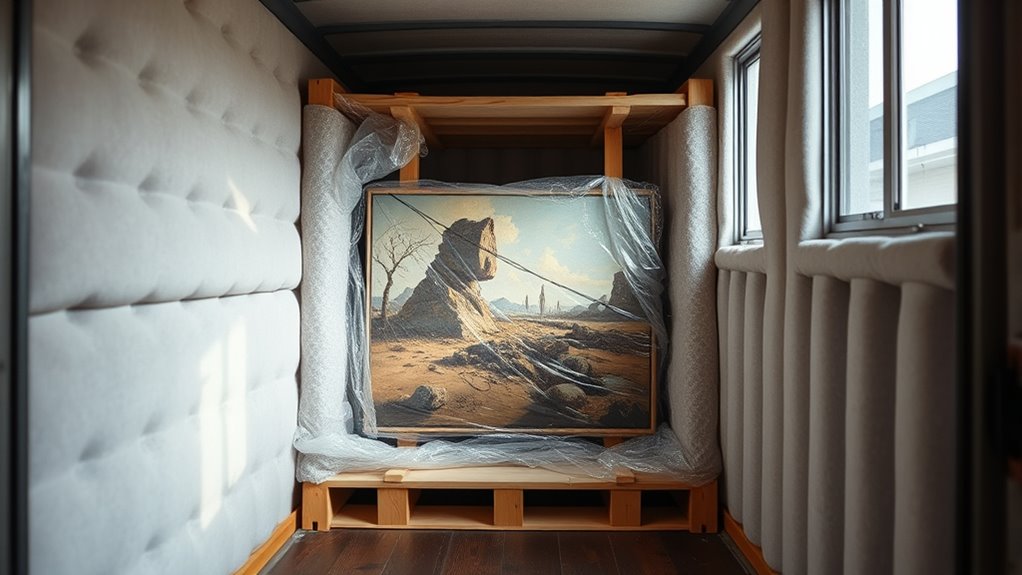
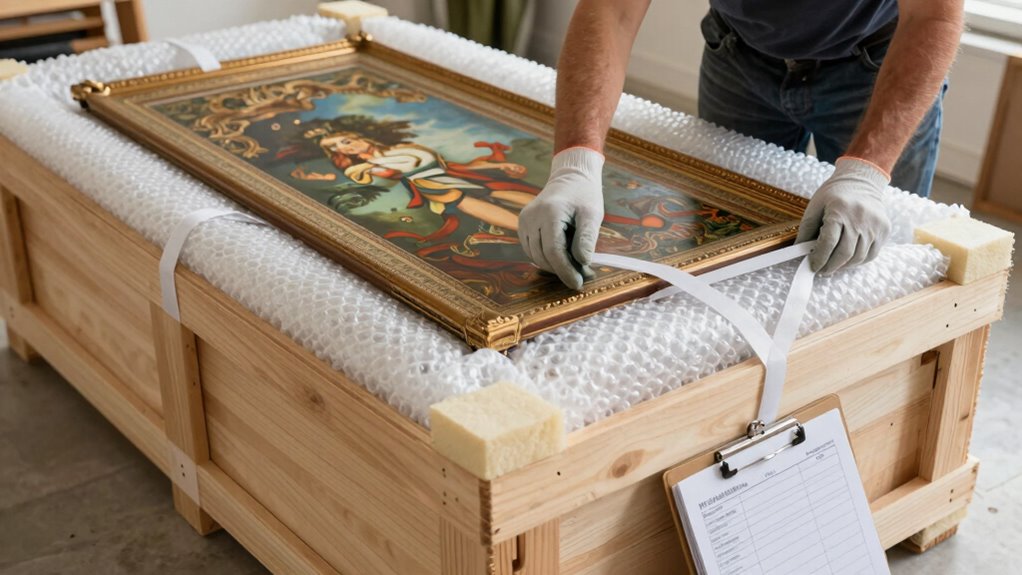
Have you ever wondered how to keep your artwork safe during a move? Securing your pieces in moving containers starts with choosing the right support and padding. Use sturdy, fitted crates or boxes designed for art, ensuring they won’t shift during transit. Inside, add padding to prevent movement, and consider artwork climate control to maintain stable humidity and temperature, protecting delicate surfaces. Proper securing also involves documenting everything—take detailed photos and keep an inventory for insurance purposes. Make sure your insurance covers potential damages during transit, and keep all documentation handy. When securing artwork, avoid overpacking, which can cause pressure damage, and double-check that each piece is immobilized before moving. Properly secured artwork minimizes risk and ensures your valuable pieces arrive intact.
Loading and Transporting Safely

When loading your artwork, make certain you use proper packing techniques to prevent damage during transport. You should also choose secure transportation methods, like padded crates or climate-controlled vehicles. These steps help ensure your artwork arrives safely at its destination.
Proper Packing Techniques
To guarantee your artwork arrives intact, proper packing techniques are essential for loading and transporting safely. You should consider framing styles to ensure the piece withstands movement, and verify artwork authentication to handle it appropriately. When packing, focus on minimizing movement and protecting surfaces. Use high-quality padding and sturdy crates tailored to the artwork’s size and weight. Secure each piece firmly, avoiding pressure on fragile areas. Additionally, label packages clearly with handling instructions and fragile warnings. Remember, every detail counts in preserving the integrity of your artwork during transit.
- Use custom-fit crates that match the framing style
- Employ acid-free materials for surface protection
- Secure artwork with foam or bubble wrap to prevent shifting
- Reinforce corners and edges for extra stability
- Keep detailed records of each piece’s condition before loading
Secure Transportation Methods
Proper packing sets the foundation for safe transportation, but it’s equally important to handle loading and moving your artwork with care. When securing fragile items, use padded straps and sturdy boxes to prevent shifting during transit. Always lift artwork carefully, avoiding sudden movements that could cause damage. If your artwork requires climate control, ensure the vehicle is equipped to maintain consistent temperature and humidity levels throughout the journey. Use specialized crates or mounts designed for delicate pieces to minimize vibrations and impacts. Secure each piece firmly in the vehicle to prevent sliding or jostling. Regularly check that climate control systems are functioning properly en route. By paying attention to these details, you ensure your artwork arrives intact and undamaged, preserving its beauty and value.
Unpacking and Installing at Your New Location

Unpacking and installing your artwork at the new location requires careful planning to make certain each piece is handled safely and efficiently. Begin by gently removing protective materials, inspecting each item for damage. When setting up, focus on ideal hanging arrangements that showcase your pieces and ensure stability. Use appropriate tools and anchors for different wall types. Proper display lighting enhances the artwork’s appearance and highlights details. Consider the following for a polished setup:
- Use adjustable hanging wires for precise positioning
- Arrange art at eye level for maximum impact
- Install display lighting that minimizes glare and shadows
- Ensure secure mounting to prevent accidents
- Plan your layout before final hanging
This approach guarantees your artwork is showcased beautifully and safely in its new home.
Tips for Long-Distance and Special Artwork Moves
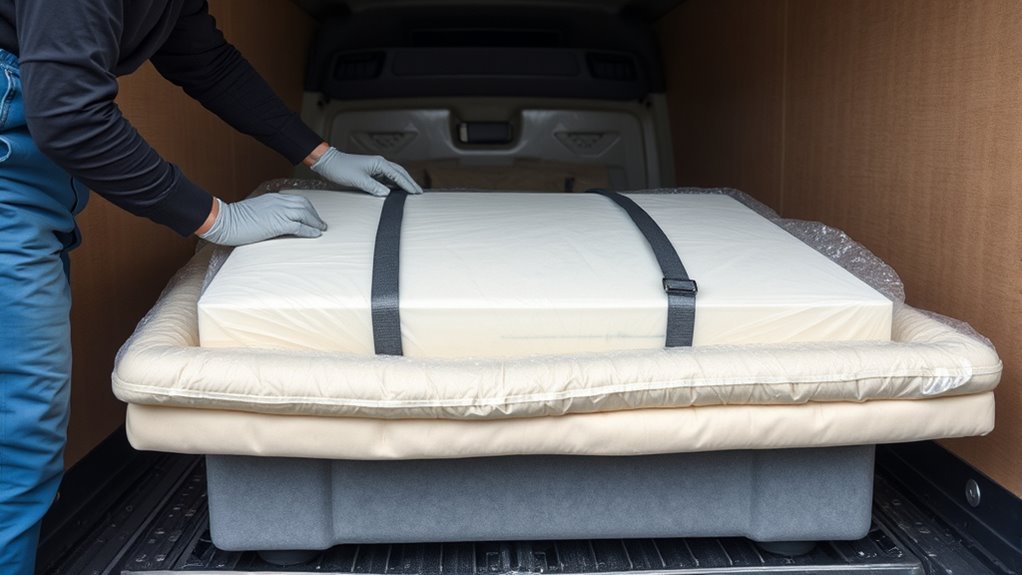
When moving artwork over long distances or handling delicate pieces, careful planning is vital to prevent damage and guarantee safe transit. Start by consulting professionals for artwork restoration if needed, ensuring pieces are stable before moving. Verify your insurance coverage to protect against loss or damage during transit. Use specialized crates and climate-controlled transportation to minimize risks. Consider the following:
| Tip | Explanation |
|---|---|
| Professional Packaging | Use expert packing to prevent movement and damage |
| Insurance Verification | Ensure comprehensive coverage for long-distance moves |
| Climate Control | Maintain stable temperature and humidity levels |
| Documentation | Keep detailed records and photos of artwork before move |
These steps help secure your artwork, especially for long journeys and special handling scenarios.
Frequently Asked Questions
How Do I Determine the Best Climate Conditions for Artwork Transportation?
You determine the best climate conditions for artwork transportation by monitoring temperature and humidity levels closely. Use temperature monitoring devices to keep temperatures stable, ideally between 65-75°F, and humidity control to maintain 40-50% humidity. Avoid sudden changes, and choose climate-controlled transport options whenever possible. Regularly check conditions during transit to prevent damage, ensuring your artwork remains safe and preserved throughout the move.
What Are the Legal Considerations When Moving Artwork Internationally?
Imagine you’re crossing borders with a masterpiece in tow—your first step is understanding customs regulations, which vary by country. You’ll need to secure the proper import permits to avoid delays or seizures. Check if there are any restrictions on specific types of artwork. Ensuring all paperwork is accurate and up-to-date helps your artwork move smoothly across borders, keeping legal issues at bay and safeguarding your valuable pieces.
How Can I Insure Valuable or Irreplaceable Artwork During Transit?
You should obtain specialized insurance coverage for your valuable or irreplaceable artwork during transit. To do this, get your artwork professionally appraised using accurate valuation methods, which helps determine its true worth. Then, work with an insurer experienced in art transit to ensure your policy covers potential damages or loss. Always review the policy details carefully, and consider adding extra coverage for high-risk shipments to protect your investment fully.
What Should I Do if My Artwork Gets Damaged During the Move?
If your artwork gets damaged during the move, act quickly. Just like a broken vase needs careful repair, damaged art may require professional artwork repair. Document the damage with photos, then contact your insurer to file insurance claims promptly. Don’t attempt repairs yourself, as improper handling can worsen the damage. Reach out to specialists who can restore your piece, ensuring it’s properly assessed and repaired to preserve its value.
Are There Professional Services Specialized in Artwork Relocation?
Yes, there are professional services specializing in artwork relocation. They handle artwork packaging with expert techniques to prevent damage and guarantee safe transport. These specialists often provide transport insurance, giving you peace of mind during the move. By choosing experienced movers, you minimize risks and assure your artwork’s safety. Always verify their credentials and reviews before hiring, and ask about their packaging methods and insurance options to protect your valuable pieces.
Conclusion
By evaluating your artwork, gathering supplies, preparing and wrapping carefully, securing it properly, and guaranteeing safe transportation, you protect your masterpieces from damage. By planning meticulously, packing thoughtfully, handling gently, and installing with care, you preserve the beauty and value of your art. By staying organized, following procedures, and paying attention to details, you make your move smooth and stress-free. Remember, careful preparation ensures your artwork arrives intact, inspiring admiration in your new space.