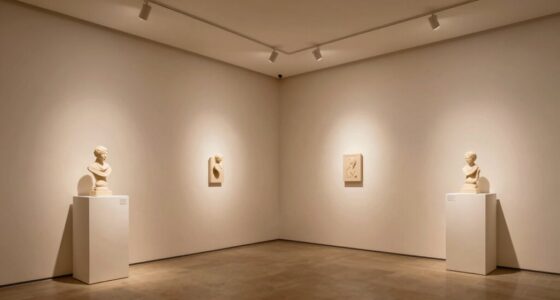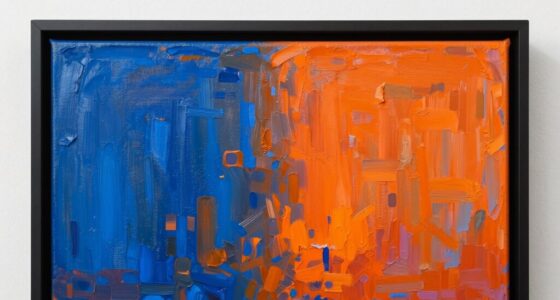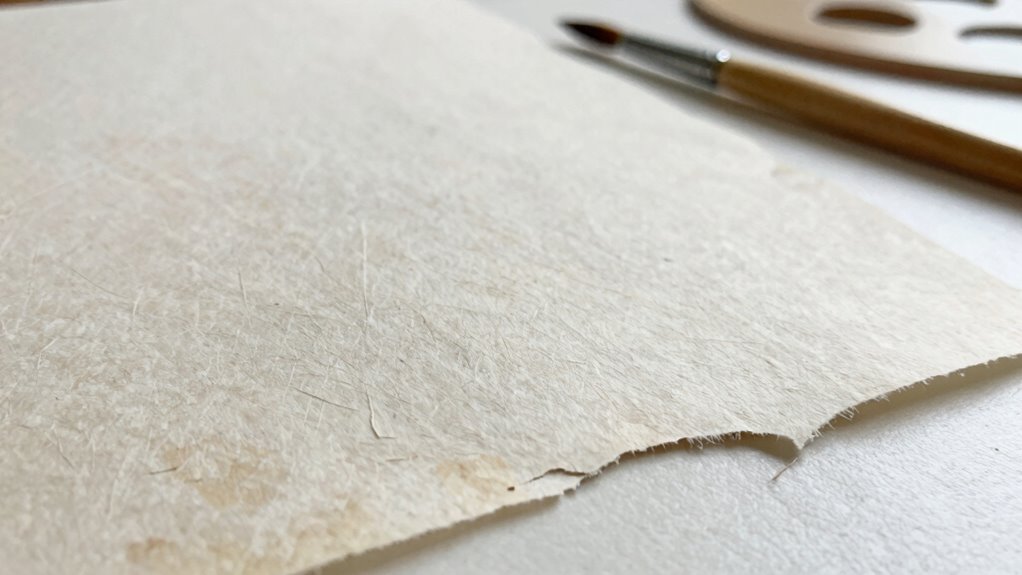

You need a different care routine for paper-based art because it’s more fragile and sensitive to environmental factors than canvas. Paper can easily fade, warp, or develop mold if exposed to light, humidity, or pollutants. It also reacts to acids, making proper framing and handling essential. Regular digital backups and careful storage further preserve its integrity. Keep these differences in mind, and you’ll discover how to provide the best long-term care for your paper artwork.
Open a free Amazon Business account
Business pricing, bulk buying and tax-exempt orders.
As an affiliate, we earn on qualifying purchases.
Key Takeaways
- Paper is more sensitive to environmental factors like humidity and light, requiring specific protective measures.
- Acidic materials and adhesives used with paper can cause deterioration, unlike canvas which is more durable.
- Paper’s delicate surface makes it more vulnerable to physical damage, demanding gentle handling and specialized framing.
- Digital preservation is crucial for paper art to prevent loss from aging, whereas canvas is more physically resilient.
- Different materials and storage conditions are necessary to prevent yellowing, warping, or mold in paper artworks.
Have you ever wondered how to keep your paper-based art looking its best for years to come? Unlike canvas, paper is a delicate material that requires a different care routine to preserve its integrity. When caring for paper-based pieces, you need to think about more than just dusting or display; you should also consider aspects like digital preservation and framing techniques. These elements help guarantee your artwork remains vibrant and intact over time.
Digital preservation plays a vital role in protecting your paper art from physical deterioration. By creating high-quality digital copies, you safeguard the visual details and colors against inevitable aging, fading, or accidental damage. Digital archives give you peace of mind, allowing you to revisit and share your work without risking the original. When it comes to physical preservation, framing techniques are your best defense against environmental factors. Using acid-free matting and UV-protective glass or acrylic helps prevent discoloration, acid migration, and fading caused by light exposure. Proper framing also creates a barrier against dust, pollutants, and fluctuations in humidity, all of which can harm paper over time.
High-quality digital copies and UV-protective framing preserve your paper art’s color and condition over time.
You should handle your paper art with care, always using gloves to avoid transferring oils or dirt onto the surface. When storing or displaying, keep your artwork away from direct sunlight, high humidity, and temperature swings, which accelerate deterioration. Instead, position it in a stable, climate-controlled environment, ideally in a space with consistent temperature and low humidity. When framing, choose materials specifically designed for paper preservation, such as acid-free backing and archival-quality mounting. Avoid adhesives or tapes that can damage the paper over time; instead, opt for framing techniques that allow for easy removal or replacement if needed. Additionally, understanding the properties of archival materials ensures your art remains protected and maintains its original appearance. Regularly inspecting your pieces for signs of deterioration can help catch issues early, preventing irreversible damage.
Monitoring your paper art regularly is essential. Check for signs of deterioration like yellowing, warping, or mold. If you notice issues, consult a professional conservator who can recommend appropriate treatments or repairs. Additionally, create digital backups periodically, especially after any conservation work, to assure your collection is always protected digitally. Understanding the importance of environmental control and proper handling is crucial to maintaining your paper-based art’s longevity. This layered approach—combining careful framing techniques, environmental control, and digital preservation—helps your paper-based art stand the test of time. By understanding these specific needs, you can develop a care routine that keeps your cherished pieces looking their best for years to come, honoring their fragile beauty and historical significance.
As an affiliate, we earn on qualifying purchases.
Frequently Asked Questions
How Often Should I Clean My Paper Art Pieces?
You should clean your paper art pieces gently whenever you notice dust or dirt accumulating, but avoid frequent cleaning to prevent damage. Use preservation techniques like soft brushes or microfiber cloths and handle them with care. Store your artworks in proper storage solutions, such as acid-free folders or portfolios, to minimize dirt buildup. Regular, gentle maintenance helps preserve your paper art’s integrity and prolongs its lifespan.
Can Paper-Based Art Be Exposed to Sunlight Safely?
Exposing paper-based art to sunlight is like inviting trouble; it’s generally unsafe. Sunlight exposure causes UV damage, fading colors and weakening the paper over time. To preserve your artwork, keep it away from direct sunlight or use UV-protective glass when displaying. This helps prevent fading and prolongs its lifespan, ensuring your art remains vibrant and intact for years to come.
What Adhesives Are Best for Repairing Torn Paper Art?
For repairing torn paper art, you should use delicate adhesives like wheat starch or acid-free archival glue, which are gentle yet effective. These adhesive types prevent damage over time. When applying, use a fine brush or a thin applicator to avoid excess. Repair techniques involve carefully aligning the torn edges and pressing gently to guarantee a seamless bond. Always test the adhesive on a small area first to ensure compatibility.
How Do Humidity Levels Affect Paper Artwork?
High humidity can cause your paper artwork to warp, buckle, or develop mold, accelerating deterioration. You might think it’s harmless, but humidity control is essential to preserve its integrity. Low humidity can make paper brittle and fragile. To protect your art, maintain a consistent environment, avoiding extreme moisture fluctuations. Proper humidity levels prevent paper deterioration, ensuring your treasured pieces stay beautiful and intact for years to come.
Is It Necessary to Frame Paper Art Differently Than Canvas?
Yes, framing paper art requires different techniques to guarantee proper preservation. You should use acid-free mats and UV-protective glass to prevent deterioration from light and environmental factors. Avoid tight framing that can cause warping or bending. Proper preservation methods, like keeping paper away from humidity and direct sunlight, are essential. These framing techniques help maintain your paper artwork’s quality and longevity, unlike typical canvas framing.
UV-protective glass for framed art
As an affiliate, we earn on qualifying purchases.
As an affiliate, we earn on qualifying purchases.
Conclusion
Remember, treating paper-based art is like tending to a delicate butterfly—you need a gentle touch and the right environment to keep it vibrant. Unlike canvas, paper easily absorbs moisture and can warp or fade if mishandled. By following a careful care routine, you’re not just preserving a piece of art; you’re safeguarding a fragile whisper of creativity. Handle it with love, and it’ll continue to tell its story for years to come.
archival quality mounting materials
As an affiliate, we earn on qualifying purchases.
As an affiliate, we earn on qualifying purchases.
digital art preservation scanner
As an affiliate, we earn on qualifying purchases.
As an affiliate, we earn on qualifying purchases.
Fall yard work Picks
leaf blowers
As an affiliate, we earn on qualifying purchases.